Beginner vs Expert Kitchen Tools Gadgets: Blenders & Choppers
Compare beginner and expert kitchen tools gadgets for food prep. We break down blenders, food processors, and choppers by price, power, and technique.
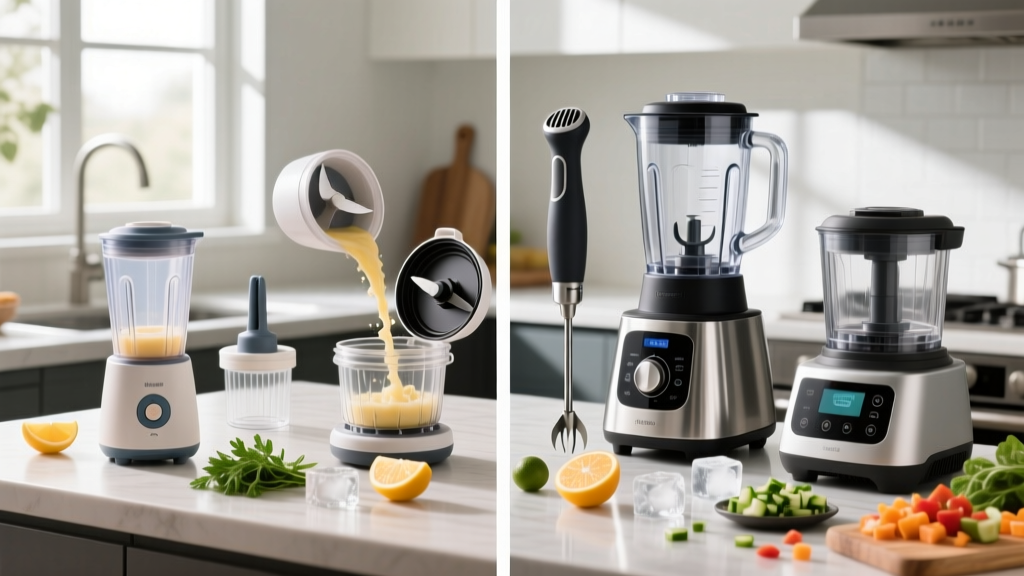
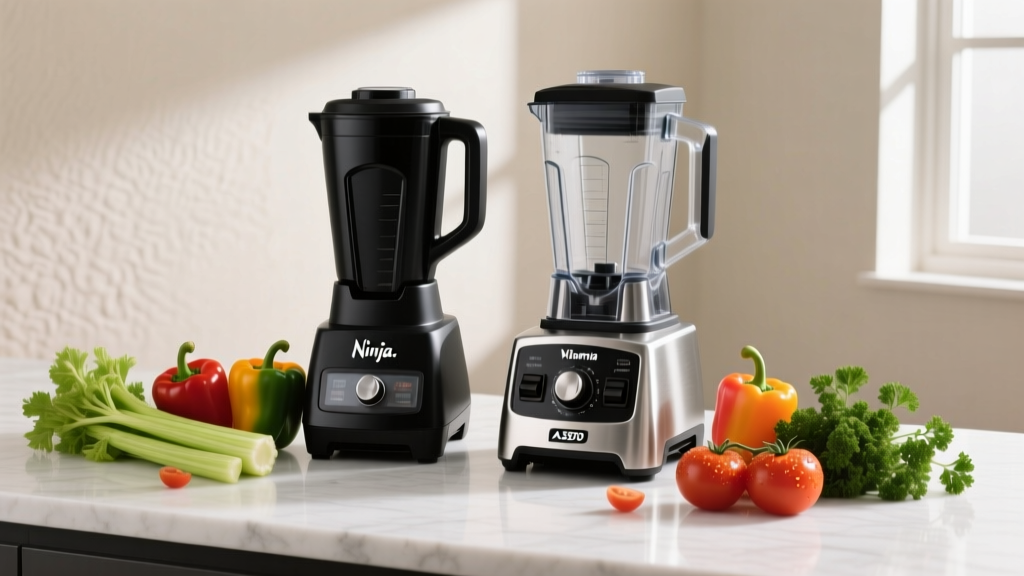
Marketing materials for modern food prep appliances heavily emphasize peak wattage, preset buttons, and sleek touchscreens. However, when evaluating kitchen tools gadgets for serious culinary work, the divide between beginner and expert equipment is defined by continuous torque, blade geometry, and feed mechanism precision. A 1400-watt budget blender and a 1600-watt professional machine do not process food identically; they rely on entirely different physical forces to achieve their results.
This guide dissects the mechanical and practical differences between entry-level and professional-tier blenders, food processors, and choppers, providing exact model benchmarks and current 2026 pricing to help you align your gear with your actual technique requirements.
The Motor Myth: Peak Wattage vs. Continuous Torque
The most common misunderstanding in appliance shopping is equating peak wattage with blending power. Beginner models, such as the Ninja Professional Plus (BN701), advertise 1400 watts. However, this is a peak draw—the motor can only sustain this output for seconds before thermal limits force a reduction in speed. To compensate for lower continuous torque, budget blenders use stacked, multi-tiered blade assemblies designed to chop food via chaotic collision rather than creating a true vortex.
Expert-tier machines, like the Vitamix A3500 Ascent Series, utilize a 2.2 peak horsepower motor (roughly 1600 continuous watts) paired with a high-torque cooling fan. This allows the motor to maintain maximum RPMs even when processing dense, viscous loads like nut butters or frozen fruit, without triggering thermal shutoffs.
Beginner Food Processors: Presets and Practicality
Entry-level food processors prioritize convenience and compact storage over continuous heavy-duty use. The Cuisinart Elemental 8-Cup (FP-8SV), currently retailing around $129, represents the standard for home cooks who need occasional chopping, dough mixing, or vegetable shredding.
Where the Entry-Level Tier Excels
- Footprint: Smaller bases and lighter bowls make them easy to pull from lower cabinets and maneuver around crowded kitchens.
- Simplicity: Two-button interfaces (On and Pulse) eliminate the learning curve associated with variable speed dials.
- Cost of Replacement: If a plastic gear strips after processing a heavy batch of pizza dough, replacing a $130 unit is less painful than servicing a $400 machine.
The Limitations of the Standard S-Blade
Budget processors rely almost exclusively on a standard Sabatier S-blade. While adequate for rough chopping onions or pureeing hummus, the S-blade crushes cellular walls when attempting fine dicing, releasing excess moisture and turning vegetables into a wet mash rather than achieving uniform, dry cubes.
Expert Food Processors: Variable Speeds and Continuous Feeds
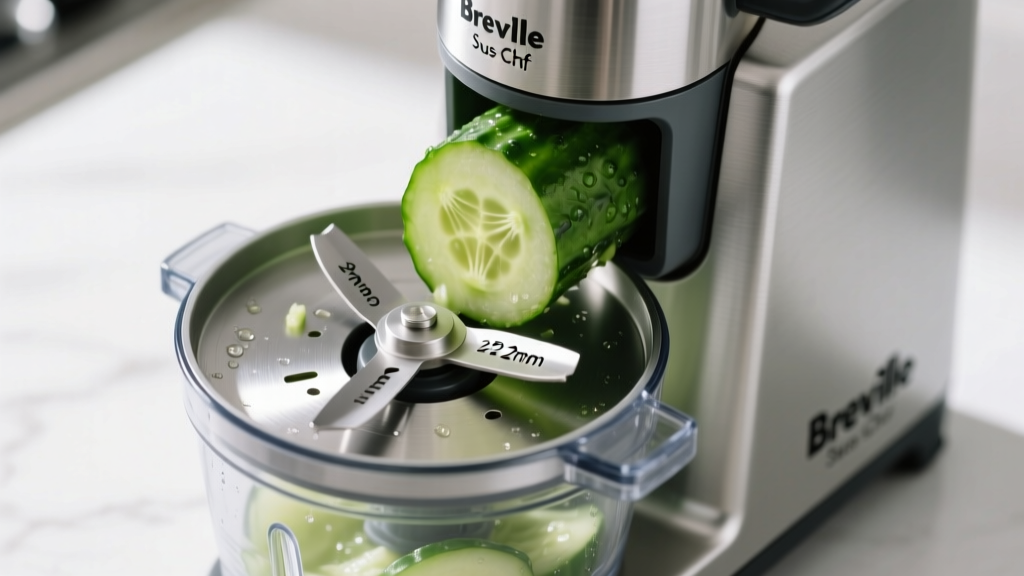
Professional-grade processors are engineered for volume, precision, and continuous operation. The Breville Sous Chef 16 Pro (BFP800XL) (street price ~$399) and commercial units like the Robot Coupe R2N CLR (~$1,200) dominate this space.
The Adjustable Slicing Disc Advantage
Unlike fixed-thickness plastic discs found in beginner models, expert processors feature machined stainless steel adjustable discs. The Breville Sous Chef allows micro-adjustments from 0.3mm to 8.0mm. This mechanical precision is critical for techniques like potato gratin, where a variance of 1mm alters the cooking time and structural integrity of the starch layers.
'A true brunoise or precise julienne cannot be achieved by pulsing an S-blade. You need a continuous feed chute and a fixed, razor-sharp disc that slices the ingredient in a single, clean pass, preserving the cellular structure and preventing oxidation.'
— Culinary Institute Prep Standards
Head-to-Head Matrix: Beginner vs. Expert Specs
| Feature | Beginner Tier (e.g., Ninja / Cuisinart) | Expert Tier (e.g., Vitamix / Breville) |
|---|---|---|
| Motor Type | Universal AC (High peak, low continuous) | High-torque DC or cooled AC (Sustained) |
| Blade Material | Stamped stainless steel (Sharp edges) | Hammermill / Machined (Blunt force) |
| Speed Control | Low/High/Pulse presets | 10+ variable speeds with digital timing |
| Bowl/Pitcher | Standard BPA-free Plastic / Glass | Eastman Tritan / Heavy-duty Polycarbonate |
| Average Cost (2026) | $80 - $150 | $400 - $700+ |
The Chopper Conundrum: Mini Prep vs. Commercial Dicing
Mini food choppers (1.5 to 3-cup capacity) are ubiquitous in beginner kitchens. Models like the KitchenAid 3.5 Cup Food Chopper (KFC3516ER) cost under $60 and are ideal for emulsifying a quick vinaigrette, mincing a single clove of garlic, or grinding a handful of nuts.
However, mini choppers suffer from severe spatial limitations. The blade sits too close to the bottom of the bowl, meaning ingredients must be perfectly pre-cut to fit beneath the blade path. For high-volume prep, expert kitchens bypass mini choppers entirely, opting instead for dedicated commercial dicing grids or utilizing the micro-bowls included with high-end processor systems.
Decision Framework: Match Your Technique to the Tier
Do not default to the most expensive option; match the machine to your specific culinary workflows.
- The Smoothie & Soup Routine (Beginner): If your primary use is blending morning smoothies, making occasional pesto, or pureeing soft cooked soups, the Ninja BN701 or Cuisinart Elemental provides 90% of the utility at 20% of the cost. The preset buttons eliminate the guesswork of over-blending.
- The Emulsion & Nut Butter Specialist (Expert): If you frequently make mayonnaise, grind dry grains into flour, or process high-fat nuts into butter, you need the sustained torque and variable speed dial of a Vitamix. The ability to slowly ramp up RPMs is mandatory for stable emulsions; dropping oil into a high-speed preset vortex will instantly break the emulsion.
- The Meal Prepper & Baker (Expert Processor): If you prep large batches of mirepoix, slice 5lbs of potatoes for gratin, or mix heavy bread doughs weekly, the Breville Sous Chef 16 Pro is non-negotiable. The continuous feed chute and adjustable discs will save hours of manual knife work and yield vastly superior textural results.
Maintenance and Blade Longevity
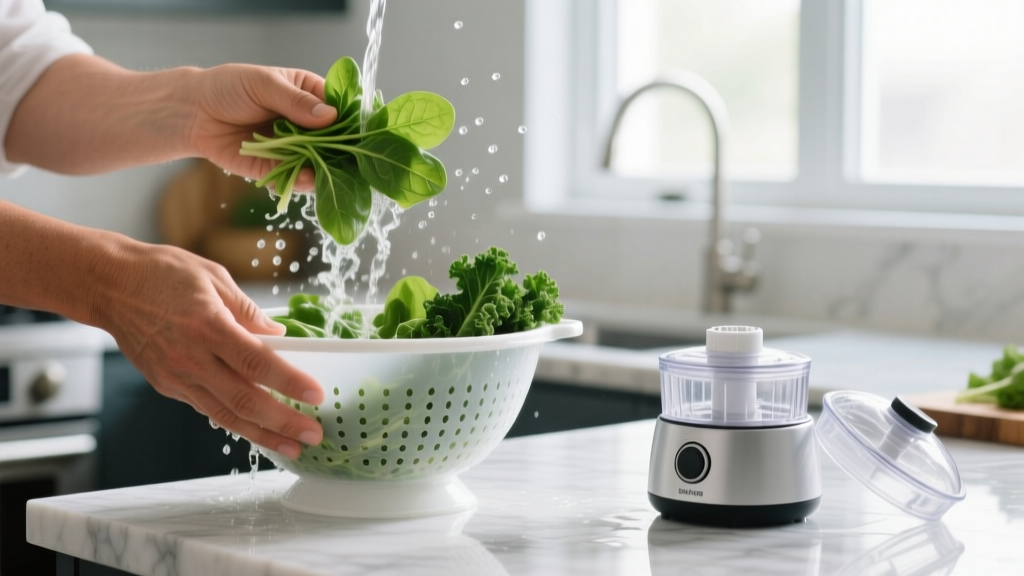
The lifespan of your kitchen tools gadgets depends heavily on cleaning protocols. Expert blender hammermill blades are notoriously difficult to reach by hand, and attempting to scrub them often results in lacerations.
Instead of manual scrubbing, utilize the machine's own torque for cleaning. As detailed in the Serious Eats blender cleaning guide, add a drop of dish soap and warm water to the pitcher, secure the lid, and run the machine on a medium-high variable speed for 45 seconds. The vortex will forcefully scour the blades and the underside of the lid. For food processors, never submerge the motor base or the S-blade assembly in a dishwasher; the harsh detergents and high heat will dull the stamped steel edges and warp the plastic drive shafts over time. Always hand-wash processor blades and dry them immediately to prevent micro-rust on the cutting edges.
Understanding the mechanical realities of wattage, blade geometry, and feed systems ensures you invest in equipment that actually supports your cooking techniques, rather than paying a premium for marketing features that gather dust on the counter.
Written by
Marcus WebbMarcus Webb served as a U.S. Army logistics officer for 8 years, where he managed field equipment procurement and tactical gear evaluation across three combat deployments. After honorable discharge, he earned a certification from the Professional Knife Makers Association and became a certified Wilderness First Responder (WFR). Marcus has tested over 500 EDC products in extreme environments — from -40°F in Alaska to 120°F in the Mojave Desert — using military-spec testing protocols. His reviews of multi-tools, tactical flashlights, and survival gear are known for their rigorous methodology: controlled drop tests from 6 feet, 120-minute water submersion at 2 meters, and lateral torque testing at 45 Nm. He is a member of the Blade Show judging panel and contributes to OutdoorGearLab.