New Gadgets for the Kitchen 2026: Budget Can & Jar Openers
Discover the best new gadgets for the kitchen in 2026 on a budget. We review top-rated, affordable can and jar openers for effortless, safe meal prep.
The Physics of the Seal: Why Most Budget Openers Fail
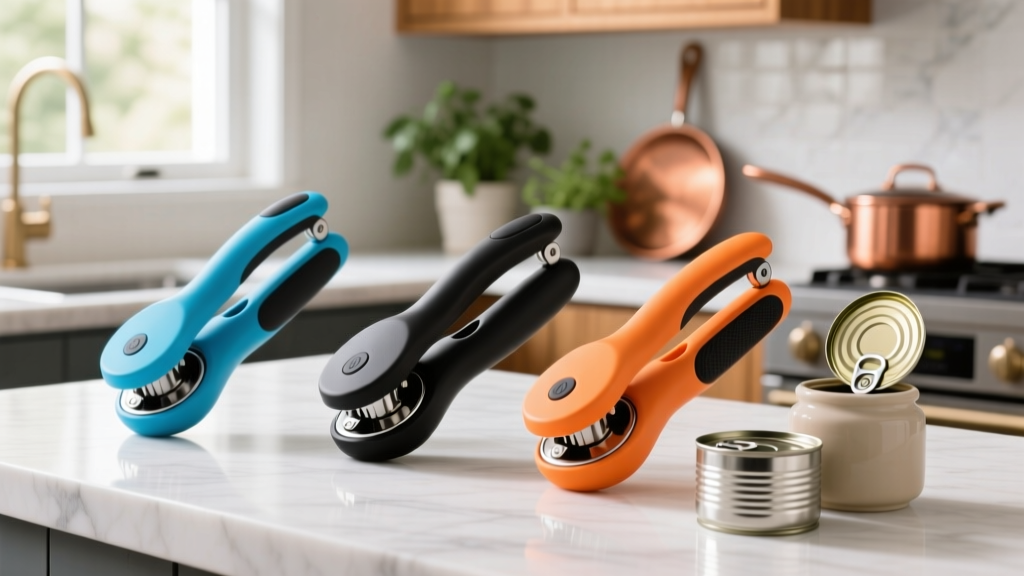
When searching for new gadgets for the kitchen that actually solve daily friction points, consumers often overlook the mechanics of can and jar openers until a stubborn lid ruins a meal prep session. The fundamental problem with sub-$15 openers is not just a lack of comfort; it is a failure in mechanical advantage and material science. Most budget can openers utilize top-piercing cutting wheels made from low-grade stamped steel. These wheels puncture the lid, leaving a jagged, dangerous edge and forcing the user to apply immense downward pressure, which accelerates gear stripping.
Jar openers face a different physics hurdle: vacuum pressure and static friction. A standard 2.5-inch mason jar lid sealed at a commercial facility can require up to 40 inch-pounds of torque to break the vacuum seal. Applying this torque using bare hands places severe stress on the carpometacarpal (CMC) joint at the base of the thumb. According to the Arthritis Foundation's guidelines on joint protection, repetitive twisting motions under high resistance are a primary catalyst for CMC joint degradation. The right budget gadget bypasses this biological limitation by altering the coefficient of friction or introducing a lever-based gear ratio.
2026 Budget Can Openers That Punch Above Their Weight
You do not need to spend $40 on an electric opener to achieve a smooth, safe edge. The following manual models dominate the under-$25 category by utilizing side-cutting technology and high-hardness steel alloys.
1. Zyliss Lock N' Lift Smooth Edge Can Opener (~$16.99)
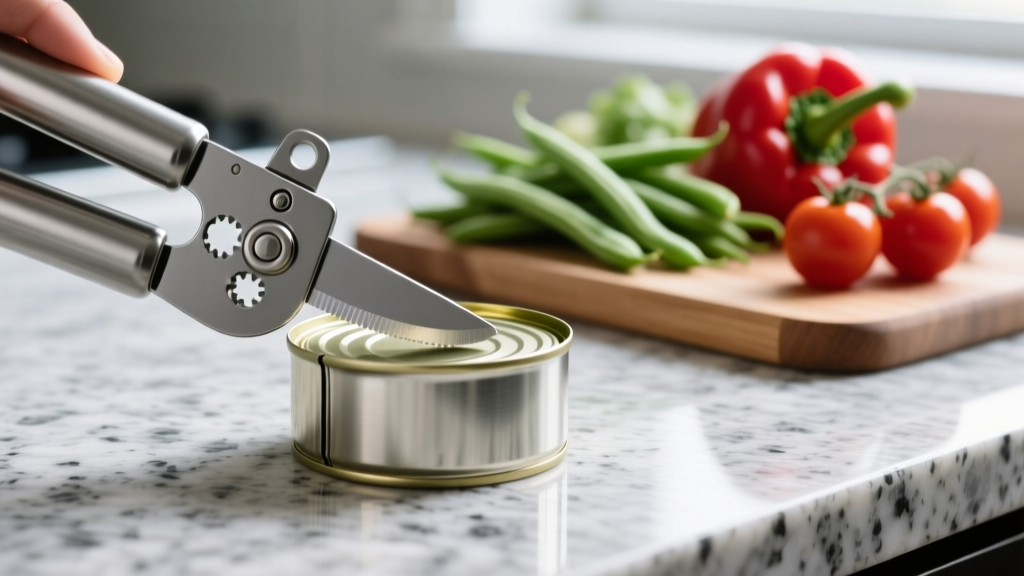
The Zyliss Lock N' Lift remains a benchmark in the budget category because it severs the crimped side seam rather than puncturing the top lid. This leaves the can with a smooth, safe edge and allows the lid to be lifted out using the tool's integrated magnetic hinge. The cutting wheel is constructed from 420-grade martensitic stainless steel. Unlike the 304-grade austenitic steel used for the opener's body (which resists rust but is too soft for cutting), 420-grade steel can be heat-treated to a hardness of HRC 50-55, ensuring the cutting wheel does not dull after hundreds of uses.
- Pros: Leaves no sharp edges; integrated lid magnet prevents drops; oversized TPE-overmolded turning knob reduces finger strain.
- Pros: Side-cutting mechanism keeps the blade entirely out of contact with the food inside the can.
- Cons: Requires a specific alignment technique to lock onto the seam; fails on cans with severely dented top rims.
2. GorillaGrip Premium Heavy-Duty Manual Opener (~$13.49)
For those who prefer the traditional top-cutting method but need maximum durability, the GorillaGrip model utilizes a reinforced carbon-steel cutting wheel and a dual-gear drive system. The dual gears distribute the rotational force across a wider surface area, drastically reducing the likelihood of the internal teeth stripping—a common failure point in single-gear budget models. The handles feature a soft-touch, non-slip thermoplastic elastomer (TPE) that maintains its grip even when wet or greasy.
Jar Opening Gadgets: Friction vs. Leverage
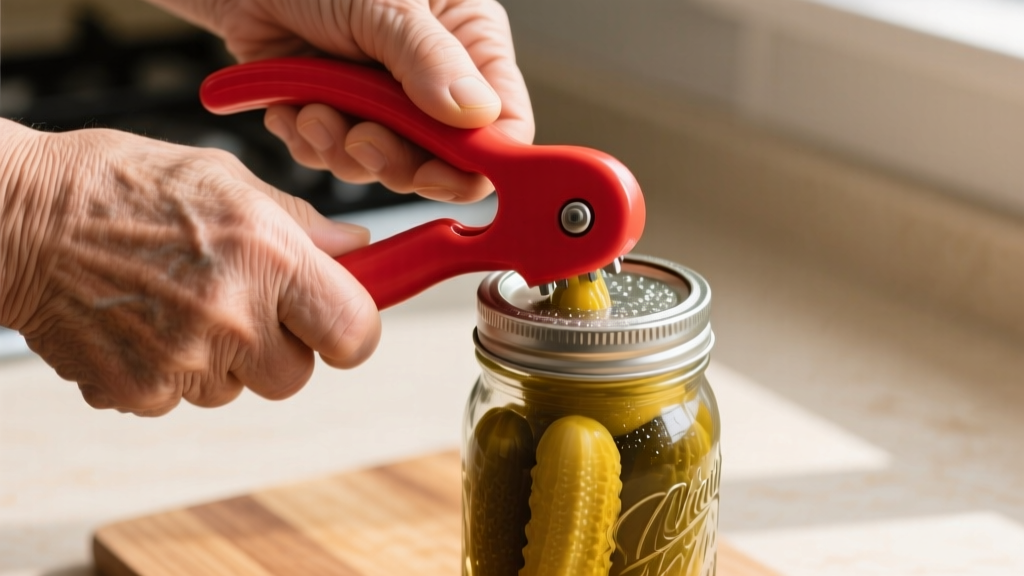
Jar openers generally fall into two categories: friction-enhancers (which stop the jar from spinning) and torque-multipliers (which use gears or levers to break the seal). Your choice depends entirely on your grip strength and counter space.
| Gadget | Mechanism | Price | Best For |
|---|---|---|---|
| Dycem Non-Slip Mat | High-friction polymer | $9.99 | Mild grip weakness; multi-use |
| Chef'n JarTop | 3:1 Gear ratio lever | $14.99 | Severe arthritis; zero grip strength |
| Swing-A-Way Under-Cabinet | Mechanical V-grip wedge | $12.50 | One-handed operation |
The Biomechanics of the Dycem Mat
The Dycem Non-Slip Jar Pad ($9.99) is arguably the most cost-effective tool on this list. Made from a specialized polyurethane-based polymer, it boasts a coefficient of friction significantly higher than standard silicone. By placing the mat over the lid, you eliminate the need to squeeze the jar tightly to prevent slipping. This directly addresses the Mayo Clinic's recommendations for managing hand osteoarthritis, which emphasize minimizing forceful pinching and gripping. You simply place the mat, apply light downward pressure, and twist. The pad does the work of holding the lid, allowing your hand to focus solely on rotation.
Chef'n JarTop: The Torque Multiplier
If friction alone is not enough, the Chef'n JarTop ($14.99) introduces a mechanical advantage. It clamps onto the lid and uses a 3:1 internal gear ratio. For every three degrees you turn the outer handle, the inner grip turns one degree, but with three times the rotational force. This means a user who can only generate 10 inch-pounds of torque manually can easily generate the 30+ inch-pounds required to break a commercial vacuum seal. The trade-off is bulk; it requires drawer space and takes a few extra seconds to clamp onto the lid.
The Grip Profile Decision Matrix
Do not buy a gadget based on general popularity; buy it based on your specific biomechanical needs. Use the matrix below to identify the optimal budget tool for your kitchen.
| User Profile | Primary Limitation | Recommended Can Opener | Recommended Jar Opener |
|---|---|---|---|
| Standard / No Issues | None; seeks speed and safety | Zyliss Lock N' Lift | Dycem Non-Slip Mat |
| Mild Arthritis / Weak Grip | Pain during sustained squeezing | GorillaGrip Heavy-Duty (TPE handles) | Dycem Non-Slip Mat |
| Severe CMC Joint Pain | Inability to generate torque | Zyliss (Oversized vertical knob) | Chef'n JarTop (Gear assisted) |
| Left-Handed Users | Standard gears bind when reversed | Zyliss (Ambidextrous side-cut) | Swing-A-Way Under-Cabinet |
Maintenance and Blade Degradation: The Hidden Failure Point
The number one reason budget can openers end up in the trash within six months is not mechanical failure; it is corrosion induced by improper cleaning. Many consumers toss their manual openers into the dishwasher. The high-heat drying cycle and harsh alkaline detergents strip the protective chromium oxide layer off the 420-grade stainless steel cutting wheels, leading to micro-rust that dulls the edge and introduces metallic flavors into your food.
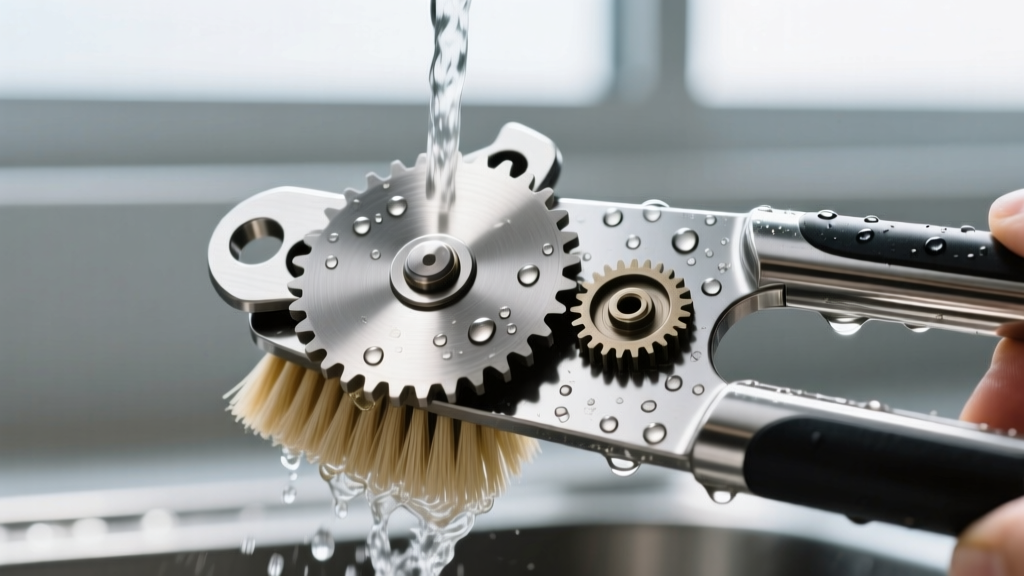
The 60-Second Maintenance Protocol: After each use, run the cutting wheel and gears under hot tap water while turning the knob to flush out food particulates. Use a stiff nylon bristle brush (never wire, which scratches the steel) with a drop of dish soap. Dry immediately with a microfiber cloth, and apply a single drop of food-grade mineral oil to the gear teeth once a month to prevent seizing.
Furthermore, food acids (like those in tomato paste or pineapple cans) accelerate galvanic corrosion if left on the blade. If you notice a gritty, black residue building up in the gears, this is a mix of oxidized metal and food starch. Create a paste of baking soda and water, apply it to the gears with an old toothbrush, and scrub gently. The mild abrasiveness of the baking soda removes the buildup without damaging the steel's heat-treated temper.
Final Verdict: Maximizing Your Kitchen Gadget Budget
Upgrading your opening tools does not require a massive investment. By allocating roughly $30 total—splitting it between the $16.99 Zyliss side-cutting can opener and the $9.99 Dycem friction mat—you eliminate the two most common physical frustrations in meal prep. You secure smooth, safe can edges that protect your fingers and trash bags, while simultaneously protecting your thumb joints from the repetitive strain of vacuum-sealed jars. These are the types of high-impact, low-cost improvements that define the smartest new gadgets for the kitchen in 2026.
Written by
Lena ChenLena Chen earned her M.S. in Human-Computer Interaction from Carnegie Mellon University and a B.S. in Electrical Engineering from the University of Washington. She has spent the past decade specializing in smart home architecture and IoT ecosystems, helping over 200 homeowners design fully connected living spaces. Lena is a certified Matter protocol consultant and has published peer-reviewed research on voice-first interface design in the ACM Digital Library. Her reviews of smart home products combine deep technical analysis with real-world usability testing, evaluating everything from Zigbee mesh stability to Alexa skill responsiveness. She regularly speaks at CEDIA Expo and CES smart home panels.