Best Ototo Kitchen Gadgets for Silicone Bakeware & Non-Stick Cooking
Discover how Ototo kitchen gadgets solve non-stick cookware scratching and sticking. Expert picks, silicone bakeware matrices, and maintenance tips.
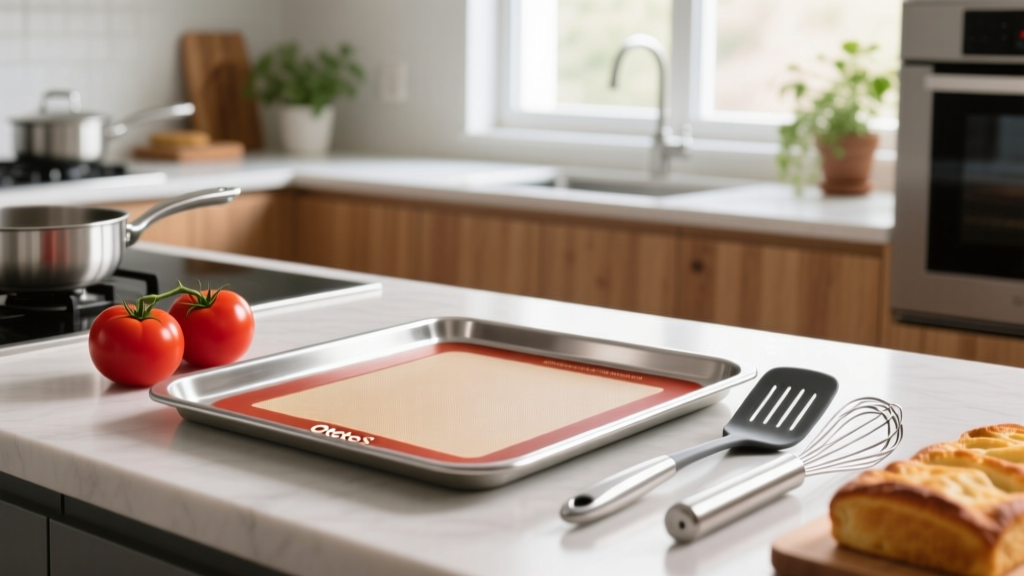
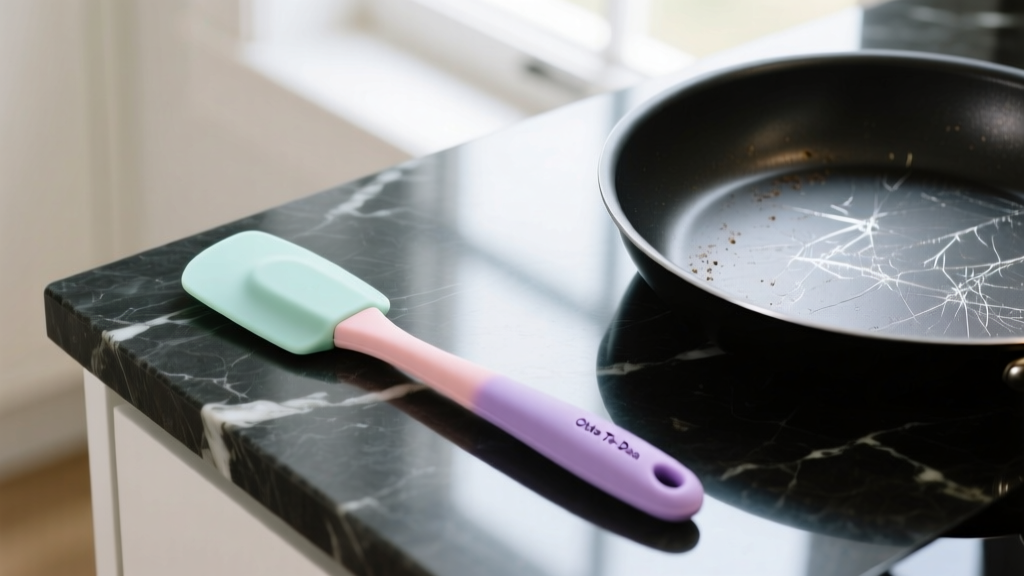
Traditional metal utensils destroy PTFE (Teflon) and ceramic non-stick coatings within six to twelve months of regular use, leading to peeling, uneven heat distribution, and the ingestion of micro-flakes. While nylon alternatives prevent scratching, they frequently melt or warp when exposed to pan edges exceeding 400°F (204°C). The practical solution lies in high-grade, platinum-cured silicone tools that offer the rigidity needed for flipping and scraping, combined with the heat resistance required for high-temperature searing.
When evaluating Ototo kitchen gadgets for daily use, the brand stands out by merging LFGB-compliant silicone construction with ergonomic, problem-solving designs. Rather than producing generic utensils, Ototo engineers tools that address specific kitchen friction points: splatter containment, bowl scraping efficiency, and non-stick surface preservation. Below is a technical breakdown of why silicone outperforms legacy materials, alongside practical picks and a decision matrix for silicone bakeware.
The Chemistry of Non-Stick: Why Silicone Outperforms Nylon and Plastic
Not all silicone is created equal. The durability and safety of non-stick kitchen tools depend entirely on the curing process used during manufacturing. Cheap silicone utensils are peroxide-cured, a process that leaves behind chemical byproducts, emits a distinct odor when heated, and degrades rapidly when exposed to fats and oils. Premium tools utilize platinum-curing, which yields a chemically inert, odorless polymer stable up to 500°F (260°C).
While the FDA Code of Federal Regulations Title 21 (CFR 177.2600) governs basic food-contact safety for rubber and silicone articles in the US, the European LFGB standard is significantly more rigorous. LFGB testing requires silicone to undergo exhaustive extraction tests with aggressive solvents to ensure no volatile organic compounds (VOCs) or siloxane oligomers migrate into food. High-tier Ototo kitchen gadgets consistently meet these stricter LFGB benchmarks, ensuring zero chemical leaching even when left resting against a 450°F cast iron skillet.
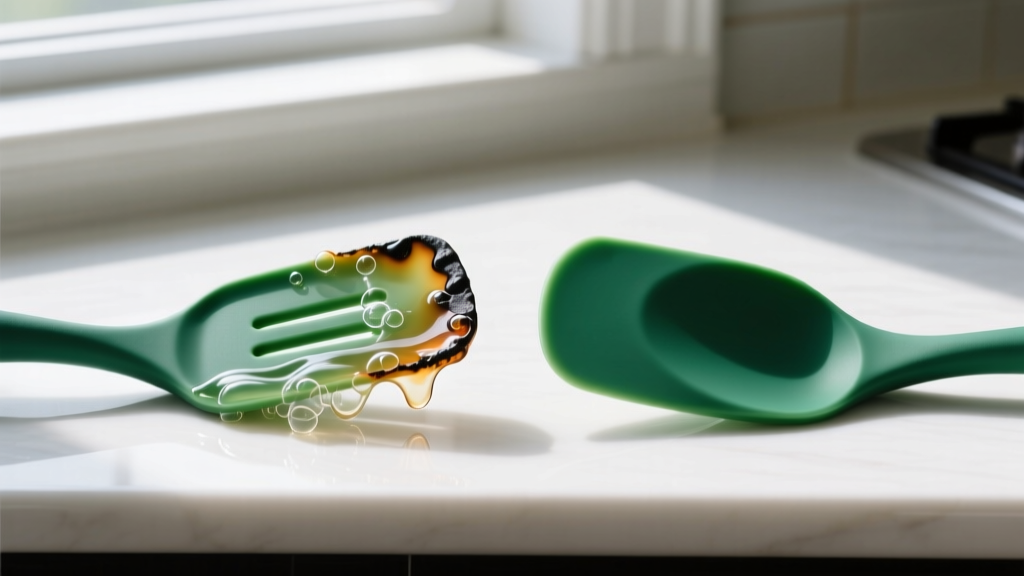
Nylon utensils, by contrast, possess a glass transition temperature of roughly 350°F to 400°F. When a nylon spatula rests against the edge of a carbon steel or non-stick pan during a high-heat sear, the edge will permanently deform, creating microscopic burrs that eventually scratch delicate ceramic coatings. Platinum silicone maintains its structural memory and flexibility indefinitely under these same conditions.
Problem-Solving Picks: Top Tools for Sticky Situations
Whimsical aesthetics often mask poor ergonomics, but the following Ototo designs solve genuine culinary problems while remaining entirely safe for PTFE, ceramic, and enameled cast iron surfaces.
1. Ototo Ta-Daa! Silicone Spatula (Approx. $16)
The Problem: Standard spatulas are too rigid to scrape the curved interior of mixing bowls, leaving up to 15% of batters and sauces behind, yet they are too flimsy to flip a heavy burger in a non-stick skillet.
The Fix: The Ta-Daa! features a dual-durometer construction. The core is reinforced with a rigid nylon skeleton for structural integrity during heavy lifting, while the outer edge is wrapped in flexible, high-grade silicone. The tapered, angled edge conforms to the radius of standard saucepans, achieving near-zero waste when scraping reductions or folding delicate batters without scoring the pan's surface.
2. Ototo Dr. Splat Splatter Guard (Approx. $18)
The Problem: Frying bacon or searing proteins in non-stick pans generates aggressive grease splatter. Metal mesh screens trap grease but are abrasive if they scrape the pan's rim, and they are notoriously difficult to clean.
The Fix: Dr. Splat is a flexible, food-grade silicone shield that bends to fit various pan diameters. Because silicone is inherently hydrophobic and oleophobic when properly cured, grease beads up on the surface rather than baking into a mesh grid. It can be wiped clean with a single pass of a soapy sponge or run through the dishwasher without degrading.
3. Ototo Nessie Ladle (Approx. $15)
The Problem: Standard ladles slide down into deep stockpots or require balancing precariously on the pot's rim, dripping broth onto the stovetop.
The Fix: While not purely silicone (it utilizes a non-stick-safe melamine/nylon blend), the Nessie features weighted, stubby legs that allow it to stand upright independently at the bottom of the pot. The material is specifically formulated to be softer than PTFE and ceramic coatings, ensuring it will not cause micro-abrasions during vigorous stirring of heavy stews or sauces.
Silicone Bakeware Decision Matrix: When to Use It
Silicone bakeware is frequently misused by home bakers who treat it as a 1:1 replacement for aluminized steel or glass. According to the German Federal Institute for Risk Assessment (BfR), high-quality silicone is exceptionally safe for food contact, but its thermal conductivity properties dictate specific use cases. Silicone is an insulator, not a conductor, which fundamentally changes how baked goods brown and set.
| Baking Application | Silicone Performance | Recommended Alternative |
|---|---|---|
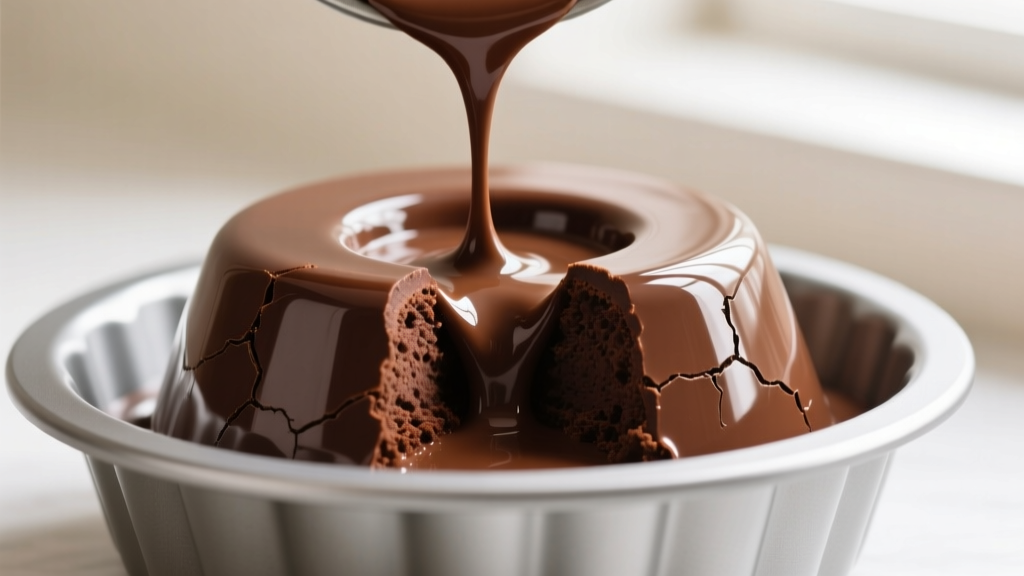
| Chocolates, Gummies, Candies | Excellent. Non-porous surface allows for flawless release without tempering or greasing. | N/A (Silicone is optimal) |
| Crusty Breads & Pizza | Poor. Insulating properties prevent the Maillard reaction and crust formation on the bottom. | Cordierite Stone or Cast Iron |
| High-Moisture Cakes | Good. Prevents sticking, but requires a metal baking sheet underneath for structural support. | Anodized Aluminum |
| Freezing & Ice Molds | Excellent. Remains flexible at -40°F, allowing easy extraction of frozen blocks. | N/A (Silicone is optimal) |
Maintenance Framework: Extending the Life of Non-Stick Silicone
Even premium platinum silicone requires specific maintenance to prevent "silicone bloom"—a phenomenon where unreacted siloxane oligomers migrate to the surface, creating a white, powdery residue that feels sticky and attracts dust. Follow this exact protocol to restore and maintain your tools:
- The Boiling Water Reset: Once a month, submerge silicone spatulas and molds in a pot of boiling water with two tablespoons of baking soda for 15 minutes. The alkaline solution breaks down polymerized cooking oils that standard dish soap cannot penetrate.
- Avoid the Dishwasher Heat Cycle: While the tools themselves can withstand the 160°F (71°C) water of a dishwasher, the harsh, highly alkaline detergents (often containing sodium carbonate) will slowly etch the silicone surface over 50+ cycles, making it porous and prone to staining from tomato-based sauces.
- Thermal Baking for Odor Removal: If silicone bakeware absorbs strong odors (like garlic or fish), place the clean, dry items on a baking sheet and bake them in the oven at 350°F (175°C) for 45 minutes. This process, recommended by materials scientists, vaporizes and burns off trapped volatile organic compounds without damaging the silicone matrix.
- Storage Protocol: Never store silicone tools in tightly packed drawers where heavy cast iron or steel utensils rest on top of them. Prolonged physical compression can permanently deform the silicone's structural memory, ruining the precise edge required for scraping bowls.
Expert Verdict: Bridging Design and Material Science
The assumption that quirky kitchen gadgets prioritize form over function is definitively challenged by Ototo's material engineering. By strictly utilizing LFGB-compliant, platinum-cured silicone and non-abrasive nylon blends, these tools actively extend the lifespan of expensive non-stick cookware. A $200 ceramic-coated skillet will easily outlast its 3-year warranty when paired with a $16 silicone-edged spatula, whereas a $5 rigid metal turner will compromise the coating in months. For home cooks looking to eliminate scratched pans, melted nylon edges, and stuck-on batters, integrating high-grade silicone tools is a mandatory operational upgrade.
Written by
Emma LarssonEmma Larsson holds an M.A. in International Relations from Sciences Po Paris and a B.A. in Communications from Stockholm University. A digital nomad since 2017, she has worked from over 45 countries across six continents, building deep expertise in portable power solutions, travel routers, compact computing, and connectivity gadgets that survive international travel. Emma is a certified member of the Travel Technology Association and has advised three travel gear startups on product-market fit for remote workers. Her reviews evaluate products against real travel scenarios — TSA compliance, voltage compatibility across 200+ countries, durability through 50+ checked bag cycles, and battery life under airplane mode vs. active use. She has been featured in Condé Nast Traveler's "Tech-Savvy Traveler" series and speaks at Remote Work Summit events.