2026 Buyer's Guide: Kitchen Gadgets Tools for Storage
Discover the best kitchen gadgets tools for pantry organization in 2026. Compare airtight containers, slide-out drawers, and smart storage systems.
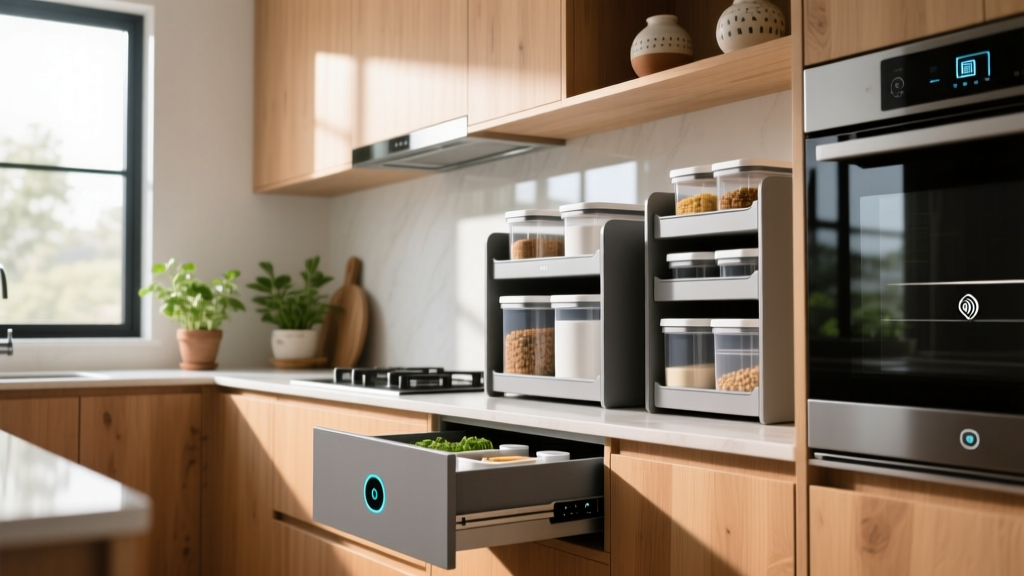
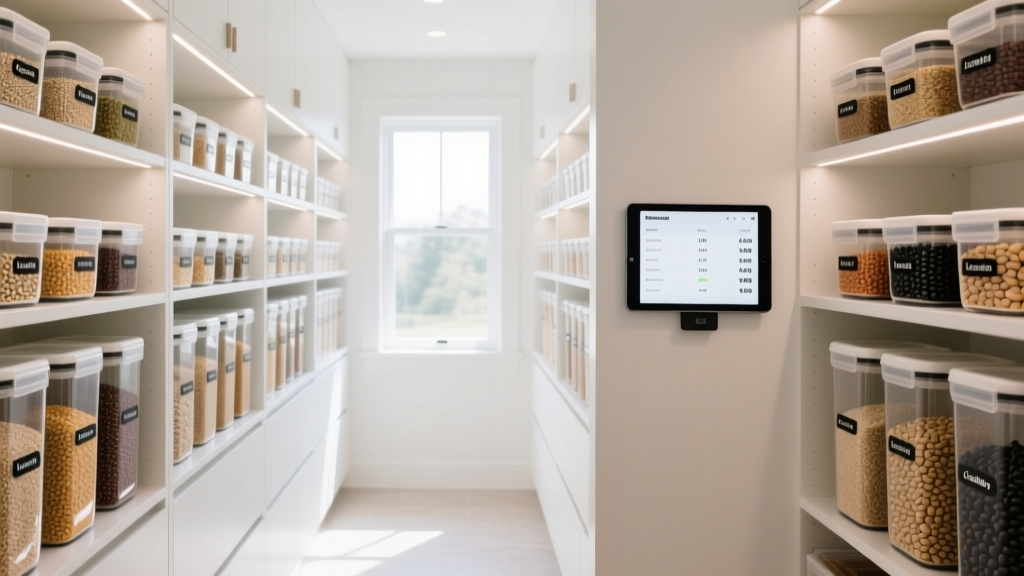
The Science of Kitchen Storage: Beyond Basic Bins
Upgrading your pantry is not just about aesthetics; it is a measurable intervention against food waste and spatial inefficiency. According to data tracked by the USDA FoodKeeper guidelines, improper storage accelerates oxidation and moisture intrusion, cutting the shelf life of dry goods by up to 60%. In 2026, the market for kitchen gadgets tools has shifted toward modular, material-specific engineering and smart inventory integration. This guide breaks down the exact specifications, material thresholds, and spatial requirements you need to select the right storage systems for your kitchen.
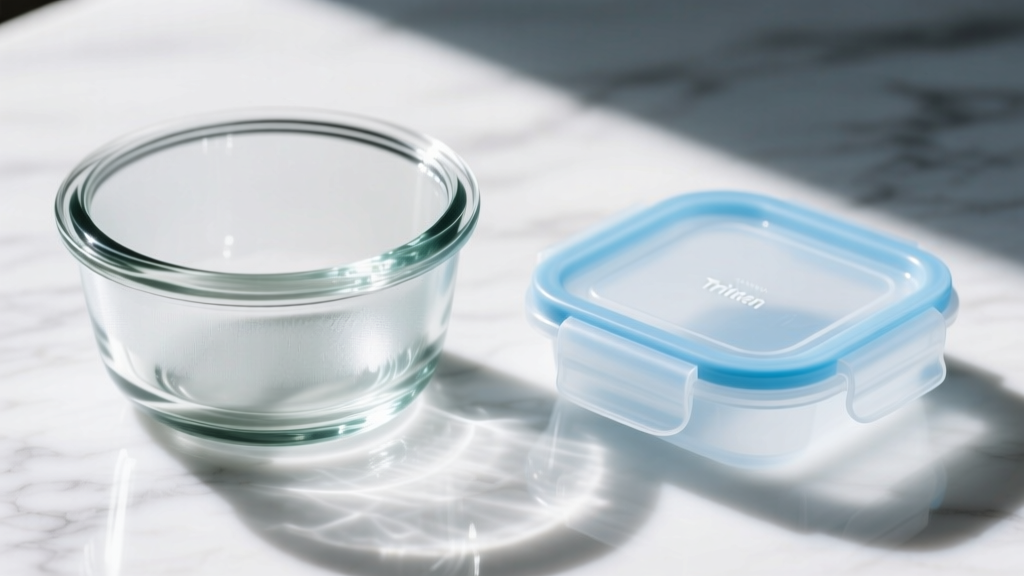
Material Matrix: Borosilicate vs. Tritan vs. 304 Steel
Choosing the wrong material for specific ingredients leads to staining, odor retention, or catastrophic thermal shock. Before buying any container system, consult this material breakdown to match the gadget to the ingredient.
| Material | Thermal Shock Limit | Weight & Durability | Best Use Case | Avg. Price per Qt. |
|---|---|---|---|---|
| Borosilicate Glass | 392°F (200°C) | Heavy, shatter-resistant | Freezer-to-oven meals, acidic sauces | $12 - $18 |
| Tritan Copolyester | 180°F (82°C) | Lightweight, drop-proof | Daily dry goods, cereal, pantry staples | $6 - $10 |
| 304-Grade Steel (18/8) | N/A (Not microwave safe) | Indestructible, opaque | Coffee beans, light-sensitive spices | $15 - $25 |
| SAN Plastic (BPA-Free) | 158°F (70°C) | Light, prone to micro-scratches | Pasta, rice, low-moisture snacks | $5 - $8 |
Note on Plastics: The FDA continues to monitor food-contact materials. When purchasing plastic kitchen gadgets tools, ensure they are certified Tritan or SAN, as detailed in the FDA guidelines on BPA in food contact applications. Avoid polycarbonate (PC) plastics marked with recycling code 7 for heated or acidic foods.
Tier 1: Airtight Container Systems (Dry Goods & Staples)
OXO Good Grips POP Containers (2025/2026 Revision)
The OXO POP line remains the benchmark for modular dry storage, but the recent gasket revisions are what make them a top-tier buy. The new silicone seal pulls up exactly 4mm when the center button is depressed, creating a 0.5 PSI vacuum effect that keeps weevils and moisture out.
- Footprint: The 1.9 Qt container perfectly fits a standard 5 lb bag of all-purpose flour without funneling.
- Modularity: Bases and lids are standardized across three size families, allowing stacking in 1.5-inch increments.
- Drawback: The internal lid mechanism traps fine powders (like powdered sugar) and requires disassembly every 3 months for deep cleaning.
Rubbermaid Brilliance (Tritan Series)
For users who need 360-degree clarity and extreme drop resistance, Rubbermaid Brilliance outperforms glass. Built from Tritan copolyester, these containers survive 6-foot drops onto tile without cracking. The latches feature a built-in vent for microwave steaming, and the 3.2 Qt deep-storage model is the only plastic container we recommend for storing long-strand spaghetti vertically without snapping.
Tier 2: Heavy-Duty Hardware & Cabinet Organizers
Containers only solve half the problem; accessing them in deep, dark cabinets requires specialized hardware. Cheap wire racks sag under the weight of cast iron or small appliances. Here are the heavy-duty kitchen gadgets tools that actually bear the load.
Lynk Professional Slide-Out Drawer Systems
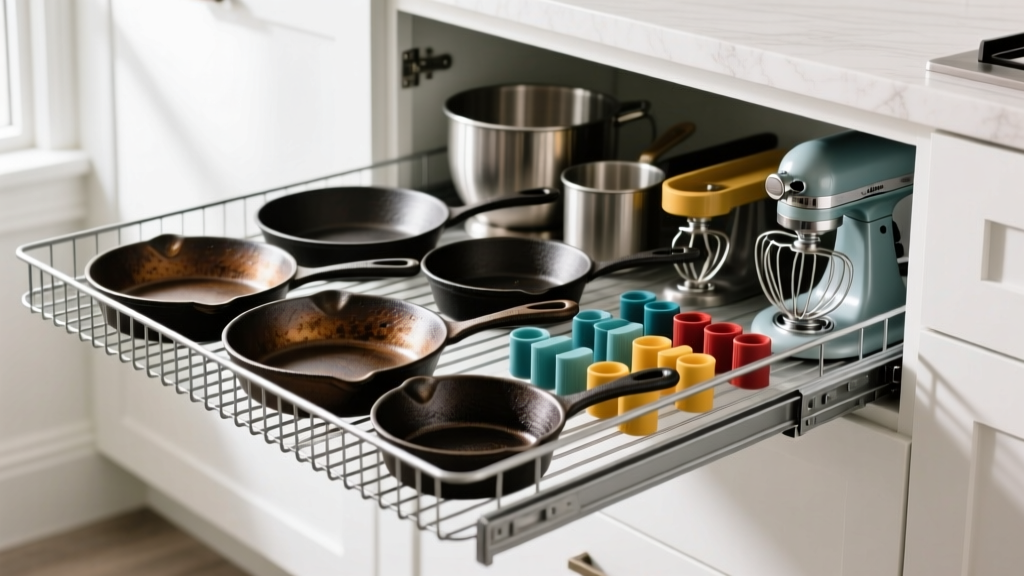
Forget tension-rod pull-outs. Lynk Professional slide-outs are built from 16-gauge steel with zinc-plated finishes and commercial-grade ball-bearing glides.
- Load Capacity: Rated for 100 lbs of dynamic weight. You can load a slide-out with a KitchenAid mixer and three cast-iron skillets without the track binding.
- Installation: Requires exactly 1.5 inches of side clearance and comes with a proprietary alignment template that eliminates measuring errors during mounting.
- Price Point: $65 to $110 depending on width (11" to 22").
YouCopia StoreMore Adjustable Rack
Lids and cutting boards are notorious spatial disruptors. The YouCopia StoreMore uses tension-loaded, spring-steel dividers that adjust in 0.75-inch increments. Unlike fixed-slot wood organizers, this allows you to store a 14-inch pizza stone next to a stack of 6-inch prep bowls securely. It fits standard 10-inch to 14-inch deep base cabinets.
Tier 3: Smart Inventory & NFC Tracking
The 2026 smart kitchen ecosystem relies on passive tracking rather than manual data entry. Instead of expensive smart-fridges with internal cameras, the most effective kitchen gadgets tools for inventory involve NFC (Near Field Communication) tags and Bluetooth integration.
NFC Pantry Tags + Smartphone Integration
By placing waterproof, food-safe NFC stickers (like the GoToTags NTAG215) on the bottom of your OXO or Rubbermaid containers, you can tap your phone to the bin to instantly log expiration dates or trigger a grocery list addition via apps like Pantry Check or Sortly. This costs less than $15 for a 50-pack of tags and eliminates the need for barcode scanning.
Greater Goods Smart Kitchen Scale (Matter-Enabled)
For bakers who track ingredient depletion, the newer Matter-compatible smart scales sync directly with home automation hubs. When you weigh out the last 50 grams of almond flour, the scale can automatically append it to your digital grocery list via IFTTT or Apple HomeKit routines.
The Decanting Decision Framework
Decant (Move to clear bins): Pasta, rice, oats, cereal, baking supplies, and coffee beans. These items are prone to pantry moth infestations and benefit from airtight seals and visual volume tracking.
Do NOT Decant (Keep in original packaging): Items with strict lot-tracking requirements for allergy recalls, heavily spiced pre-mixed rubs that lose volatile oils when exposed to light, and anything you cannot finish within the container's standard volume footprint.
Frequently Asked Questions (FAQ)
How do I remove tomato sauce stains from Tritan plastic containers?
Tomato lycopene binds to plastic polymers when heated. To remove stains, create a paste of baking soda and water, coat the interior, and let it sit in direct UV sunlight for 4 hours. The UV rays break down the lycopene bonds without degrading the Tritan material.
What is the ideal shelf depth for pantry organization?
The optimal shelf depth for standard kitchen gadgets tools and containers is 12 to 14 inches. Anything deeper creates a 'dead zone' where items are pushed to the back and forgotten. If your pantry has 24-inch deep shelves, use sliding wire baskets to bring the back row forward.
Can I store coffee beans in the freezer using airtight containers?
Yes, but only if you use 304-grade stainless steel or thick borosilicate glass with a silicone gasket. Freezing coffee beans preserves volatile aromatics, but taking a plastic container in and out of the freezer causes condensation inside the bin, which ruins the beans. Only freeze coffee you intend to use in a single batch without returning it to the freezer.
Quick Buyer's Checklist
- Verify container materials: Borosilicate for heat, Tritan for drops, Steel for light-blocking.
- Measure cabinet depth before ordering slide-out drawers (require 1.5" clearance).
- Invest in NFC tags for high-turnover dry goods to automate inventory tracking.
- Never store raw alliums in airtight bins at room temperature.
Written by
Ryan TanakaRyan Tanaka holds a B.S. in Mechanical Engineering from Oregon State University and is a certified AWS Solutions Architect. He has built over 80 custom electronics projects ranging from CNC machines to IoT sensor networks, and has reviewed development boards, 3D printers, soldering equipment, and maker tools for the past 6 years. Ryan is an active contributor to 12 open-source hardware projects on GitHub and teaches monthly workshops at three hackerspaces across the Pacific Northwest. His reviews combine engineering rigor with accessibility — he evaluates products not just on specs but on documentation quality, community support, and learning curve for beginners. He has presented at Maker Faire Bay Area, Open Hardware Summit, and the Adafruit community showcase, and maintains a popular blog documenting his build processes.