Shifting to Gadget Kitchen Microwave Tech: Silicone 2026 Trends
Explore 2026 trends in silicone bakeware and non-stick tools, and how to integrate them into smart gadget kitchen microwave ecosystems safely.
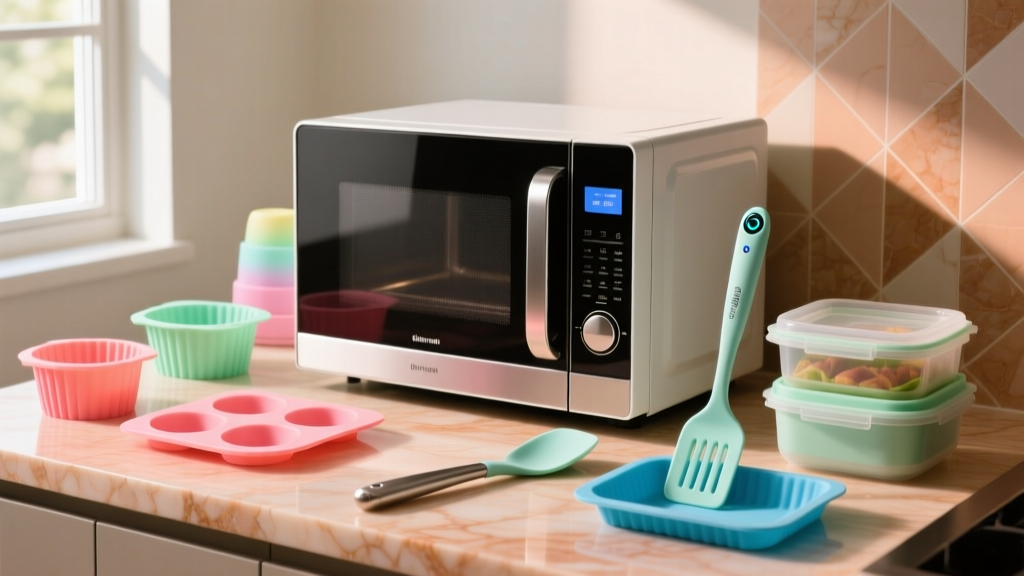
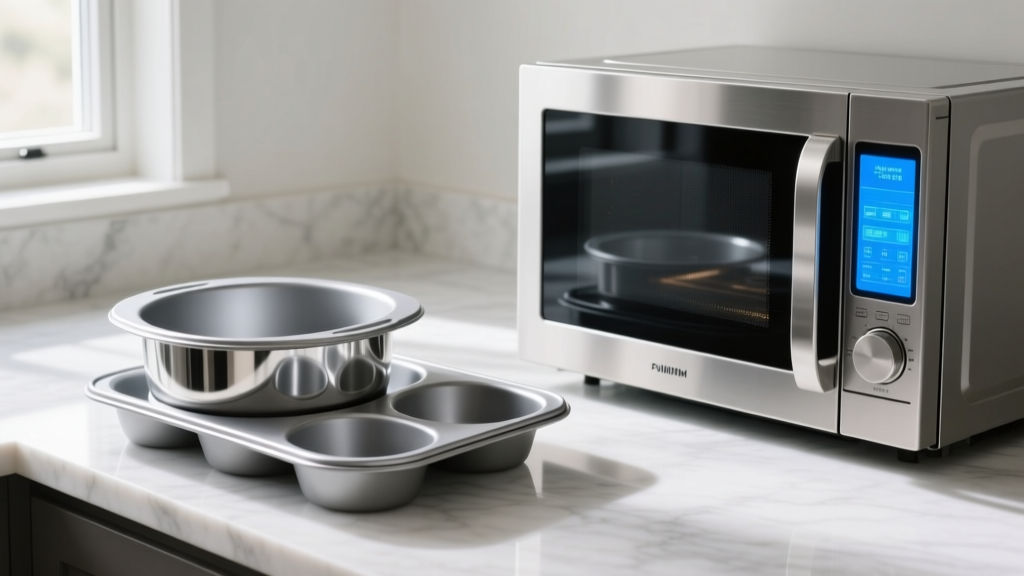
The Material Science Shift: FDA vs. LFGB Silicone Standards
As home cooks transition from traditional ovens to gadget kitchen microwave ecosystems—such as the Panasonic HomeChef 4-in-1 (NN-CS89LB) or the Breville Combi Wave 3D (BMO850BSS)—the materials we use for baking and prep must evolve in tandem. In 2026, the most critical divide in silicone bakeware is no longer just about color or flexibility; it is about the certification standard. While the U.S. Food and Drug Administration (FDA) regulates silicone as a Food Contact Substance, the European LFGB standard has emerged as the benchmark for premium kitchen gadgets.
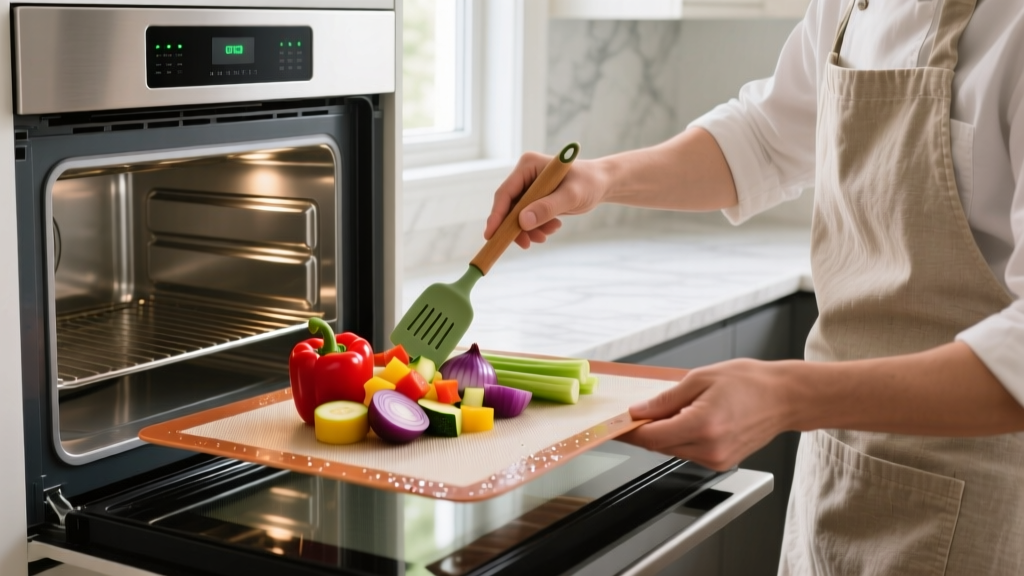
LFGB-certified platinum silicone undergoes rigorous extraction testing using olive oil and 95% ethanol, ensuring no chemical compounds leach into high-fat foods when subjected to the intense, localized heat of smart microwave convection modes. Standard FDA-grade silicone, while safe for general baking, often fails the LFGB olive oil test. For cooks utilizing smart microwaves that push ambient cavity temperatures to 450°F (232°C) during air-fry and convection cycles, investing in LFGB-certified brands like Lékué or high-end Silpat mats (typically priced between $25 and $45) prevents the white, chalky residue and off-gassing associated with cheaper, peroxide-cured alternatives.
Expert Insight: Platinum-cured silicone utilizes a platinum catalyst that leaves zero toxic byproducts, whereas peroxide-cured silicone can leave behind volatile organic compounds (VOCs) that degrade faster under the rapid thermal cycling of smart convection microwaves.
Non-Stick Evolution: Moving Past PTFE in 2026
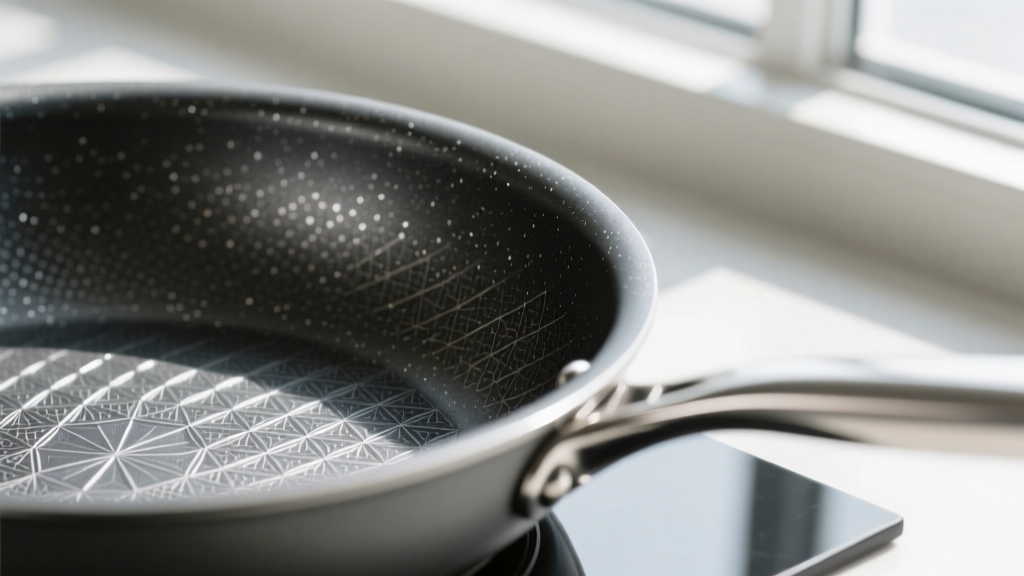
The non-stick landscape has fundamentally shifted. With increasing regulatory scrutiny on per- and polyfluoroalkyl substances (PFAS), as detailed by the Environmental Protection Agency, the kitchen gadget market has aggressively pivoted toward advanced ceramics and graphene-infused coatings. When utilizing non-stick tools inside smart microwave-convection hybrids, traditional PTFE (Teflon) pans are entirely disqualified due to the risk of thermal degradation if the smart sensors miscalculate surface temperatures.
⚠️ Warning: Metal-Infused Non-Stick & Pure Microwave Modes
Many 2026 'smart' non-stick pans feature induction-compatible steel base plates. If your smart microwave is set to pure microwave mode (rather than convection or combo), these metal-infused bases will cause severe arcing and magnetron damage. Always verify your appliance's sensor mode before inserting induction-ready non-stick bakeware.
Graphene-infused ceramic coatings, such as those found in the latest Caraway and GreenPan Thermolon lines ($60 to $120 per piece), offer superior thermal conductivity. This is vital for smart microwaves, which rely on rapid preheating. Graphene's heat-spreading properties eliminate the hot spots that often cause ceramic coatings to micro-fracture and lose their non-stick efficacy within a year.
Integrating Bakeware into Smart Microwave Ecosystems
The transition to advanced smart microwaves requires rethinking how we use flexible bakeware. Smart microwaves utilize a combination of infrared (IR) thermometers, humidity sensors, and precision turntables to cook food. Silicone and non-stick tools interact with these sensors in highly specific ways.
Sensor Interference: The Hidden Edge Case
A common failure mode when using thick silicone bakeware in smart microwaves is sensor blindspots. Smart microwaves like the Breville Combi Wave use an internal IR sensor aimed at the center of the turntable to monitor food surface temperature. High-density, dark-colored silicone mats can absorb and mask the IR signature of the food sitting on top of them, causing the microwave's algorithm to overcook the dish while it attempts to reach the target temperature.
- Turntable Weight Limits: Smart microwave glass trays and turntable motors are calibrated for specific weights. Overloading a flexible silicone mold with heavy batters (exceeding 4 lbs) can stall the turntable motor, disabling the 3D convection airflow.
- Humidity Sensor Traps: Smart steam-cooking modes rely on venting. Using tight-fitting silicone lids traps humidity, confusing the appliance's internal hygrometer and prematurely terminating the cooking cycle.
- Clearance Requirements: Convection microwave heating elements are often located just 1.5 inches from the top rack. Tall silicone molds will scorch at the edges before the center is cooked.
Material Comparison Matrix for Smart Microwaves
| Material Type | Max Heat Tolerance | Smart Microwave Safety | Avg. Price Range (2026) | Estimated Lifespan |
|---|---|---|---|---|
| Peroxide-Cured Silicone (FDA) | 428°F (220°C) | Poor (Degrades in convection) | $8 - $15 | 1 - 2 Years |
| Platinum-Cured Silicone (LFGB) | 480°F (250°C) | Excellent (IR transparent) | $25 - $45 | 5+ Years |
| Traditional PTFE Non-Stick | 500°F (260°C) | Unsafe (Toxic off-gassing risk) | $20 - $40 | 2 - 3 Years |
| Graphene-Ceramic Non-Stick | 600°F (315°C) | Excellent (Rapid heat transfer) | $60 - $120 | 3 - 5 Years |
Future Outlook: What's Next in 2027 and Beyond?
As we look toward the next generation of kitchen gadgets, material science is pushing toward shape-memory polymers (SMPs) and self-cleaning nanostructures. Researchers are currently testing silicone composites that stiffen when exposed to the specific microwave frequencies used in smart defrost cycles, preventing the floppy, unstable nature of traditional silicone when handling heavy, liquid-based foods. Furthermore, advanced non-stick surfaces are being developed with microscopic lotus-leaf structures that repel carbonized oils without the need for chemical coatings, promising a future where scrubbing baked-on cheese from your smart microwave's air-fry tray is entirely obsolete.
For now, optimizing your current setup means prioritizing LFGB-certified platinum silicone and graphene-ceramic tools, ensuring your non-stick gadgets are entirely metal-free for pure microwave modes, and understanding the physical limitations of your appliance's sensor array. By matching the right material science to your smart microwave's specific cooking algorithms, you unlock the true potential of modern, automated cooking.
Written by
Sarah KimSarah Kim holds certifications from both NASM (National Academy of Sports Medicine) and ACE (American Council on Exercise), along with a B.S. in Kinesiology from UCLA. She has spent 7 years bridging the gap between exercise science and consumer technology, evaluating fitness trackers, smart scales, sleep monitors, and recovery devices with clinical precision. Sarah has tested over 200 health-focused wearables in controlled lab settings and real-world training environments, comparing device data against gold-standard medical equipment like ECG monitors and DEXA scans. She consults for three fitness app companies on data accuracy standards and has presented research on wearable reliability at the American College of Sports Medicine (ACSM) annual conference. Her reviews emphasize clinical validity over marketing claims.