Quirky Kitchen Gadgets 2026: Smart Kettles & Water Dispenser Trends
Discover the top quirky kitchen gadgets in 2026, from AI-driven smart kettles to countertop RO water dispensers. Explore trends, specs, and buying advice.
The Redefinition of 'Quirky' in 2026 Water Gadgets
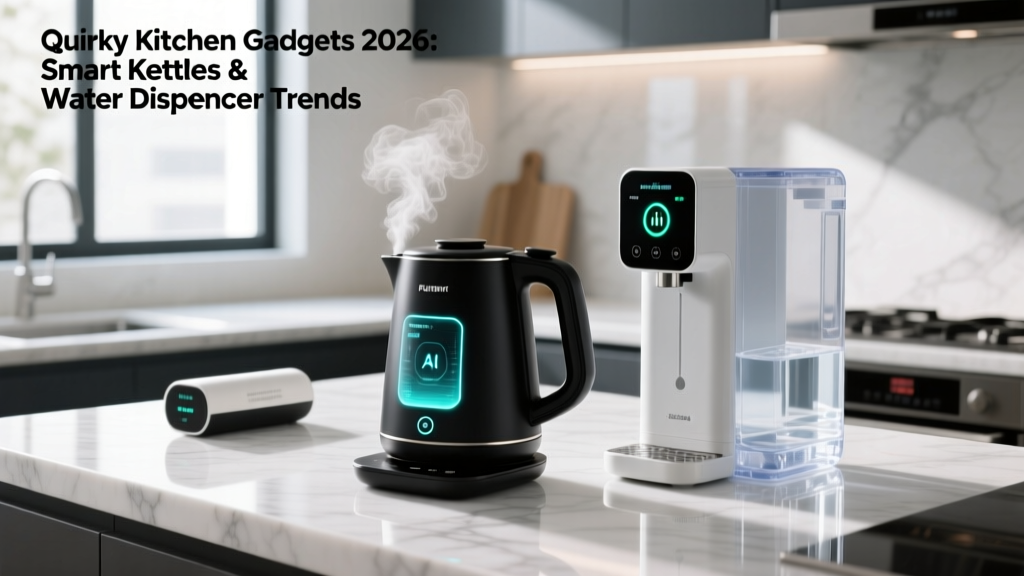
When most people hear the phrase 'quirky kitchen gadgets,' they picture novelty items: banana slicers, egg-shaped timers, or silicone spatulas shaped like dinosaur tails. But in 2026, the definition of quirky in the kitchen appliance sector has radically shifted. Today, the most interesting quirky kitchen gadgets are defined by hyper-specialized engineering wrapped in unexpected, non-traditional aesthetics. Nowhere is this more evident than in the electric kettle and water dispensing category. The humble water boiler has evolved from a basic 1500-watt heating element into a precision instrument capable of 0.1°C temperature profiling, Bluetooth-connected pour-over telemetry, and modular reverse osmosis (RO) filtration that looks more like a spaceship component than a kitchen tool.
This trend report examines how electric kettles and countertop water dispensers are pushing the boundaries of form and function, providing actionable insights for home baristas, tea aficionados, and hydration optimizers looking to upgrade their setups this year.
Hyper-Specific Temperature Profiling: The Fellow Stagg EKG Pro
The pour-over coffee movement has single-handedly driven the most significant innovations in electric kettles over the last decade. According to the Specialty Coffee Association (SCA), precise water temperature is one of the most critical variables in coffee extraction, with optimal brewing ranges strictly defined between 90°C and 96°C (195°F–205°F). However, 2026's top-tier kettles don't just hit a target temperature; they profile it.
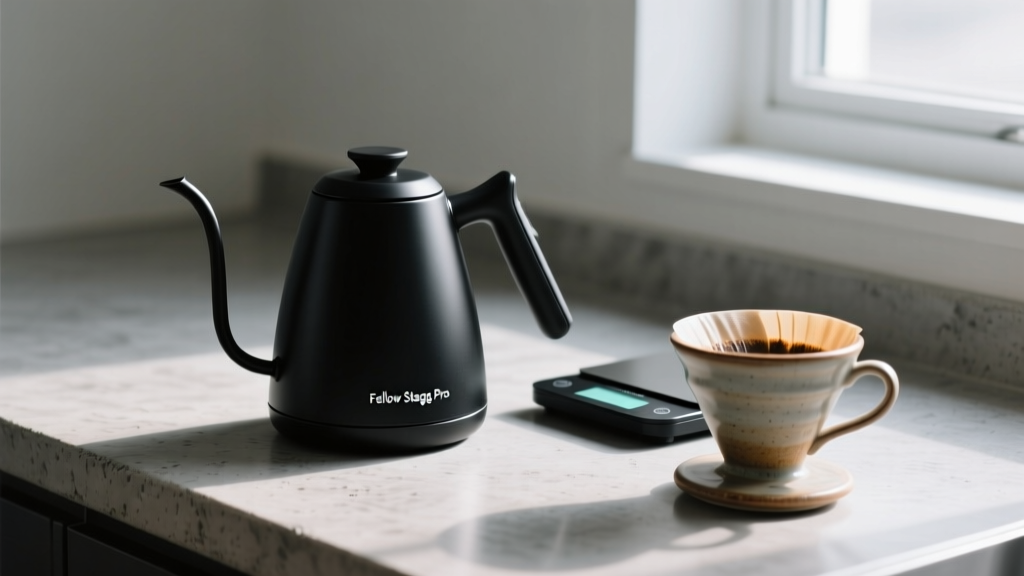
The Fellow Stagg EKG Pro Studio Edition ($225) is the prime example of a high-end, quirky kitchen gadget that prioritizes data over traditional design. Its 'quirk' lies in its hyper-analytical approach to boiling water. Equipped with an advanced PID controller and dual NTC thermistors, the EKG Pro maintains water temperature within a 0.1°C variance. More importantly, its variable flow-rate profiling allows users to adjust the pour speed via the base dial, altering the agitation level of the coffee bed without changing the gooseneck spout geometry.
Expert Insight: The true value of the EKG Pro isn't just holding 93.5°C; it's the 'Hold Mode' algorithm that predicts heat loss during a 3-minute bloom phase and pulses the 1200W heating element at 15% power to prevent micro-boiling, a common failure mode in cheaper PID kettles that scorches delicate light-roast beans.
Aesthetic-Functional Dissonance: Smart Retro Kettles
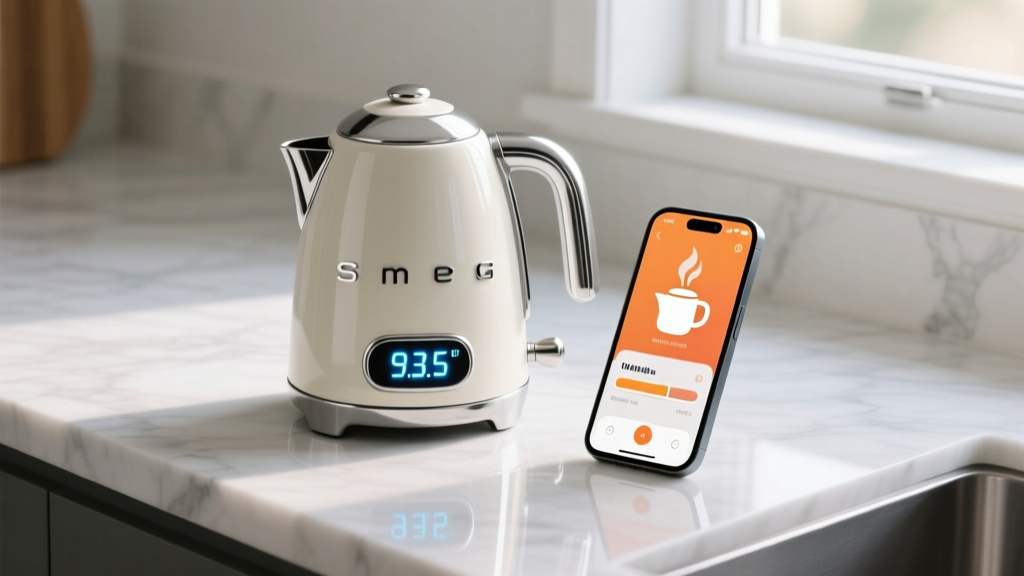
Another major trend in 2026 is aesthetic-functional dissonance—gadgets that look like they belong in a 1950s diner but house 2026 smart-home internals. The Smeg Smart Kettle with App Control ($199) perfectly encapsulates this. While its exterior features the iconic glossy retro chrome and pastel powder-coating, the interior is a marvel of modern IoT integration.
Through its proprietary app, users can schedule 'wake-up boils,' integrate the kettle into broader smart home routines (e.g., triggering the boil when your smart mattress detects you've entered light sleep), and access pre-programmed temperature profiles for over 40 specific tea varietals. The quirkiness here is the juxtaposition of mid-century analog styling with aggressive digital automation.
Countertop RO Dispensers: The Waterdrop K19 Phenomenon
Moving beyond kettles, the water dispensing market has been disrupted by countertop Reverse Osmosis (RO) systems. Historically, RO systems required under-sink installation, drilling into countertops, and complex plumbing. In 2026, quirky kitchen gadgets include plug-and-play countertop RO dispensers that look like high-end espresso machines.
The Waterdrop K19 Countertop RO Dispenser ($399) is a standout. It utilizes a 75-gallon-per-day RO membrane with a pore size of 0.0001 microns, effectively removing 99.9% of dissolved solids, heavy metals, and PFAS ('forever chemicals'). Its quirky, space-saving form factor houses a 4-stage filtration system, an instant heating module capable of delivering boiling water in 3 seconds, and a built-in UV sterilization loop that fires every 2 hours to prevent bacterial growth in the internal tank.
While countertop RO dispensers are revolutionary, they have a specific failure mode. If your municipal water source has a Total Dissolved Solids (TDS) reading above 400 ppm, the 0.0001-micron membrane will foul and scale with calcium carbonate within 3 to 4 months, drastically reducing flow rates and ruining the $45 replacement filter. Always test your source water with a $12 TDS meter before purchasing a countertop RO unit. For hard water areas, a traditional under-sink system with a dedicated water softener pre-filter remains the only viable option.
Furthermore, modern countertop RO units have vastly improved their water efficiency. According to the EPA WaterSense program, older RO systems wasted up to 3 gallons of water for every 1 gallon produced. The 2026 generation of smart countertop dispensers utilizes internal recirculation pumps to achieve a near 1:1 drain-to-pure water ratio, making them viable even in drought-prone regions.
2026 Market Matrix: Quirky Kitchen Gadgets in the Water Category
To help you navigate this hyper-niche market, we've compiled a comparison matrix of the most notable electric kettles and water dispensers defining the quirky gadget trend this year.
| Product | Category | Price (2026) | The 'Quirk' Factor | Best For |
|---|---|---|---|---|
| Fellow Stagg EKG Pro | Pour-Over Kettle | $225 | Variable flow-rate dial & Bluetooth brew logging | Specialty coffee nerds |
| Smeg Smart Kettle | Smart Kettle | $199 | 1950s retro shell with IoT sleep-cycle integration | Design-conscious smart homes |
| Waterdrop K19 | RO Dispenser | $399 | Espresso-machine aesthetic with 0.0001-micron RO | Renters needing pure water |
| Balmuda The Pot | Tea Kettle | $329 | Haptic feedback handle & acoustic boiling chimes | Japanese tea ceremony purists |
Decision Framework: Do You Need a Hyper-Niche Water Gadget?
Spending $200 to $400 on a water-heating device requires justification beyond mere aesthetics. Use this practical decision framework to determine if a quirky 2026 water gadget belongs on your counter:
- If you brew light-roast single-origin coffees (e.g., Ethiopian Yirgacheffe): You absolutely need a variable-temperature gooseneck kettle like the Fellow Stagg. The ability to hold exactly 93.0°C and execute a slow, 40-second concentric pour is mathematically required to prevent the under-extraction of dense, lightly roasted beans.
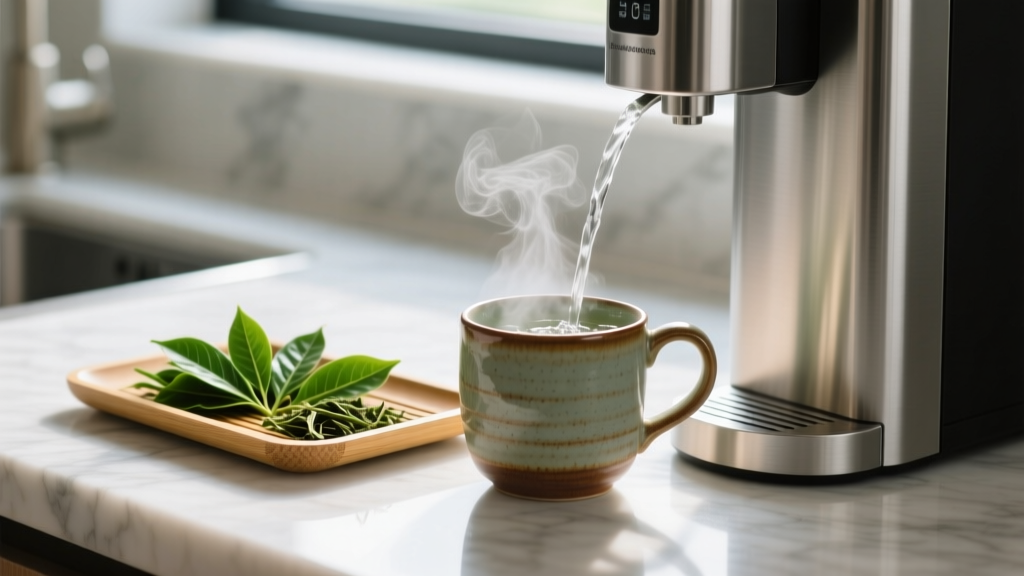
- If you drink delicate Japanese green teas (e.g., Gyokuro): Look for kettles with rapid-cool functionality or dedicated low-temp holds (60°C–70°C). The Balmuda The Pot excels here, as its specialized spout and haptic handle prevent the aggressive splashing that bruises delicate tea leaves and releases bitter tannins.
- If you live in an apartment with unfiltered, high-chlorine municipal water: Skip the kettle and invest in a countertop RO dispenser like the Waterdrop K19. Boiling water does not remove heavy metals, microplastics, or dissolved salts; it only concentrates them. An RO membrane is the only reliable point-of-use solution for renters who cannot install under-sink plumbing.
Future Outlook: Haptic Feedback and AI Hydration Tracking
Looking toward late 2026 and 2027, the next frontier for quirky kitchen gadgets in the water category involves sensory feedback and biometric integration. Prototypes currently in beta testing feature kettles with haptic feedback handles that vibrate gently when the water reaches the exact thermal mass required for a specific tea leaf, eliminating the need to stare at an LCD screen.
Furthermore, smart water dispensers are beginning to integrate weight sensors into their drip trays, syncing with wearable health trackers to monitor your daily hydration volume in real-time. If you fall behind your personalized hydration algorithm, the dispenser's ambient LED ring shifts from cool blue to an urgent amber, subtly nudging you to drink. What started as a simple mechanism to boil water has officially transformed into a hyper-connected, data-driven wellness hub, proving that the most useful quirky kitchen gadgets are those that fundamentally change how we interact with our most basic daily habits.
Written by
Sarah KimSarah Kim holds certifications from both NASM (National Academy of Sports Medicine) and ACE (American Council on Exercise), along with a B.S. in Kinesiology from UCLA. She has spent 7 years bridging the gap between exercise science and consumer technology, evaluating fitness trackers, smart scales, sleep monitors, and recovery devices with clinical precision. Sarah has tested over 200 health-focused wearables in controlled lab settings and real-world training environments, comparing device data against gold-standard medical equipment like ECG monitors and DEXA scans. She consults for three fitness app companies on data accuracy standards and has presented research on wearable reliability at the American College of Sports Medicine (ACSM) annual conference. Her reviews emphasize clinical validity over marketing claims.