Top Sustainable Brand of Kitchen Gadgets for Spice Racks & Grinders
Discover the most sustainable brand of kitchen gadgets for spice racks and grinders. Compare eco-friendly materials, FSC woods, and ceramic burrs.
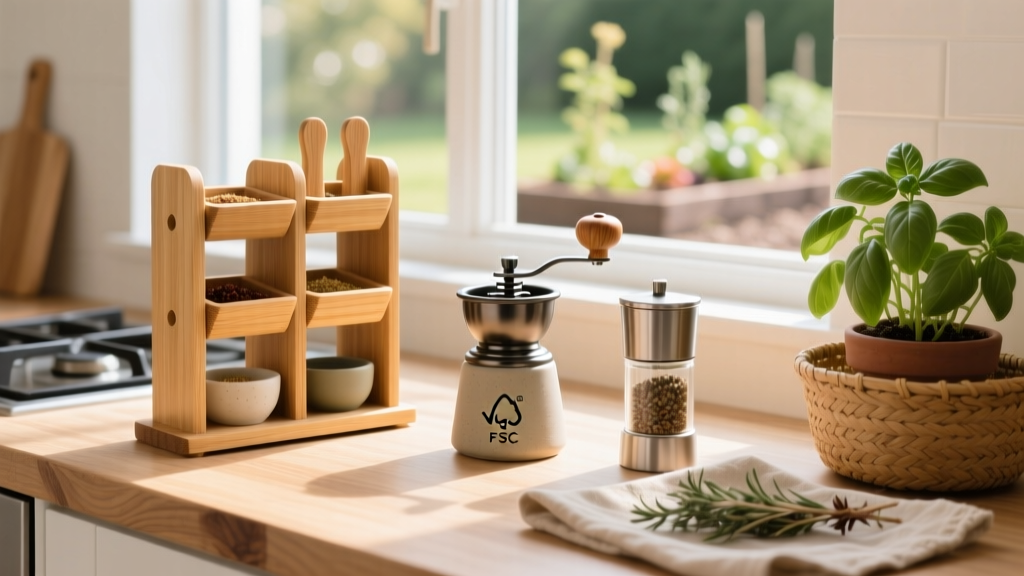
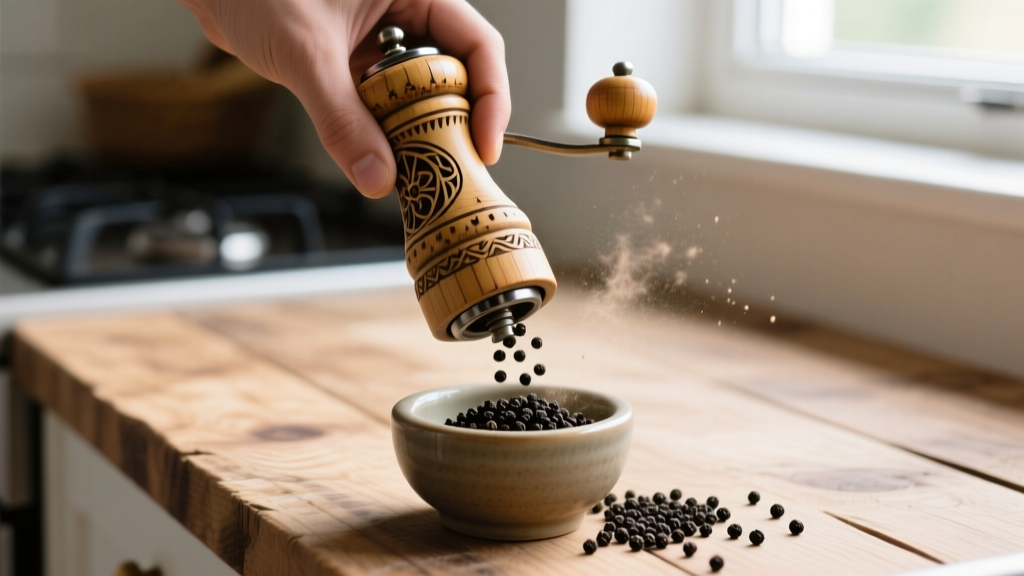
The modern spice drawer is often a graveyard of virgin plastics, micro-scratched acrylics, and unrecyclable mixed-material grinders. When evaluating a brand of kitchen gadgets through an environmental lens, seasoning tools present a unique challenge: they require food-safe durability, precise mechanical tolerances for grinding, and resistance to volatile essential oils found in spices like clove and star anise. As of 2026, the shift away from single-use plastics and non-repairable mechanisms has forced manufacturers to rethink how we store and process seasonings.
This guide dissects the material science, mechanical longevity, and lifecycle sustainability of the best eco-friendly spice grinders and racks available today. We will identify what separates a genuinely sustainable brand of kitchen gadgets from one that merely relies on greenwashing.
The Hidden Carbon Footprint of Your Spice Drawer
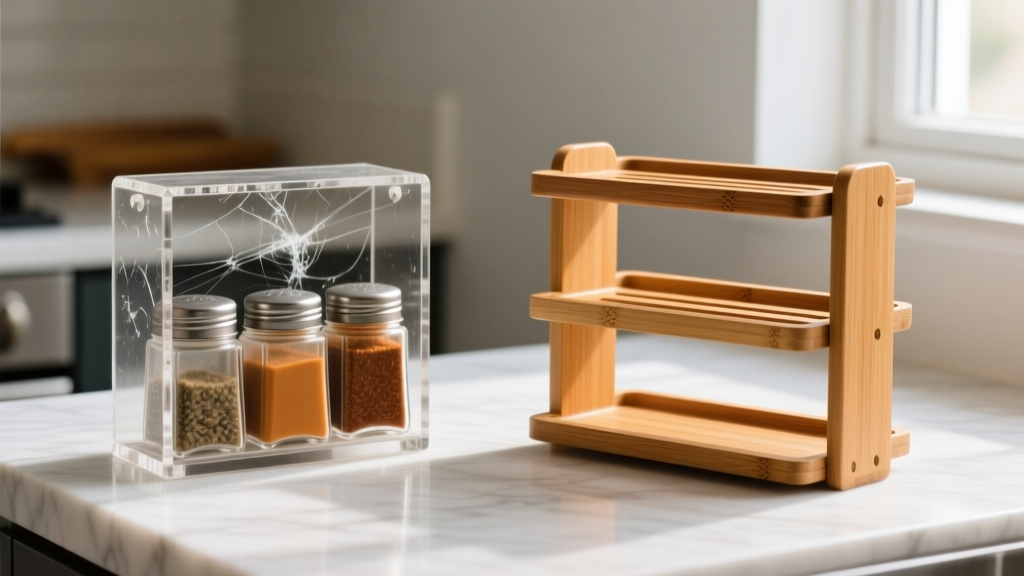
Most commercial spice grinders utilize a polycarbonate or acrylic housing paired with a metal or ceramic burr. While functional, these materials degrade. Acrylic develops micro-fissures that harbor bacterial growth and shed microplastics directly into your food. Furthermore, the mixed-material nature of a standard grinder (metal spring, plastic housing, ceramic burr, metal cap) makes them virtually impossible to recycle at municipal facilities.
According to EPA plastic waste data, the recycling rate for plastics in the United States hovers around a dismal 5% to 6%. Kitchen gadgets, categorized under mixed durable goods, frequently end up in landfills because the cost of separating the metal grinding mechanisms from the plastic housing exceeds the value of the reclaimed materials.
Material Science: What Makes a Spice Gadget Truly Sustainable?
To determine the environmental impact of a spice rack or grinder, we must analyze the materials across three metrics: sourcing, food-safety degradation, and end-of-life recyclability. Below is a comparison matrix of common materials used by top-tier eco-conscious brands.
| Material | Sourcing Impact | Durability & Food Safety | End-of-Life |
|---|---|---|---|
| FSC-Certified Beechwood | Low (Regenerative forestry) | High, but requires oiling to prevent warping from humidity. | Compostable (if untreated with synthetic varnishes). |
| Recycled PET (rPET) | Medium (Diverts landfill waste) | Excellent. Resists clove oil degradation better than virgin acrylic. | Recyclable in specialized streams. |
| 304-Grade Stainless Steel | High initial mining impact | Indestructible. Zero microplastic shedding. | 100% infinitely recyclable. |
| Borosilicate Glass | Medium (High heat required) | Inert. Will not absorb volatile spice oils or stain from turmeric. | Recyclable, though heavy transport adds to footprint. |
Evaluating the Top Eco-Conscious Brands for Seasoning Tools
When searching for a reliable, sustainable brand of kitchen gadgets, three companies currently lead the market in lifecycle transparency and material innovation for spice management.
1. FinaMill: The rPET Pioneer
FinaMill disrupted the grinder market by introducing a modular, pod-based system. The FinaMill Pro (retailing around $14.99) utilizes a housing made from 100% post-consumer recycled plastic. The brilliance lies in the separation of materials: the grinding mechanism is a self-contained ceramic pod. When the burr eventually dulls (typically after 5 to 7 years of daily use), you replace only the $3.99 ceramic pod rather than throwing away the entire plastic housing. This modularity reduces plastic waste by roughly 80% compared to traditional disposable grinders.
2. Cole & Mason: FSC-Certified Heritage
For those who prefer natural materials, Cole & Mason’s Gourmet Precision line features housings crafted from Forest Stewardship Council (FSC) certified beechwood and acrylic alternatives. According to FSC certification standards, this ensures the wood is harvested from responsibly managed forests that provide environmental, social, and economic benefits. Priced at approximately $32.50, their grinders use a carbon steel mechanism for pepper (which cuts rather than crushes, preserving volatile oils) and a diamond-sharpened ceramic mechanism for salt. The wood is finished with food-safe, plant-based oils rather than petroleum-based polyurethanes.
3. Bambu Home: Zero-Waste Spice Organization
Spice racks are notoriously wasteful, often made from cheap, formaldehyde-laden MDF or brittle plastics. Bambu Home manufactures the 3-Tier Countertop Rack ($45.00) using certified organic bamboo. Bamboo is a grass that regenerates from its own roots without replanting, requiring no pesticides and minimal water. Crucially, Bambu Home uses water-based, formaldehyde-free adhesives to bind the bamboo layers, ensuring no off-gassing occurs near your food. The rack is dimensioned specifically to hold standard 2.5-inch diameter spice jars, with a 12-inch width that fits perfectly under standard 18-inch upper kitchen cabinets.
Decision Framework: Matching Grinder Mechanisms to Spice Types
Sustainability also means buying a tool that actually works for your specific needs, preventing the 'buy-it-twice' cycle. Different spices possess different hardness levels (measured roughly on the Mohs scale) and oil contents. Using the wrong burr material leads to premature wear, clogging, and eventual disposal of the gadget.
| Spice Category | Examples | Required Burr Material | Why? |
|---|---|---|---|
| Hard & Dry | Black Peppercorns, Coriander | Carbon Steel or High-Grade Ceramic | Steel cuts the hard shell; ceramic crushes it. Both resist shattering. |
| Soft & Moist | Sea Salt, Himalayan Pink Salt | Ceramic Only | Salt causes rapid oxidation and rust in carbon steel mechanisms. |
| High Oil / Sticky | Cloves, Nutmeg, Star Anise | Stainless Steel (304-Grade) | Essential oils degrade plastics and gum up ceramic pores. Steel is easily wiped clean. |
| Flaky / Leafy | Dried Rosemary, Oregano | Manual Mortar or Flaker Mill | Standard burr grinders will clog instantly. Flaker mills use flat rollers to crush leaves. |

DIY & Upcycled Spice Rack Solutions
If you want to bypass commercial manufacturing entirely, building a magnetic spice wall is one of the most sustainable organization methods available. It utilizes vertical space, keeps spices away from heat sources (like the stove), and uses upcycled materials.
- Source the Containers: Save uniform glass jars (e.g., 4oz baby food jars or upcycled caper jars). Glass is infinitely recyclable and inert.
- The Magnetic Mechanism: Purchase N42-grade neodymium magnets (1/2 inch diameter, 1/8 inch thick). These provide roughly 12 lbs of pull force—more than enough to hold a 6oz jar of spices securely.
- Adhesive Selection: Avoid superglue, which becomes brittle and fails under the weight of glass. Use a two-part marine epoxy to bond the magnet to the metal lid of the jar. Allow 24 hours to cure.
- The Mounting Surface: Reclaim a piece of untreated hardwood or use an upcycled stainless steel backsplash panel. If using wood, mount a thin galvanized steel sheet behind it, or simply screw the jars directly into a steel magnetic knife strip mounted to the wall.
Frequently Asked Questions
Are bamboo spice racks actually eco-friendly if they are shipped from overseas?
Yes, but with caveats. While the maritime shipping footprint is real, bamboo’s rapid carbon sequestration rate (absorbing up to 4 times more CO2 than equivalent tree stands) and its ability to regenerate without replanting or chemical fertilizers generally offset the transport emissions. The critical factor is ensuring the brand uses formaldehyde-free adhesives, as off-gassing in a kitchen environment negates the health benefits of a natural material.
How do I clean a ceramic spice grinder burr without using harsh chemicals?
Never submerge a grinder mechanism in water. To clean oil buildup from grinding cloves or cumin, grind a tablespoon of coarse, dry white rice or coarse kosher salt through the mechanism. The hard, dry grains will absorb the residual essential oils and scrape away spice dust from the ceramic pores. Discard the rice/salt and wipe the exterior with a damp cloth.
What is the most sustainable way to dispose of an old plastic spice grinder?
Disassemble it completely. Remove the metal spring, the metal cap, and the ceramic or metal burr. The metal components can be placed in your standard recycling bin or taken to a scrap metal facility. The plastic housing, usually made of mixed polycarbonates, is rarely accepted in curbside bins. Check if your local municipality has a 'hard plastics' drop-off, or mail it to specialized recycling programs like TerraCycle’s Zero Waste Kitchen Boxes.
Written by
Sarah KimSarah Kim holds certifications from both NASM (National Academy of Sports Medicine) and ACE (American Council on Exercise), along with a B.S. in Kinesiology from UCLA. She has spent 7 years bridging the gap between exercise science and consumer technology, evaluating fitness trackers, smart scales, sleep monitors, and recovery devices with clinical precision. Sarah has tested over 200 health-focused wearables in controlled lab settings and real-world training environments, comparing device data against gold-standard medical equipment like ECG monitors and DEXA scans. She consults for three fitness app companies on data accuracy standards and has presented research on wearable reliability at the American College of Sports Medicine (ACSM) annual conference. Her reviews emphasize clinical validity over marketing claims.