12 Cool Gadgets for Travelling in 2026: The Ultimate Buyer's Guide
Discover the best cool gadgets for travelling in 2026. Our buyer's guide reviews power banks, smart trackers, and in-flight tech that solve real problems.
The Shift from Gimmicks to Utility in Travel Tech
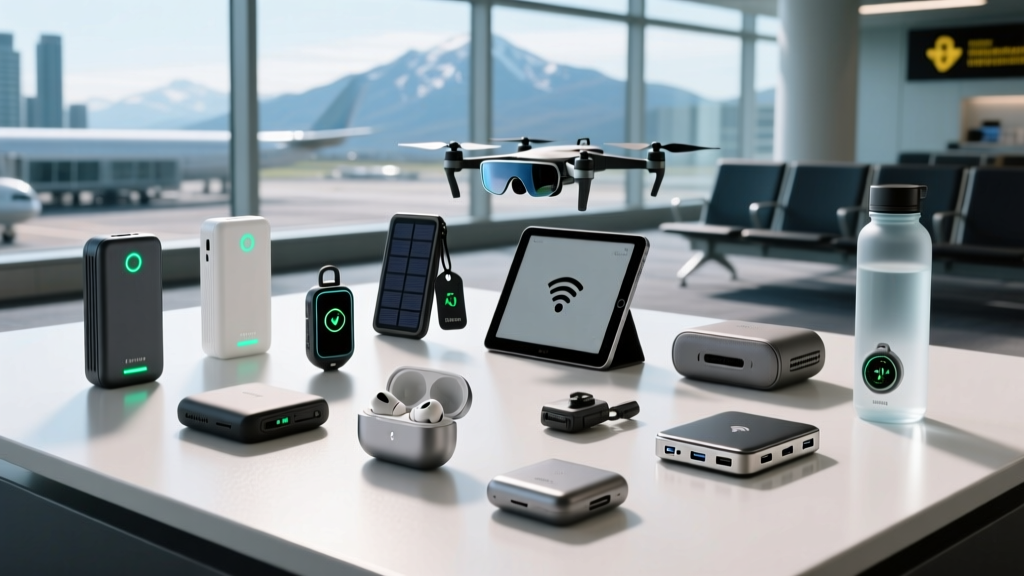
The market for cool gadgets for travelling is heavily saturated with novelty items that fail after a single trip. In 2026, the most valuable travel technology is defined by high-ROI problem solving: minimizing dead batteries, preventing lost luggage, and bypassing restrictive in-flight entertainment systems. This comprehensive buyer's guide strips away the gimmicks and focuses exclusively on gear with proven technical specifications, durable build quality, and strict airline compliance.
Whether you are optimizing a carry-on for a 14-hour long-haul flight or preparing for an off-grid road trip, the following categories represent the current pinnacle of travel engineering.
Power & Connectivity: Navigating Airline Watt-Hour Limits
The single most critical constraint for travel electronics is the TSA and FAA regulation on lithium-ion batteries. Spare batteries and power banks must remain in carry-on luggage and are generally capped at 100 Watt-hours (Wh) without special airline approval. To maximize capacity within this legal limit, you need high-density cells paired with Gallium Nitride (GaN) charging architecture.
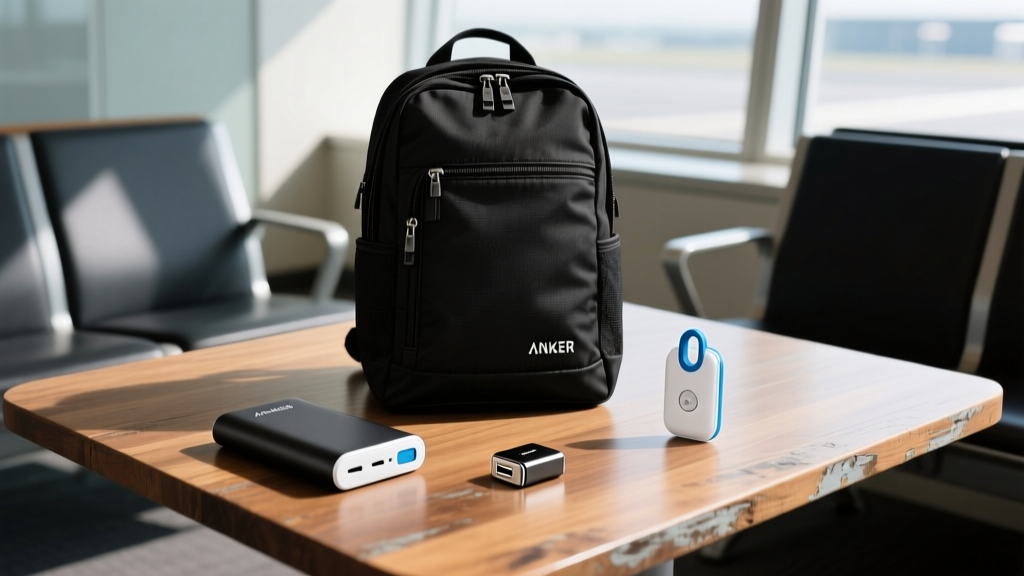
Top Pick: Anker Prime 27,650mAh (250W) Power Bank
Priced at $179, the Anker Prime 27,650mAh translates to roughly 99.5Wh, placing it perfectly under the 100Wh international aviation threshold. It features a smart digital display that outputs real-time metrics for voltage, amperage, and battery health. Unlike older silicon-based chargers, its GaN II topology allows it to output 140W via a single USB-C port—enough to fast-charge a 16-inch MacBook Pro from 0 to 50% in roughly 35 minutes. The primary failure mode for high-capacity power banks is thermal throttling; the Prime mitigates this with an internal graphite cooling pad, maintaining peak output even in warm cabin environments.
Luggage Loss Prevention: Ultra-Wideband (UWB) Trackers
Relying on standard Bluetooth for luggage tracking is obsolete. The current standard requires Ultra-Wideband (UWB) technology, which uses short-duration radio pulses across a wide spectrum to provide spatial awareness and precision finding down to the centimeter.
Apple AirTag vs. Samsung SmartTag2
- Apple AirTag ($29): Leverages the billion-device Find My network. Its UWB chip enables 'Precision Finding,' directing you with haptic feedback and AR overlays to your exact bag on a crowded carousel. Powered by a user-replaceable CR2032 coin cell lasting roughly 12 months. The main drawback is the lack of a built-in lanyard hole, requiring a third-party silicone or leather housing.
- Samsung SmartTag2 ($29.99): Designed for the Galaxy ecosystem. It features an integrated metal ring for direct attachment to zipper pulls without extra accessories. It uses a replaceable CR2032 battery but boasts a superior IP67 water and dust resistance rating compared to the AirTag's IP67 (Samsung's sealing around the battery door is notably more robust for rugged outdoor travel).
💡 Pro-Tip: The Faraday Bag Contingency
If you are traveling through regions with high rates of electronic theft or RFID skimming, store your passport and backup credit cards in a Silent Pocket RFID-blocking sleeve. However, never place your UWB trackers inside these bags, as the metallic mesh will completely sever the Bluetooth and UWB signals, rendering the tracker useless if your bag is diverted.
In-Flight Audio Hacking: Bypassing the 3.5mm Jack
Despite the industry-wide adoption of Bluetooth, 90% of commercial seatback entertainment systems still rely on wired 3.5mm audio jacks. Using standard wired earbuds on a plane restricts movement and tangles easily.
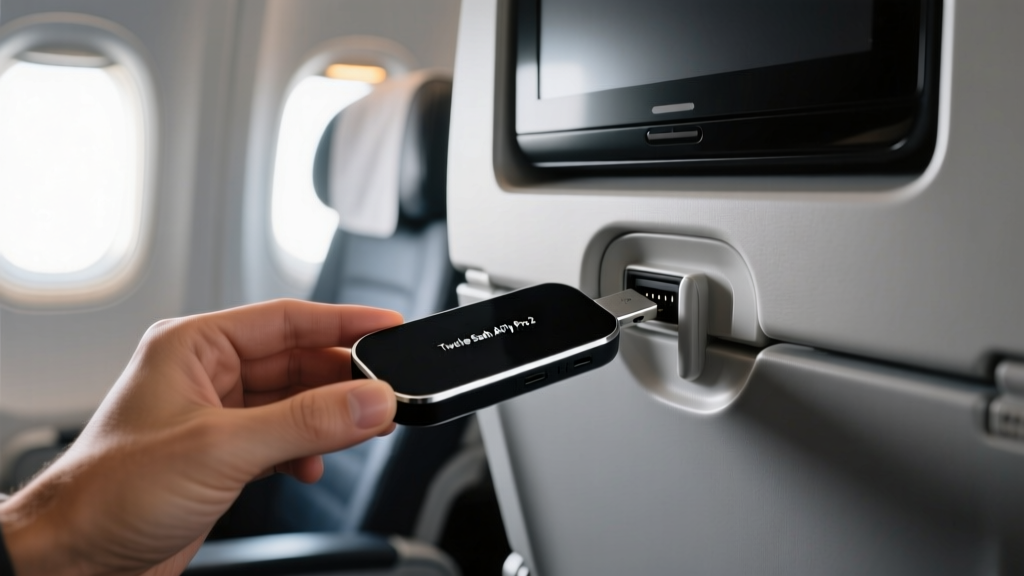
The Solution: Twelve South AirFly Pro 2
Retailing for $54.99, the AirFly Pro 2 is a Bluetooth transmitter that plugs directly into the airplane's audio jack. It supports the aptX Low Latency codec, which eliminates the audio-visual sync delay (lip-sync error) that plagues cheaper generic transmitters. It can simultaneously pair with two sets of Bluetooth headphones, making it an essential gadget for couples watching movies on a shared screen. Battery life is rated at 20+ hours, easily covering the longest commercial flights, such as the Singapore to New York (JFK) route which clocks in at nearly 19 hours.
Ergonomics and Sleep Engineering
Standard U-shaped memory foam pillows fail because they do not address cervical lateral flexion—the primary cause of neck strain when sleeping upright in economy seats.
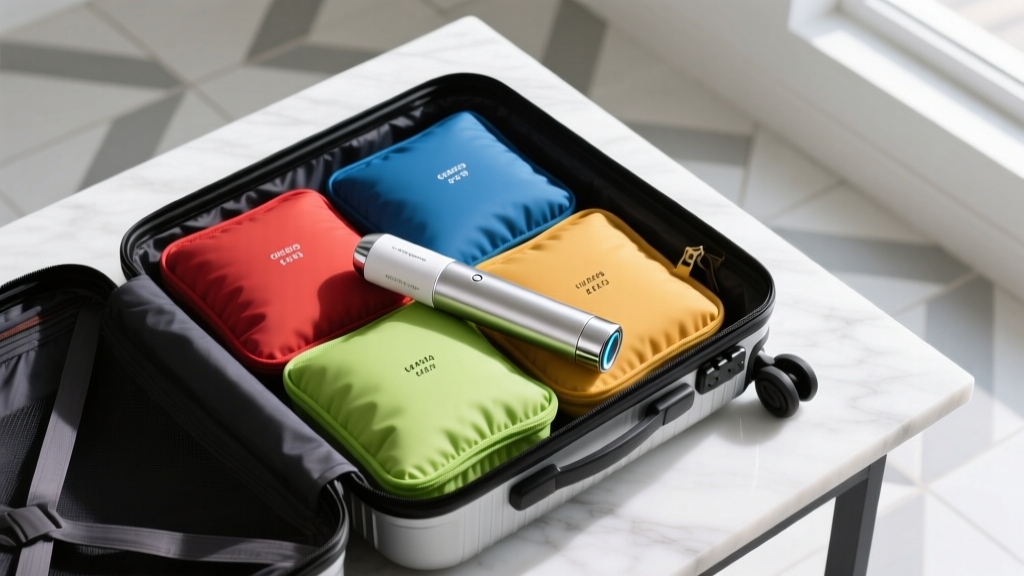
Cabeau Evolution Earth Pillow ($39.99)
Instead of relying solely on foam bulk, the Cabeau Evolution Earth utilizes a proprietary seat-strap tension system. The adjustable straps anchor the pillow to the wings of your airplane seat, physically preventing your head from falling forward or to the side. The core is constructed from recycled polyurethane foam with a density of 40kg/m³, providing firm support without the excessive bulk that prevents it from fitting into a standard personal item bag. It compresses to half its size using the included travel case.
2026 Travel Power Matrix: High-Capacity Carry-On Compliant Banks
When evaluating top-tier portable chargers, weight-to-capacity ratio and multi-device power distribution are the key metrics. Below is a comparison of the top three 100Wh-compliant power banks for heavy tech users.
| Model | Capacity / Wh | Max Output | Weight | Price |
|---|---|---|---|---|
| Anker Prime 27,650mAh | 99.5Wh | 250W (Total) | 603g | $179 |
| Sharge Storm 2 | 90Wh | 100W (Single) | 510g | $259 |
| Baseus Blade 100W | 74Wh | 100W (Single) | 480g | $65 |
The FAA strictly limits spare lithium-ion batteries to 100 Watt-hours (Wh) per battery in carry-on luggage without airline approval. Never pack power banks in checked baggage, as thermal runaway in the cargo hold cannot be extinguished by standard halon fire suppression systems.
Decision Framework: Matching Gadgets to Travel Styles
Do not buy gear you will not use. Use this matrix to prioritize your purchases based on your specific travel profile:
- The Digital Nomad: Prioritize the Anker Prime 27,650mAh and a 100W GaN wall charger (like the Ugreen Nexode 100W). Your bottleneck is laptop uptime in transit cafes.
- The Frequent Flyer: Invest in the Twelve South AirFly Pro 2 and the Cabeau Evolution Earth Pillow. Your bottleneck is sleep quality and entertainment on long-haul red-eyes.
- The Adventure/Off-Grid Traveler: Focus on the Samsung SmartTag2 (for rugged gear tracking) and a portable UV-C water purifier like the LARQ Bottle PureVis. Your bottleneck is environmental unpredictability.
Frequently Asked Questions (Technical Specifications)
Can I bring a 20,000mAh power bank on a plane?
Yes, in almost all cases. To calculate Watt-hours (Wh), multiply the battery's voltage (typically 3.7V for lithium-ion cells) by its Ampere-hours (Ah). A 20,000mAh (20Ah) battery at 3.7V equals 74Wh. This is well below the 100Wh limit enforced by the TSA and international aviation authorities.
Do universal travel adapters convert voltage?
No. Standard universal adapters (like the popular Epicka or Zendure models) only adapt the physical plug shape (e.g., US Type A to EU Type C). They do not step down or step up voltage. Plugging a 110V-only appliance (like some hair dryers) into a 220V European outlet using only a shape adapter will destroy the appliance and pose a severe fire hazard. Always check the device's power brick for an 'Input: 100-240V' rating before traveling.
Why do my Bluetooth headphones lag when watching movies on a plane?
Standard Bluetooth codecs (like SBC or standard AAC) introduce a latency of 150 to 300 milliseconds. When watching a video, this results in noticeable lip-sync delay. You must use a transmitter and headphones that both support the aptX Low Latency (aptX LL) or aptX Adaptive codec, which reduces latency to under 40 milliseconds, making it imperceptible to the human brain.
Written by
Tom ReynoldsTom Reynolds holds a CFA (Chartered Financial Analyst) designation and a B.S. in Finance from the University of Texas at Austin. Before entering tech journalism, he spent 6 years as a quantitative analyst at a hedge fund, building cost-benefit models for consumer product investments. Tom has maintained a proprietary database of over 10,000 tech deals for the past 8 years, developing his signature "penny-per-feature" evaluation framework that calculates the true value proposition of every gadget. His budget gadget reviews are known for their financial rigor — he tracks price history across 15+ retailers, calculates cost-per-use over 3-year lifespans, and identifies the exact inflection point where premium features justify their markup. Tom's deal alerts have saved his readers an estimated .3 million since 2018.