Best Anime Gadgets for Transforming Cosplay Props (2026)
Discover the best anime gadgets for transforming cosplay props in 2026. Compare servos, NeoPixels, and henshin belts for mecha builds.
The Engineering Behind Anime Transformation Tech
Building functional, moving props requires moving beyond static EVA foam and 3D-printed resin. When sourcing anime gadgets for transforming cosplay rigs, builders must balance mechanical torque, power consumption, and programmable lighting sequences. In 2026, the standard for high-end mecha and magical girl props relies on serial bus servos, addressable LED matrices, and compact microcontrollers capable of syncing audio with motorized articulation. This guide breaks down the exact hardware specifications, pricing tiers, and architectural frameworks needed to engineer reliable transforming anime gadgets.
Articulated Armor: Serial Bus Servos vs. Standard PWM
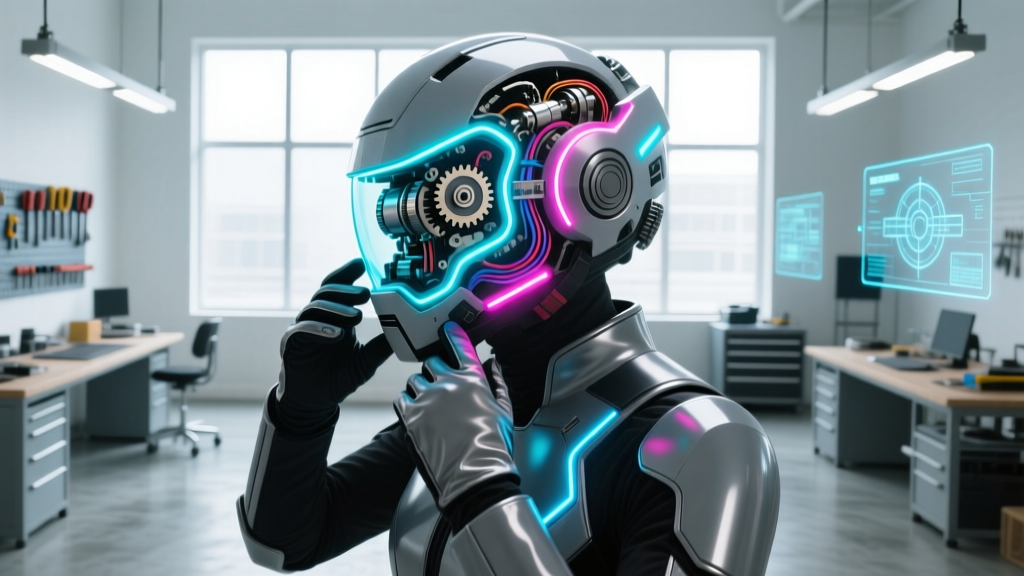
The most common failure point in motorized anime helmets and articulated mecha gauntlets is servo jitter and gear stripping. Historically, builders relied on the MG996R metal-gear servo. While cheap (around $12 per unit), the MG996R uses standard PWM (Pulse Width Modulation), which requires a dedicated GPIO pin for every single motor and suffers from signal interference when daisy-chained through long wiring harnesses inside a cosplay suit.
For multi-point transformations (like an Evangelion entry plug helmet or a Gundam faceplate), upgrade to the LewanSoul LX-16A serial bus servos. Priced at $22 each, these servos allow you to daisy-chain up to 253 units on a single TTL serial line. They feature built-in temperature and voltage protection, preventing burnout during long convention days, and offer precise 0.24-degree angular control via digital feedback.
To control these servos, bypass standard Arduino boards and utilize the Adafruit 16-Channel PWM/Servo Shield paired with a Raspberry Pi Zero 2 W. This setup allows for complex, multi-stage transformation sequences programmed in Python, ensuring that a faceplate retraction happens in perfect sync with an audio cue, without the micro-stuttering common in underpowered microcontrollers.
Henshin Drivers: Addressable LEDs and Audio Syncing
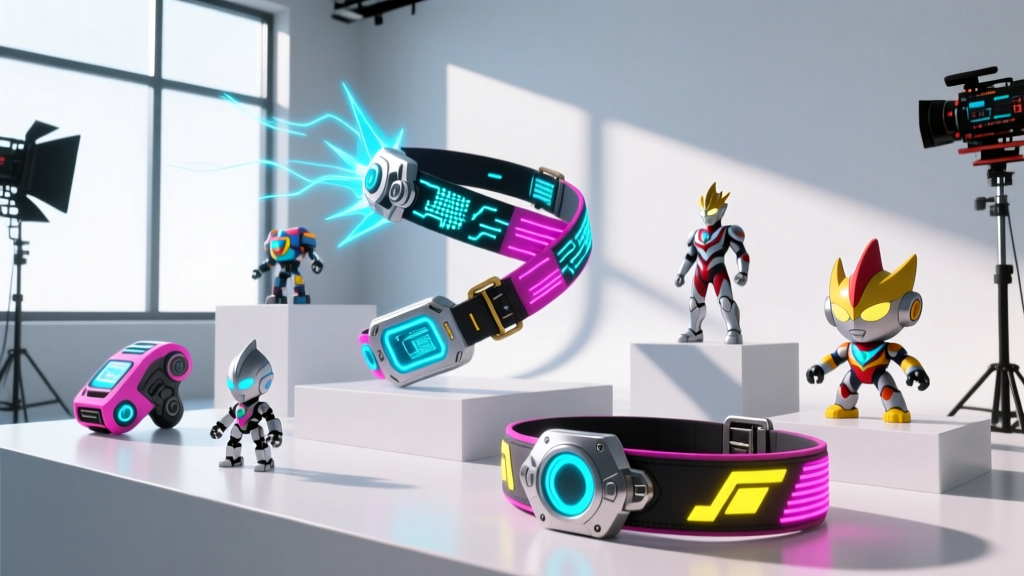
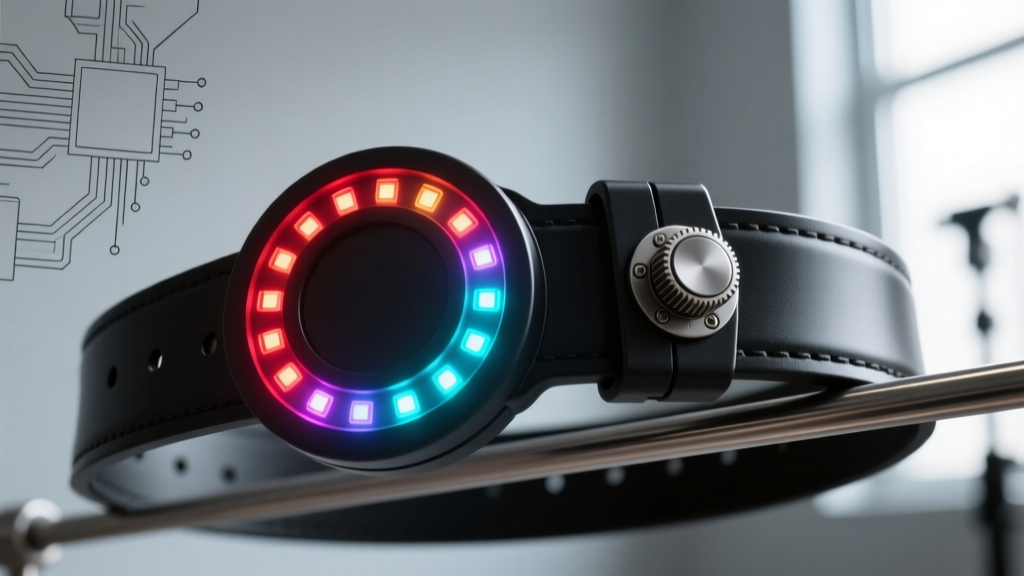
Transformation belts (Henshin drivers) are the centerpiece of many anime and tokusatsu-inspired builds. The visual impact of a transformation relies entirely on sequential lighting. Standard RGB strips are obsolete for premium builds; the 2026 standard is the WS2812B addressable LED (commonly known as NeoPixels). These LEDs contain an integrated driver chip, allowing a single data pin to control the color and brightness of every individual diode in the chain.
When designing a custom henshin belt, power injection is critical. According to the Adafruit NeoPixel Überguide, a single WS2812B pixel at full white brightness draws 60mA. A standard transformation belt ring featuring 60 LEDs will draw 3.6 Amps at peak brightness. Feeding this through a standard microcontroller's 5V pin will instantly fry the board. You must use a dedicated 5V 10A switching power supply for bench testing, and a high-discharge LiPo battery for wearable use, alongside a 1000µF capacitor across the power leads to absorb initial voltage spikes.
Hardware Comparison: Transforming Prop Tiers
| Tier | Hardware Stack | Estimated Cost | Best Use Case |
|---|---|---|---|
| Premium Official | Bandai CSM (Complete Selection Modification) Belts | $350 - $600 | Screen-accurate collectors; zero fabrication required. |
| Pro-Sumer Custom | Adafruit Prop-Maker, NeoPixels, I2S Audio Amplifier | $120 - $180 | Custom anime OCs; complex multi-sensor interactive props. |
| Budget DIY | Arduino Nano, standard RGB strips, DFPlayer Mini | $35 - $60 | Beginners; simple static glow and basic MP3 playback. |
Mechanical Wings and Heavy Weapons: Pneumatics vs. High-Torque Servos
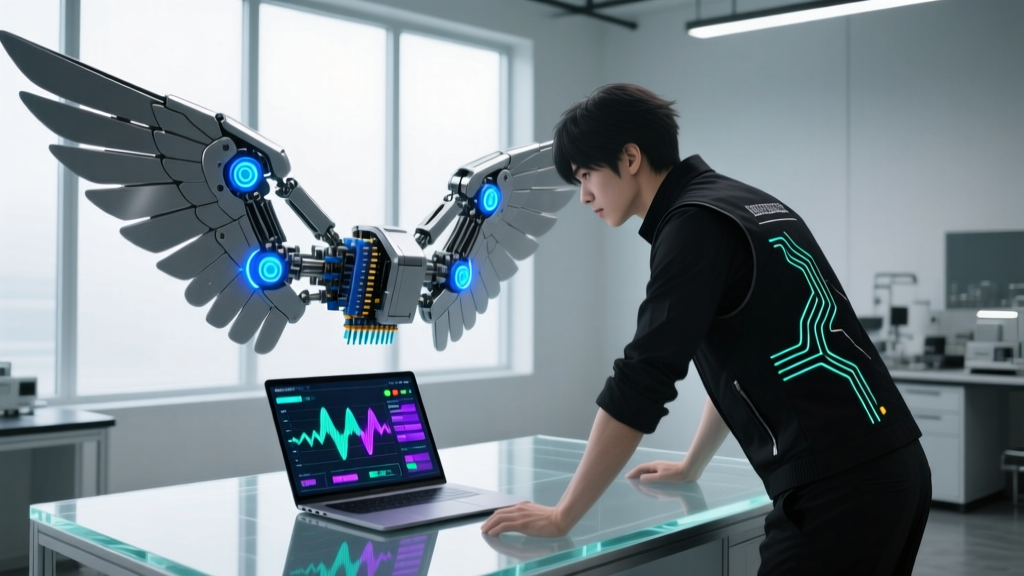
Large-scale transforming gadgets, such as mechanical angel wings or heavy mecha buster rifles, present a severe weight-to-torque challenge. Early cosplayers attempted to use pneumatic cylinders powered by micro-compressors. While pneumatics offer immense lifting force, the compressors are excessively loud, require bulky air reservoirs, and leak pressure over time, making them entirely impractical for convention floors.
The modern solution utilizes high-torque, low-RPM DC gear motors paired with worm-gear drives. A worm gear is essential because it is self-locking; when the motor stops, the gear cannot be back-driven by the weight of the wing. For a 5-pound articulated wing assembly, a 12V 30RPM worm gear motor generating 15kg·cm of torque will provide smooth, cinematic deployment. Control these motors using a dual H-Bridge motor driver (like the L298N or the more efficient TB6612FNG), which allows for both directional control and PWM speed ramping, ensuring the wings don't snap open violently and damage the 3D-printed joints.
Power Management: Sizing Batteries for Wearable Tech
The most dangerous and frequently misunderstood aspect of building transforming anime gadgets is power management. Relying on standard 5V USB power banks is insufficient for high-draw servo and LED arrays, as internal protection circuits in commercial power banks will often trip and shut down when subjected to the sudden current spikes of a motor starting up.
When using Lithium Polymer (LiPo) batteries, you must calculate the C-Rating (discharge rate). A 2200mAh 3S (11.1V) LiPo with a 40C rating can safely deliver 88 Amps continuously. However, as detailed in the Adafruit LiPo Battery Guide, you must never discharge a LiPo below 3.0V per cell. Always integrate a low-voltage alarm buzzer into your prop's wiring harness to alert you before the battery drops into the dangerous degradation zone.
For 5V logic systems (NeoPixels, Raspberry Pi, standard servos), use a high-efficiency buck converter (like the LM2596) to step down a 3S LiPo (12.6V fully charged) to a stable 5V. This prevents the severe heat generation and 50% energy loss associated with linear voltage regulators like the L7805, effectively doubling your prop's operational runtime at a convention.
Frequently Asked Questions
How do I prevent 3D-printed gears from stripping in servo joints?
Standard PLA and PETG will strip under the torque of a 13kg·cm servo. For all load-bearing gears in transforming gadgets, print using ABS, ASA, or Polycarbonate (PC) with a minimum of 4 perimeters and 40% infill. Better yet, design your joints to accept standard 20-tooth metal GT2 timing pulleys and use closed-loop GT2 fiberglass-reinforced belts to transfer power, completely eliminating gear-teeth shear points.
Can I use Bluetooth to trigger transformation sequences?
Yes, but avoid generic HC-05 Bluetooth modules due to latency and connection drops in crowded convention halls. Use an ESP32 microcontroller, which features native Bluetooth Low Energy (BLE) and Wi-Fi. You can program a custom smartphone web interface via WebSockets to trigger specific transformation states with less than 20 milliseconds of latency, ensuring your audio and mechanical movements remain perfectly synced.
What is the best material for diffusing NeoPixel LEDs in props?
Raw addressable LEDs create harsh, blinding hotspots. To achieve the smooth, glowing look seen in official anime merchandise, use sandblasted acrylic or 3D print your diffuser lenses using natural (uncolored) PETG or Opal White PLA. For curved henshin belt screens, a 2mm sheet of flexible opal acrylic heated and vacuum-formed over your mold provides the most professional, factory-finish light diffusion.
Written by
Nina PetrovaNina Petrova holds a Master's degree in Child Development from the Erikson Institute and a B.S. in Nursing from the University of Illinois at Chicago. She worked as a pediatric nurse for 6 years before transitioning to family technology consulting, bringing clinical rigor to her evaluations of kid-friendly gadgets, educational toys, and parental control software. Nina has reviewed over 400 children's tech products, testing each for safety compliance (CPSC and ASTM standards), developmental appropriateness across age groups, screen-time impact, and data privacy practices. She serves on the Children's Technology Review advisory board and has testified before the FTC on children's data protection in connected toys. Her reviews are trusted by parents and educators alike for their evidence-based approach to balancing technology benefits with child safety.