Secret Camera Gadgets: Beginner vs Expert Gear Compared
Discover the secret camera gadgets pros use to bypass beginner limits. We compare entry-level workarounds with expert macro, lighting, and filter gear.
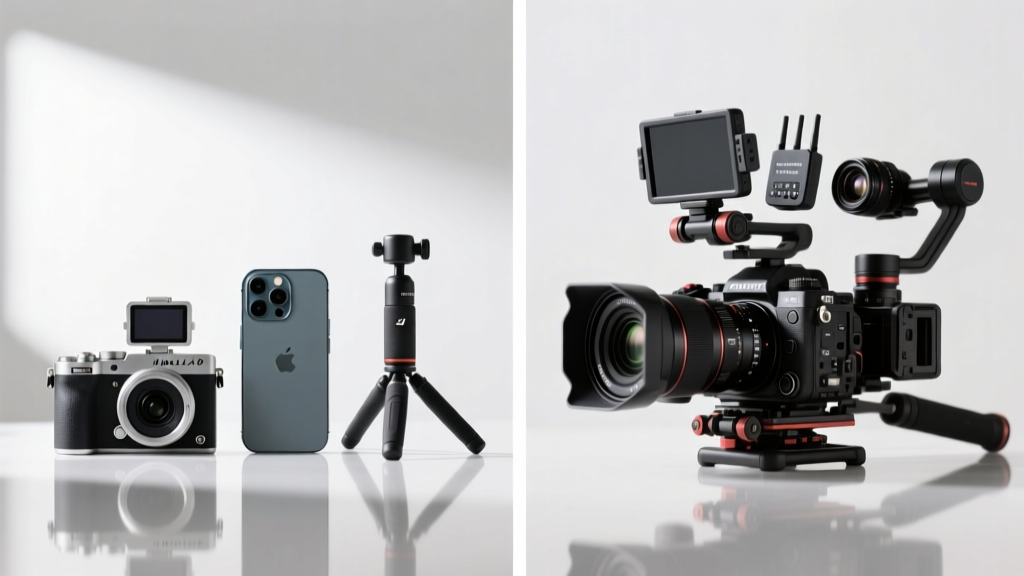
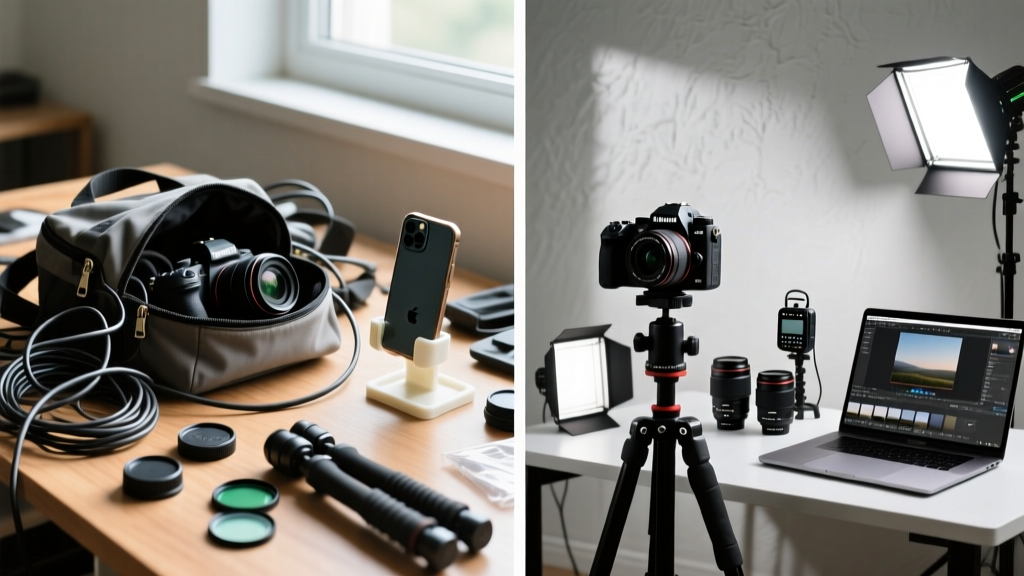
The Illusion of Basic Gear: Why Beginners Hit a Wall
When most photographers start their journey, they obsess over the camera body and the lens. They chase megapixels, autofocus tracking speeds, and wide apertures. But as you transition from an enthusiastic amateur to a working professional, you quickly realize that the true bottleneck isn't the sensor—it is the invisible edge cases that ruin a shoot. This is where secret camera gadgets come into play. These are the highly specialized, often unglamorous tools that experts use to solve complex optical, mechanical, and lighting problems that beginners don't even know exist.
In 2026, with flagship sensors pushing past 80 megapixels and video rigs capturing 16-bit RAW, the margin for error is zero. A slight vibration, a minor color shift, or a slow lighting adjustment can cost you a commercial gig. Below, we break down three critical categories of photography, comparing the beginner's flawed workarounds with the expert's secret weapons.
Gadget 1: Conquering Micro-Worlds (Macro Rails)
Macro photography is unforgiving. At 1:1 or 5:1 magnification, your depth of field shrinks to fractions of a millimeter. Capturing a fully in-focus image of a circuit board or an insect requires focus stacking—taking dozens of photos at slightly different focal planes and blending them in post.
The Beginner Approach: Extension Tubes & Handheld Bracketing
Beginners typically buy a $30 set of extension tubes and attempt to hand-hold their camera while manually twisting the focus ring. The failure mode: Human hands cannot move in perfectly parallel Z-axis increments. You will inevitably introduce X and Y axis drift, causing the stacking software (like Helicon Focus) to fail or produce severe ghosting artifacts. Furthermore, guessing the step size leads to out-of-focus gaps in the final composite.
The Expert Secret: Cognisys StackShot 3X
Professionals rely on motorized macro rails, with the Cognisys StackShot 3X being the undisputed industry standard. This isn't just a motorized slider; it is a precision instrument.
- Micro-stepping Motor: Capable of step sizes down to 0.002mm, ensuring zero gaps in the focal plane.
- Bluetooth App Control: Allows the photographer to set exact start/end points and calculate the required number of frames based on the lens's aperture and magnification.
- Vibration Dampening: The system includes programmable delays to let micro-vibrations settle before the shutter fires.
| Feature | Beginner (Handheld/Tubes) | Expert (StackShot 3X) |
|---|---|---|
| Step Precision | ~0.5mm (Inconsistent) | 0.002mm (Exact) |
| Axis Drift | High (X/Y shift) | Zero (CNC machined) |
| Setup Time | 5 mins (Guesswork) | 2 mins (Auto-calculated) |
| Success Rate | ~20% | 99.9% |
Gadget 2: Taming Invisible Light (IRND Filters)
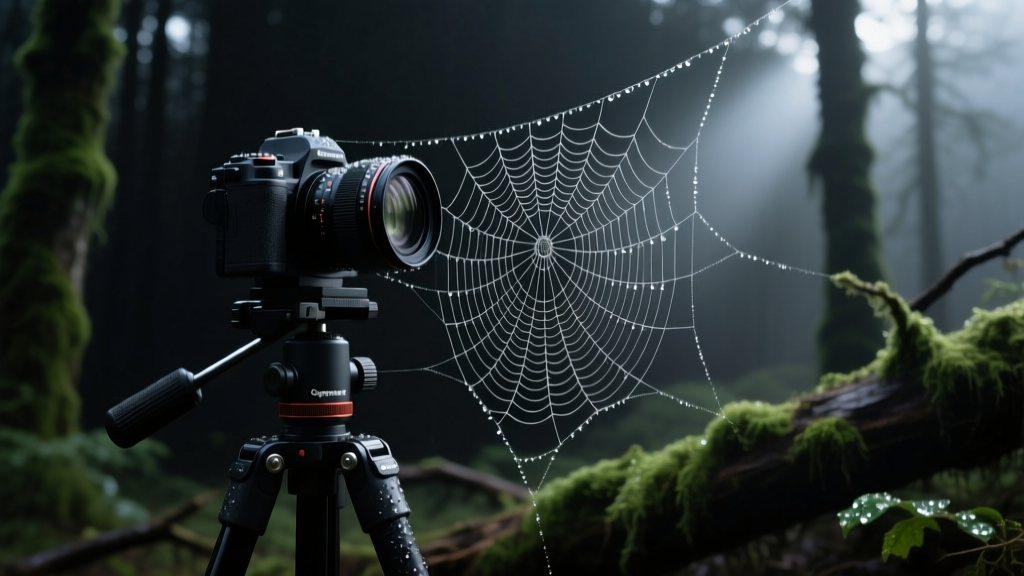
Shooting video or long-exposure photography in broad daylight requires Neutral Density (ND) filters to cut down the light entering the lens. But not all light is visible to the human eye, and this creates a massive headache for unprepared shooters.
The Beginner Trap: Standard ND Color Shifts
A beginner will purchase a cheap, standard 10-stop ND filter. When they look at the monitor, the image is dark, but the shadows and deep blacks exhibit a sickly magenta or red color cast. The science: Digital sensors are inherently sensitive to Infrared (IR) light. Standard ND filters block visible light but allow IR wavelengths to pass through. When you heavily suppress visible light, the IR light becomes dominant in the shadows, ruining color science and requiring hours of tedious secondary color grading.
The Expert Secret: Tiffen IRND & Hot Mirror Technology
Expert cinematographers and landscape photographers use Infrared Neutral Density (IRND) filters, such as the Tiffen IRND series. These filters combine standard ND materials with an IR-blocking "hot mirror" coating.
Pro Insight: The IR pollution effect is exponentially worse on newer, high-resolution sensors with thinner sensor glass stacks. If you are shooting on an ARRI Alexa 35 or a RED Komodo-X in 2026, an IRND filter is not optional; it is mandatory for maintaining neutral skin tones in heavy ND situations.
While a standard 82mm variable ND might cost $80, a Tiffen IRND 1.2 (4-stop) filter costs around $160, and the 10-stop versions can push past $280. The ROI is immediate: zero color cast, perfect shadow neutrality, and vastly reduced post-production time.
Gadget 3: Precision Light Shaping (Magnetic Modifiers)
Speed is the currency of professional photography, especially in event, portrait, and commercial settings. The time it takes to modify your light directly impacts your subject's energy and your bottom line.
Beginner: Diffusion Socks and Traditional Softboxes
Novices typically use traditional rod-and-ring softboxes or cheap slip-on diffusion socks. Traditional softboxes require assembling metal rods, which takes 3 to 5 minutes per light. If the wind picks up, they act like sails and topple your light stands. Diffusion socks offer terrible light falloff and spill light everywhere, ruining the moody atmosphere of a shoot.
Expert: MagMod MagBox Pro & Gel Systems
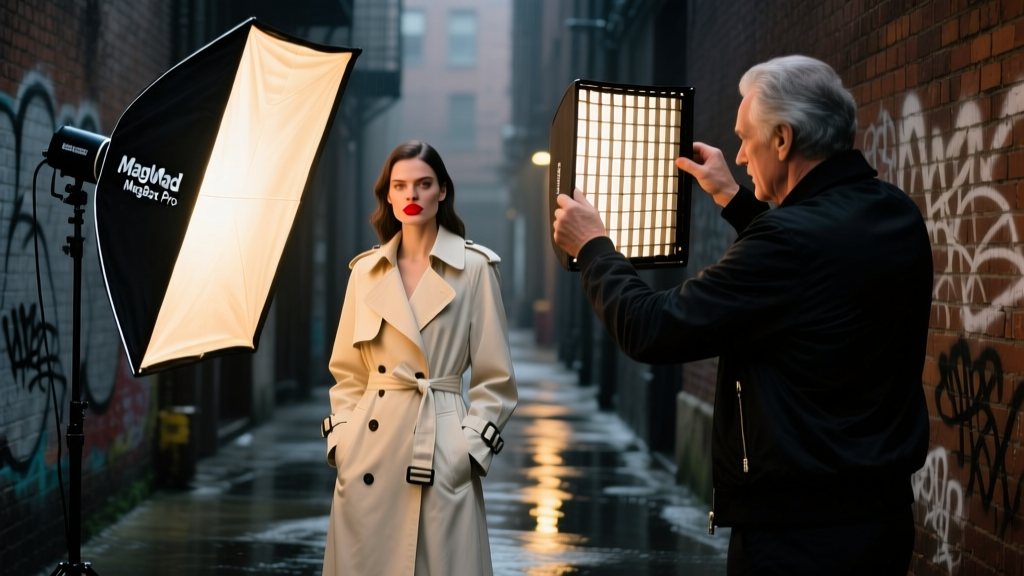
Working professionals have largely migrated to magnetic ecosystems, with the MagMod MagBox Pro 24 leading the charge. This secret camera gadget ecosystem uses high-strength neodymium magnets to snap modifiers into place instantly.
- Setup Speed: The MagBox Pro deploys in under 10 seconds. You simply pull it open and snap the magnetic grid or gel onto the front.
- Light Control: The specialized magnetic grids restrict beam spread to exactly 40 degrees, preventing light from spilling onto backgrounds or triggering unwanted lens flares.
- Durability: Unlike fragile metal rods, the composite frame is designed to withstand drops, wind, and the rigors of daily location shooting.
The Financial Reality: Cost vs. ROI Matrix
It is easy to look at the price tags of expert gear and balk. However, when you calculate the cost of failure, the beginner gear is actually more expensive in the long run. Here is a decision framework for upgrading your kit.
| Gadget Category | Beginner Cost | Expert Cost | Hidden Cost of Beginner Gear |
|---|---|---|---|
| Macro Stacking | $30 (Tubes) | $675 (StackShot) | Lost commercial contracts due to soft images; hours of manual masking. |
| ND Filtration | $50 (Standard ND) | $220 (IRND) | 2+ hours of color-matching in DaVinci Resolve per shoot. |
| Light Modifiers | $40 (Softbox) | $230 (MagBox Pro) | Missed candid moments; fatigued subjects due to slow setup times. |
Expert FAQ: Transitioning from Novice to Pro
1. Should I buy all these secret gadgets at once?
No. Upgrade based on your specific failure points. If you are losing gigs because your product photography lacks sharpness, invest in the macro rail first. If you shoot outdoor video and struggle with color grading, the IRND filter is your priority.
2. Are there cheaper alternatives to the Cognisys StackShot?
There are budget motorized rails from brands like WeMacro (around $250), but they often lack the Bluetooth integration, extreme 0.002mm precision, and long-term durability of the Cognisys. For hobbyists, WeMacro is acceptable; for paid commercial work, Cognisys is the standard.
3. Do IRND filters affect the autofocus performance of modern mirrorless cameras?
High-quality IRND filters like Tiffen or Hoya do not interfere with phase-detect autofocus on modern 2026 mirrorless bodies. However, extremely dark NDs (like 15-stops) will always require you to compose and focus before attaching the filter, regardless of IR blocking.
4. Can I use magnetic modifiers on any speedlight?
No. You need a magnetic adapter ring specific to your flash head's dimensions. MagMod sells universal adapters, but for the best fit and zero light leakage, use the dedicated adapter designed for your exact speedlight model (e.g., Godox V1, Profoto A10).
Written by
Marcus WebbMarcus Webb served as a U.S. Army logistics officer for 8 years, where he managed field equipment procurement and tactical gear evaluation across three combat deployments. After honorable discharge, he earned a certification from the Professional Knife Makers Association and became a certified Wilderness First Responder (WFR). Marcus has tested over 500 EDC products in extreme environments — from -40°F in Alaska to 120°F in the Mojave Desert — using military-spec testing protocols. His reviews of multi-tools, tactical flashlights, and survival gear are known for their rigorous methodology: controlled drop tests from 6 feet, 120-minute water submersion at 2 meters, and lateral torque testing at 45 Nm. He is a member of the Blade Show judging panel and contributes to OutdoorGearLab.