Cool Wine Gadgets & AR Smart Glasses: 2026 Outdoor Tasting Guide
Discover how AR smart glasses and cool wine gadgets elevate outdoor vineyard tours and patio tastings in 2026. Expert gear picks, glare fixes, and setups.
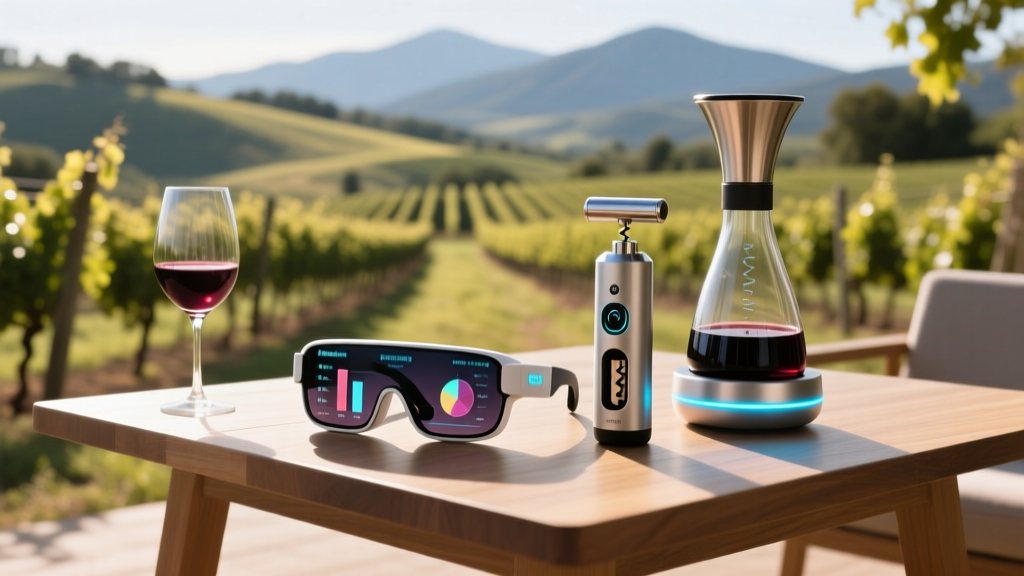
When curating a collection of cool wine gadgets for the 2026 seasonal outdoor market, most enthusiasts default to ultrasonic aging wands, electric corkscrews, or Bluetooth-enabled smart aerators. While those tools have their place on the patio, the true frontier of the modern vineyard tour and outdoor tasting experience lies in augmented reality (AR) smart glasses. By overlaying real-time tasting notes, terroir maps, and AI-driven label analysis onto your physical environment, AR wearables are fundamentally changing how we interact with viticulture in the wild. This guide explores the technical realities of wearing spatial computers in direct sunlight, the best hardware for the job, and how to integrate them with traditional wine tech for the ultimate outdoor sommelier experience.
The Glare and Heat Problem: Outdoor AR Realities
Taking AR glasses out of the living room and into a sun-drenched Napa Valley vineyard or a bright coastal patio introduces two massive engineering hurdles: luminance washout and thermal throttling. Most consumer AR glasses utilize Micro-OLED or waveguide displays that max out between 400 and 500 nits of brightness. In direct outdoor sunlight, which can exceed 10,000 lux, a 400-nit display becomes entirely invisible. To effectively read tasting notes or view vineyard boundary overlays outdoors, you need a minimum of 600 nits, coupled with electrochromic dimming capabilities to manage contrast.
2026 AR Smart Glasses Comparison Matrix
Not all wearables are built for the patio. Below is a technical breakdown of the top three smart glasses suited for outdoor wine enthusiasts, focusing on optical engines, battery endurance, and AI integration.
| Model | Display / Optics | Peak Brightness | Battery Life | Best Outdoor Use Case | MSRP |
|---|---|---|---|---|---|
| Xreal Air 2 Ultra | Sony Micro-OLED | 600 nits | 3-4 hrs (tethered) | Spatial terroir maps & video tasting notes | $699 |
| Ray-Ban Meta (Wayfarer) | Audio / 12MP Camera | N/A (No Display) | 4 hrs (audio/AI) | AI label scanning & hands-free sommelier Q&A | $329 |
| Solos AirGo Vision | Audio / Modular Camera | N/A | 5 hrs (swappable) | All-day vineyard walking tours with hot-swap batteries | $399 |
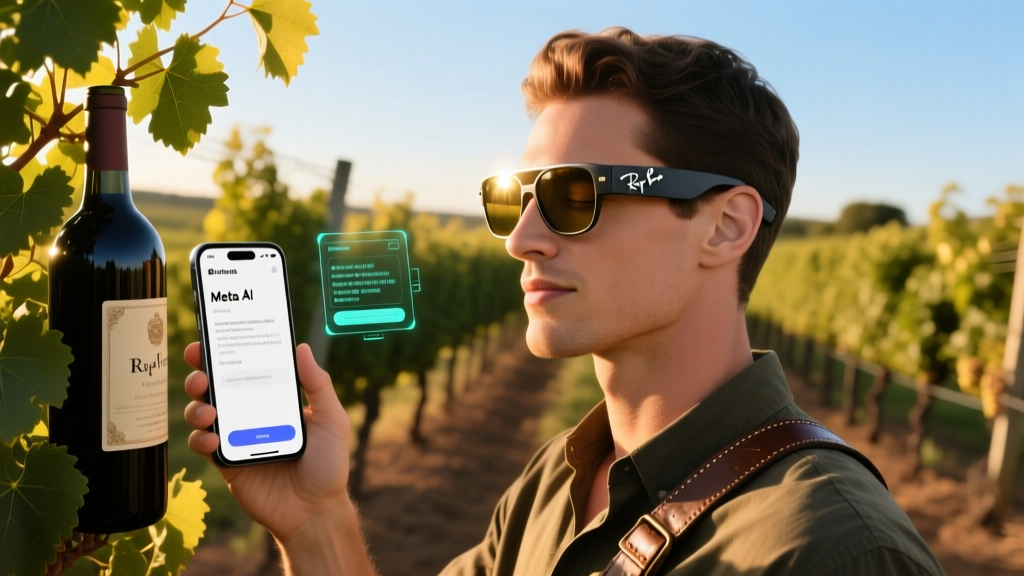
For deep visual immersion, the Xreal Air 2 Ultra remains the benchmark. However, because it requires a tethered connection to a compute puck or smartphone, it is best suited for stationary patio tastings where you can rest your device on a table. For active vineyard walking tours, the Ray-Ban Meta is vastly superior. Lacking a display, it relies on Meta AI's multimodal vision capabilities. You simply look at a bottle of 2018 Barolo and ask, 'Hey Meta, what are the primary tasting notes for this vintage, and what outdoor foods pair best?' The open-ear directional speakers deliver the answer without isolating you from your surroundings.
Synergizing Wearables with Cool Wine Gadgets
AR glasses reach their full potential when they act as the central hub for a broader ecosystem of cool wine gadgets. By pairing your wearables with Bluetooth-enabled physical tools, you create a seamless, data-rich tasting environment.
- Smart Wine Thermometers (e.g., Yummly Smart Probe or ThermoWorks): Serving temperature dictates the volatility of aromatic compounds in wine. A red Bordeaux served at 22°C on a hot patio will taste overly alcoholic and flabby. Insert a Bluetooth probe into the bottle; when the wine drops to the optimal 16°C (60°F), the companion app pushes a haptic notification to your smart glasses or triggers an audio chime.
- Coravin Pivot+ Preservation System: Unlike the needle-based Timeless system, which struggles with thick sediment and outdoor debris, the Pivot+ uses a simple airtight stopper and specialized pourer. It allows you to open multiple bottles for a comparative outdoor flight, preserving the remainder for up to four weeks without exposing the wine to rapid oxidation.
- Vinaer Handheld Aerator: This gadget uses fluid dynamics and micro-bubble technology to aerate wine in seconds, mimicking the effects of a 30-minute decant. When paired with AR glasses, you can pull up the specific oxygenation requirements for a young, tannic Cabernet Sauvignon and aerate precisely to the recommended volume.
Step-by-Step: Building Your AR Sommelier Kit
To execute a flawless outdoor tasting session, you must prepare your digital and physical gear before stepping into the sun. Follow this operational checklist:
- Pre-Cache Offline Databases: Vineyards are notorious for cellular dead zones. Before leaving home, use the Vivino or CellarTracker API via your companion app to download the specific estate's tasting notes and vintage variation charts to your phone's local storage.
- Configure Electrochromic Dimming: If using Micro-OLED glasses like the Xreal, set the electrochromic dimming to 0% (fully transparent) in the companion app. This sacrifices black levels but ensures the virtual UI text remains legible against the bright sky.
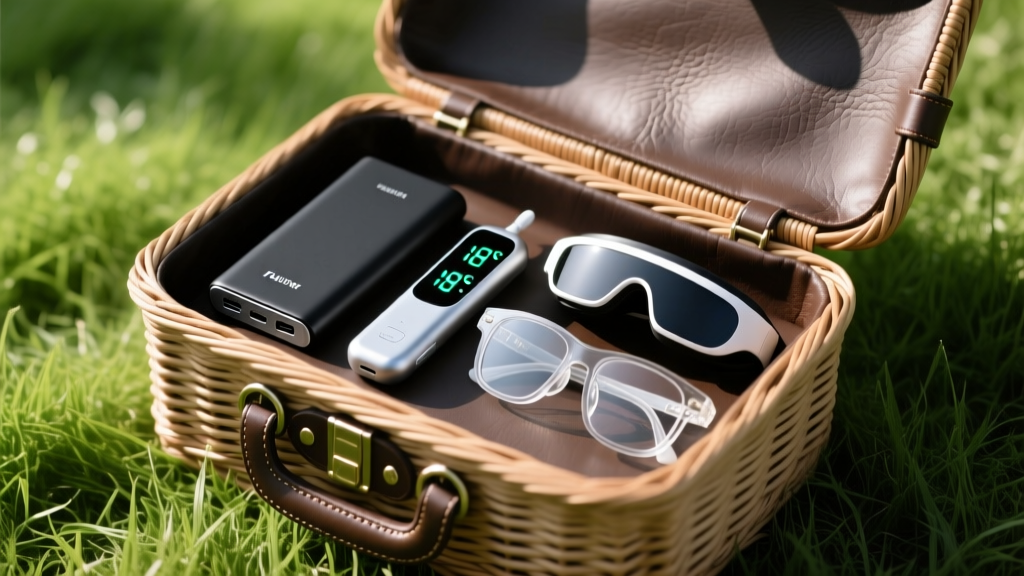
- Deploy the Magnetic Power Tether: AR glasses drain host devices rapidly when using spatial anchors and camera passthrough. Attach a 5,000mAh magnetic MagSafe power bank to the back of your phone to double your operational runtime, ensuring your AI label scanner doesn't die mid-flight.
- Calibrate Audio EQ for Wind: Open-ear speakers struggle with ambient wind noise on exposed patios. Access your glasses' developer or advanced settings and enable 'Wind Noise Reduction' or 'Outdoor EQ' to boost mid-range vocal frequencies, ensuring the AI sommelier's voice cuts through the breeze.
Information Gain: The 'Sediment and Sun' Edge Case
Most tech reviewers ignore the physical reality of pouring wine outdoors. When using AR glasses to scan labels or view pairing guides, your attention is divided. Pouring older, unfiltered wines (like a vintage Châteauneuf-du-Pape) in a windy, bright environment makes it incredibly difficult to see the sediment line approaching the bottle's neck. The Fix: Combine your AR headset with a specialized LED wine bottle collar. These $25 gadgets wrap around the neck of the bottle and shine a high-lumen light upward through the glass, illuminating the sediment line brilliantly even in direct sunlight. This allows you to maintain your AR overlay focus while executing a perfect, grit-free pour.
Frequently Asked Questions
Can I use AR glasses to scan wine labels in low-light evening patio settings?
Yes, but with caveats. AI camera glasses like the Ray-Ban Meta require sufficient light for the 12MP sensor to achieve fast shutter speeds. On a dimly lit patio, the AI may struggle to read the intricate typography of French or Italian wine labels. Always position your seating near ambient pathway lighting or use a small, targeted key light on the table to illuminate the bottle for the camera.
Are smart glasses safe to leave in the car between vineyard stops?
Absolutely not. The internal cabin temperature of a parked car in the summer can exceed 65°C (150°F) within minutes. This will permanently degrade the lithium-ion batteries in your smart glasses and can cause the optical waveguides or Micro-OLED panels to delaminate. Always store them in their protective hard case and take them with you during tasting room transitions.
How do I clean the lenses after an outdoor tasting?
Outdoor environments introduce dust, pollen, and aerosolized wine droplets. Never use your shirt or standard paper towels, which contain wood fibers that will scratch the delicate anti-reflective and electrochromic coatings. Use a dedicated microfiber cloth and a specialized optical cleaning solution that is strictly alcohol-free, as alcohol can strip the hydrophobic oleophobic top-coat required for outdoor glare resistance.
Written by
Sarah KimSarah Kim holds certifications from both NASM (National Academy of Sports Medicine) and ACE (American Council on Exercise), along with a B.S. in Kinesiology from UCLA. She has spent 7 years bridging the gap between exercise science and consumer technology, evaluating fitness trackers, smart scales, sleep monitors, and recovery devices with clinical precision. Sarah has tested over 200 health-focused wearables in controlled lab settings and real-world training environments, comparing device data against gold-standard medical equipment like ECG monitors and DEXA scans. She consults for three fitness app companies on data accuracy standards and has presented research on wearable reliability at the American College of Sports Medicine (ACSM) annual conference. Her reviews emphasize clinical validity over marketing claims.