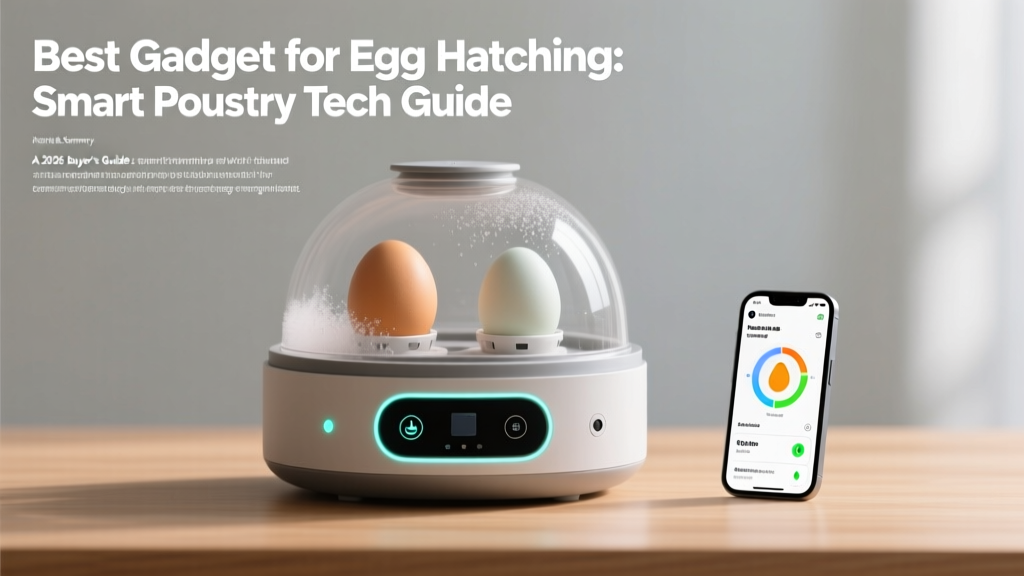
Best Gadget for Egg Hatching: Smart Poultry Tech Guide
Discover the best gadget for egg hatching, smart incubators, and IoT poultry tech. A 2026 buyer's guide for backyard flock and reptile breeding enthusiasts.
The Evolution of Precision Hatching Technology
Backyard poultry and reptile breeding has transitioned from analog guesswork to precision IoT microclimates. For modern enthusiasts, finding the right gadget for egg hatching means moving beyond basic heated containers and investing in networked environments that monitor thermal mass, humidity gradients, and embryo development in real time. Whether you are hatching heritage chicken breeds, rare quail, or leopard gecko clutches, the margin for error is measured in tenths of a degree.
According to Penn State Extension, the most common cause of late-stage embryo mortality is improper humidity management leading to dehydration or drowning during the internal pip stage. Smart incubators solve this by integrating automated humidity pumps and Wi-Fi alerts, ensuring you never lose a clutch to a dried-out water channel. This guide breaks down the exact hardware, sensor configurations, and monitoring setups required for a 2026 breeding season.
Anatomy of a Smart Gadget for Egg Incubation
A true smart incubator relies on three core subsystems: thermal regulation, moisture control, and automated telemetry. Entry-level models use basic thermistors that drift over time, while premium gadgets utilize industrial-grade sensors like the Sensirion SHT31, which offers ±2% RH accuracy and ±0.3°C precision.
Critical Features to Demand
- Proportional-Integral-Derivative (PID) Controllers: Unlike simple on/off thermostats that cause temperature spikes, PID algorithms pulse the heating element to maintain a flat 99.5°F (37.5°C) curve, mimicking the steady body heat of a broody hen.
- Automatic Egg Turning: Embryos must be turned at least 3-5 times daily to prevent the yolk from adhering to the shell membrane. Smart gadgets use slow-tilt motors that rotate eggs 45 degrees hourly, eliminating manual handling and the associated risk of transferring skin oils to the eggshell pores.
- External Water Reservoirs: Opening an incubator to refill water drops humidity instantly. High-end units feature external syringe ports or integrated peristaltic pumps that auto-dose water based on real-time hygrometer readings.
2026 Smart Incubator Comparison Matrix
Selecting the right hardware depends on your clutch size and budget. Below is a comparison of the top networked incubators currently dominating the enthusiast market.
| Model | Capacity | IoT / App Telemetry | Auto-Humidity Pump | Avg. Price (2026) |
|---|---|---|---|---|
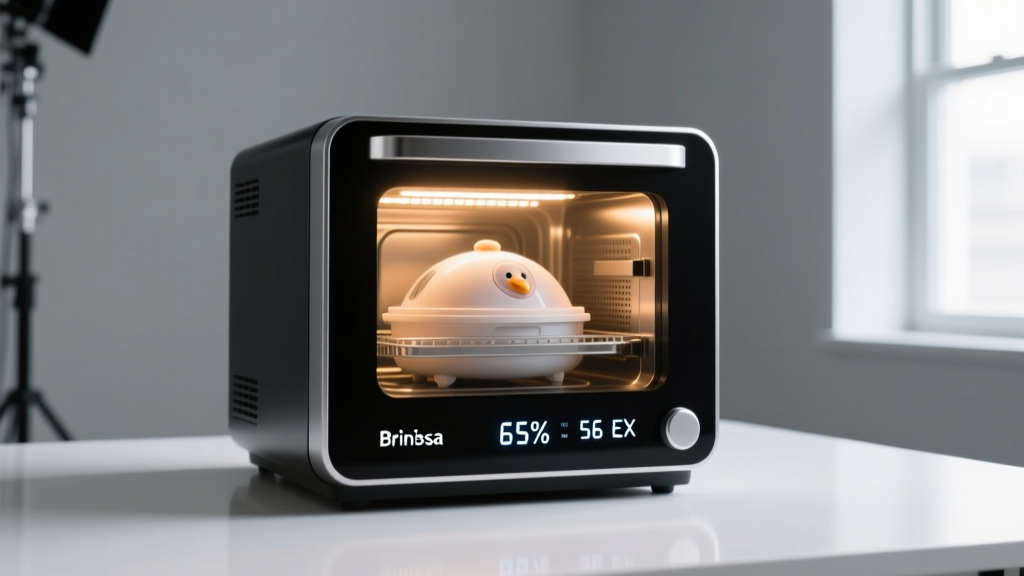
| Brinsea Ovation 56 EX | 56 Chicken / 130 Quail | Yes (Wi-Fi & Cloud Logging) | Yes (Integrated) | $480 - $520 |
| IncuView 3 Pro | 48 Chicken | Local Network Dashboard | No (Manual fill) | $220 - $250 |
| Kebonnixes 12 Pro | 12 Chicken | Bluetooth Proximity | No (Sponge-based) | $65 - $85 |
| R-Com King Suro 20 | 20 Chicken / 52 Quail | No (Standalone Digital) | Yes (External Tube) | $350 - $380 |
The 'Sensor Drift' Failure Mode and Calibration
Never trust the digital readout on the lid of your incubator as absolute truth. Heat rises, and the temperature at the top of the dome can be 1.5°F higher than at the egg equator. Always calibrate your gadget for egg hatching using an independent, NIST-traceable reference meter placed directly adjacent to the eggs.
To combat sensor drift, experienced breeders deploy a secondary verification gadget. The ThermoPro TP50 or a Govee Bluetooth Hygrometer ($12-$15) should be placed inside the incubator during the 24-hour pre-flight dry run. Compare the incubator's digital display against the independent sensor. If the Brinsea reads 99.5°F but the Govee reads 98.8°F at egg level, use the incubator's calibration offset menu to adjust the internal PID target. According to University of Minnesota Extension, a sustained temperature deviation of just one degree over 21 days can advance or delay hatching by up to 24 hours, severely impacting chick vitality.
Secondary Gadgets: Candlers and Mass Scales
An incubator maintains the environment, but secondary gadgets allow you to monitor the biological process. Candling and weight tracking are non-negotiable for serious breeders.
LED Candlers for Viability Checks
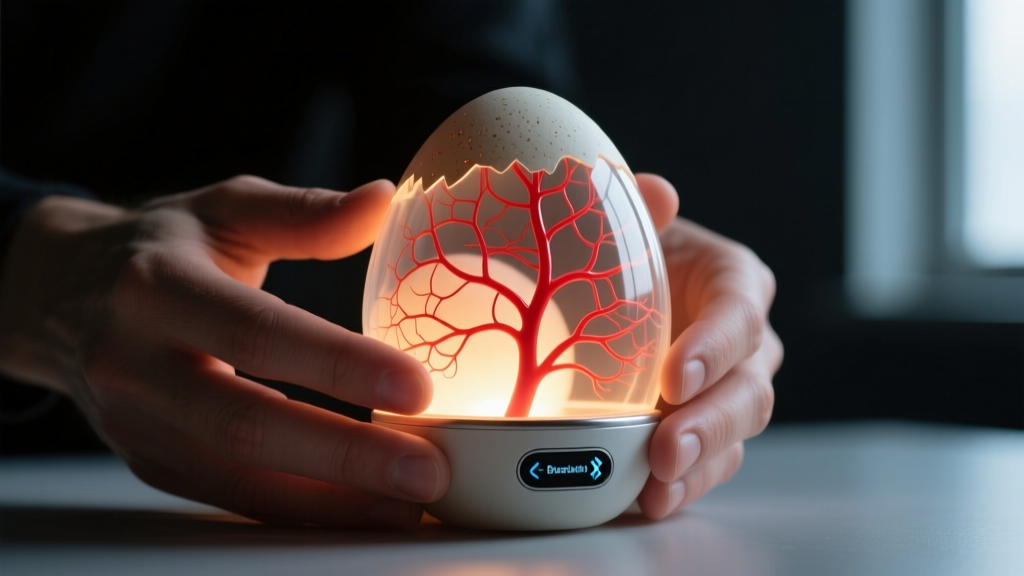
Forget the old flashlight-in-a-cardboard-tube method. Modern LED candlers, like the Brinsea Ovascope or high-lumen rechargeable aluminum candlers ($25-$40), provide the focused, cool light necessary to see the vascular network without heating the embryo. For dark-shelled eggs (like Marans or Olive Eggers), you need a candler with at least 1200 lumens and a concentrated beam aperture to penetrate the heavy pigmentation.
Milligram Scales for Weight Loss Tracking
Eggs must lose exactly 12% to 14% of their initial mass through moisture evaporation by day 18 (lockdown). This is the most accurate way to verify if your humidity is correct. Use a digital pocket scale with 0.1g resolution, such as the AWS Gemini-20 ($15). Weigh the eggs on day 1, calculate the target lockdown weight, and chart the trajectory. If the eggs are losing weight too fast, increase humidity; if too slow, decrease it.
'Proper egg weight loss is the single most reliable indicator of correct incubation humidity. Relying solely on the hygrometer reading without verifying physical moisture loss through weighing is a common novice error.' — American Veterinary Medical Association (AVMA) Poultry Guidelines
Brooder Monitoring: Adapting Pet Cameras for Hatchlings
Once the eggs pip and hatch, the tech stack shifts from incubation to brooder management. Hatchlings require a localized heat source (starting at 95°F and dropping 5°F weekly), and monitoring them 24/7 is critical to prevent piling or chilling.
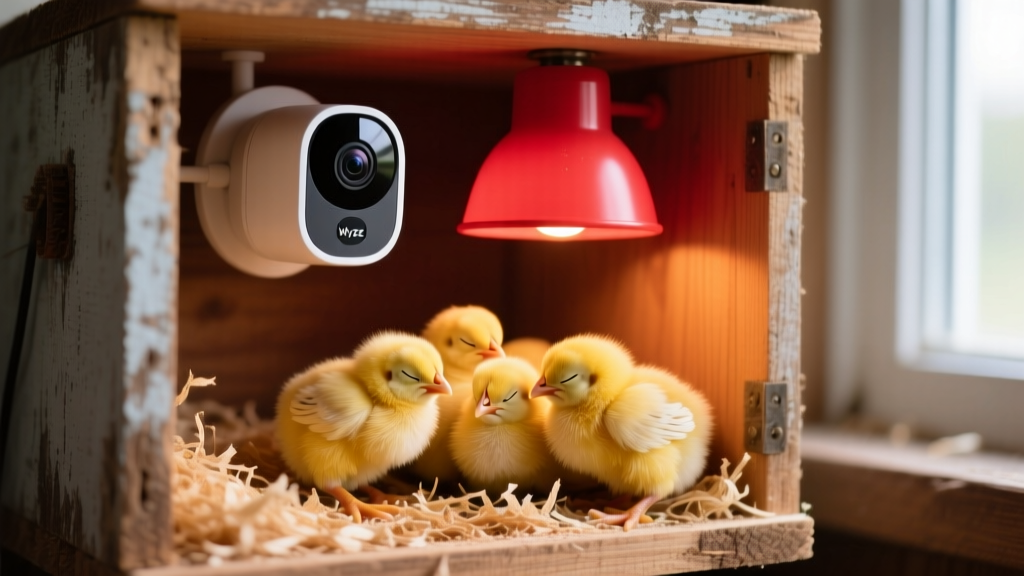
The Wyze Cam v3 ($50) is the undisputed champion for brooder boxes. Its Starlight sensor allows for full-color night vision without emitting the harsh infrared glare that can disrupt the circadian rhythms of developing birds. Mount the camera on the outside of the brooder ring, angled down toward the feed and water stations. Utilize the Wyze app's motion-detection zones to receive push notifications if the chicks are frantically running (indicating they are too cold) or panting and pushed to the far edges (indicating they are too hot).
Decision Framework: Building Your 2026 Hatching Stack
Use this conditional framework to allocate your budget effectively based on your specific breeding goals:
- If you are hatching high-value, rare genetics (e.g., Serama bantams, rare morph geckos): Invest heavily in the incubator. Purchase the Brinsea Ovation 56 EX for its pump-driven humidity and PID stability. Pair it with an AWS Gemini-20 scale for daily weight tracking.
- If you are hatching standard backyard layers in small batches: The Kebonnixes 12 Pro is sufficient, provided you buy a standalone Govee hygrometer to verify the dome's internal readings and manually sponge-mist the water channels.
- If you are managing multiple clutches across different rooms: Centralize your telemetry. Use IncuView networked incubators and route all brooder Wyze Cams to a dedicated tablet mounted in your breeding room for a single-pane-of-glass overview.
- If you live in an area with frequent grid instability: You must budget for a Uninterruptible Power Supply (UPS). A standard 600VA UPS (like the APC Back-UPS) will keep a smart incubator and its Wi-Fi router running for 4-6 hours during an outage, preventing catastrophic temperature drops during the final three days of lockdown.
Mastering the gadget for egg hatching is ultimately about data verification. The smartest breeders do not blindly trust a single digital readout; they cross-reference thermal mass, humidity gradients, and physical weight loss to engineer the perfect microclimate for new life.
Written by
Jake MorrisonJake Morrison holds a B.S. in Electrical Engineering from UC Berkeley and an MBA from Stanford Graduate School of Business. With over 12 years of hands-on experience in consumer electronics, he previously served as a senior product engineer at a Silicon Valley startup before transitioning to tech journalism. Jake has personally tested and benchmarked over 3,000 gadgets across categories including smartphones, wearables, smart home devices, and audio equipment. His durability testing methodology — involving controlled drop tests, thermal cycling, and water submersion — is widely cited by major tech publications. He is a certified CompTIA A+ technician and a contributing editor to the IEEE Consumer Electronics Magazine.