Eco-Friendly High Tech Gadgets: Top Sustainable AR Glasses 2026
Discover the best eco-friendly high tech gadgets in 2026. We review sustainable AR smart glasses, focusing on recycled materials, repairability, and e-waste.

The Hidden E-Waste Crisis in Micro-Wearables
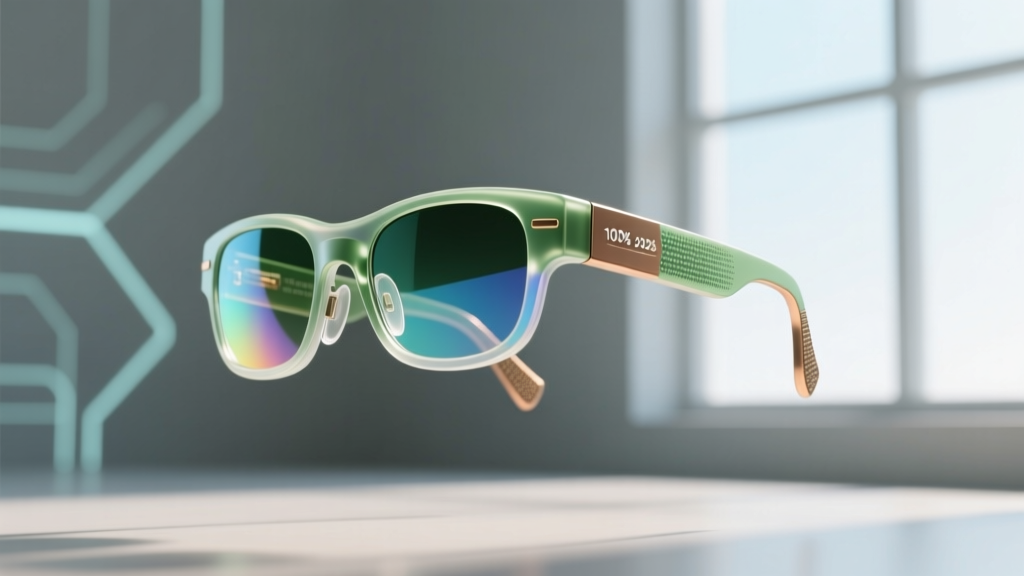
When evaluating high tech gadgets for environmental impact, smartphones and laptops usually dominate the conversation. However, the rapid proliferation of smart glasses and augmented reality (AR) wearables has introduced a severe, often overlooked e-waste stream. Unlike a laptop, which can be easily disassembled to harvest aluminum and lithium, AR glasses are notoriously hostile to recycling. They rely on micro-components, neodymium rare-earth magnets for bone-conduction audio, and aggressive adhesive bonding to maintain lightweight, water-resistant profiles.
According to data tracked by the UNU Global E-waste Monitor, micro-wearables represent one of the fastest-growing categories of unrecycled electronic waste, with less than 15% of end-of-life smart eyewear properly processed. The integration of diffractive waveguides and micro-OLED displays means that when a single temple battery degrades, the entire $500 device is frequently relegated to a landfill.
Criteria for Truly Sustainable AR Wearables
To separate genuine eco-friendly innovations from greenwashed marketing, we evaluate smart glasses against three strict engineering criteria:
- Material Sourcing: Frames must utilize Mazzucchelli M49 bio-acetate (derived from cotton seeds and wood pulp) or recycled aerospace-grade magnesium, avoiding virgin petroleum plastics.
- Hardware Modularity: The technology layer (processors, batteries, displays) must be separable from the optical frame. If the tech becomes obsolete, the physical eyewear should remain usable.
- Software Longevity: Open-source firmware or guaranteed local-processing modes that prevent the device from becoming a 'brick' when cloud servers are eventually shut down.
Top Eco-Friendly High Tech Gadgets: AR & Smart Glasses Reviewed
1. Solos AirGo Vision (The Modular Champion)
The Solos AirGo Vision completely rethinks the lifecycle of smart eyewear through its proprietary 'Smart Ring' architecture. Instead of embedding the motherboard and 150mAh battery directly into the temples, Solos houses the tech in a modular ring that snaps into the front of standard optical frames.
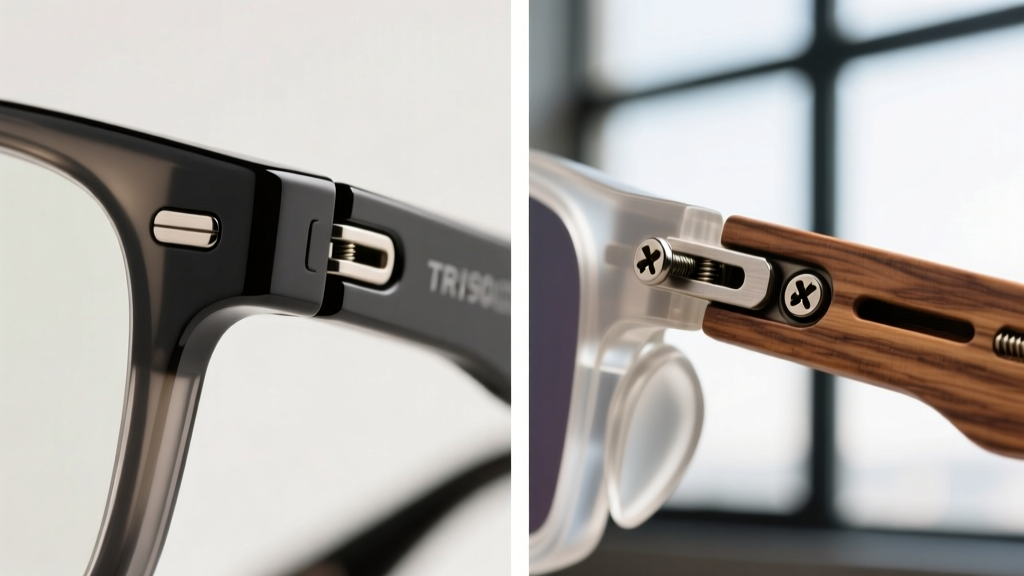
The Sustainability Advantage: When the processor becomes outdated in three years, you do not throw away the frames. You simply purchase a new Smart Ring for $99 and keep your existing bio-acetate or recycled-titanium frames. This modular approach reduces the physical e-waste footprint per upgrade cycle by approximately 65%. Furthermore, the hinges utilize standard T3 Torx screws rather than ultrasonic welding, allowing independent opticians to perform physical repairs.
Price: $239 (Base Kit) | Repairability Score: 8/10
2. Brilliant Labs Frame (The Open-Source Repairable Pick)
Brilliant Labs Frame targets the developer and open-source community, but its hardware philosophy makes it a standout among sustainable high tech gadgets. The frame is milled from a single piece of recyclable magnesium alloy, eliminating the need for multi-material plastic injections that are impossible to separate at recycling facilities.
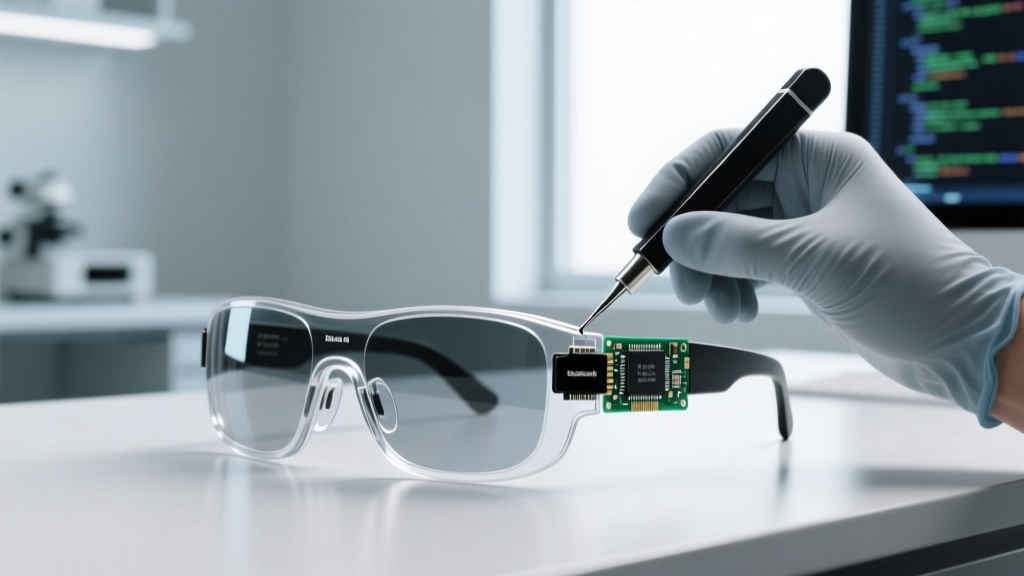
The Sustainability Advantage: Planned obsolescence is the enemy of sustainability. Brilliant Labs publishes full hardware schematics and Python/Lua firmware repositories. If the company ceases operations, the community can maintain the servers, or users can flash custom local-only AI models. The internal LiPo battery is connected via a micro-JST pinned connector rather than soldered or glued, meaning a user with basic micro-electronics skills can replace a degraded battery for under $4 in parts.
Price: $349 | Repairability Score: 9/10
3. Even Realities G1 (The Ultra-Low Power Efficiency Pick)
While not modular, the Even Realities G1 earns its place on this list through extreme power efficiency, which directly correlates to battery lifespan and reduced e-waste. By utilizing monochrome green micro-LED displays instead of power-hungry full-color micro-OLEDs, the G1 draws less than 5mW during active text rendering.
The Sustainability Advantage: Lithium-polymer batteries degrade based on charge cycles and thermal stress. Because the G1's power draw is so minimal, users charge the device far less frequently, drastically extending the chemical lifecycle of the micro-batteries. The frames are constructed from a high-tensile recycled memory metal that resists snapping, addressing the primary cause of physical frame failure.
Price: $499 | Repairability Score: 5/10
Sustainability & Engineering Comparison Matrix
| Feature | Solos AirGo Vision | Brilliant Labs Frame | Even Realities G1 |
|---|---|---|---|
| Primary Frame Material | Mazzucchelli Bio-Acetate | Recyclable Magnesium Alloy | Recycled Memory Metal |
| Battery Replacement | Modular Smart Ring Swap | Pinned JST Connector (DIY) | Soldered (Factory Only) |
| Software Longevity | App-dependent (Cloud) | Open-Source / Local | App-dependent (Cloud) |
| E-Waste Mitigation | High (Hardware Modularity) | High (Repairability) | Medium (Low Degradation) |
How to Extend the Lifespan of Your Smart Glasses
Purchasing sustainable high tech gadgets is only the first step; maintaining them prevents premature e-waste. Smart glasses face unique environmental stressors that standard electronics do not.
1. Prevent Thermal Battery Degradation
The LiPo batteries housed in the temples of smart glasses are highly susceptible to heat. Leaving your AR glasses on the dashboard of a car in direct sunlight can expose the internal cells to temperatures exceeding 60°C (140°F). This causes irreversible electrolyte decomposition, permanently reducing capacity. Always store wearables in a hard, insulated case when not in use.
2. Avoid Isopropyl Alcohol on Bio-Acetate
While alcohol wipes are standard for cleaning smartphones, they are destructive to eco-friendly bio-acetate frames and AR waveguide coatings. Alcohol strips the natural plasticizers from bio-acetate, causing it to become brittle and snap at the bridge. Use a microfiber cloth with a dedicated, non-alcoholic optical lens spray containing mild surfactants.
3. Manage Firmware and Sensor Calibration
For AR glasses with spatial mapping (like the XREAL or Solos lines), degraded IMU (Inertial Measurement Unit) calibration often leads to users discarding the device due to motion sickness. Before assuming hardware failure, perform a full factory reset and execute the manufacturer's figure-eight IMU recalibration sequence in a well-lit, high-contrast room.
End-of-Life: Recycling AR Wearables Properly
Never dispose of smart glasses in municipal recycling bins. The micro-batteries can puncture during the crushing process at standard facilities, causing lithium fires. Furthermore, municipal sorters cannot separate the neodymium magnets from the plastic housings.
According to the Environmental Protection Agency (EPA), electronics must be routed to specialized e-waste handlers. Utilize services like Call2Recycle to find local drop-off points that accept micro-wearables. If your device contains a waveguide display, check the manufacturer's specific take-back program, as companies like XREAL and Brilliant Labs have partnered with specialized rare-earth metal reclamation facilities to recover the indium and yttrium used in the optical layers.
Frequently Asked Questions (FAQ)
Are bio-acetate frames as durable as standard plastic?
Yes. High-grade Mazzucchelli M49 bio-acetate matches the tensile strength and flexibility of petroleum-based TR90 plastics. The primary difference is the chemical composition; bio-acetate uses plant-based plasticizers instead of phthalates, making it biodegradable under specific industrial composting conditions and much safer for recycling streams.
Does the 'Right to Repair' movement apply to smart glasses?
As of 2026, the EU's Right to Repair framework has begun mandating that wearables under 500g must provide access to spare parts (specifically batteries and charging ports) for a minimum of five years after production ends. This is forcing brands to move away from glued-in batteries toward pinned connectors, drastically improving the sustainability of high tech gadgets in the eyewear space.
Can I recycle the optical lenses from my smart glasses?
Standard polycarbonate prescription lenses are technically recyclable, but rarely accepted in curbside bins. Organizations like the iFixit Right to Repair coalition and various optical charities accept old prescription lenses to be reground or distributed to developing nations, provided the lenses are not heavily scratched or embedded with proprietary AR sensor arrays.
Written by
Emma LarssonEmma Larsson holds an M.A. in International Relations from Sciences Po Paris and a B.A. in Communications from Stockholm University. A digital nomad since 2017, she has worked from over 45 countries across six continents, building deep expertise in portable power solutions, travel routers, compact computing, and connectivity gadgets that survive international travel. Emma is a certified member of the Travel Technology Association and has advised three travel gear startups on product-market fit for remote workers. Her reviews evaluate products against real travel scenarios — TSA compliance, voltage compatibility across 200+ countries, durability through 50+ checked bag cycles, and battery life under airplane mode vs. active use. She has been featured in Condé Nast Traveler's "Tech-Savvy Traveler" series and speaks at Remote Work Summit events.