Eco Phone Accessories: Best Personal Safety Gadgets for Quick Response
Discover the best personal safety gadgets for quick response in emergencies. Eco-friendly solar chargers, multi-tool gimbals, and thermal phone lenses.
The Paradigm Shift: Your Smartphone as the Ultimate Survival Tool
When evaluating the best personal safety gadgets for quick response in emergencies, most buyers default to standalone hardware: satellite messengers, tactical flashlights, or emergency radios. However, in 2026, your smartphone remains the most powerful multi-tool in your pocket—provided it has power, stabilization, and enhanced optics. The challenge lies in keeping these capabilities operational off-grid without contributing to the growing global e-waste crisis.
According to the U.S. Environmental Protection Agency (EPA), electronics are the fastest-growing category of municipal solid waste. By selecting phone accessories engineered from post-consumer recycled materials, featuring modular repairability, and offering multi-functional utility, you can build a highly effective quick-response kit that aligns with sustainable practices.
Why Eco-Friendly Gear Matters in Crisis Prep
Sustainable emergency gear isn't just about reducing your carbon footprint; it's about supply chain resilience. Products built with recycled plastics and standardized Qi2 wireless charging protocols are less reliant on scarce-earth mining bottlenecks. Furthermore, multi-tool accessories reduce the total number of lithium-ion batteries you must maintain and eventually recycle.
Sustainable Power: Solar Wireless Chargers That Actually Work
A dead phone in a grid-down scenario is a critical safety hazard. While traditional power banks require wall outlets to recharge, solar-integrated wireless chargers offer off-grid resilience. However, you must separate marketing hype from photovoltaic physics.
Top Pick: Nimble FOR GOOD 10K Solar Wireless Charger
Price: $79 | Capacity: 10,000mAh | Material: 72% Post-Consumer Recycled Plastic
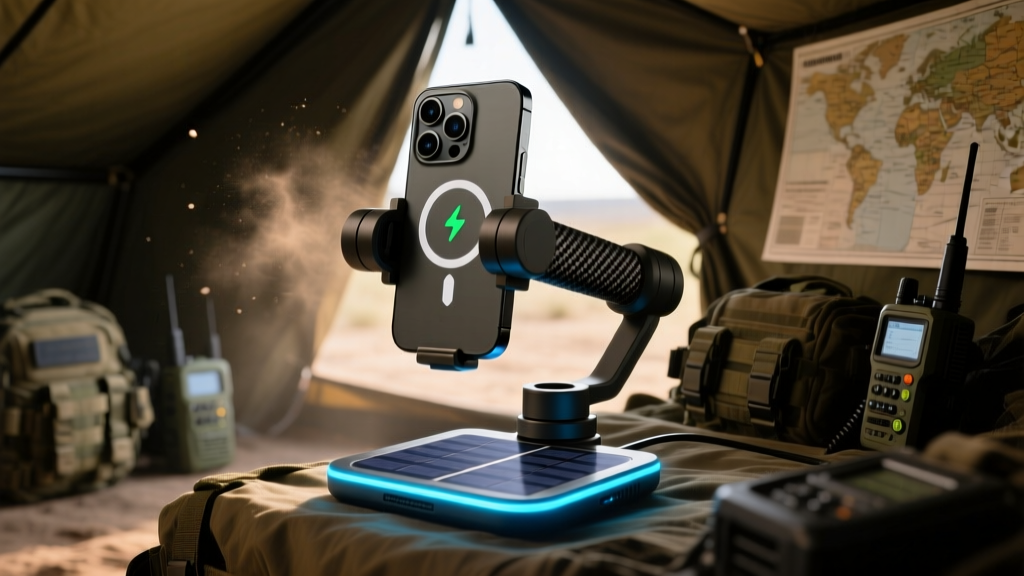
The Nimble FOR GOOD 10K utilizes a high-efficiency 5W monocrystalline solar panel paired with a 15W Qi2 MagSafe wireless charging pad. Its eco-credentials are verifiable: the chassis is molded from recycled plastics, and it ships in zero-plastic hemp packaging.
- Real-World Solar Yield: Under peak direct sunlight (1000 W/m² irradiance), the 5W panel generates roughly 1,000mAh over three hours. This is a trickle-charge designed to maintain battery levels during extended deployments, not to rapidly revive a dead phone from 0%.
- Quick Response Application: Strap it to the outside of your rucksack via the integrated carabiner loop while hiking to maintain a 20% emergency reserve for SOS beacon transmission.
- Failure Mode to Avoid: Leaving the device on a dashboard. Solar panels lose up to 25% efficiency when temperatures exceed 113°F (45°C). Keep it in ambient airflow.
Stabilization & Redundancy: Eco-Conscious Gimbals with Backup Power
Documenting disaster damage for insurance claims, live-streaming rescue coordinates, or simply navigating treacherous terrain requires a steady camera feed. Traditional 3-axis gimbals are single-purpose tools that drain their own internal batteries. The sustainable alternative is a hybrid device.
Top Pick: ShiftCam SnapGrip
Price: $129 | Payload: 300g | Battery: 10,000mAh (Reverse Wireless Charging)
The ShiftCam SnapGrip merges a magnetic 3-axis gimbal with a high-capacity power bank. By combining two accessories into one, you cut the lithium-ion battery production footprint of your kit in half. The SnapGrip uses RoHS-compliant materials and features a modular magnetic mount system that reduces plastic breakage points compared to traditional clamp-based gimbals.
| Feature | Standard 3-Axis Gimbal | ShiftCam SnapGrip (Hybrid) |
|---|---|---|
| Primary Function | Stabilization Only | Stabilization + Power Bank |
| Kit Battery Count | 2 (Gimbal + Separate Power Bank) | 1 (Integrated 10,000mAh) |
| Emergency Phone Charging | No (Requires extra cables) | Yes (Qi2 Reverse Wireless) |
| E-Waste Impact | Higher (Multiple batteries to recycle) | Lower (Consolidated hardware) |
Enhanced Vision: Low-Power Thermal Lens Kits for Search & Rescue
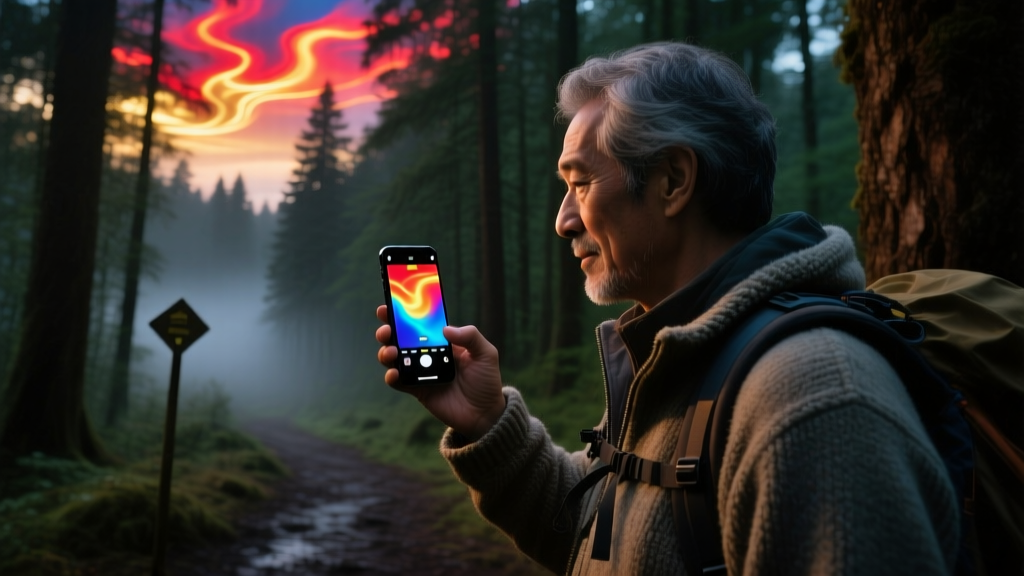
When visibility drops due to smoke, fog, or nightfall, standard smartphone cameras become useless. Thermal lens attachments transform your phone into a life-saving sensor capable of detecting body heat through dense brush or identifying electrical hotspots in storm-damaged infrastructure.
Top Pick: InfiRay P2 Pro Thermal Camera
Price: $239 | Resolution: 256 x 192 IR | Power Draw: 0.35W
The InfiRay P2 Pro plugs directly into your phone's USB-C port (the universal standard as of 2026). Its most critical feature for emergency response is its minuscule power draw. Unlike older thermal attachments that required their own heavy batteries, the P2 Pro draws only 0.35W from your phone, meaning a 4,000mAh phone battery can run the thermal sensor continuously for over 10 hours.
Field Insight: In search and rescue (SAR) operations, the 25Hz refresh rate of the P2 Pro is crucial. Lower-end 9Hz thermal lenses (restricted by export regulations) create motion blur when panning across a landscape, making it difficult to spot a moving heat signature. Always verify the 25Hz spec for quick-response scenarios.
Quick-Response Deployment Framework
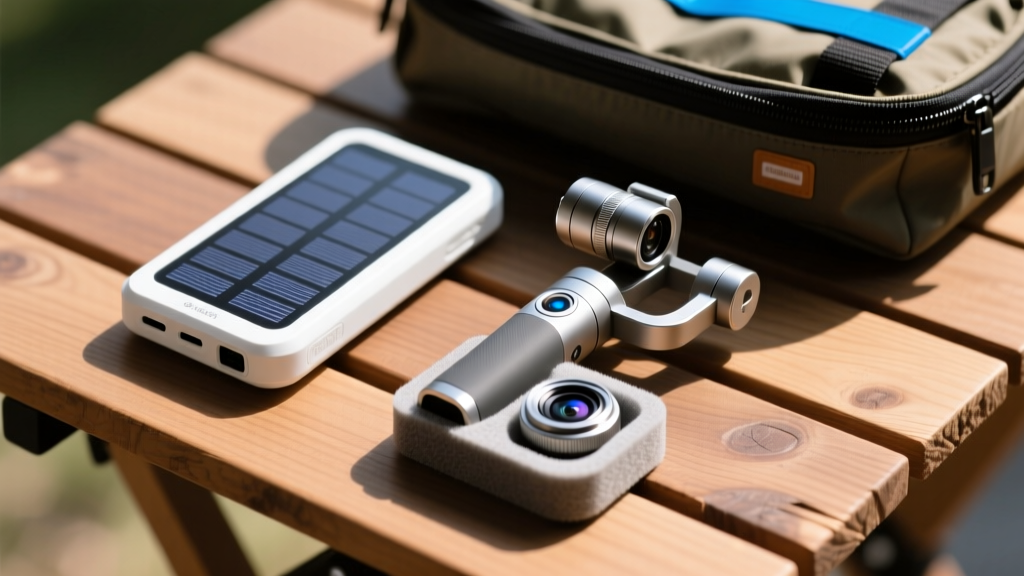
Owning the recommended emergency gear is only half the battle. How you deploy these eco-friendly phone accessories determines their effectiveness. Follow this 4-step protocol when an emergency triggers:
- Assess & Conserve (Minute 0-5): Drop your phone brightness to 10%, enable airplane mode with Wi-Fi/Bluetooth active for local mesh networks, and attach the InfiRay P2 Pro only if visual navigation is compromised.
- Power Triage (Minute 5-15): If grid power is lost, snap your phone onto the Nimble FOR GOOD solar charger. Position the panel at a 45-degree angle facing the equator (South in the Northern Hemisphere) for maximum photon capture.
- Document & Transmit (Minute 15+): Mount the phone to the ShiftCam SnapGrip. Use the gimbal's built-in 10,000mAh battery to reverse-charge the phone via Qi2 while recording high-stability damage assessment video for insurance or first responders.
- Thermal Sweep (Nightfall/Smoke): Switch to the thermal lens to scan the perimeter for wildlife, stranded individuals, or smoldering debris before setting up a temporary shelter.
Maintenance & E-Waste Reduction
To maximize the lifespan of your lithium-ion accessories and prevent premature e-waste, store your power banks and gimbals at a 50% charge in a cool, dry environment. According to the American Red Cross, emergency kits should be audited every six months. Use this bi-annual check to cycle the batteries, ensuring the chemical integrity of your sustainable gear remains intact for when you need it most.
Written by
Jake MorrisonJake Morrison holds a B.S. in Electrical Engineering from UC Berkeley and an MBA from Stanford Graduate School of Business. With over 12 years of hands-on experience in consumer electronics, he previously served as a senior product engineer at a Silicon Valley startup before transitioning to tech journalism. Jake has personally tested and benchmarked over 3,000 gadgets across categories including smartphones, wearables, smart home devices, and audio equipment. His durability testing methodology — involving controlled drop tests, thermal cycling, and water submersion — is widely cited by major tech publications. He is a certified CompTIA A+ technician and a contributing editor to the IEEE Consumer Electronics Magazine.