Essential HVAC Tech Gadgets: Smartwatch Bands & Faces for Field Work
Discover the best HVAC tech gadgets for your wrist. We review rugged smartwatch bands, custom field faces, and protective accessories for technicians.
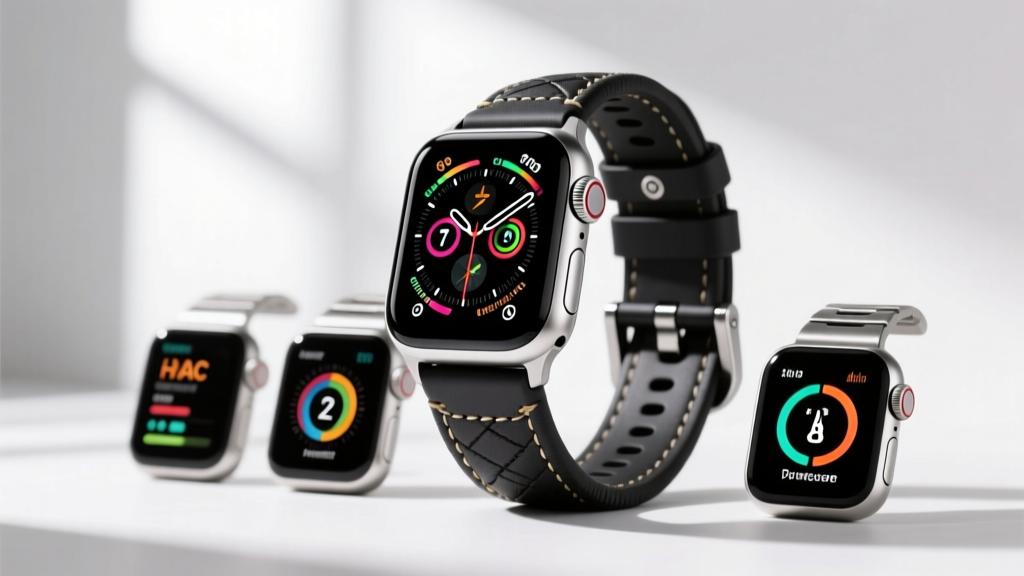
Why Standard Wearables Fail in the Mechanical Room
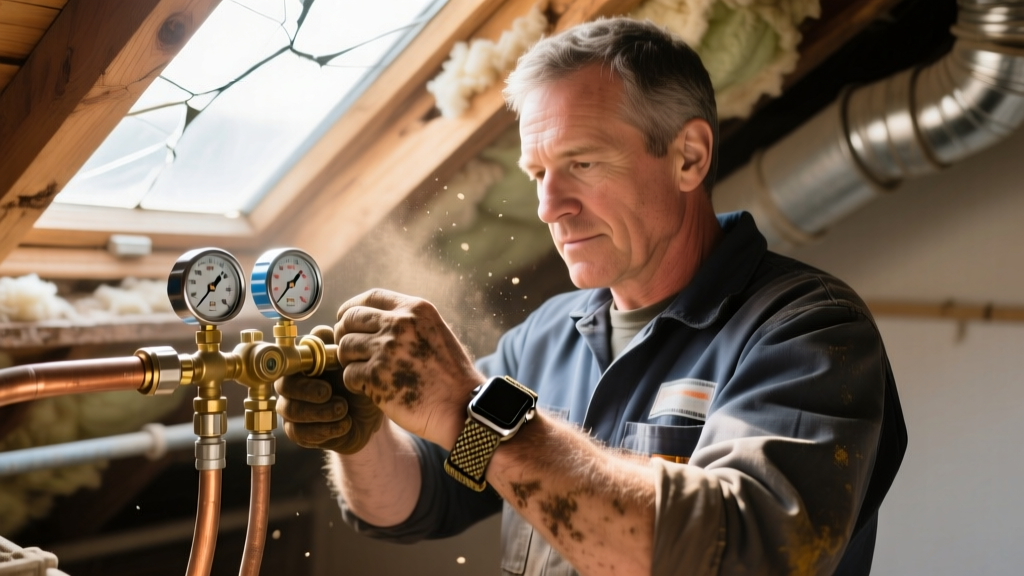
The environment of an HVAC technician is notoriously hostile to consumer electronics. You are routinely exposed to 140°F attic temperatures, abrasive fiberglass insulation, sharp sheet metal edges, and highly hygroscopic refrigerant oils. Standard smartwatch setups—particularly the default fluoroelastomer or braided nylon bands included with most devices—degrade rapidly under these conditions. Polyolester (POE) and Polyalkylene glycol (PAG) oils, standard in modern R-410A and R-32 systems, act as mild solvents that cause cheap silicone and TPU bands to swell, turn gummy, and eventually snap mid-job.
Furthermore, when evaluating EPA Section 608 compliance and safe refrigerant handling, you need gear that can be easily decontaminated without breaking down. Building a reliable wearable setup requires looking beyond the watch itself and investing in specialized hvac tech gadgets designed for the wrist. This guide breaks down the exact materials, custom software configurations, and protective accessories that survive the trade.
The Material Matrix: Choosing the Right Band
Not all polymers and weaves are created equal. Braided nylon loops are a severe snag hazard around ductwork screws and attic truss nails, often resulting in the watch being ripped from the wrist or the connector pins shearing off. Here is how the top band materials perform in field conditions as of 2026.
| Material | Chemical Resistance (POE/PAG) | Snag Factor | Price Range | Best Field Application |
|---|---|---|---|---|
| FKM Fluoroelastomer | Excellent (Chemically Inert) | Zero | $25 - $45 | Daily service, refrigerant handling |
| Aramid Fiber (Kevlar) | Good (Resists most solvents) | Low | $70 - $110 | Heavy mechanical rooms, abrasive environments |
| Titanium / Steel | Excellent | Low (if flush links) | $80 - $200 | Office days, client-facing estimates |
| Braided Nylon | Poor (Absorbs oils/sweat) | Extreme | $20 - $50 | Avoid entirely in the field |
For pure field work, an FKM band like the Barton Elite Silicone (which uses high-grade FKM despite the naming convention) or the Oceanic+ FKM Pro offers the best balance of sweat resistance, chemical inertness, and easy wipe-downs. If you frequently work in tight commercial mechanical rooms with exposed structural steel, the Pitaka Aramid Fiber band provides immense tensile strength without the bulk of metal.
High-Voltage Safety: The Conductivity Trap
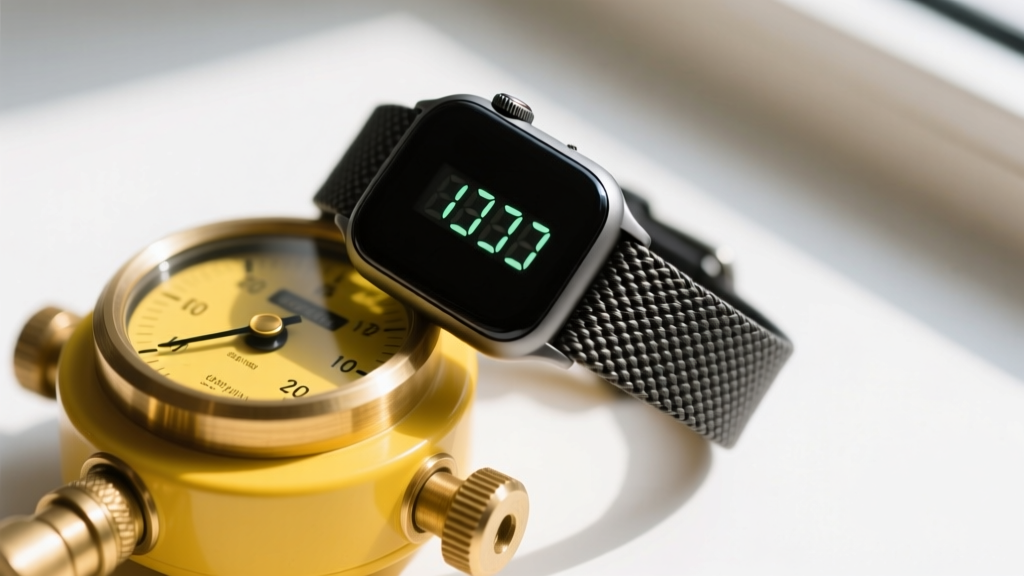
While titanium and stainless steel link bracelets look professional, they introduce a severe safety hazard when working inside air handler control boards or commercial rooftop unit (RTU) disconnects.
Custom Watch Faces: Your Wrist-Sized Psychrometric Chart
The true utility of a smartwatch in the HVAC trade isn't step tracking; it's instant access to field data. Using platforms like Watchsmith (for iOS/Apple Watch) or Facer (for Wear OS/Galaxy Watch), you can build custom 'Service Mode' dials tailored to diagnostic workflows.
Essential Complications for the HVAC Dial
- Superheat & Subcooling Calculators: Apps like HVAC Calculator Pro offer widget complications. Pin your current target evaporator and condenser temperatures to the top corners of your watch face for quick glances while adjusting TXVs.
- Dew Point & Humidity Sensors: While wrist-based ambient sensors are inaccurate due to body heat, pairing your watch via Bluetooth to a remote probe (like the MeasureQuick ecosystem or Fieldpiece wireless tools) allows you to read remote duct humidity and dew point directly on your wrist while standing at the thermostat.
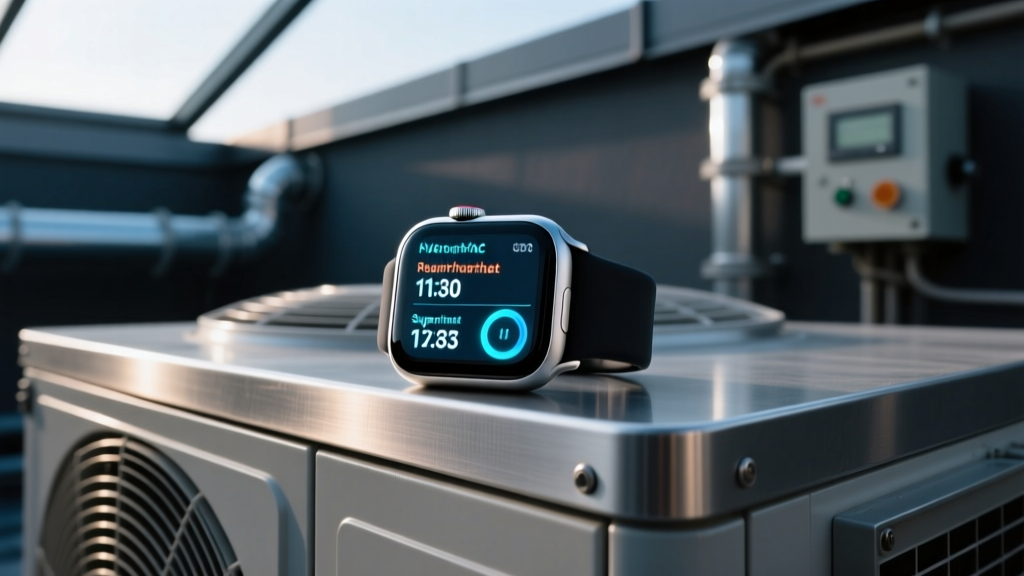
- Pressure Decay Timers: A large, high-contrast digital timer complication set to 10 or 15 minutes is essential for standing pressure tests on copper line sets. Configure the haptic feedback to pulse distinctly when the test interval completes, allowing you to work in loud mechanical rooms without hearing an alarm.
- Flashlight Toggle: Map a dedicated complication to trigger the watch screen's maximum brightness white-light mode. This is invaluable when dropping a screw into a dark, insulated return air plenum.
Screen Protection Against Fiberglass and Sheet Metal
Attic environments are essentially sandpaper. Fiberglass insulation particles and oxidized sheet metal will micro-scratch standard Ion-X glass or standard Gorilla Glass within weeks, reducing screen legibility under direct sunlight. When selecting a wearable, prioritize models with Sapphire Crystal displays (such as the Apple Watch Ultra series or high-end Garmin Fenix/Epix lines). Sapphire ranks a 9 on the Mohs hardness scale, making it virtually impervious to fiberglass and copper burrs.
If your current device lacks sapphire glass, apply a TPU (Thermoplastic Polyurethane) hydrogel film rather than tempered glass. Tempered glass protectors tend to shatter or lift when exposed to the extreme thermal cycling of an attic (swinging from 70°F in the home to 135°F in the attic space), whereas TPU films expand and contract with the chassis and self-heal minor abrasions.
Quick-Release Mechanisms and Lug Standards
The ability to transition from a crawlspace to a client's living room requires quick adaptability. Standardize your watch collection around universal lug widths to maintain a swap-ready kit in your service van.
Pro-Tip for the Van Kit: Keep a dedicated 20mm and 22mm FKM band in your tool bag at all times. If your primary Aramid or metal band gets coated in mastic or duct sealant, a 10-second swap to the backup FKM band ensures you can present a clean appearance to the homeowner without spending 20 minutes scrubbing your watch with degreaser.
For technicians utilizing proprietary lug systems (like the Apple Watch), invest in a high-quality titanium adapter bracket from a brand like Nomad or Catalyst. Cheap aluminum adapters can galvanically corrode when exposed to sweat and acidic flux residues, eventually seizing the quick-release pins. Always apply a microscopic drop of synthetic dielectric grease to the spring bars during installation to prevent them from seizing in high-humidity environments.
Building the Ultimate 2026 Field Setup
Optimizing your wearable technology is about eliminating friction and mitigating environmental hazards. By pairing a chemically resistant FKM band with a sapphire-protected display, configuring custom diagnostic complications via industry-standard data frameworks, and strictly managing conductivity around high-voltage panels, your smartwatch transitions from a fragile consumer toy into an indispensable piece of diagnostic test equipment. Evaluate your current wrist setup against these material and software benchmarks, and upgrade the components that are holding you back in the field.
Written by
Priya SharmaPriya Sharma holds a Ph.D. in Acoustical Engineering from the University of Southampton and a B.Tech in Electronics from IIT Delhi. She has spent 9 years as a consumer electronics journalist, with deep specialization in audio equipment, camera systems, and assistive technology. Priya is an active member of the Audio Engineering Society (AES) and has co-authored papers on spatial audio perception published in the Journal of the Acoustical Society of America. Her reviews of headphones, portable DACs, and studio monitors include objective measurements using Audio Precision analyzers alongside subjective listening tests. She also serves on the advisory board of the Global Accessibility Reporting Initiative (GARI), evaluating mobile devices for users with visual and hearing impairments.