Outdoor Tech and Gadgets: TomTechBlog's 2026 VR Field Guide
Discover the best outdoor VR and AR gadgets for 2026. Our field-tested guide covers lens protection, high-nit AR glasses, and off-grid power solutions.
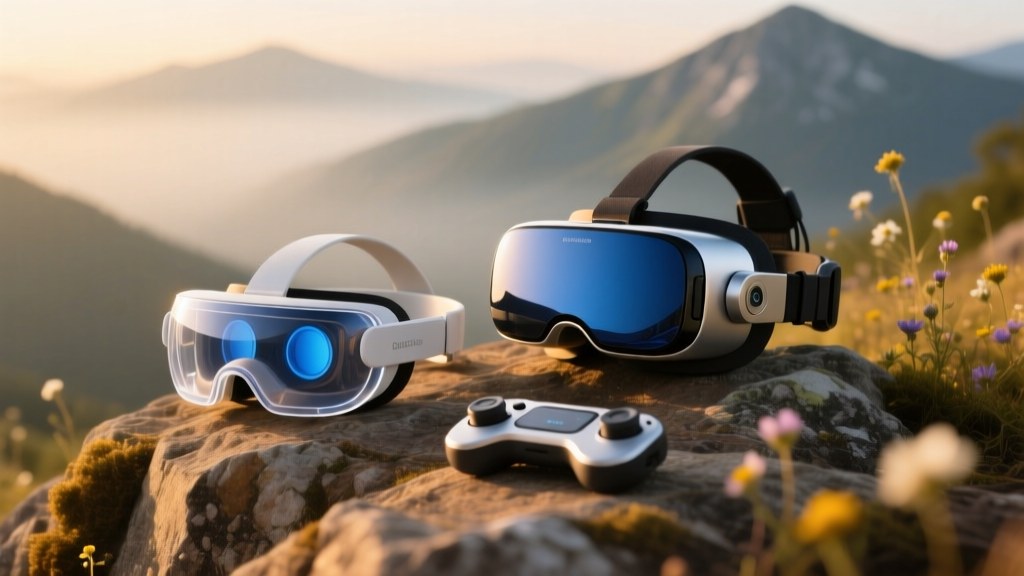
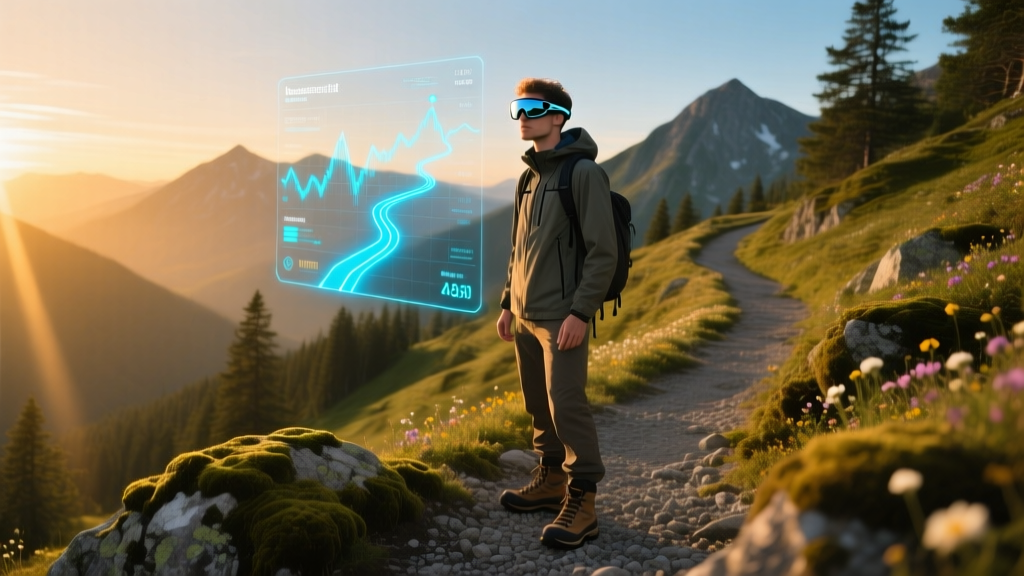
Taking immersive hardware beyond the living room introduces a host of environmental variables that most manufacturers fail to address in their manuals. When evaluating the latest outdoor tech and gadgets, TomTechBlog's contributing field-testers consistently find that ambient light, temperature fluctuations, and unstructured terrain severely impact headset performance. Whether you are setting up a backyard VR fitness station, navigating backcountry trails with AR smart glasses, or running a mobile mixed-reality demo at an outdoor festival, standard indoor best practices will result in hardware failure or subpar tracking.
This guide bypasses generic setup advice to deliver exact specifications, environmental thresholds, and accessory configurations required to operate XR hardware safely and effectively in the wild.
Optical Survival: Protecting Pancake Lenses from Solar Ignition
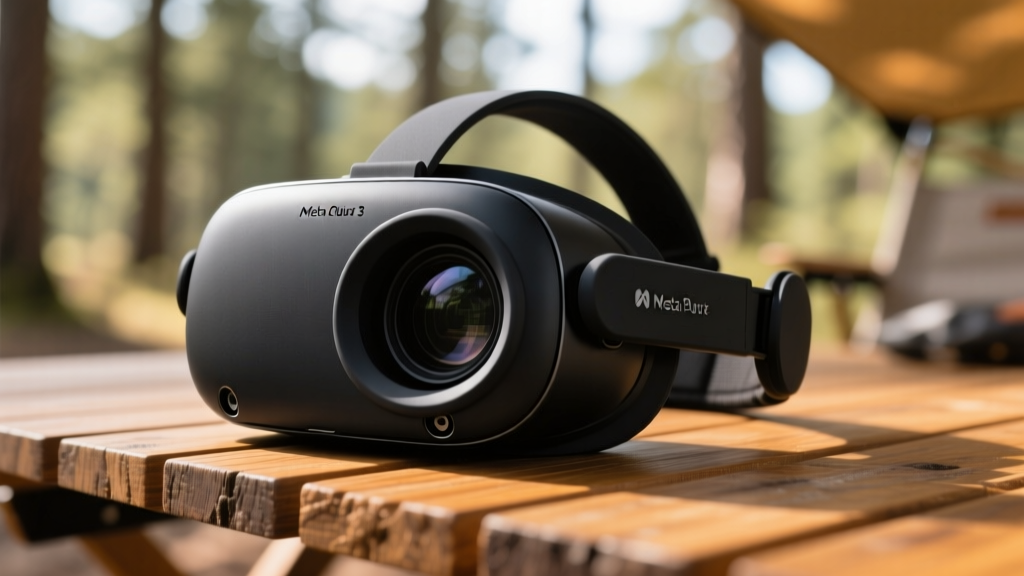
The most catastrophic failure mode for outdoor VR users is lens-induced screen burn. Modern headsets like the Meta Quest 3 and Apple Vision Pro utilize pancake or multi-element optical stacks designed to fold light paths. When exposed to direct sunlight, these lenses act as high-efficiency magnifying glasses. The focal point concentrates solar radiation directly onto the internal LCD or micro-OLED panels.
To mitigate this, every outdoor XR kit must include an opaque silicone lens shield (typically $12-$18). Unlike fabric covers, molded silicone blocks 100% of UV and IR radiation and prevents dust ingress when the headset is stored in a backpack. Furthermore, when using mixed-reality passthrough outdoors, ensure your physical body is positioned with the sun at your back to prevent direct rays from entering the external camera arrays and flaring the internal displays.
AR Smart Glasses: Overcoming Ambient Washout on the Trail
While VR headsets trap you in a digital box, AR smart glasses overlay data onto the physical world, making them ideal for outdoor navigation and cycling. However, the primary enemy of AR waveguides and birdbath optics is ambient lux. Direct sunlight operates at roughly 100,000 lux. To maintain legibility, an AR display must push massive peak brightness, measured in nits, while utilizing electrochromic dimming to increase contrast.
Below is a field-tested comparison of the top AR wearables for high-glare outdoor environments in 2026:
| Model | Peak Brightness | Electrochromic Dimming | Best Outdoor Use Case |
|---|---|---|---|
| Viture Pro XR | 1000 nits | Yes (Multi-mode) | Hiking navigation, daytime drone FPV |
| Xreal Air 2 Ultra | 600 nits | Yes (3-stop) | Shaded campsite media, overcast cycling |
| Ray-Ban Meta (Standard) | N/A (Audio/Camera) | Transitions Lenses | Hands-free trail recording, spatial audio |
For rigorous daytime hiking, the Viture Pro XR is the superior choice. Its 1000-nit peak brightness cuts through canopy glare, and the integrated electrochromic dimming allows you to block out the real world when resting at a summit to watch cached media. As noted in The Verge's extensive XR optical analysis, maintaining contrast ratios in high-ambient light requires both raw nit output and physical light-blocking accessories; always pair your AR glasses with the included magnetic sun-shades when facing east or west during golden hour.
SLAM Tracking Failures in Unstructured Environments
Simultaneous Localization and Mapping (SLAM) relies on optical cameras identifying high-contrast feature points in your environment to calculate 6-Degrees-of-Freedom (6DoF) movement. The outdoors is fraught with SLAM-breaking anomalies.
- Featureless Terrain: Snowfields, sand dunes, and large bodies of water lack the geometric texture required for optical tracking. The headset will experience severe drift or drop into 3DoF (head rotation only) mode.
- IR Washout: Headsets like the Quest 3 use 850nm and 940nm infrared illuminators for low-light tracking and depth mapping. Sunlight contains massive amounts of broadband IR radiation. In direct sun, the external cameras become 'blinded' by IR noise, causing controller tracking to stutter or detach entirely.
- Reflective Surfaces: Puddles, car windows, and even wet tent fabrics create ghost reflections that confuse spatial mapping algorithms, resulting in virtual objects 'floating' or clipping through the ground plane.
Field Fix: Restrict 6DoF room-scale gaming to shaded, textured areas (like a grassy lawn under a tree canopy). For open environments like beaches or snowy slopes, switch your headset to 'Media Mode' or 'Cinematic Mode,' which locks the virtual screen to your head (3DoF) and disables environmental mapping, eliminating tracking drift entirely.
Thermal Throttling and Cold-Weather Battery Chemistry
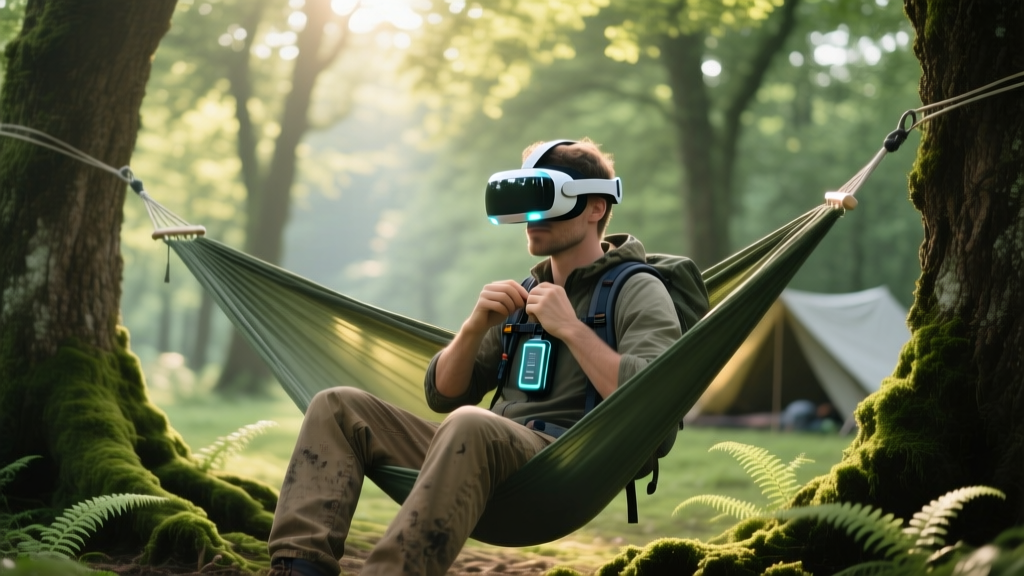
Lithium-ion batteries suffer from increased internal resistance when temperatures drop below 32°F (0°C). If you are snowshoeing or operating in high-altitude base camps, a headset that normally yields 2.5 hours of runtime may shut down prematurely at 45 minutes due to voltage sag triggering the battery management system's low-voltage cutoff.
To counteract this, utilize a modular head strap system like the BoboVR B3 or Kiwi Design Battery Strap. These systems move the heavy battery cells to the rear of the head, improving weight distribution, but more importantly, they allow you to swap batteries without removing the headset. Keep your spare magnetic battery packs in an inner jacket pocket close to your core body heat. When a battery drops below 20% in freezing conditions, swap it immediately and place the depleted pack back in your jacket to warm it up; the residual heat will often recover an extra 5-10% of usable charge for emergency use.
Audio Isolation in High-Wind Conditions
Open-ear audio designs, standard on the Quest 3 and Vision Pro, are entirely useless in winds exceeding 10 mph. The wind shear across the speaker grilles creates low-frequency rumbling that drowns out spatial audio cues. For outdoor use, bypass the onboard speakers entirely. Pair your headset with IPX4-rated Active Noise Cancelling (ANC) earbuds, such as the Sony WF-1000XM5 or Apple AirPods Pro 2. The ANC microphones will actively phase-cancel wind noise, while the silicone ear tips provide the physical seal necessary to hear directional audio in a breezy environment.
Quick-Deploy Field Checklist
Before leaving the trailhead or setting up your outdoor demo tent, verify your kit against this operational checklist:
- Lens Shield Installed: Opaque silicone cover is on the headset whenever it is not actively mounted on your face.
- Electrochromic Dials Set: AR glasses dimming is set to maximum for daytime transit to preserve contrast.
- Tracking Environment Verified: Play area is shaded, free of large reflective puddles, and features high-contrast ground textures (grass or dirt, not sand or snow).
- Thermal Management: Spare battery packs are stored in insulated inner pockets; headset is kept out of direct sun to prevent SoC thermal throttling (which typically occurs at 104°F / 40°C internal chassis temp).
- Audio Rerouted: Bluetooth ANC earbuds are paired and set to 'Wind Noise Reduction' mode in their companion app.
By respecting the physical limitations of optical sensors and lithium chemistry, you can reliably integrate high-end XR hardware into your outdoor adventures. For more rigorous hardware teardowns and environmental stress tests, continue following expert analyses from sources like Wired's hardware reviews to stay ahead of the rapidly evolving mobile spatial computing landscape.
Written by
Sarah KimSarah Kim holds certifications from both NASM (National Academy of Sports Medicine) and ACE (American Council on Exercise), along with a B.S. in Kinesiology from UCLA. She has spent 7 years bridging the gap between exercise science and consumer technology, evaluating fitness trackers, smart scales, sleep monitors, and recovery devices with clinical precision. Sarah has tested over 200 health-focused wearables in controlled lab settings and real-world training environments, comparing device data against gold-standard medical equipment like ECG monitors and DEXA scans. She consults for three fitness app companies on data accuracy standards and has presented research on wearable reliability at the American College of Sports Medicine (ACSM) annual conference. Her reviews emphasize clinical validity over marketing claims.