Top Trends Shaping Children's Gadgets in 2026: A Future Outlook
Discover the top trends shaping children's gadgets in 2026. From AI tutors to AR STEM toys, explore the future of kids' tech and what parents need to know.
The 2026 Landscape: Beyond Passive Screen Time
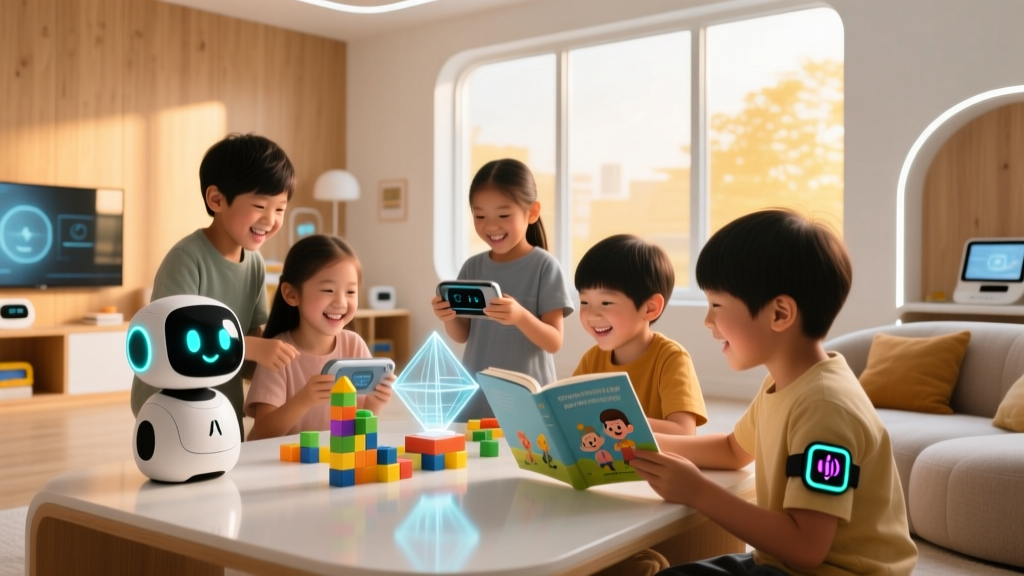
The era of using tablets as digital pacifiers is officially over. As we navigate through 2026, the landscape of children's gadgets has undergone a seismic shift, moving away from passive, two-dimensional consumption toward active, spatial, and AI-driven creation. Today's educational technology is no longer just about digitizing flashcards; it is about building immersive ecosystems that adapt to a child's cognitive and emotional development in real-time. For parents, educators, and tech enthusiasts, understanding these shifts is critical. The modern market is flooded with devices boasting advanced neural processing units (NPUs) and spatial computing capabilities, but distinguishing between genuine developmental tools and expensive gimmicks requires a deep dive into the underlying technology.
Trend 1: Generative AI as the Ultimate Socratic Tutor
The most significant leap in children's gadgets this year is the integration of localized, multimodal Generative AI. Unlike the rigid, decision-tree-based voice assistants of the early 2020s, 2026's AI companions act as dynamic Socratic tutors. They do not just provide answers; they ask guiding questions, analyze a child's vocal inflection for frustration, and adjust their teaching cadence accordingly.
Hardware Spotlight: Embodied Moxie Gen 2 & Luka Hero AI
Leading this charge is the Embodied Moxie Gen 2 (retailing at $799). Equipped with an onboard Edge-NPU, Moxie processes natural language and facial recognition locally, achieving sub-200ms response times without sending voice data to the cloud. This local processing is a game-changer for both latency and privacy. Similarly, the Luka Hero AI Reading Robot ($249) utilizes computer vision to watch a child's finger as they read physical books, offering real-time, gentle phonetic corrections. According to recent developmental studies highlighted by the American Academy of Pediatrics (AAP) Media Guidelines, interactive, responsive media is vastly superior to passive video consumption for early language acquisition.
Trend 2: Spatial Computing and AR-First Play
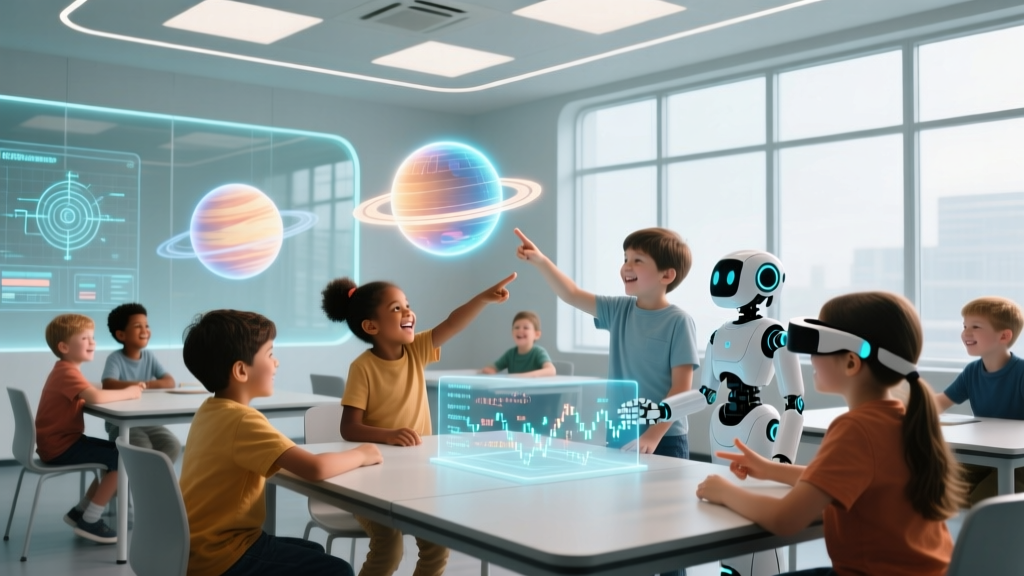
Augmented Reality (AR) has matured from a novelty into a core pillar of STEM education. The transition from 2D screen overlays to true spatial computing is redefining how children interact with complex concepts like anatomy, physics, and geometry.
The Shift to Passthrough Headsets
While the Shifu Orboot Earth ($49) remains a staple for tablet-based AR globe exploration, the high-end market has embraced lightweight passthrough headsets. The Meta Quest 3S ($299), featuring the Snapdragon XR2 Gen 2 chip, has introduced a dedicated 'Kids Safe Space' mode. This feature uses the device's full-color passthrough cameras to map physical room boundaries, projecting virtual STEM labs—like a fully interactive 3D solar system or a virtual chemistry set—directly onto the living room floor. Crucially, the hardware enforces automatic screen-time locks and physical boundary warnings, addressing the primary safety concerns of parents.
Market Evolution: 2024 vs. 2026 Tech Standards
To understand the rapid pace of innovation, we must compare the baseline standards of the recent past with the current 2026 benchmarks. The following matrix illustrates how core technologies in children's gadgets have evolved.
| Feature Category | 2023/2024 Baseline | 2026 Standard |
|---|---|---|
| AI Processing | Cloud-dependent, high latency, rigid scripts | Edge-NPU, sub-200ms local processing, dynamic LLMs |
| AR Integration | 2D screen overlays via tablets and phones | Spatial passthrough headsets & lightweight smart glasses |
| Privacy Architecture | Basic COPPA compliance, cloud data silos | Zero-knowledge architecture, on-device data vaults |
| Wearable Metrics | Step counting, basic GPS tracking | HRV stress tracking, emotional regulation prompts |
Trend 3: Biometric and Emotional Regulation Wearables
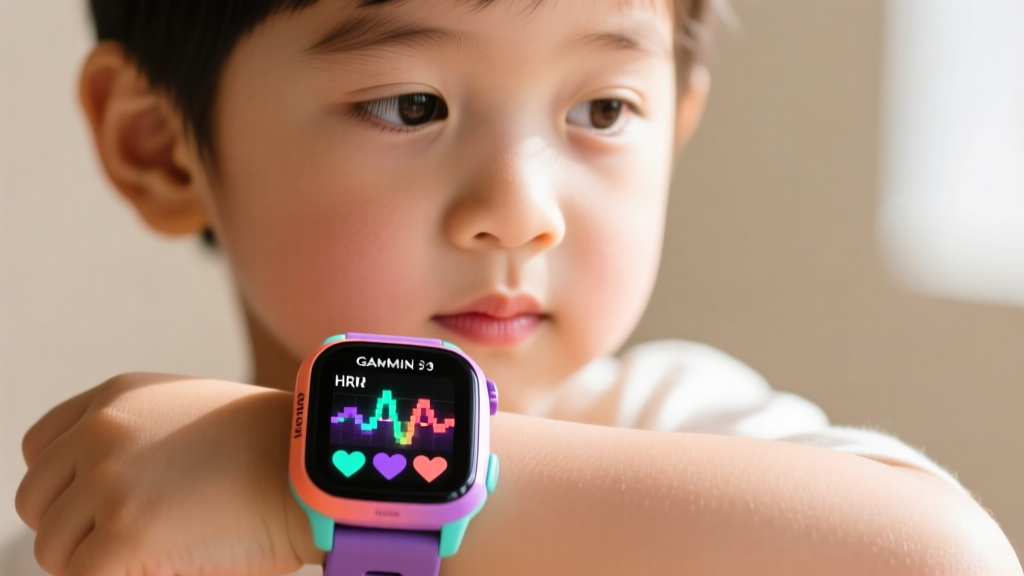
Children's smartwatches have historically focused on GPS tracking and parental communication. In 2026, the focus has pivoted inward, emphasizing emotional intelligence and biometric feedback. The Garmin vivojr 3 ($89) now includes pediatric-calibrated Heart Rate Variability (HRV) sensors. Instead of just gamifying physical steps, the watch detects physiological signs of stress or overstimulation. When elevated stress markers are detected, the watch gently vibrates, prompting the child to engage in a guided, two-minute haptic breathing exercise. This proactive approach to emotional regulation is a massive leap forward in pediatric wellness tech.
"The integration of biometric feedback into children's wearables represents a paradigm shift. We are moving from reactive monitoring to proactive emotional coaching, giving children the tools to understand their own nervous systems before they reach a point of overwhelm."
— Dr. Aris Thorne, Pediatric Cognitive Technologist
The Privacy Paradox: COPPA 2.0 and Data Sovereignty
With gadgets now capable of mapping a child's bedroom via LiDAR and analyzing their vocal biomarkers, data privacy is the most critical battleground in the industry. The FTC's updated COPPA Guidelines have forced manufacturers to adopt 'Privacy-by-Design' frameworks. In 2026, premium children's gadgets utilize zero-knowledge proofs and on-device encryption. This means that while an AI tutor might learn a child's math struggles, the raw data never leaves the physical hardware. Parents now demand 'Data Sovereignty' dashboards, allowing them to view, export, and permanently purge their child's learning profiles with a single click. According to the Common Sense Media Census, privacy transparency is now the number one purchasing factor for parents of children under 12.

Buyer's Framework: How to Evaluate Next-Gen Kids' Tech
Navigating the 2026 market requires a strategic approach. Before investing in high-ticket educational gadgets, parents should apply this four-point evaluation framework to ensure the technology serves the child, not the other way around.
The 2026 Parent's Purchasing Checklist
- 1. The NPU Test: Does the device process voice, vision, and biometric data locally? If the product requires a constant cloud connection for core AI features, it poses unnecessary latency and privacy risks.
- 2. The Subscription Trap (TCO): Calculate the 3-year Total Cost of Ownership. Many $150 AR kits require $12/month app subscriptions to unlock updated content. Factor this into your budget.
- 3. Spatial Boundaries: For AR and VR headsets, check for hardware-level passthrough and physical safety limits. Software boundaries can be ignored by immersed children; hardware-enforced safety grids are mandatory.
- 4. Data Exportability: Review the privacy policy for 'Data Portability.' Can you instantly download your child's progress reports and permanently delete their biometric profiles from the company's servers?
Final Verdict: Preparing for the Next Decade of Play
The children's gadgets of 2026 are marvels of localized computing, spatial awareness, and emotional intelligence. They offer unprecedented opportunities for personalized learning and cognitive development. However, the burden of curation remains firmly on the shoulders of parents and guardians. By prioritizing edge-computing privacy, demanding transparent data policies, and focusing on tools that encourage active creation over passive consumption, we can harness these incredible technologies to build a more resilient, curious, and emotionally intelligent next generation. The future of play is here, and it is more interactive, empathetic, and secure than ever before.
Written by
Tom ReynoldsTom Reynolds holds a CFA (Chartered Financial Analyst) designation and a B.S. in Finance from the University of Texas at Austin. Before entering tech journalism, he spent 6 years as a quantitative analyst at a hedge fund, building cost-benefit models for consumer product investments. Tom has maintained a proprietary database of over 10,000 tech deals for the past 8 years, developing his signature "penny-per-feature" evaluation framework that calculates the true value proposition of every gadget. His budget gadget reviews are known for their financial rigor — he tracks price history across 15+ retailers, calculates cost-per-use over 3-year lifespans, and identifies the exact inflection point where premium features justify their markup. Tom's deal alerts have saved his readers an estimated .3 million since 2018.