Antique Kitchen Gadgets Inspire 2026 Smart Kettle Trends
Discover how antique kitchen gadgets are shaping 2026 smart kettle and water dispenser trends, blending vintage aesthetics with precision PID tech.
The Heritage Tech Movement: Why 2026 is Looking Backward
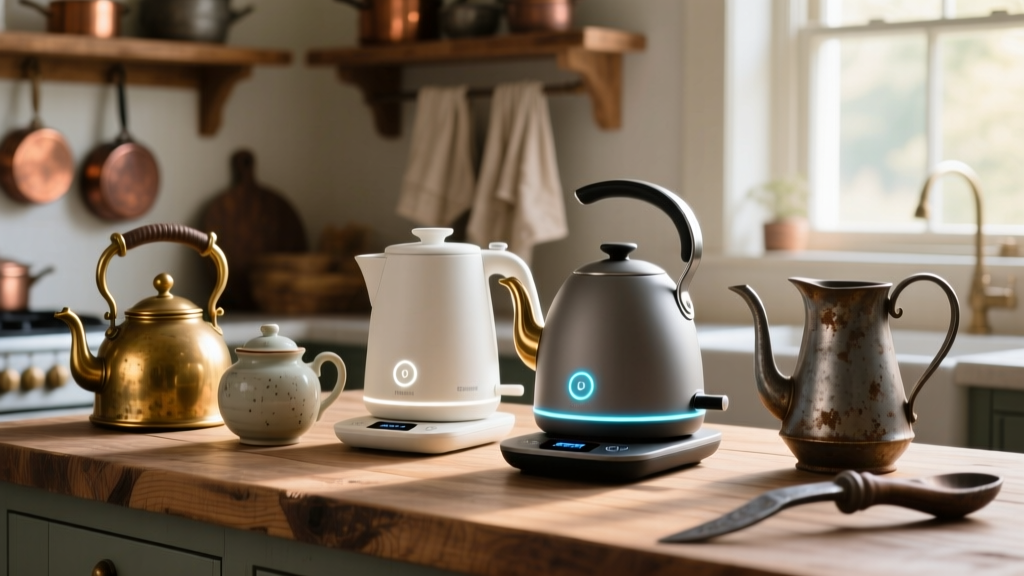
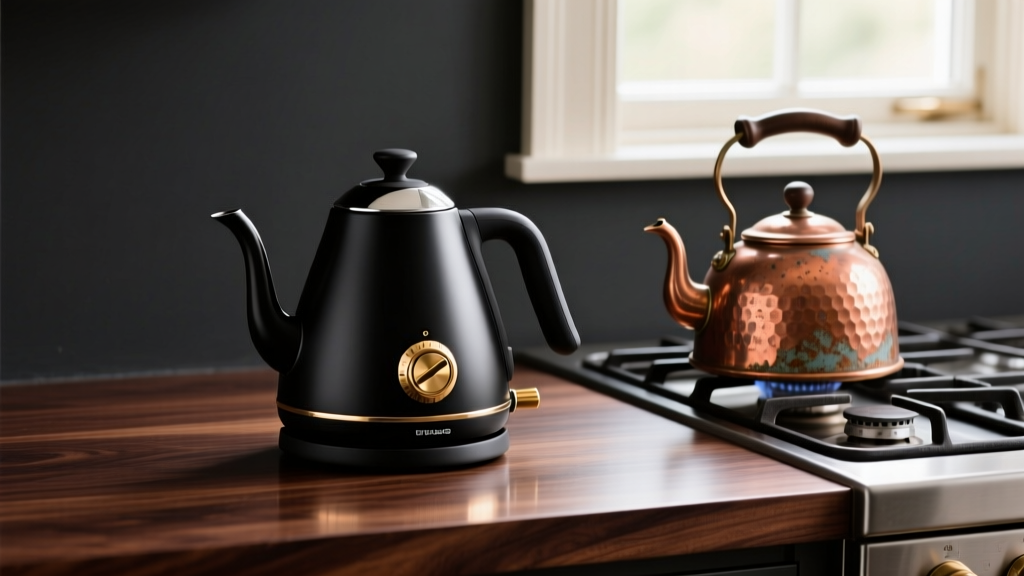
The premium kitchen appliance market of 2026 is experiencing a definitive pivot away from the sterile, hyper-minimalist aesthetic that dominated the early 2020s. Driven by a consumer desire for permanence and tactile engagement, a movement known as 'Heritage Tech' is redefining electric kettles and water dispensers. By studying the ergonomics, material longevity, and mechanical charm of antique kitchen gadgets, manufacturers are engineering a new generation of water-heating appliances that marry early-20th-century design cues with micro-processor precision.
This is not mere nostalgia. The shift is rooted in functional superiority. Early smart kettles reliant on capacitive touchscreens and glossy plastic housings suffered high failure rates due to steam-induced micro-condensation shorting digitizer layers. In contrast, the mechanical toggles, heavy brass fittings, and enameled steel bodies found in antique kitchen gadgets were designed to withstand high-humidity, high-heat environments for decades. Today’s engineers are adapting these historical solutions to house modern PID temperature controllers and thick-film heating elements.
Tactile Over Touch: The Return of Mechanical Controls
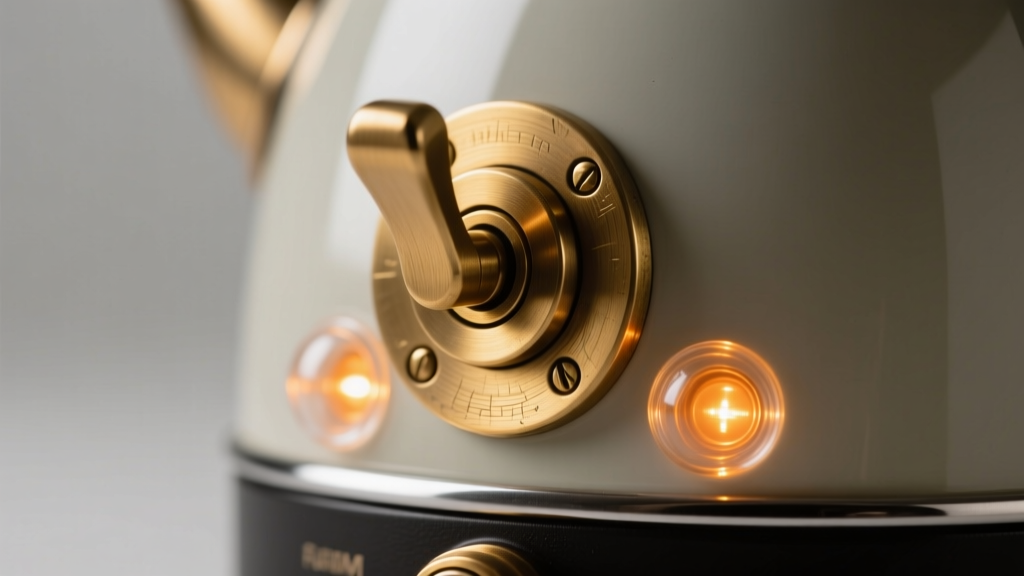
The most significant takeaway from studying antique kitchen gadgets is the superiority of physical feedback. When handling boiling water, users require absolute certainty that a device is engaged. The 2026 lineup of smart kettles replaces fragile glass touch panels with heavy, dampened rotary encoders and mechanical lever switches.
Case Study: The Rotary Encoder Dial
Models like the updated Fellow Stagg EKG Pro ($165) and the Breville Aqua IQ Retro ($299) utilize solid brass or machined aluminum dials. Beneath the vintage exterior lies a high-resolution optical encoder. This allows the user to scroll through temperature settings (from 104°F to 212°F) with the heavy, ratcheted resistance of a 1950s analog radio dial, while an embedded NTC thermistor ensures ±1°F accuracy. This hybrid approach eliminates the 'phantom touch' errors common in steamy environments while preserving the precision required for third-wave coffee brewing and delicate green teas.
Material Science: Beyond the Stainless Steel Monoculture
For the past decade, 304-grade stainless steel has been the default for electric kettles. However, the Heritage Tech trend has revived the use of spun copper, cast iron accents, and porcelain enamel—materials heavily favored in antique kitchen gadgets for their thermal properties and aging characteristics.
Manufacturers are now using advanced cladding techniques to bond aesthetic outer layers with food-safe inner cores. The FDA's guidelines on food contact substances strictly regulate copper and brass exposure, prompting 2026 designs to feature a 316-grade surgical stainless steel interior (which resists pitting from acidic water and descaling agents) clad in an exterior layer of spun copper or matte enamel.
| Material Cladding | Thermal Retention | Weight Profile | Maintenance & Patina | Average Cost (2026) |
|---|---|---|---|---|
| Spun Copper / 316 SS Core | Excellent (High conductivity) | Heavy (2.8 lbs empty) | Requires polishing or develops natural dark patina | $220 - $350 |
| Porcelain Enamel / Carbon Steel | Good (Radiates heat slowly) | Medium (2.1 lbs empty) | Chip-resistant; wipe clean; zero patina | $130 - $180 |
| Brushed Brass / 304 SS Core | Moderate | Medium-Heavy (2.4 lbs) | Lacquered to prevent tarnish; fingerprint prone | $160 - $240 |
Countertop Water Dispensers: Reimagining the Antique Pump
The influence of antique kitchen gadgets extends beyond kettles into the rapidly growing category of countertop water dispensers. Early 20th-century kitchens relied on mechanical cast-iron water pumps and gravity-fed ceramic crocks. In 2026, premium water dispensers are adopting these vertical, lever-actuated form factors to replace the bulky, plastic, push-button towers of the previous decade.
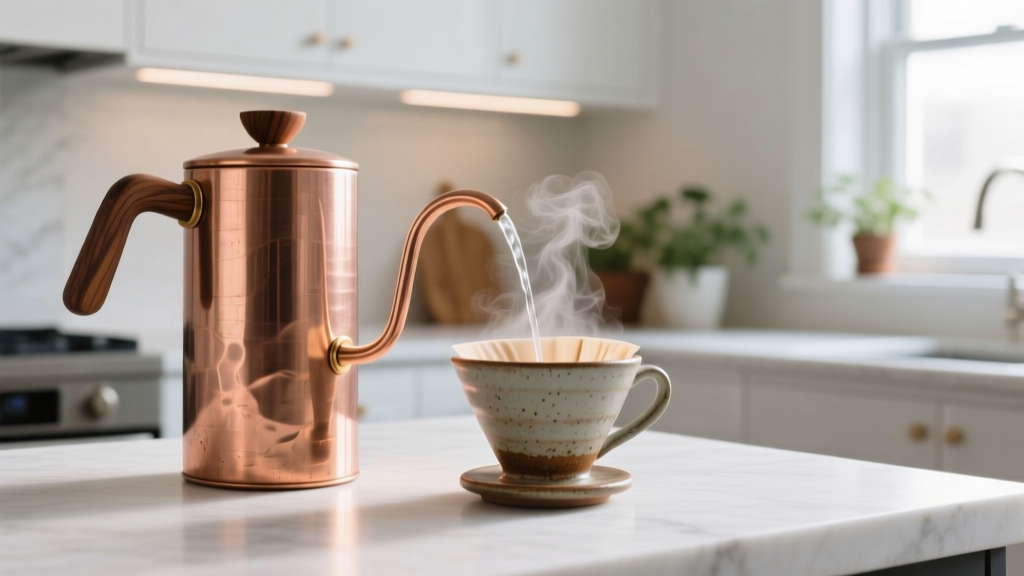
Modern heritage dispensers, such as the Lomi Aqua Heritage ($450), feature walnut wood accents and solid brass dispensing levers. Pulling the heavy brass lever forward mechanically actuates a micro-switch that triggers a 2000W thick-film heating element. Unlike traditional coiled resistance wires, thick-film technology prints the heating circuit directly onto a stainless steel substrate, allowing for 0.2-second thermal response times. The result is instant, on-demand boiling water delivered through a vintage-style spout, completely eliminating the need for a standalone kettle while occupying 40% less counter space.
Filtration Meets Heritage Design
These dispensers also integrate reverse osmosis (RO) and mineral-remineralization filters hidden within their retro-styled bases. Drawing inspiration from the Smithsonian's historical food and kitchen collections, which document the evolution of domestic water purification, modern designers recognize that consumers want water technology to feel natural and grounded, not clinical. Hiding complex UV-C sterilization chambers inside cast-aluminum housings that mimic 1930s Art Deco appliances satisfies both the demand for pure water and aesthetic warmth.
2026 Buyer’s Framework: Evaluating Heritage-Style Kettles
Not all retro-styled appliances are built to last. The market is flooded with cheap plastic kettles painted to look like copper. When investing in Heritage Tech, use this strict evaluation framework to ensure you are buying genuine quality rather than a superficial skin.
- Verify the Interior Steel Grade: Always look for 316-grade (marine/surgical) stainless steel interiors. 304-grade is acceptable, but 316 offers vastly superior resistance to pitting from hard water scale and citric acid descalers. Avoid any kettle with an exposed plastic interior or silicone water-level windows, which degrade and leach over time.
- Inspect the Base Contacts: High-quality heritage kettles use Strix or Otter controls (the gold standard in thermostat manufacturing). Look for heavy, gold-plated contact pins on the base rather than thin, stamped aluminum connectors which can arc and scorch under 1500W loads.
- Demand True PID Controllers: A vintage dial is useless if the internal thermostat is a simple bimetallic strip that overshoots the target temperature. Ensure the spec sheet explicitly lists a 'PID (Proportional-Integral-Derivative) controller' and 'NTC thermistor' for hold-temperature accuracy.
- Weight and Balance: Antique kitchen gadgets were inherently heavy, providing stability. A premium 2026 smart kettle should weigh at least 2.2 lbs empty. If it feels feather-light, the manufacturer has skimped on the thermal cladding and sound-dampening materials, resulting in a loud, vibrating boil.
Future Outlook: Living Finishes and Predictive Tech
As we look toward the late 2020s, the intersection of antique aesthetics and smart technology will evolve from visual mimicry to material interaction. Material scientists are currently testing 'living alloys'—copper and brass blends engineered to develop a specific, highly protective verdigris patina over a predictable five-year timeline, effectively allowing the appliance to age gracefully like a cast-iron skillet or a leather strop.
Furthermore, predictive maintenance algorithms will be integrated into these mechanical-looking dials. Instead of digital error codes, the brass dial will utilize subtle haptic feedback or shift its ambient LED under-glow to amber when the internal scale sensor detects a 15% reduction in heating efficiency, prompting the user to descale. By respecting the timeless, tactile brilliance of antique kitchen gadgets while silently embedding cutting-edge diagnostics, the next generation of water dispensers will finally achieve the ultimate goal of kitchen design: tools that are both beautiful to use and built to outlast their owners.
Written by
Ryan TanakaRyan Tanaka holds a B.S. in Mechanical Engineering from Oregon State University and is a certified AWS Solutions Architect. He has built over 80 custom electronics projects ranging from CNC machines to IoT sensor networks, and has reviewed development boards, 3D printers, soldering equipment, and maker tools for the past 6 years. Ryan is an active contributor to 12 open-source hardware projects on GitHub and teaches monthly workshops at three hackerspaces across the Pacific Northwest. His reviews combine engineering rigor with accessibility — he evaluates products not just on specs but on documentation quality, community support, and learning curve for beginners. He has presented at Maker Faire Bay Area, Open Hardware Summit, and the Adafruit community showcase, and maintains a popular blog documenting his build processes.