Best Budget Wooden Kitchen Gadgets for Stainless Steel Cookware 2026
Discover the best budget wooden kitchen gadgets under $20 in 2026. Protect your stainless steel cookware from scratches with our expert-tested utensil roundup.
The Stainless Steel Dilemma: Preserving the Mirror Polish
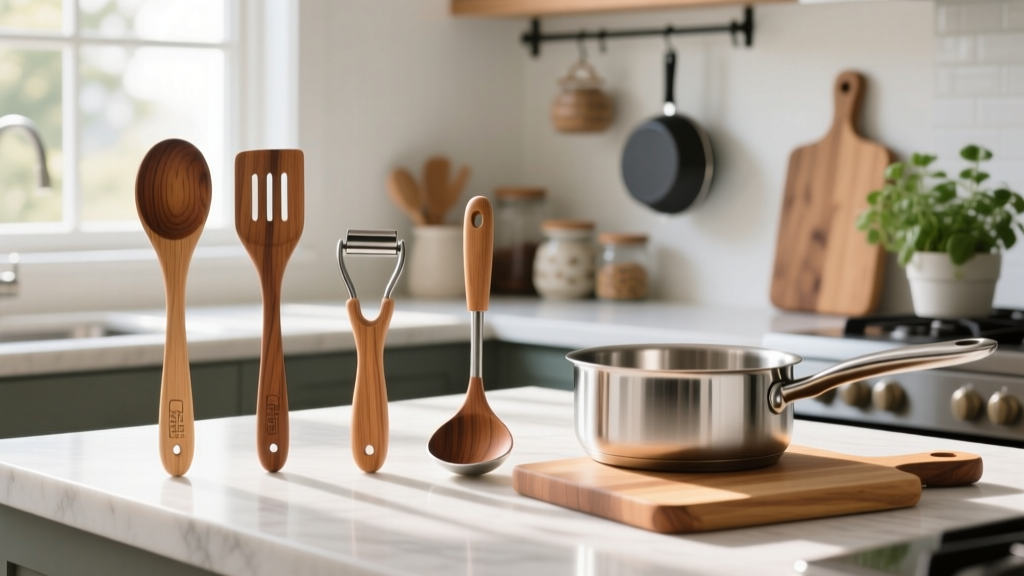
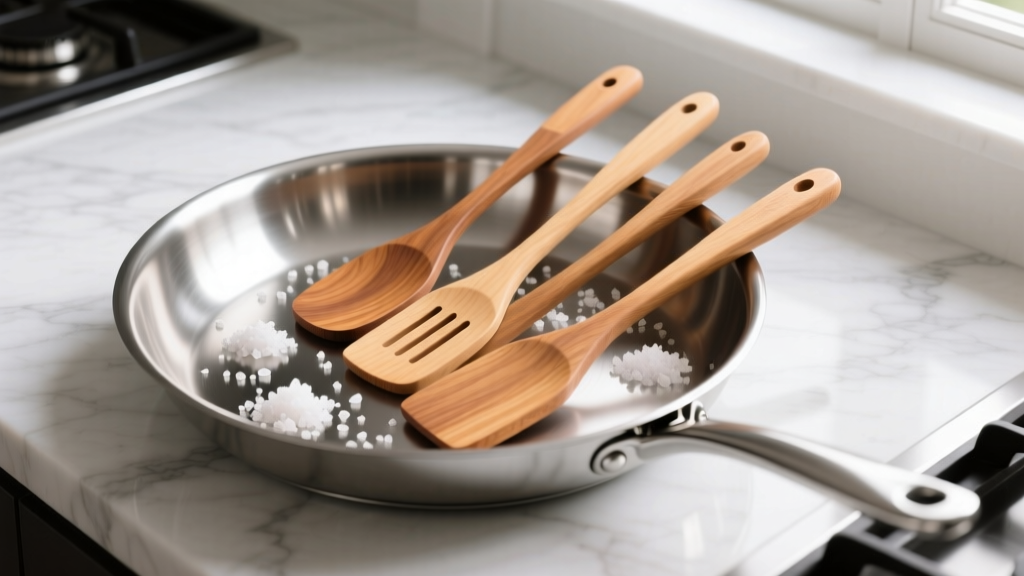
Investing in high-quality 18/10 or 304-grade stainless steel cookware is a cornerstone of any serious kitchen. Brands like All-Clad, Made In, and Tramontina offer unparalleled heat distribution and longevity. However, the polished mirror finish of premium stainless steel is highly susceptible to micro-abrasions. When you use metal utensils—stainless steel spatulas, whisks, or tongs—you create metal-on-metal friction. While this won't compromise the structural integrity of the pan, it permanently dulls the cooking surface, creating microscopic grooves where oxidized oils and polymerized fats accumulate, leading to stubborn sticking and a degraded aesthetic.
The ultimate, cost-effective solution to preserve your cookware's finish is integrating wooden kitchen gadgets into your daily prep. Wood is naturally softer than steel, meaning it yields to the pan rather than scratching it. Furthermore, wood provides superior tactile feedback; you can feel the exact moment a delicate fish fillet releases from the pan without scraping the surface. Below, we break down the best budget-friendly wooden utensils for 2026 that deliver premium performance without the premium price tag.
Never place wooden kitchen gadgets in the dishwasher. The extreme heat (often exceeding 150°F/65°C) and prolonged moisture exposure will cause the wood fibers to swell and rapidly contract during the drying cycle. This leads to catastrophic grain splitting, warping, and the breakdown of glued joints within weeks.
2026 Budget Roundup: Top Wooden Gadgets Under $20
You do not need to spend $40 on a single artisan-carved olive wood spoon to protect your cookware. The following budget picks offer exceptional ergonomics, proper wood treatment, and edge profiles designed specifically for modern stainless steel skillets and saucepans.
1. OXO Good Grips Wooden Spoon & Spatula Set (Beechwood)
Price: $16.99 | Material: FSC-Certified European Beech
OXO’s beechwood line remains the gold standard for budget utensils. Beech is a closed-grain hardwood, meaning its pores are tight enough to resist trapping food particles and bacteria—a critical factor for kitchen safety. The spatula features a 15-degree angled edge, thin enough to slide under a searing scallop but thick enough to provide leverage when deglazing a stainless steel saucepan with wine. The handle is contoured with a slight bulb at the base, preventing it from slipping through wet hands during vigorous stirring.
2. Earlywood Flat Sauté Spatula (Hard Rock Maple)
Price: $18.00 | Material: US-Sourced Hard Rock Maple
Earlywood specializes in minimalist, hyper-functional designs. Their Flat Sauté spatula is milled from hard rock maple, boasting a Janka hardness rating of 1,450 lbf. The standout feature here is the flat, broad profile. Unlike traditional spoons with deep bowls, this flat edge maximizes surface contact with your stainless steel pan, making it ideal for scraping up fond (the browned bits of protein) after searing meats. At just 2mm thick at the leading edge, it mimics the profile of a metal fish turner without the scratching risk.
3. Totally Bamboo 3-Piece Utensil Set
Price: $12.95 | Material: Organically Grown Moso Bamboo
While technically a grass rather than a hardwood, bamboo is a staple in budget wooden kitchen gadgets. Moso bamboo has a tensile strength that rivals steel and a Janka hardness of roughly 1,380 lbf. This 3-piece set includes a slotted spoon, a solid spoon, and a slotted spatula. The bamboo’s natural silica content makes it highly resistant to water absorption and staining from acidic ingredients like tomato sauce, a common issue with softer woods. The slotted spatula features precision laser-cut vents that allow excess oil to drain away when lifting foods from a shallow fry.
Material Science: Closed-Grain vs. Open-Grain Woods
When shopping for wooden utensils to pair with your stainless steel accessories, the grain structure is more important than the brand name. The Penn State Extension highlights that wood porosity directly impacts bacterial retention and cross-contamination risks in the kitchen.
| Wood Type | Grain Structure | Janka Hardness | Best Use Case |
|---|---|---|---|
| Hard Maple | Closed | 1,450 lbf | Scraping fond, heavy stirring |
| Beech | Closed | 1,300 lbf | Everyday sautéing, flipping |
| Bamboo | Closed/Fibrous | 1,380 lbf | Acidic sauces, high-heat tossing |
| Red Oak | Open | 1,290 lbf | Avoid (traps food/bacteria) |
| Olive Wood | Closed | 2,710 lbf | Serving, light prep (premium cost) |
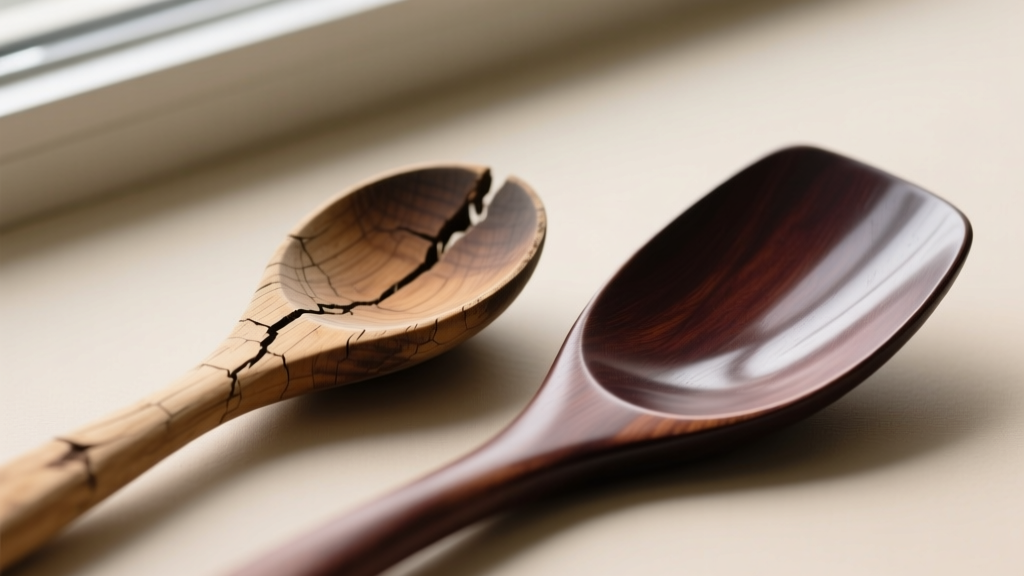
Always avoid open-grain woods like Red Oak, Ash, or Hickory for cooking utensils. Their large, visible pores act as microscopic traps for oils, meat juices, and bacteria. Stick to closed-grain options like Maple, Beech, and Bamboo, which naturally resist moisture penetration. Furthermore, look for the Forest Stewardship Council (FSC) certification on packaging to ensure the wood was harvested from responsibly managed forests, a standard increasingly adopted by budget brands like OXO and Bambu.
The Maintenance Protocol: Oiling and Storage
Wooden kitchen gadgets require a specific maintenance routine to prevent the fibers from desiccating and splintering. When a wooden spatula splinters, those micro-fragments can end up in your food, and the rough edges will defeat the purpose of protecting your stainless steel cookware's polish.
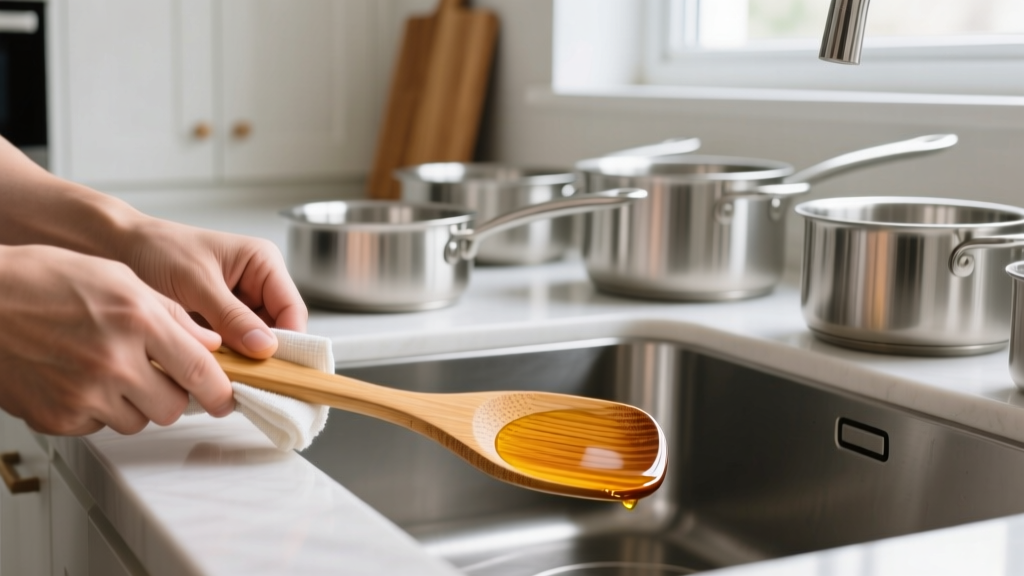
Never use cooking oils (olive, canola, vegetable) to condition your wooden utensils. These oils are high in unsaturated fats and will oxidize and go rancid over time, leaving your tools smelling like old paint. Use only 100% food-grade mineral oil or a blend of mineral oil and natural beeswax.
Step-by-Step Monthly Conditioning
- Clean and Dry: Wash the utensil with mild dish soap and warm water. Stand it upright in a well-ventilated area to air dry completely for at least 12 hours. Moisture trapped under oil will cause black mold spots.
- Apply Oil: Pour a teaspoon of food-grade mineral oil onto a lint-free microfiber cloth. Rub the oil into the wood, moving in the direction of the grain. Pay special attention to the thin leading edges and any carved notches.
- Let it Cure: Allow the utensil to rest horizontally on a wire cooling rack for 4 to 6 hours. This allows the oil to penetrate the cellular structure of the wood without pooling on the countertop.
- Buff: Wipe away any excess, sticky oil with a clean, dry paper towel. The wood should feel smooth and matte, not greasy.
According to FDA food safety guidelines regarding wooden food-contact surfaces, proper oiling creates a hydrophobic barrier that prevents raw meat juices from penetrating the wood, making closed-grain wooden utensils exceptionally safe when maintained correctly.
Edge Profiles: Matching the Tool to the Pan
Not all stainless steel cookware is shaped the same, and your wooden gadgets must match the geometry of your pans to be effective.
- Straight-Walled Saucepans: Use a wooden spoon with a flat, squared-off bottom edge (often called a French spoon or risotto spoon). This allows you to scrape the 90-degree corner where the side wall meets the base, preventing roux or polenta from burning in the seam.
- Sloped Skillets (Fry Pans): Use a spatula with a curved or angled leading edge. The curve matches the sloped flare of the skillet, allowing you to slide the tool completely under food without the sharp corners of the wood gouging the opposite side of the pan.
- Dutch Ovens: Opt for a long-handled, deep-bowled wooden ladle or scoop. The extra length keeps your knuckles away from the high, heat-radiating walls of a heavy enameled or stainless Dutch oven when braising.
Final Verdict: Building Your Budget Kit
Equipping your kitchen with the right wooden tools is the cheapest insurance policy you can buy for your premium stainless steel cookware. For under $50 total, you can assemble a complete, professional-grade wooden toolkit. Start with the OXO Good Grips Beechwood Set ($16.99) for your daily stirring and sautéing needs. Add the Earlywood Flat Sauté ($18.00) for delicate flipping and fond-scraping, and keep the Totally Bamboo slotted spoons ($12.95) on hand for high-acid tomato sauces and draining tasks. By committing to a simple monthly mineral oil regimen, these budget-friendly wooden kitchen gadgets will easily outlast the non-stick pans sitting in the back of your cupboard, keeping your stainless steel collection looking pristine for decades.
Written by
Ryan TanakaRyan Tanaka holds a B.S. in Mechanical Engineering from Oregon State University and is a certified AWS Solutions Architect. He has built over 80 custom electronics projects ranging from CNC machines to IoT sensor networks, and has reviewed development boards, 3D printers, soldering equipment, and maker tools for the past 6 years. Ryan is an active contributor to 12 open-source hardware projects on GitHub and teaches monthly workshops at three hackerspaces across the Pacific Northwest. His reviews combine engineering rigor with accessibility — he evaluates products not just on specs but on documentation quality, community support, and learning curve for beginners. He has presented at Maker Faire Bay Area, Open Hardware Summit, and the Adafruit community showcase, and maintains a popular blog documenting his build processes.