Best Travel Gadgets 2026: Practical Problem-Solvers for Any Trip
Solve real transit problems with our 2026 guide to the best travel gadgets. We test power banks, trackers, and ergonomic pillows for actual trips.
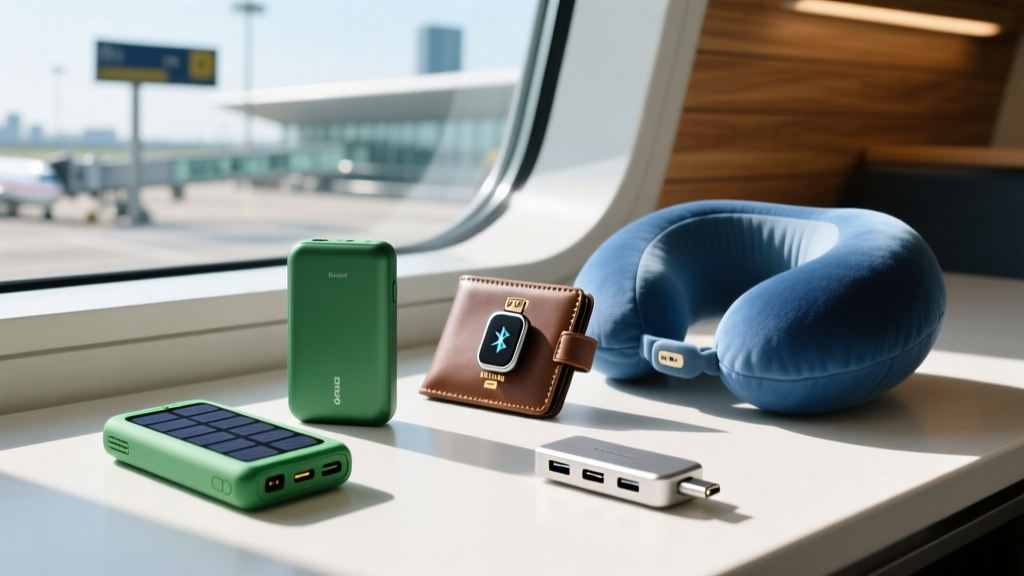
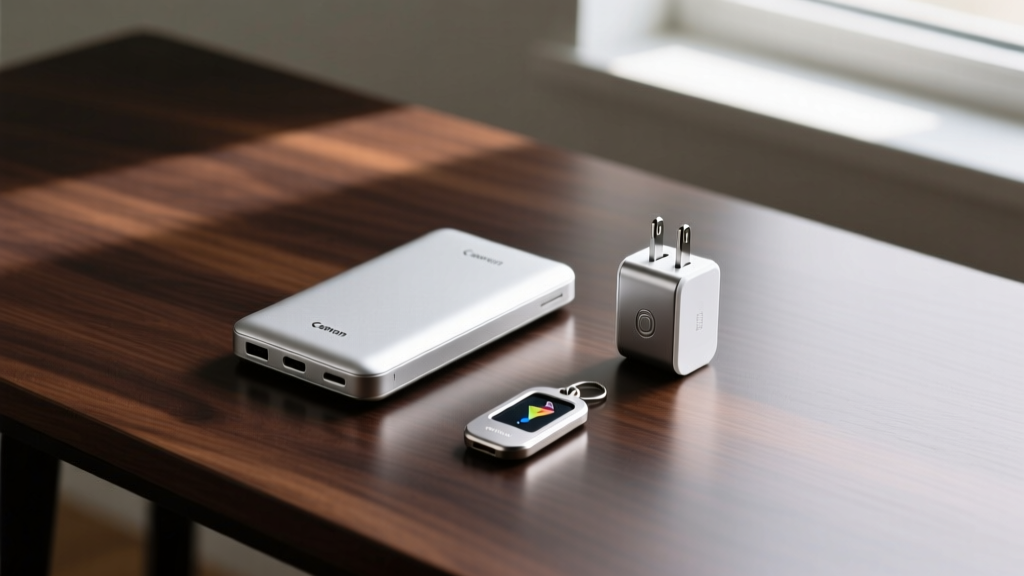
Most travel gear lists are padded with novelty items that fail the moment you step off the plane. In 2026, modern transit involves stricter airline battery regulations, aggressive baggage fee structures, and a total reliance on digital boarding passes and mobile keys. The right gear is not about having the most tech; it is about eliminating specific points of friction. We evaluate the best travel gadgets based entirely on their problem-solving utility, focusing on exact specifications, real-world failure modes, and airline compliance.
The Power & Connectivity Bottleneck
The most common point of failure for modern travelers is device depletion combined incompatible infrastructure. When selecting high-capacity power banks, you must navigate strict aviation regulations regarding lithium-ion batteries. According to the FAA PackSafe guidelines, spare lithium batteries carried in carry-on baggage must not exceed a 100 Watt-hour (Wh) rating without specific airline approval.
Pick: Anker Prime 27,650mAh Power Bank (250W)
At roughly $179, the Anker Prime 27,650mAh is engineered specifically to skirt airline limits while maximizing output. Its actual capacity is 99.5Wh, keeping it safely under the 100Wh regulatory ceiling. The primary problem this solves is multi-device fast charging in transit hubs where wall outlets are scarce or non-functional. It features a 100W USB-C input (recharging the brick in 90 minutes) and dual 100W USB-C outputs, allowing you to fast-charge a 16-inch laptop and a flagship smartphone simultaneously without tripping the internal thermal shutoff.
Universal Adapters: Identifying Hidden Failure Points
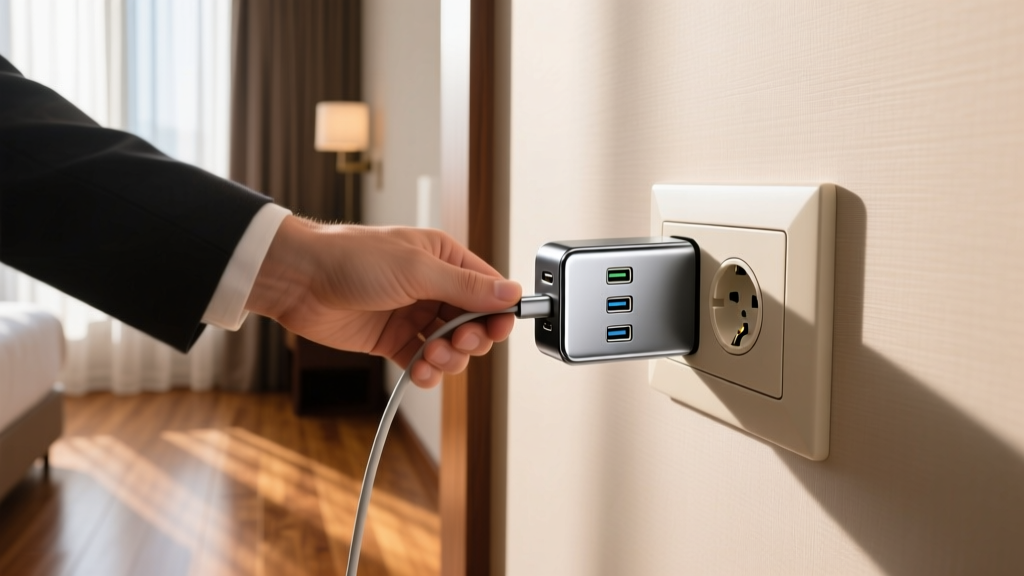
Universal adapters are notorious for failing when subjected to high-draw appliances. The internal slide-mechanisms often create poor contact with foreign wall plates, leading to arcing or voltage drops. Furthermore, many budget adapters use thermal fuses that permanently break the circuit if a traveler plugs in a 1500W hair dryer.
Adapter Comparison Matrix
| Feature | EPICKA TA-105 | Ceptics World Adapter Pro |
|---|---|---|
| Max AC Wattage | 1840W (at 230V) | 1380W (at 230V) |
| Fuse Mechanism | Replaceable 8A Ceramic | Auto-Reset Thermal |
| USB-C PD Output | 20W Max | 30W Max |
| Pin Lock Mechanism | Manual Slider Lock | Spring-loaded Auto Lock |
| Estimated Price | $22 | $34 |
The Verdict: Choose the EPICKA TA-105 if you prioritize a user-replaceable fuse; if you blow the 8A fuse in rural Italy, you can replace it with a standard spare for pennies. Choose the Ceptics Pro if you need 30W USB-C PD to fast-charge a modern tablet directly from the wall, but avoid using its AC socket for high-heat appliances like kettles, as the auto-reset thermal switch is prone to premature tripping.
Luggage Tracking & Weight Friction
Checked bag fees in 2026 average $35 to $45 for the first bag on domestic flights, and overweight penalties start at $100 for bags exceeding 50 lbs. Simultaneously, baggage mishandling rates remain a persistent issue. The IATA guidelines strictly prohibit loose lithium tracking devices in checked luggage if they cannot be remotely deactivated, making network-integrated trackers essential.
Apple AirTag vs. Samsung SmartTag2
For luggage tracking, the Apple AirTag ($29) leverages the massive global Find My network, utilizing Ultra Wideband (UWB) Precision Finding. If your bag is misplaced in a sprawling hotel corridor or a rental car trunk, the U1 chip provides directional, turn-by-turn haptic feedback on your iPhone to locate it within inches. Samsung’s SmartTag2 ($29) offers a similar UWB experience but relies on the Galaxy ecosystem, which has a significantly smaller global footprint in rural or international areas. For pure luggage recovery probability, the AirTag’s network density is mathematically superior.
Pick: Etekcity Digital Luggage Scale
At $12, the Etekcity Digital Luggage Scale solves the overweight fee problem with brute simplicity. It features a built-in temperature sensor and a max capacity of 110 lbs (50 kg). The critical feature is the tare function and the data lock mechanism, which freezes the weight reading on the LCD screen so you can read it without awkwardly twisting your wrist while holding a 40-pound suitcase off the ground.
In-Transit Ergonomics: Solving the Economy Seat Sleep Deficit
Sleeping upright in a 17-inch wide economy seat causes cervical spine flexion, leading to the dreaded "head bob" that disrupts REM sleep cycles. The Sleep Foundation notes that fragmented sleep during transit severely exacerbates jet lag and circadian misalignment. Standard U-shaped memory foam pillows fail because they compress under the weight of the human head, offering zero lateral support.

Pick: Trtl Pillow Plus
Retailing around $65, the Trtl Pillow Plus abandons the U-shape entirely. It utilizes an internal, patented polymer support strut that acts as a flexible splint for your neck. By wrapping the fleece scarf around your neck and positioning the rigid strut against your shoulder and jawline, it mechanically prevents your head from falling forward or sideways. The "Plus" version adds adjustable height settings via Velcro, accommodating taller travelers (over 6'0") who found the original Trtl pushed their heads upward uncomfortably. It folds down to the size of a standard neck scarf, eliminating the bulk of clipping a massive foam donut to the outside of your backpack.
The "Do Not Buy" List: Gadget Trap Avoidance
Equally important to knowing what to buy is knowing what to avoid. The travel gadget market is saturated with items that look practical in product photos but fail in real-world physics.
- Portable Solar Chargers: Unless you are embarking on a multi-day backcountry trek, avoid foldable solar panels. Budget models use amorphous silicon cells with 10-12% real-world efficiency. A panel advertised as "21W" will realistically output 4W to 5W on a cloudy day or through an airplane window, which is insufficient to trigger the charging circuit on modern iPads or laptops.
- Generic Wearable Neck Fans: These devices often utilize unbranded, low-quality lithium cells to keep costs under $20. Not only do they provide negligible cooling in high-humidity environments, but airport security in regions with strict aviation enforcement (such as the EU and parts of Asia) will frequently confiscate them because the batteries lack proper UL or CE certification markings.
- "TSA-Approved" Multi-Tool Keychains: While marketed as flight-safe because the blade is under 2.36 inches, TSA agents operate on final discretion. If the tool includes a corkscrew, file, or aggressive bottle opener, it will likely be confiscated at the checkpoint, forcing you to either surrender it or exit security to mail it home.
By focusing on exact specifications, regulatory compliance, and mechanical reliability, you can build a travel kit that actively solves transit problems rather than creating new ones. Invest in high-density power delivery, mechanical luggage scales, and structurally sound ergonomic supports to ensure your gear works as hard as you do on the road.
Written by
David OkaforDavid Okafor is an ASE (Automotive Service Excellence) Master Certified Technician with 15 years of professional experience in vehicle diagnostics, aftermarket electronics installation, and fleet management. He holds an Associate Degree in Automotive Technology from Universal Technical Institute and certifications in mobile electronics (MECP Certified Installer). David has installed and reviewed over 800 car tech products — from OBD2 scanners and dash cams to full infotainment system retrofits — in vehicles ranging from economy compacts to luxury SUVs. His popular YouTube channel "AutoTech David" has over 150,000 subscribers and features detailed installation tutorials and product teardowns. He is a regular contributor to the SEMA Show's aftermarket technology showcase and advises two automotive tech startups on product development.