Beginner vs Expert Traveling Gadgets: Upgrading Your 2026 Kit
Compare beginner and expert traveling gadgets to upgrade your 2026 kit. Discover pro-level packing tech, GaN chargers, and luggage trackers.
The Core Difference: Convenience vs. Redundancy
The gap between amateur packing and professional travel logistics is rarely about spending more money; it is about shifting from single-purpose convenience to multi-layered redundancy. Beginners purchase traveling gadgets based on immediate, superficial needs—a cheap power bank for a dying phone, a basic padlock for a zipper. Experts engineer their loadouts around failure points, voltage regulation, and ecosystem integration. Upgrading your travel tech stack in 2026 requires understanding the underlying protocols of your gear, from USB-C Power Delivery (PD) negotiations to Ultra-Wideband (UWB) tracking frequencies.
This guide dissects the exact hardware differences between novice and veteran travel kits, providing specific model benchmarks, electrical specifications, and ergonomic data to help you transition from a reactive packer to a proactive traveler.
Power Delivery: Brick Chargers vs. GaN Ecosystems
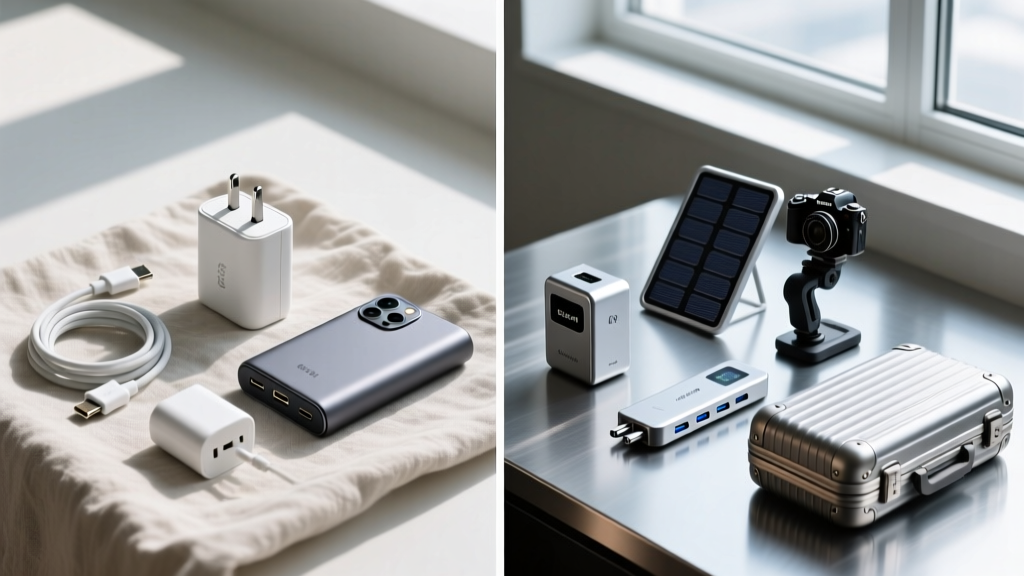
Novice travelers typically rely on the 18W to 20W USB-A power banks included with their first smartphones, paired with bulky, single-port silicon wall chargers. This setup fails when tasked with charging a laptop, a smartwatch, and a phone simultaneously, resulting in voltage drops and thermal throttling.
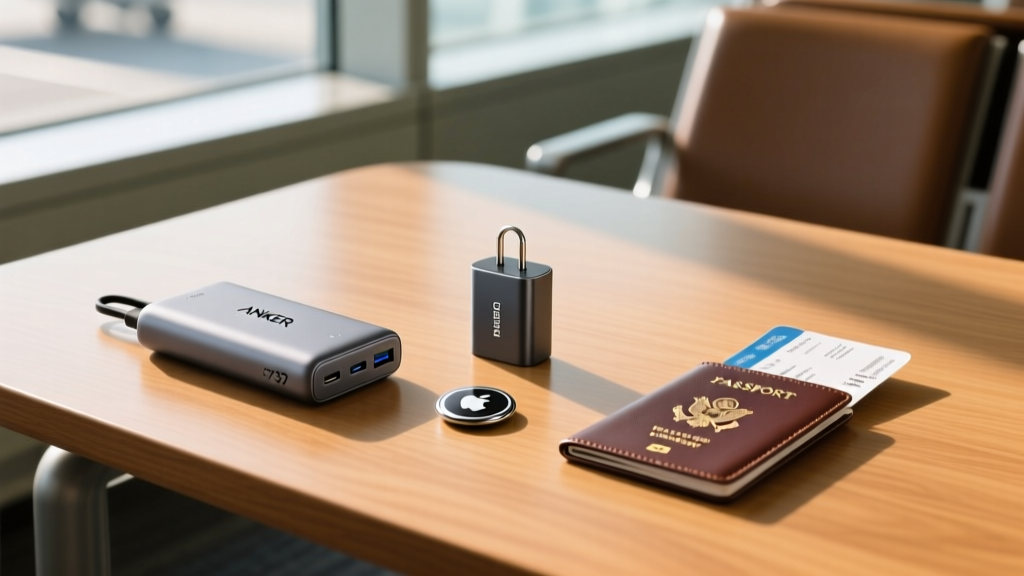
Expert travelers utilize Gallium Nitride (GaN) technology. GaN chargers operate with higher switching frequencies, allowing for smaller magnetic components and significantly reduced heat generation. An expert 2026 loadout centers around a 100W to 140W multi-port GaN wall charger and a high-density Lithium-Polymer (LiPo) power bank that supports the USB-C PD 3.1 standard. According to the USB Implementers Forum, PD 3.1 enables up to 240W of power delivery, though 140W is the current practical ceiling for high-performance travel laptops like the 16-inch MacBook Pro or Dell XPS 15.
The Federal Aviation Administration and international equivalents cap carry-on lithium-ion batteries at 100 Watt-hours (Wh) without airline approval. To calculate your power bank's Wh, multiply its milliamp-hours (mAh) by its voltage (typically 3.7V) and divide by 1,000. A 24,000mAh power bank equals 88.8Wh, keeping you safely under the limit while providing enough capacity to recharge a flagship smartphone five times and a laptop once. Always check the FAA PackSafe guidelines before flying with high-capacity cells.
Power Hardware Comparison Matrix
| Feature | Beginner Loadout | Expert Loadout (2026 Standard) |
|---|---|---|
| Wall Charger | 20W Single-Port Silicon ($15) | UGREEN Nexode 100W 4-Port GaN ($55) |
| Power Bank | 10,000mAh 18W USB-A ($25) | Anker 737 (24K) 140W PD 3.1 ($110) |
| Cables | Standard PVC USB-C to USB-A ($10) | Braided 100W USB-C to USB-C with E-Marker ($22) |
| Total Weight | 0.65 lbs (295g) | 2.15 lbs (975g) |
| Simultaneous Output | Drops to 5W split across ports | 65W (Laptop) + 30W (Phone) + 5W (Watch) |
Luggage Tracking: Visual Tags vs. Precision Networks
The beginner approach to baggage security involves writing a phone number on a paper tag and attaching it to the exterior handle. If the bag is misrouted by an automated sorting facility, recovery relies entirely on the visual acuity of baggage handlers and the airline's barcode scanning system, which frequently fails when tags are torn off.
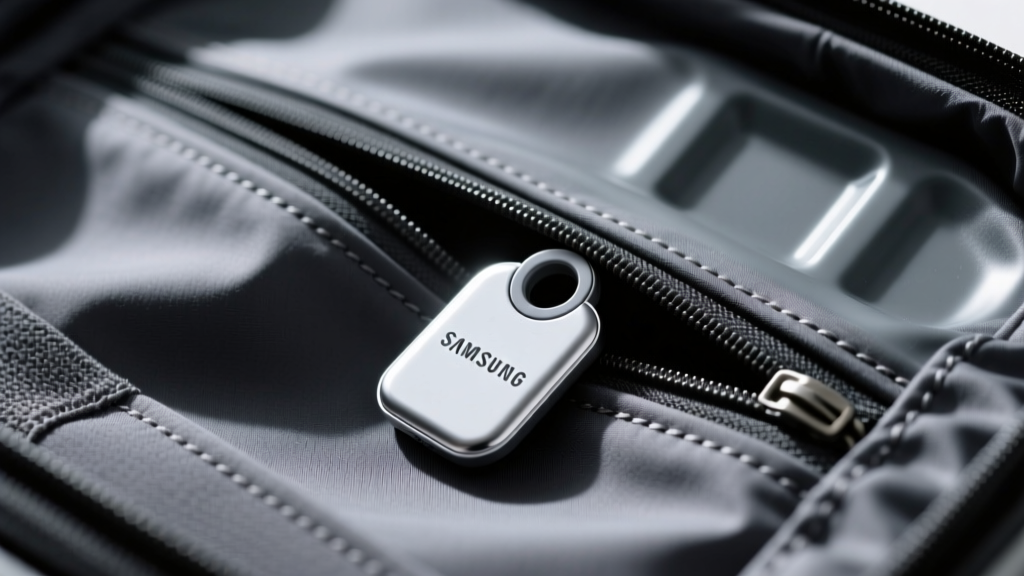
Experts deploy decentralized Bluetooth Low Energy (BLE) mesh networks. By hiding an Apple AirTag ($29) or Samsung SmartTag2 ($29) inside the structural lining of the suitcase, travelers tap into billions of consumer devices acting as silent relays. The true advantage of the expert setup lies in Ultra-Wideband (UWB) technology. As detailed in Apple's Precision Finding documentation, UWB utilizes short-range, high-frequency radio pulses to measure the exact time-of-flight of signals, allowing your smartphone to point you toward your bag with directional arrows and distance readouts accurate to the inch. This is critical when your bag is sitting in a massive lost-and-found warehouse or hidden behind a carousel pillar.
Off-Grid and Expedition Tracking
For travel outside urban environments where BLE mesh networks are sparse, experts upgrade to standalone GPS/LTE trackers. Devices like the Tracki 4G ($129 + $10/month subscription) utilize cellular triangulation and GPS satellites to ping locations globally. While overkill for a weekend trip to London, this hardware is mandatory for overland expeditions or shipping expensive camera equipment via freight.
In-Transit Comfort: Generic Pillows vs. Structural Ergonomics
Sleeping upright in a 17-inch wide economy seat subjects the cervical spine to severe lateral flexion and forward shear force. Beginners attempt to mitigate this with microbead or inflatable U-shaped pillows. These fail because they only pad the sides of the neck; they do not support the weight of the human head (which averages 10 to 12 pounds), leading to the chin dropping forward and interrupting REM sleep cycles.
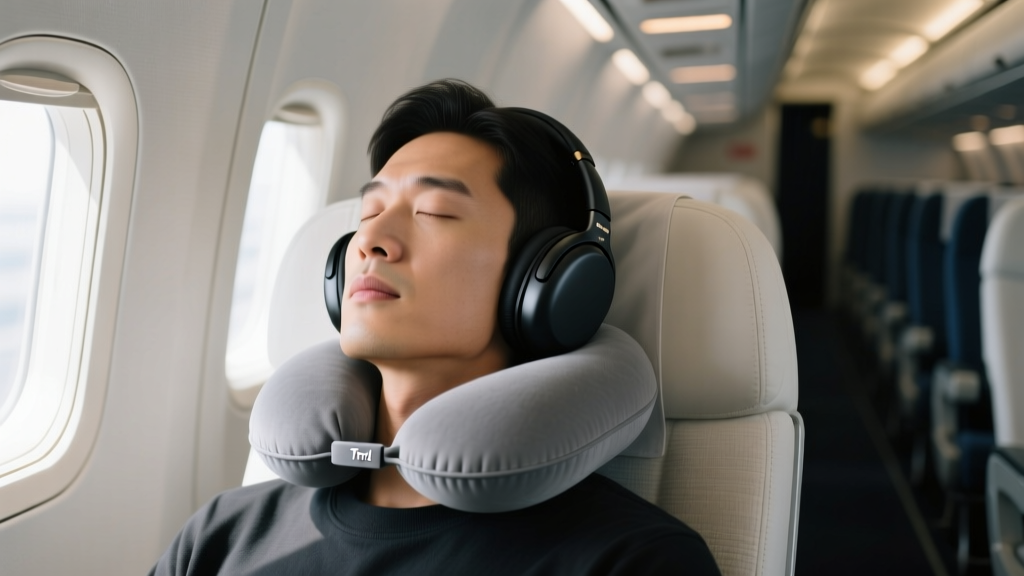
Expert travelers prioritize structural support and acoustic isolation. The Trtl Pillow ($60) abandons the U-shape entirely, utilizing a hidden, flexible internal plastic rib wrapped in fleece that acts as a cervical brace, holding the head in a neutral, upright position. Alternatively, the Ostrichpillow Go ($50) uses high-density memory foam with a rigid rear clasp to prevent lateral head drop.
Active Noise Cancellation (ANC) Frequencies
Foam earplugs block high-frequency sounds (crying infants, talking passengers) but fail against the low-frequency, 200Hz to 500Hz drone of jet engines. Experts invest in over-ear ANC headphones like the Sony WH-1000XM5 ($350) or Bose QuietComfort Ultra ($429). These devices use outward-facing microphones to sample ambient engine noise and internal processors to generate an inverted anti-noise phase wave in under 2 milliseconds, effectively canceling out the low-frequency vibration that causes central nervous system fatigue during long-haul flights.
The Upgrade Decision Matrix
Not every traveler needs a $110 power bank or a $400 headset. Use this framework to determine when to transition your gear from beginner to expert tier.
- Upgrade your Power Delivery when: You travel with a laptop that requires 65W+ charging, you frequently experience 6-hour layovers without accessible wall outlets, or you notice your current power bank gets uncomfortably hot during use.
- Upgrade your Tracking when: You check bags more than three times a year, you travel through major hub airports (e.g., CDG, ORD, LHR) with high misrouting statistics, or you carry equipment that cannot be easily replaced.
- Upgrade your Ergonomics when: You fly for more than 5 hours at a time, you arrive at destinations with neck stiffness or tension headaches, or you need to perform cognitive work immediately upon landing.
Final Loadout Verdict
Mastering your traveling gadgets is an exercise in risk mitigation. The beginner buys gear hoping nothing goes wrong. The expert buys gear knowing things will go wrong, and ensures they have the voltage, the data, and the physical support to handle it seamlessly. Start by upgrading your power protocol to GaN, secure your luggage with UWB tracking, and protect your cervical spine on the next long-haul flight.
Written by
Tom ReynoldsTom Reynolds holds a CFA (Chartered Financial Analyst) designation and a B.S. in Finance from the University of Texas at Austin. Before entering tech journalism, he spent 6 years as a quantitative analyst at a hedge fund, building cost-benefit models for consumer product investments. Tom has maintained a proprietary database of over 10,000 tech deals for the past 8 years, developing his signature "penny-per-feature" evaluation framework that calculates the true value proposition of every gadget. His budget gadget reviews are known for their financial rigor — he tracks price history across 15+ retailers, calculates cost-per-use over 3-year lifespans, and identifies the exact inflection point where premium features justify their markup. Tom's deal alerts have saved his readers an estimated .3 million since 2018.