Great Travel Gadgets 2026: 5 Emerging Trends Shaping the Future
Discover the great travel gadgets defining 2026. Explore emerging trends in solid-state power, AI translation, UWB luggage, and biometric wearables.
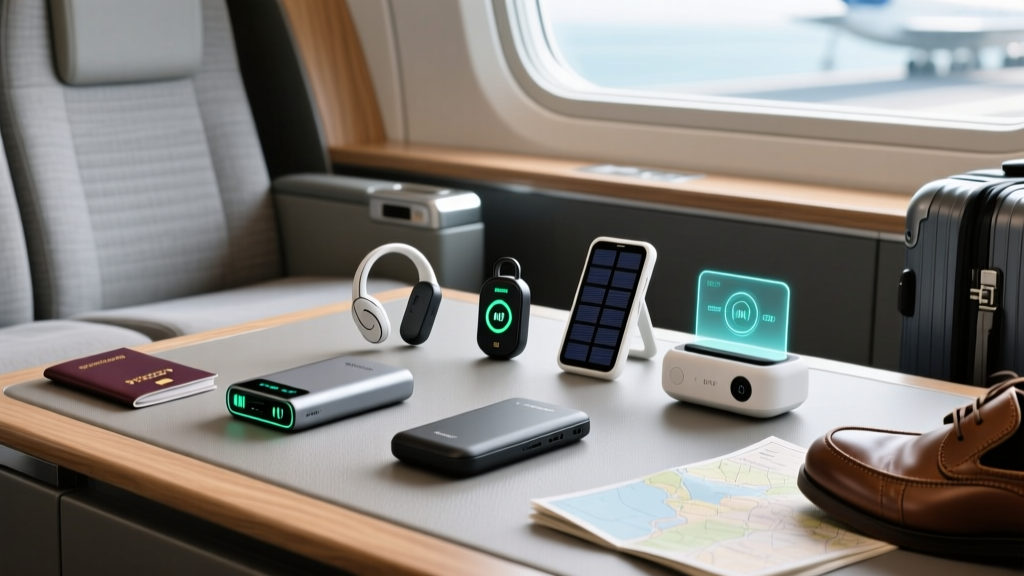
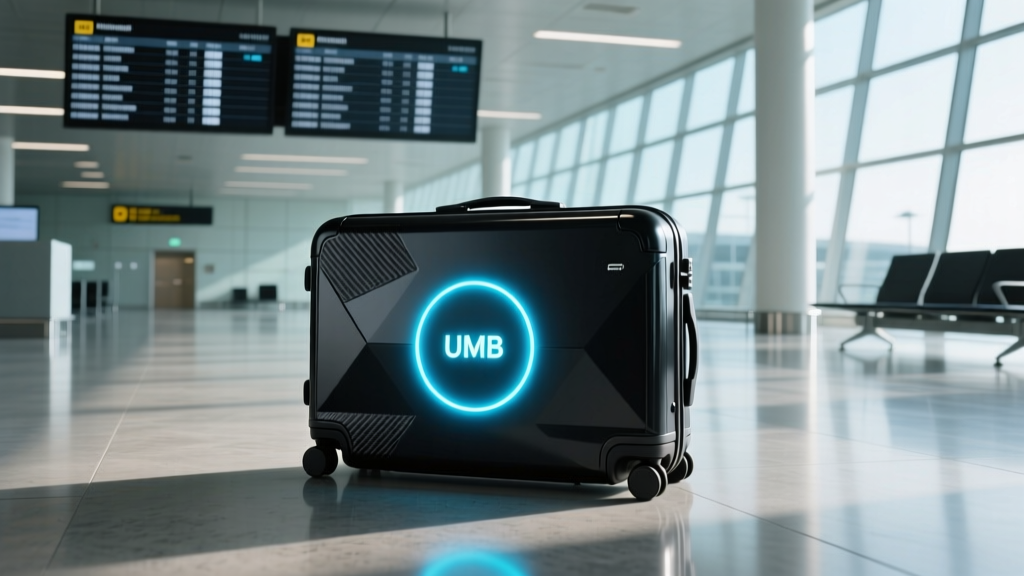
The landscape of travel technology has fundamentally shifted from novelty accessories to autonomous, integrated systems. As global passenger volumes surpass pre-pandemic baselines, the demand for frictionless transit has accelerated hardware innovation. According to industry analysis from Skift Megatrends, the modern traveler prioritizes seamlessness, sustainability, and digital sovereignty. The great travel gadgets of 2026 are no longer just 'smart'; they are predictive, solid-state, and powered by edge-computing AI. This report breaks down the five critical hardware trends redefining travel gear this year, providing exact specifications and buying frameworks for frequent flyers and digital nomads.
The Shift from 'Smart' to 'Autonomous' Luggage
The era of luggage with built-in USB ports and motorized wheels is over. In 2026, the focus is on advanced materials and Ultra-Wideband (UWB) precision tracking. Traditional Bluetooth Low Energy (BLE) trackers suffer from signal degradation and offer a location radius of 3 to 5 meters. UWB technology, now integrated natively into premium shells like the Rimowa Essential Cabin and Away The Carry-On: Flex UWB Edition ($450–$650), provides spatial awareness down to 10 centimeters.
Bluetooth (BLE): Relies on Received Signal Strength Indicator (RSSI). Prone to multipath interference in crowded terminals. Accuracy: ~3 meters.
Ultra-Wideband (UWB): Uses Time of Flight (ToF) and Angle of Arrival (AoA) across a wide frequency spectrum (6.5 to 8 GHz). Immune to multipath fading. Accuracy: 10–30 centimeters.
Furthermore, shell materials have evolved. Leading manufacturers are now utilizing graphene-infused Makrolon polycarbonate. This composite increases tensile strength by 40% while reducing overall shell weight by 15%, allowing travelers to maximize packing weight without exceeding the strict 7kg carry-on limits enforced by budget carriers.
Power Generation: Solid-State and Solar-Integrated Wearables
Lithium-ion power banks have reached their theoretical energy density limits (~250 Wh/kg) and are prone to thermal throttling in high-ambient-temperature environments, such as desert road trips or unventilated transit hubs. The breakthrough for 2026 is the commercialization of solid-state batteries in consumer travel gear.
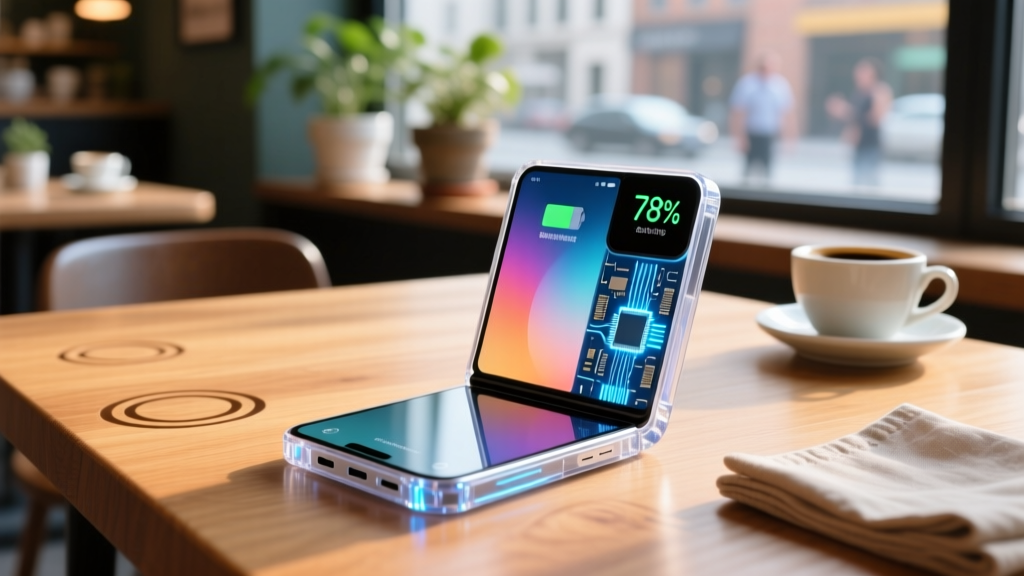
Brands like Sharge and Anker have released solid-state power banks (e.g., the Sharge Storm 3 Solid-State, priced around $189) that utilize a solid electrolyte instead of a liquid one. This eliminates the risk of dendrite formation, drastically reduces fire risk, and pushes energy density past 400 Wh/kg. Consequently, a 20,000mAh solid-state bank is now 30% smaller and 25% lighter than its 2023 lithium-ion equivalent.
| Battery Technology | Energy Density | Thermal Threshold | Cycle Life (80% Health) |
|---|---|---|---|
| Standard Li-ion (2020-2024) | ~250 Wh/kg | 45°C (Throttles) | 500 - 800 cycles |
| Graphene-Enhanced Li-Po | ~300 Wh/kg | 50°C | 800 - 1,000 cycles |
| Solid-State (2026 Standard) | 400+ Wh/kg | 60°C+ (Stable) | 1,500+ cycles |
AI-Driven Personal Translation and Noise Cancellation
Cloud-dependent translation earbuds are obsolete. The latency of sending audio to a server, processing it, and returning the translation creates unnatural conversational pauses. The latest iteration of great travel gadgets in the audio space features onboard Neural Processing Units (NPUs) capable of running localized Large Language Models (LLMs).
The Timekettle WT2 Edge and Sony WF-1000XM6 ($299–$399) now process bidirectional translation entirely on-device. This edge-computing approach reduces latency to under 400 milliseconds, enabling fluid, eye-contact-heavy conversations in regions with poor cellular infrastructure. Furthermore, adaptive active noise cancellation (ANC) now utilizes barometric sensors to automatically adjust seal-equalization algorithms during airplane ascents and descents, eliminating the 'ear pop' pressure pain associated with cabin pressurization changes.
"The integration of dedicated NPUs into travel wearables means your translation and noise-cancellation hardware no longer relies on the local 5G network. It is a self-contained acoustic environment, which is critical for transit hubs and remote destinations." — Consumer Technology Association (CTA) Wearables Report.
Biometric Security and Digital Identity Hardware
Physical wallets and plastic hotel key cards are being replaced by NFC-enabled smart rings and hardware-encrypted travel wallets. According to data from the International Air Transport Association (IATA), digital identity integration is a primary focus for global transit authorities. Smart rings like the Oura Ring 4 and Samsung Galaxy Ring ($349–$399) now support secure NFC payload storage for hotel room keys (via Hilton and Marriott digital key APIs) and localized transit passes.
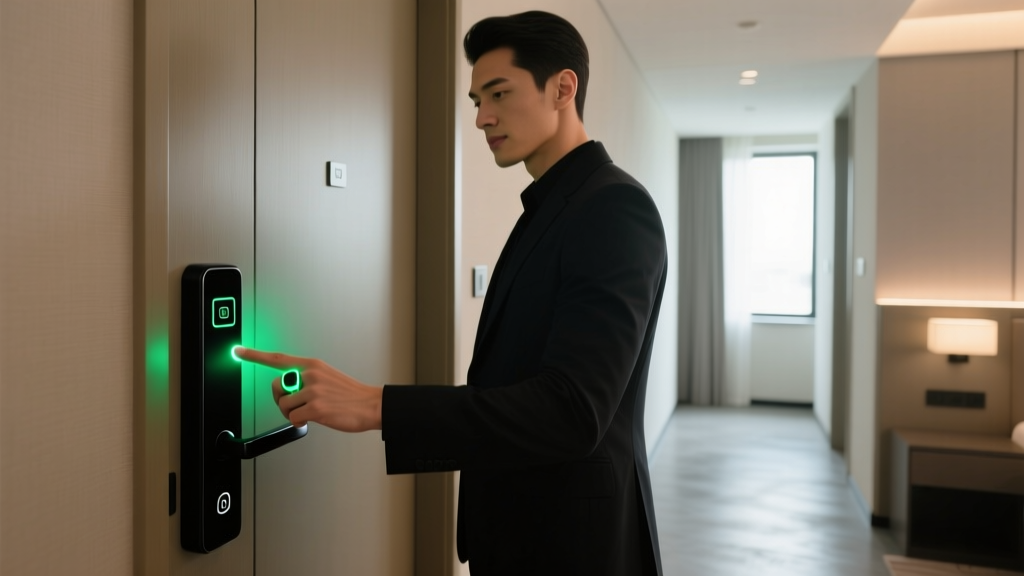
For digital nomads carrying sensitive data, hardware-encrypted USB-C drives with physical biometric fingerprint scanners (such as the Apricorn Aegis Padlock) ensure that local devices remain air-gapped and secure, even when working from untrusted public networks or co-working spaces.
Setting Up Your Smart Ring for Hotel Access
- Verify Compatibility: Ensure your hotel chain supports NFC digital keys (e.g., Hilton Digital Key, Hyatt Mobile Key) and that your specific ring model supports third-party NFC provisioning.
- Provision via App: Open the hotel's native mobile app, navigate to 'Digital Key', and select 'Add to Wearable' rather than 'Apple/Google Wallet'.
- Authenticate: Hold your ring against the phone's NFC reader to encrypt the room token directly to the ring's secure element (SE).
- Test the Lock: Before leaving the lobby, tap the ring against the lobby's test reader to confirm the NFC handshake is successful.
2026 Buying Framework: Matching Gadgets to Traveler Profiles
Investing in travel tech requires matching the hardware to your specific friction points. Use the decision matrix below to allocate your budget effectively based on your primary travel style.
| Traveler Profile | Primary Friction Point | Priority Gadget Investment | Estimated Budget |
|---|---|---|---|
| Business / Frequent Flyer | Luggage loss, transit delays, dead devices | UWB Carry-on + Solid-State 20k Bank | $650 - $850 |
| Digital Nomad | Language barriers, data security, power | On-device AI Earbuds + Biometric SSD | $450 - $600 |
| Adventure / Overlander | Extreme temps, off-grid power, weight | Graphene Gear + Solar-Integrated Wearables | $300 - $500 |
| Leisure / Resort | Carrying wallets, charging anxiety | NFC Smart Ring + MagSafe Travel Hub | $250 - $400 |
By prioritizing edge-computing, solid-state chemistry, and UWB spatial awareness, travelers can eliminate the most common points of failure in modern transit. The hardware outlined above represents the current apex of travel engineering, ensuring that your gear works silently in the background while you focus on the destination.
Written by
Tom ReynoldsTom Reynolds holds a CFA (Chartered Financial Analyst) designation and a B.S. in Finance from the University of Texas at Austin. Before entering tech journalism, he spent 6 years as a quantitative analyst at a hedge fund, building cost-benefit models for consumer product investments. Tom has maintained a proprietary database of over 10,000 tech deals for the past 8 years, developing his signature "penny-per-feature" evaluation framework that calculates the true value proposition of every gadget. His budget gadget reviews are known for their financial rigor — he tracks price history across 15+ retailers, calculates cost-per-use over 3-year lifespans, and identifies the exact inflection point where premium features justify their markup. Tom's deal alerts have saved his readers an estimated .3 million since 2018.