Best Smart Travel Gadgets for 2026: A Comprehensive Buyer's Guide
Discover the best smart travel gadgets for 2026. Our comprehensive buyer's guide covers portable chargers, luggage tech, and packing essentials.
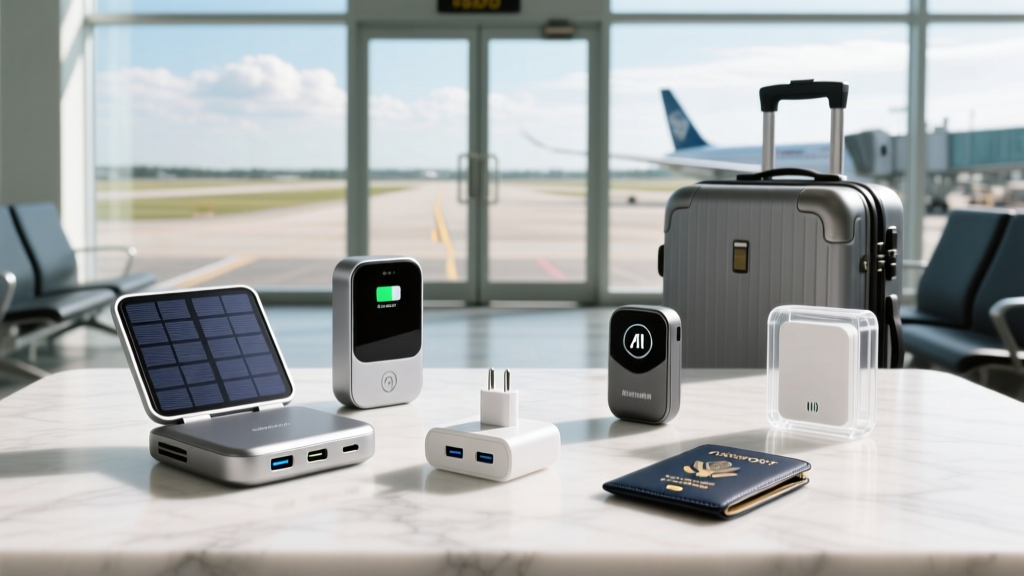
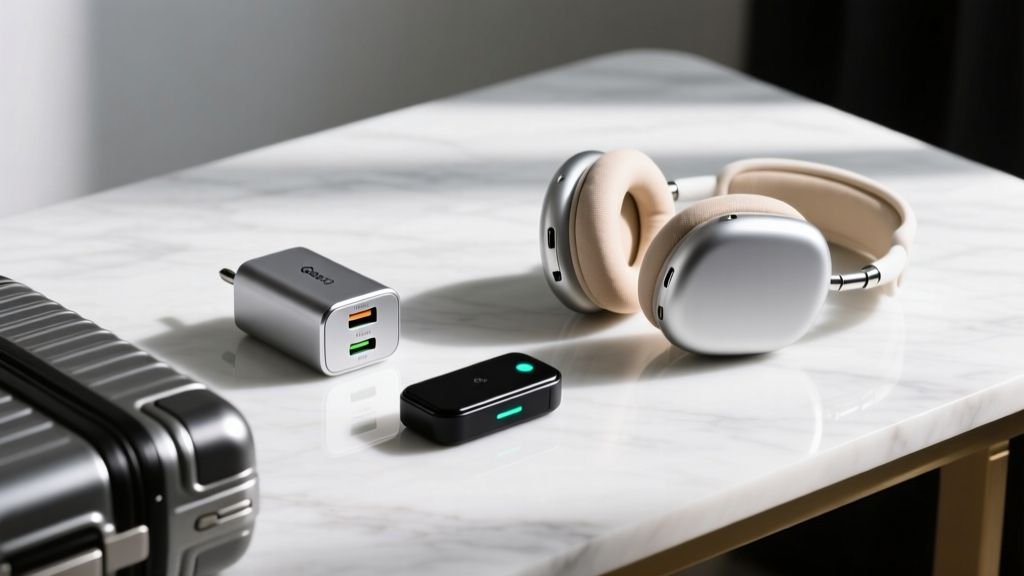
Upgrading your transit gear requires navigating a saturated market of gimmicks and genuine innovations. The shift toward Gallium Nitride (GaN) semiconductors, Ultra-Wideband (UWB) tracking, and adaptive acoustic algorithms has fundamentally changed what qualifies as essential smart travel gadgets in 2026. This buyer’s guide strips away the marketing fluff to focus on exact specifications, real-world failure modes, and precise pricing for the gear that actually survives the rigors of modern transit.
The Core Power Matrix: GaN Chargers & Smart Power Banks
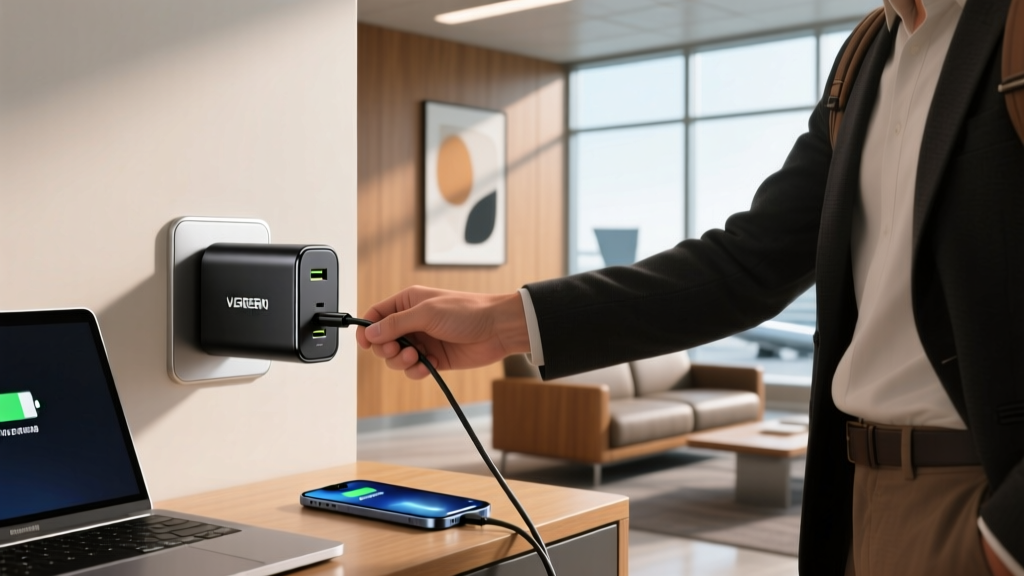
Silicon-based chargers are obsolete for frequent flyers. Gallium Nitride (GaN) semiconductors allow for 30% smaller form factors while managing higher thermal loads, meaning you can pull 160W from a brick that fits in a palm. When evaluating travel gadgets for power, prioritize Power Delivery (PD) 3.1 support and Programmable Power Supply (PPS) to prevent battery degradation in modern smartphones.
Top Tier Recommendations
- UGREEN Nexode Pro 160W GaN ($109): Features a 4-port layout (3 USB-C, 1 USB-A). When a single device is plugged into the primary C1 port, it delivers the full 160W, easily charging a 16-inch laptop at full speed. If you plug in a second device, it intelligently splits to 100W/60W. The foldable prongs and 2.1-inch thickness make it the current benchmark for wall adapters.
- Anker Prime 27,650mAh Power Bank ($179): This is not a standard brick. It features a built-in smart display showing real-time input/output wattage, remaining time to full charge, and battery health metrics. It outputs a massive 250W total across three ports and supports wireless charging at 15W. Crucially, it supports pass-through charging, allowing you to charge the bank and your devices simultaneously from a single wall outlet.
Critical Compliance: FAA & TSA Battery Limits
Before buying high-capacity power banks, you must understand aviation limits. According to FAA PackSafe guidelines, spare lithium-ion batteries must be carried in carry-on baggage only. Furthermore, batteries exceeding 100 Watt-hours (Wh) require airline approval, and those over 160Wh are strictly prohibited on passenger aircraft. The Anker Prime 27,650mAh sits at 99.5Wh, deliberately engineered to sit just under the 100Wh legal threshold for hassle-free TSA screening.
Luggage Tech & UWB Tracking Ecosystems
According to IATA baggage operations data, millions of bags are mishandled globally each year, making Bluetooth and UWB trackers non-negotiable travel gadgets. The critical differentiator in 2026 is Ultra-Wideband (UWB) technology, which provides precision finding down to the centimeter, rather than the 30-foot radius of standard Bluetooth Low Energy (BLE).
Tracker Comparison Matrix
| Feature | Apple AirTag | Samsung SmartTag2 | Chipolo ONE Point |
|---|---|---|---|
| Network | Find My (1B+ devices) | SmartThings Find | Find My Device (Android) |
| Precision UWB | Yes (Directional) | Yes (Directional) | No (BLE only) |
| Battery Life | ~1 Year (CR2032) | ~1.5 Years (CR2032) | ~2 Years (CR2032) |
| Retail Price | $29 | $29.99 | $27.99 |
Expert Insight: If you travel with a mixed-OS household, buy trackers native to the phone of the person most likely to lose the bag. The Apple Find My network remains vastly superior in rural and international areas due to the sheer density of active iPhones, whereas Android’s Find My Device network is rapidly expanding but still lags in global coverage outside major metropolitan hubs.
In-Transit Acoustics: Active Noise Cancellation
Cabin noise on a commercial jet typically hovers between 75 and 85 decibels, dominated by low-frequency engine drone (50Hz to 1000Hz). The best travel gadgets for audio do not just block sound; they use destructive interference via outward-facing microphones to generate anti-noise phase waves. When selecting ANC headphones, look for models that specifically target this low-frequency band without introducing high-pitched ‘hiss’ artifacts.
Over-Ear vs. In-Ear Decision Framework
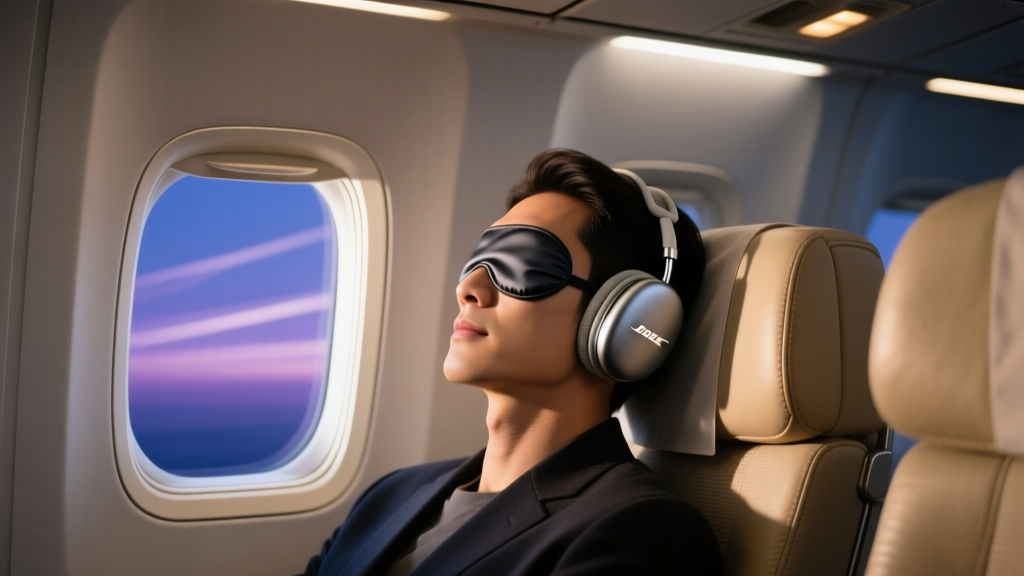
- Choose Over-Ear (e.g., Bose QuietComfort Ultra, $429) if: You are on flights longer than 4 hours. The Bose QC Ultra utilizes CustomTune technology that measures your ear canal’s acoustic response at startup, optimizing the ANC and spatial audio specifically for your anatomy. The clamping force is calibrated to prevent jaw fatigue during long-haul sleep.
- Choose In-Ear (e.g., Sony WF-1000XM5, $298) if: You prioritize packing density and wear glasses. Over-ear cups can break the seal of thick glasses frames, compromising passive isolation. The Sony XM5 earbuds use polyurethane foam tips that expand in the ear canal, providing superior passive seal and excellent ANC for connecting flights where space is at a premium.
Security & Biometric Organizers
Digital skimming and physical slash-and-grab theft remain persistent threats in transit hubs. Modern security travel gadgets integrate physical barriers with digital shielding.
- Pacsafe Vibe 25L Anti-Theft Backpack ($129): This is not a standard daypack. It features an eXomesh slashguard steel wire mesh embedded directly into the fabric, preventing blade slashes. The zippers utilize Roobar Sport locking anchors, which interlock the zipper pulls to a single reinforced point, making silent pickpocketing nearly impossible in crowded terminals.
- RFID Blocking Sleeves vs. Wallets: Avoid bulky ‘tactical’ RFID wallets that add unnecessary weight. Instead, purchase a 10-pack of slim RFID-blocking card sleeves ($8) and slip them into your existing minimalist wallet. This blocks the 13.56 MHz frequency used by skimmers to read contactless credit cards and passport chips, without altering your daily carry ergonomics.
Quick-Reference Buying Decision Tree
Use this framework to prioritize your budget when upgrading your travel tech stack:
- Is your phone dying before you reach the hotel? Prioritize a GaN wall charger (UGREEN 160W) and a 20,000mAh power bank. Skip the smart luggage.
- Are you checking bags on complex multi-leg itineraries? Buy three Apple AirTags or Samsung SmartTag2s. Hide one in the lining, one in a zippered pocket, and one in a toiletry bag. Redundancy defeats signal jammers.
- Do you arrive at your destination exhausted and unable to sleep? Reallocate your budget to premium ANC headphones (Bose QC Ultra) and a contoured memory foam eye mask. Audio isolation directly impacts cortisol levels during transit.
Frequently Asked Questions
Can I bring a 160W GaN charger on a plane?
Yes. The FAA and TSA restrict lithium-ion batteries, not the chargers themselves. A GaN charger is simply a transformer and circuit board; it contains no battery cells and can be packed in either checked or carry-on luggage without restriction.
Do I need a voltage converter for international travel in 2026?
Almost never for modern tech. Check the input rating on your device’s power brick. If it reads ‘Input: 100-240V ~ 50/60Hz’, it is dual-voltage and will work globally. You only need a simple, non-converting plug adapter to match the physical wall socket shape (e.g., Type G for the UK, Type C for Europe). Voltage converters are only required for high-heat, single-voltage appliances like cheap hair dryers.
Will airport security scanners destroy my smart luggage tracker?
No. Standard X-ray baggage scanners and CT scanners used by the TSA do not emit magnetic fields strong enough to wipe the flash memory or disrupt the Bluetooth/UWB radios inside an AirTag or SmartTag. You can leave them inside your checked luggage without issue.
Written by
David OkaforDavid Okafor is an ASE (Automotive Service Excellence) Master Certified Technician with 15 years of professional experience in vehicle diagnostics, aftermarket electronics installation, and fleet management. He holds an Associate Degree in Automotive Technology from Universal Technical Institute and certifications in mobile electronics (MECP Certified Installer). David has installed and reviewed over 800 car tech products — from OBD2 scanners and dash cams to full infotainment system retrofits — in vehicles ranging from economy compacts to luxury SUVs. His popular YouTube channel "AutoTech David" has over 150,000 subscribers and features detailed installation tutorials and product teardowns. He is a regular contributor to the SEMA Show's aftermarket technology showcase and advises two automotive tech startups on product development.