Best Budget Mini PCs to Build an SMS Gadget in 2026
Discover the best budget mini PCs and SBCs in 2026 to build a DIY SMS gadget for IoT alerts, server monitoring, and remote automation.
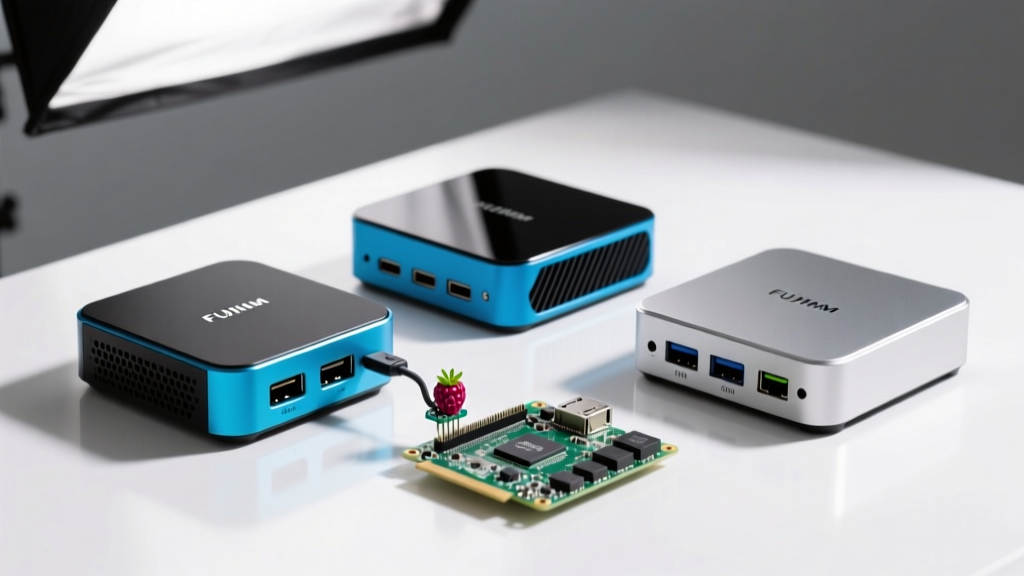
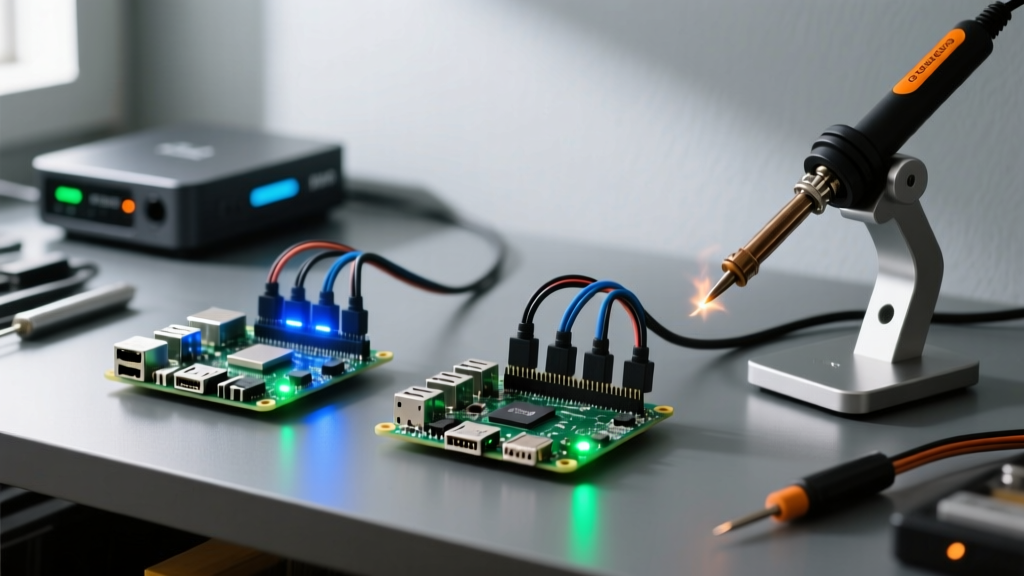
The Rise of the DIY SMS Gadget
In the world of off-grid telemetry, remote server monitoring, and smart home automation, relying solely on local Wi-Fi is a critical point of failure. Enter the SMS gadget: a compact, low-power computing node equipped with a cellular modem that sends and receives text messages to trigger alerts, execute remote reboots, or log environmental data. Whether you are monitoring a remote cabin's temperature or building a 2FA forwarding node, building your own SMS gadget in 2026 is cheaper and more reliable than ever.
As a tech enthusiast, you don't need to spend $500 on enterprise-grade cellular routers. Today's budget single-board computers (SBCs) and compact mini PCs offer PCIe lanes, USB 3.0 bandwidth, and GPIO headers perfectly suited for 4G LTE HATs and M.2 modems. In this roundup, we break down the best budget-friendly hardware to power your next cellular-connected project.
What Makes a Great SBC for an SMS Gadget?
Before throwing money at the most popular board, it is crucial to understand the hardware bottlenecks of cellular communication. Older SBCs routed cellular modems through USB 2.0, leading to latency spikes and driver instability under heavy SMS logging. For a 2026 build, your hardware must meet three criteria:
- Direct PCIe or USB 3.0 Routing: Essential for modern Cat 4 and Cat 6 LTE modems to prevent bus saturation.
- Low Idle Power Draw: Your SMS gadget will run 24/7. Boards idling under 3W are ideal for solar or battery-backed setups.
- Form Factor & Expansion: M.2 B-Key slots or dedicated 40-pin GPIO headers allow for clean, internal modem integration without messy USB dongles.
Top Single-Board Computers (SBCs) for 2026
Single-board computers remain the undisputed champions of DIY IoT projects. They offer bare-metal access, GPIO pins for hardware interrupts, and a massive community for software troubleshooting.
1. Raspberry Pi 5 (8GB) - The Community Standard
Priced at $80, the Raspberry Pi 5 revolutionized the SBC space by finally exposing a PCIe 2.0 x1 interface on the board. According to the official Raspberry Pi foundation, this PCIe lane allows you to connect M.2 4G/LTE modems directly, bypassing the USB bottleneck entirely. Paired with an active cooler, the Pi 5 idles at roughly 2.5W. When paired with a Sixfab 4G/LTE Cellular Modem Kit, it becomes an unstoppable SMS gateway.
Expert Insight: Do not use the micro-HDMI port next to the PCIe ribbon cable for high-bandwidth displays while polling SMS logs; the shared silicon can cause minor I/O contention. Stick to headless setups via SSH for the best SMS gadget performance.
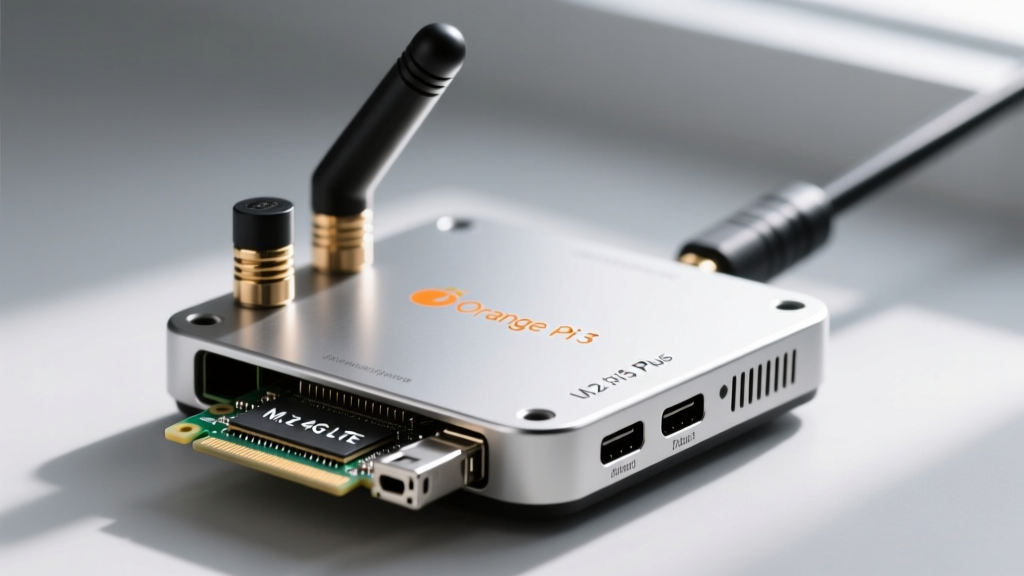
2. Orange Pi 5 Plus (8GB) - The PCIe Powerhouse
At $110, the Orange Pi 5 Plus is built around the Rockchip RK3588 SoC. It features an M.2 M-Key slot on the bottom of the board and an M.2 E-Key on the top. While M-Key is typically used for NVMe storage, many enthusiasts use custom ribbon adapters to route 4G modems. The dual 2.5G Ethernet ports also make it a fantastic hybrid SMS/Network bridge. It idles at an impressive 2.1W, making it highly efficient for remote, solar-powered deployments.
Best Budget Compact Mini PCs for LTE Integration
If you prefer a plug-and-play metal chassis over bare PCBs, compact mini PCs are a fantastic alternative. They eliminate the need for 3D-printed cases and custom power delivery boards.
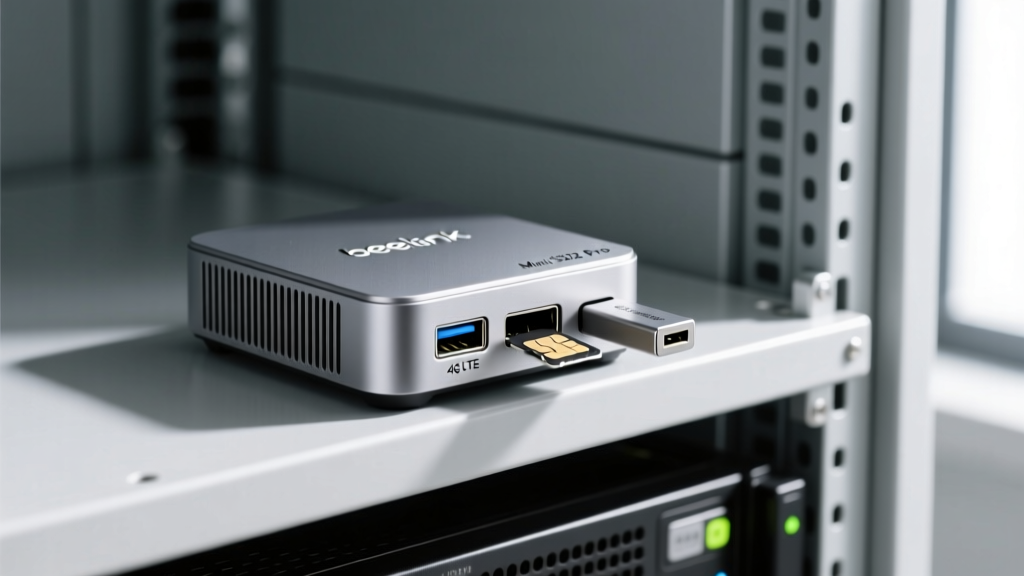
1. Beelink Mini S12 Pro (Intel N100)
Retailing around $150, the Beelink Mini S12 Pro features the Intel N100 processor. While it lacks GPIO pins, it makes up for it with an internal M.2 2230 slot (typically used for Wi-Fi) that can be adapted for cellular modems, alongside four USB 3.2 Gen 2 ports. As noted in CNX Software's deep dives on mini PC expansions, the N100 architecture handles concurrent serial-to-IP routing effortlessly. It idles at roughly 6W—higher than an SBC, but still incredibly cheap to run annually.
2. GMKtec NucBox G3
For $130, the GMKtec G3 offers a similar N100 experience but in a radically smaller 3x3-inch footprint. It is perfect for mounting behind a server rack or inside a weatherproof Pelican case for outdoor SMS telemetry. The thermal design is slightly more aggressive, meaning the internal fan will spin up if you are compiling code, but for simple Gammu SMS polling, it remains virtually silent.
Hardware Comparison Matrix
| Device | Price (Approx.) | Modem Interface | Idle Power | Best Use Case |
|---|---|---|---|---|
| Raspberry Pi 5 (8GB) | $80 | PCIe 2.0 (via HAT) | ~2.5W | Custom IoT & GPIO triggers |
| Orange Pi 5 Plus | $110 | M.2 / USB 3.0 | ~2.1W | Solar/Off-grid telemetry |
| Beelink Mini S12 Pro | $150 | USB 3.2 / M.2 Adapt | ~6.0W | Rack-mounted server alerts |
| GMKtec NucBox G3 | $130 | USB 3.2 | ~5.5W | Portable field SMS gateway |
Choosing the Right Cellular Modem & Peripherals
The compute node is only half the battle; the modem dictates your SMS gadget's reliability. In 2026, 3G networks are globally deprecated, and 5G modules remain prohibitively expensive for budget builds. The sweet spot is 4G LTE Cat 4.
- SIMCom SIM7600G-H: The undisputed king of budget SBC HATs. Priced around $45, it offers global band support and native compatibility with Raspberry Pi and Orange Pi via standard AT commands.
- Quectel EC25-AF: Slightly more expensive at $60, but offers superior thermal management and better antenna tuning for weak-signal rural areas.
- Antennas: Never rely on the tiny PCB antennas included in cheap kits. Invest $15 in a pair of 3dBi omnidirectional SMA paddle antennas to ensure your SMS gateway doesn't drop packets during bad weather.
Software Stack: Gammu vs. ModemManager
Once your hardware is assembled, you need software to translate serial AT commands into readable SMS payloads.
Gammu remains the lightweight champion for headless SMS gadgets. It runs as a daemon, polling the serial port every 5 seconds, and can trigger bash scripts upon receiving specific keywords (e.g., texting "REBOOT" to your gadget triggers a server restart script). It uses less than 15MB of RAM, making it perfect for the 8GB Raspberry Pi 5.
Alternatively, ModemManager integrates deeply with Linux NetworkManager. If your SMS gadget also needs to use the cellular connection as a failover WAN route for internet access, ModemManager handles the dial-up and SMS routing simultaneously via D-Bus interfaces.
Frequently Asked Questions
Can I use a cheap USB 4G dongle instead of a HAT?
Yes, but it is not recommended for mission-critical SMS gadgets. Cheap USB dongles often overheat during continuous serial polling and suffer from voltage drops if the SBC's USB bus isn't perfectly regulated. M.2 or HAT-based modems draw power directly from the board's 3.3V/5V rails, ensuring stability.
Do I need a specialized SIM card for an SMS gadget?
Standard consumer SIMs work, but they often have "fair use" policies that block automated SMS traffic. For a dedicated SMS gadget, look into IoT-specific M2M (Machine to Machine) SIM cards from providers like Twilio, Hologram, or local carrier IoT divisions, which offer flat-rate SMS pricing without the risk of sudden throttling.
How do I secure the SMS gateway from spam?
Always configure your software stack (like Gammu) with a strict whitelist of authorized phone numbers. If your gadget triggers physical actions (like unlocking a gate or rebooting a server), implement a secondary PIN code requirement within the SMS body to prevent spoofing.
Written by
Tom ReynoldsTom Reynolds holds a CFA (Chartered Financial Analyst) designation and a B.S. in Finance from the University of Texas at Austin. Before entering tech journalism, he spent 6 years as a quantitative analyst at a hedge fund, building cost-benefit models for consumer product investments. Tom has maintained a proprietary database of over 10,000 tech deals for the past 8 years, developing his signature "penny-per-feature" evaluation framework that calculates the true value proposition of every gadget. His budget gadget reviews are known for their financial rigor — he tracks price history across 15+ retailers, calculates cost-per-use over 3-year lifespans, and identifies the exact inflection point where premium features justify their markup. Tom's deal alerts have saved his readers an estimated .3 million since 2018.