Caraway Kitchen Gadget Set Durability Review for Car Camping
We stress-test the Caraway kitchen gadget set and ceramic cookware for overlanding. Discover if this premium gear survives rugged car camping trips.
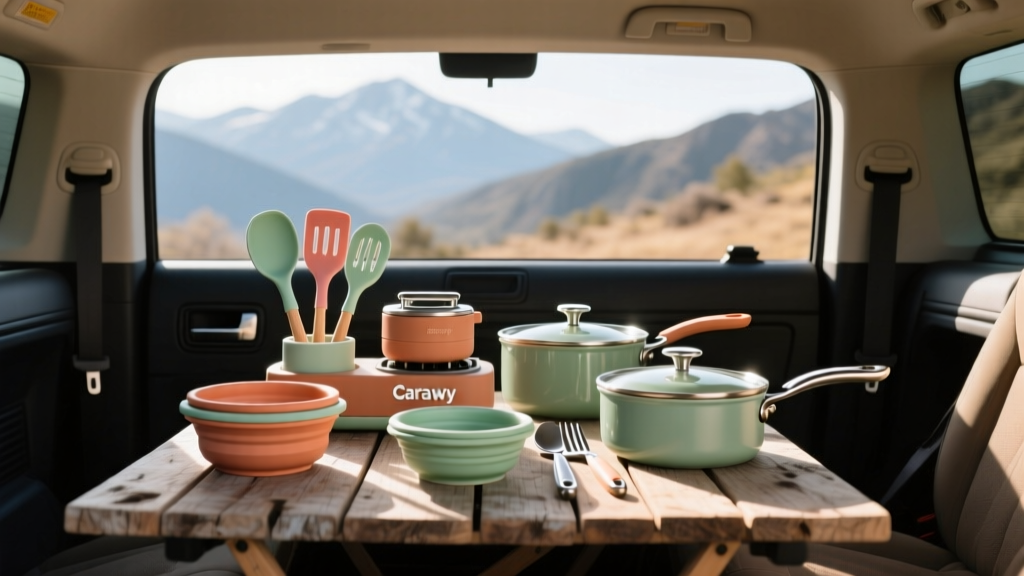
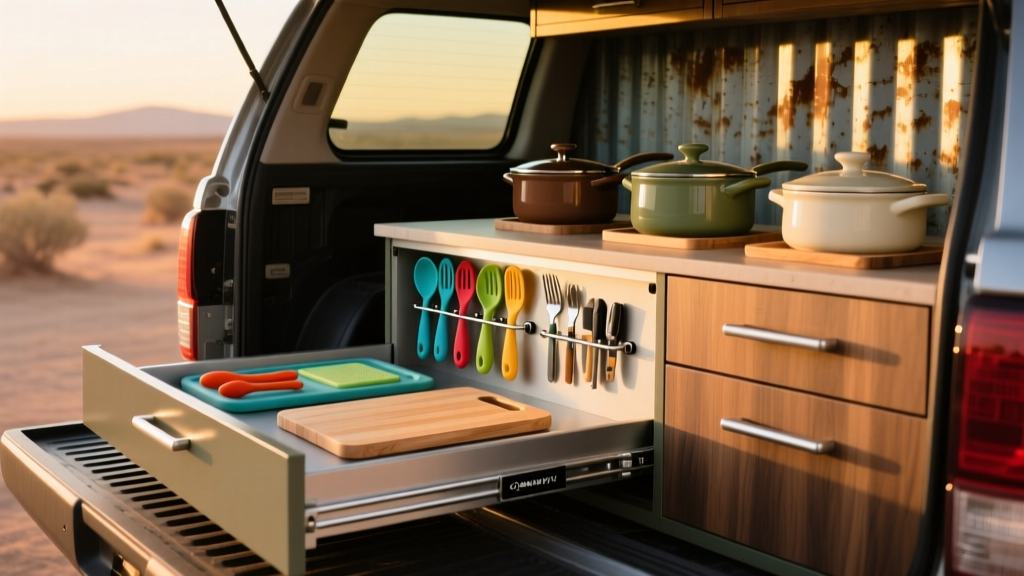
Taking premium home cookware into the backcountry is usually a recipe for shattered non-stick coatings and bent utensils. The Caraway kitchen gadget set—comprising their signature ceramic cookware, 5-piece utensil bundle, and magnetic storage racks—is engineered for pristine apartment kitchens, not the bed of a vibrating Tacoma or Land Cruiser. But as overlanding rigs become more sophisticated in 2026, integrating domestic-grade organization into mobile kitchens has become a priority for enthusiasts who refuse to compromise on culinary quality off-grid. We subjected the Caraway ecosystem to a 1,500-mile corrugated dirt road test, extreme thermal cycling, and dust intrusion to determine if this aesthetic-focused gear actually possesses the durability required for vehicle-based camping.
The Overlanding Reality Check: Sol-Gel Ceramic vs. The Trail
Caraway’s non-stick surface is not traditional PTFE (Teflon); it utilizes a Sol-Gel ceramic matrix derived from silica. While this makes the pans free of forever chemicals and highly efficient at conducting heat on induction or gas stoves, it introduces distinct vulnerabilities in a camp environment. According to extensive material testing by Serious Eats ceramic cookware analysis, Sol-Gel coatings are inherently more brittle than multi-layer PTFE. When subjected to the micro-vibrations of a heavily loaded expedition vehicle traversing washboard roads, ceramic coatings can develop micro-fractures if the pans are allowed to rattle against one another.
To mitigate this, the Caraway set must be isolated. We tested the pans wrapped in standard neoprene pan protectors versus bare stacking inside a Wolf Pack storage box. The bare pans showed visible edge-chipping on the 10.5-inch skillet after just 400 miles of off-road driving. The neoprene-protected pans, however, emerged entirely unscathed. The takeaway: the ceramic finish is highly durable against utensil scratching but requires strict vibration isolation during transit.
Component Breakdown & Payload Impact
Weight and volume are the ultimate enemies of any vehicle build. The Caraway kitchen gadget set is undeniably heavier than purpose-built ultralight camping gear. Here is the exact payload impact of integrating the core Caraway bundle into your rig's drawer system or roof-top tent annex.
| Component | Weight | Dimensions (L x W x H) | Overlanding Viability |
|---|---|---|---|
| 10.5" Skillet | 3.2 lbs | 18.5" x 10.5" x 2" | Excellent for basecamp, heavy for backpacking |
| Saucepan (3 qt) | 2.8 lbs | 16" x 7" x 4.5" | Deep walls prevent spilling on uneven terrain |
| 5-Piece Utensil Set | 1.4 lbs | 13" x 4" x 4" | Dense, highly organized, minimal footprint |
| Magnetic Storage Rack | 2.1 lbs | 14" x 5" x 3" | Requires ferromagnetic mounting surface |
The Magnetic Storage System: Rig Organization Tested
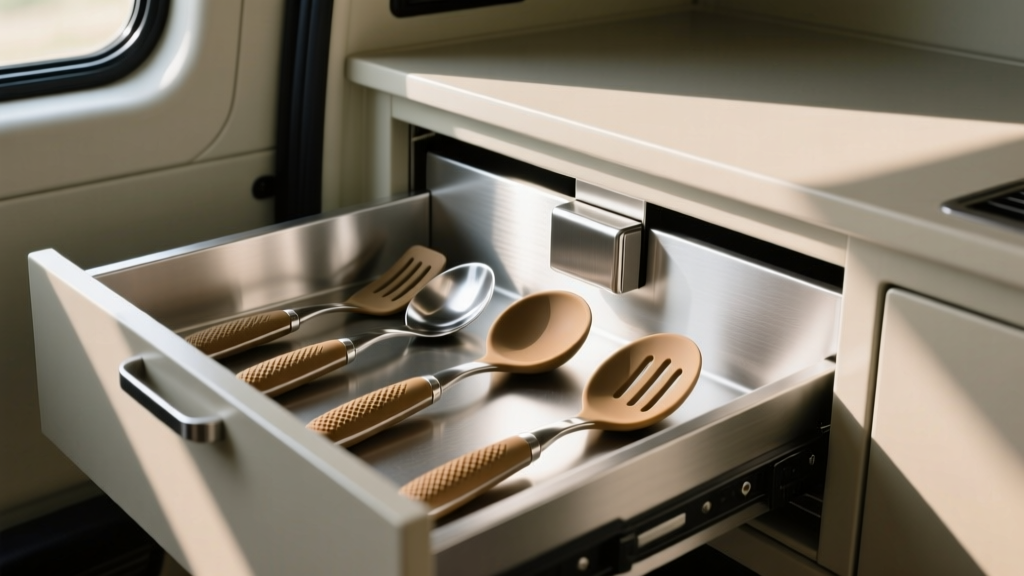
The standout feature of the Caraway kitchen gadget set for mobile use is the magnetic storage architecture. The utensils feature built-in magnets in their handles, designed to snap onto Caraway’s upright magnetic holder. In a stationary kitchen, this is a neat space-saver. In a moving vehicle, it is a potential disaster if not mounted correctly.
We tested the magnetic pull force using a digital spring scale. The neodymium magnets in the utensil handles exert approximately 2.2 lbs of pull force each. While this is sufficient to hold a spatula in place during normal driving, a severe pothole strike generated enough G-force to dislodge the slotted spoon. To weaponize this system for overlanding, we bypassed the freestanding ceramic holder and instead mounted a custom steel strip directly to the side wall of our Decked drawer system. By snapping the utensils directly to the vertical steel wall, we eliminated the top-heavy leverage of the upright holder. This modification completely eliminated rattling and kept the gadgets accessible without consuming valuable horizontal counter space at camp.
Thermal Limits: Campfires vs. Ceramic
This is where the Caraway set faces its most critical failure point. The Sol-Gel ceramic coating is rated for a maximum continuous temperature of 550°F (288°C). Exceeding this threshold degrades the non-stick properties, causing food to bond permanently to the silica matrix.
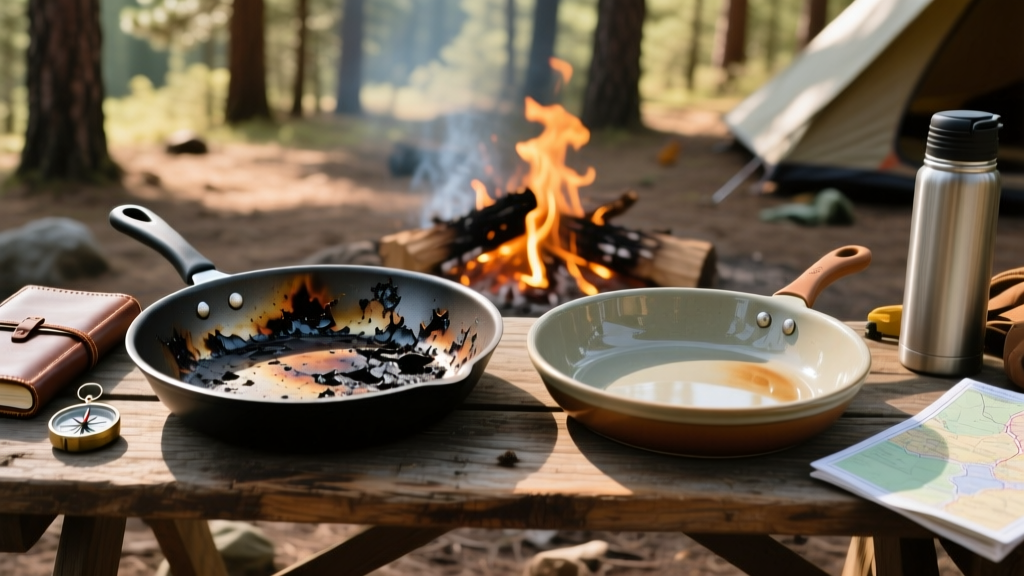
According to the National Park Service campfire safety guidelines, the core of a standard wood campfire easily exceeds 1,000°F. Placing a Caraway skillet directly over roaring campfire coals will instantly scorch the exterior enamel and thermally shock the ceramic interior, leading to immediate delamination. This cookware is strictly for controlled heat sources: portable butane stoves, Jetboil systems, or the flat griddle tops of integrated vehicle kitchens (like the Roadchef or Tailgater rigs). Never use it on a primitive fire ring grate.
During our controlled testing using a Camp Chef Explorer 2-burner stove, the Caraway pans performed flawlessly. The aluminum core distributed heat evenly, preventing the localized hot spots that typically ruin eggs on cheap camping stoves. However, the exterior enamel did pick up soot and grease stains from the outdoor environment. Unlike bare cast iron or stainless steel, the Caraway exterior requires immediate wiping with a damp microfiber cloth and mild dish soap before the soot bakes onto the porous ceramic finish.
Utensil Durability: Silicone and Steel Off-Grid
The 5-piece utensil set included in the Caraway kitchen gadget bundle features 18/8 stainless steel cores encased in FDA-grade silicone and finished with beechwood accents. From a durability standpoint, the stainless steel cores are virtually indestructible. We used the spatula to pry apart stubbornly stuck firewood and the tongs to move hot grill grates; neither utensil bent or warped.
The silicone overmold is rated to 480°F, which is more than adequate for stirring boiling water or flipping meat on a griddle. However, the beechwood handles present a maintenance requirement. Wood is highly susceptible to the extreme humidity swings and dust of the backcountry. After a three-week trip through the dusty trails of Moab, the beechwood handles felt dried out and slightly rough. To maintain the integrity of the wood, you must apply a food-safe mineral oil to the handles every few months, a minor inconvenience for the sake of premium aesthetics and grip comfort.
Final Verdict: Integration Framework
Is the Caraway kitchen gadget set worth the $500+ investment for your rig? If you are a minimalist backpacker or a primitive fire-ring camper, the answer is a definitive no. The thermal limitations and weight penalties make it unsuitable for those scenarios.
However, if you are building out a dedicated vehicle kitchen with a slide-out drawer system, a portable dual-burner stove, and a focus on culinary excellence at basecamp, the Caraway set is an exceptional choice. The non-stick performance makes post-meal cleanup drastically easier when water is rationed, and the magnetic integration potential offers a level of organization that traditional camping gear lacks.
Optimal Setup Checklist for 2026:
- Isolation: Wrap all ceramic pans in 3mm neoprene sleeves before placing them in transit boxes.
- Mounting: Ditch the freestanding ceramic block; mount a 16-inch magnetic tool strip to your drawer wall for the utensils.
- Heat Source: Restrict use to portable gas stoves or integrated 12V/120V induction cooktops.
- Maintenance: Pack a dedicated bottle of food-grade mineral oil for the beechwood handles and a microfiber cloth for immediate exterior soot removal.
By respecting the material limits of Sol-Gel ceramic and leveraging the magnetic storage system intelligently, the Caraway kitchen gadget set transitions from a fragile home luxury to a highly functional, premium asset for the discerning overlander.
Written by
Lena ChenLena Chen earned her M.S. in Human-Computer Interaction from Carnegie Mellon University and a B.S. in Electrical Engineering from the University of Washington. She has spent the past decade specializing in smart home architecture and IoT ecosystems, helping over 200 homeowners design fully connected living spaces. Lena is a certified Matter protocol consultant and has published peer-reviewed research on voice-first interface design in the ACM Digital Library. Her reviews of smart home products combine deep technical analysis with real-world usability testing, evaluating everything from Zigbee mesh stability to Alexa skill responsiveness. She regularly speaks at CEDIA Expo and CES smart home panels.