Your Off-Grid Gadget Fix: 2026 Solar Energy Trends
Explore 2026 solar-powered gadgets and off-grid energy solutions. Get your off-grid gadget fix with our trend report on perovskite cells and micro-harvesting.
The Shift to True Energy Independence
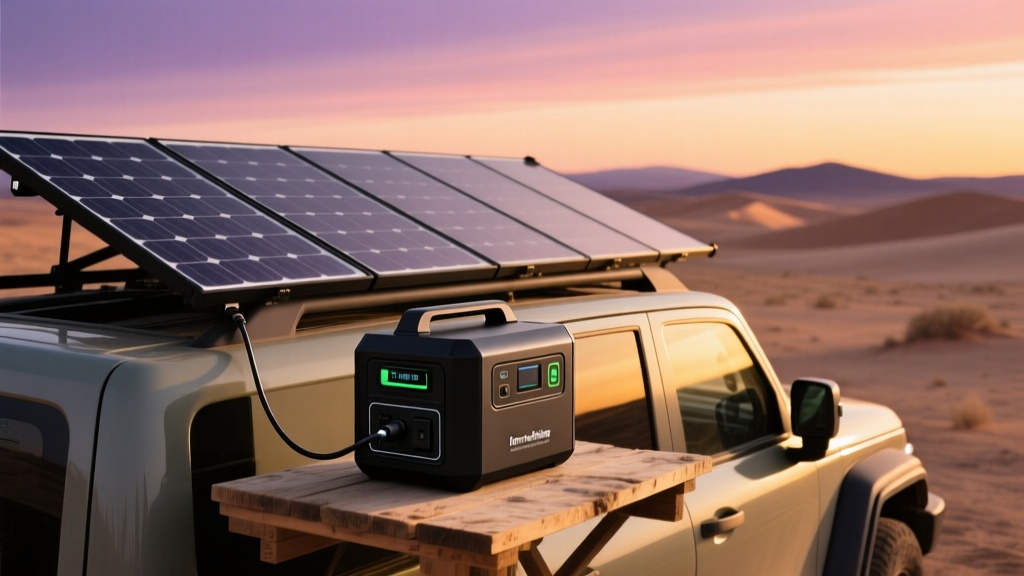
For tech enthusiasts, the wilderness no longer means disconnecting. As we navigate through 2026, the demand for reliable off-grid energy solutions has shifted from niche survivalism to mainstream digital nomadism and high-end overlanding. Getting your daily gadget fix while boondocking in the Mojave or working from a remote cabin in the Pacific Northwest requires more than just a basic folding solar panel and a heavy lead-acid battery. Today’s ecosystem is defined by ultra-efficient photovoltaic materials, AI-driven power management, and solid-state storage. This trend report breaks down the cutting-edge solar-powered gadgets and off-grid architectures defining the current landscape, offering actionable insights for building a resilient, self-sustaining tech ecosystem.
Perovskite Tandem Cells: The 2026 Efficiency Leap
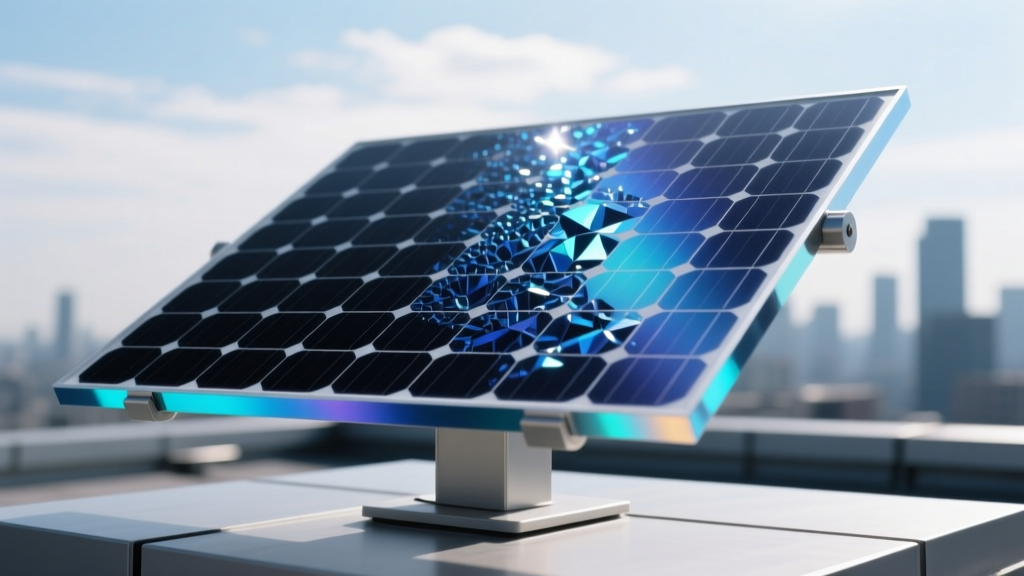
The most significant disruption in portable solar generation over the last eighteen months is the commercial maturation of perovskite-silicon tandem solar cells. Traditional monocrystalline silicon panels have long hovered around a practical efficiency ceiling of 22% to 24%. However, the integration of perovskite layers has pushed commercial portable module efficiencies past the 28% mark in real-world conditions.
According to data tracked by the National Renewable Energy Laboratory (NREL), tandem cell architectures are rapidly closing the gap between lab anomalies and consumer products. Companies like Oxford PV have pioneered this transition, demonstrating that perovskite layers can capture a broader spectrum of sunlight, particularly in low-light and high-temperature environments where traditional silicon suffers from voltage drop-off. For the off-grid enthusiast, this translates to panels like the EcoFlow 400W NextGen Rigid and the Bluetti PV420X, which deliver up to 30% more yield during the critical first and last hours of the day. This means a 400W array can now reliably generate 2.8 kWh in a truncated 5-hour winter window, a feat that required a 600W array just three years ago.
Thermal Degradation and Real-World Yield
A non-obvious insight for 2026 is the thermal coefficient of these new panels. Standard silicon panels lose roughly 0.35% of their efficiency for every degree Celsius above 25°C. The latest perovskite-hybrid portable panels exhibit a thermal coefficient closer to 0.25%. When deployed on the black roof of an overlanding rig in 95°F (35°C) heat, this thermal resilience prevents the severe midday power clipping that plagued older setups, ensuring your portable power station charges steadily even at peak ambient temperatures.
2026 Portable Power Station Showdown
The heart of any off-grid gadget setup is the portable power station (PPS). In 2026, Lithium Iron Phosphate (LiFePO4) is the undisputed baseline chemistry, offering 3,500+ charge cycles before degrading to 80% capacity. However, the differentiator is now the bidirectional inverter speed, IoT integration, and expandability. Below is a comparison of the top-tier units dominating the enthusiast market this year.
| Model | Capacity / Output | Max Solar Input | 0-80% Charge Time | Estimated Price (2026) |
|---|---|---|---|---|
| EcoFlow Delta Pro 3 | 4.0 kWh / 4000W | 1600W (Dual PV) | 55 Minutes | $3,999 |
| Anker SOLIX F3800 | 3.84 kWh / 6000W | 1200W | 70 Minutes | $3,599 |
| Bluetti AC200L | 2.04 kWh / 2400W | 1200W | 45 Minutes | $1,599 |
Expert Takeaway: If your gadget fix includes power-hungry devices like portable induction cooktops, desktop workstations, or CPAP machines with heated humidifiers, the Anker SOLIX F3800 provides the necessary 240V split-phase output via its expansion battery. However, for pure solar charging speed and modular smart-home integration (via Matter protocol), the EcoFlow Delta Pro 3 remains the apex predator of off-grid energy management.
Micro-Harvesting: The Wearable Gadget Fix
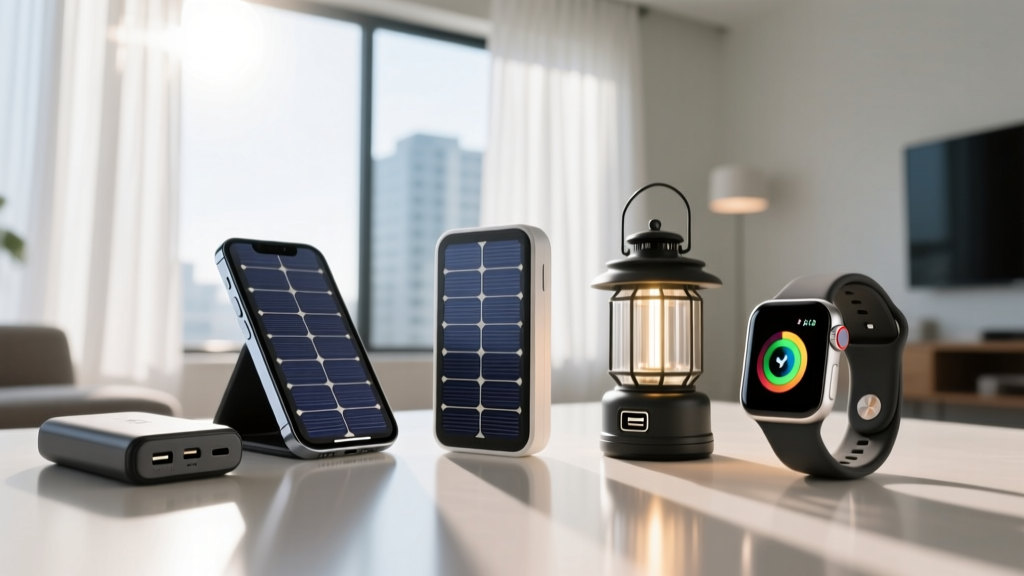
While massive power stations handle the heavy lifting, the true frontier of 2026 solar tech lies in micro-harvesting for wearables and IoT sensors. The days of bulky solar bezels are over. Modern smartwatches and GPS trackers now utilize transparent, amorphous silicon layers integrated directly beneath the OLED display.

Ambient Light and Kinetic Charging
Garmin’s latest iterations of the Instinct and Fenix series utilize Power Glass technology that pulls in ambient indoor light as effectively as direct sunlight. A mere 3 hours of outdoor exposure provides enough continuous trickle charge to run advanced GPS tracking and satellite SOS messaging indefinitely. Furthermore, we are seeing the rise of thermoelectric generators (TEGs) in niche wearable tech. Devices like the updated Matrix PowerWatch 2 harvest the temperature differential between your skin and the ambient air to generate microwatts of power, ensuring the internal RTC (Real-Time Clock) and low-energy Bluetooth modules never sleep, even when stored in a dark drawer for months.
Decision Framework: Sizing Your Off-Grid Setup
Building an off-grid energy solution requires precise load calculation to avoid overspending on unnecessary capacity or suffering from unexpected blackouts. Use this framework to size your 2026 setup:
- Step 1: Audit the Phantom Loads. List every device and its exact wattage. A Starlink Mini draws roughly 25W-40W, while a 16-inch MacBook Pro peaks at 140W but averages 60W during heavy coding sessions.
- Step 2: Calculate Daily Watt-Hours (Wh). Multiply the average wattage by the hours of use. (e.g., 60W x 8 hours = 480Wh). Add 20% for inverter inefficiency.
- Step 3: Factor in the 'Dark Day' Multiplier. For remote locations, multiply your daily Wh requirement by 2.5 to account for heavy cloud cover or snow obstruction on panels.
- Step 4: Match Solar Array to Battery Capacity. A general rule of thumb for 2026 high-efficiency panels is 1W of solar for every 2Wh of battery capacity. A 2000Wh battery requires a minimum 1000W solar array to reliably recharge in a single day of mixed conditions.
Future Outlook: Solid-State Batteries and Beyond
As we look toward the latter half of the decade, the bottleneck in off-grid tech is shifting from generation to storage density. The International Energy Agency (IEA) notes in their Renewables Market Report that decentralized, off-grid storage is scaling faster than centralized grid updates, driven by consumer demand for resilience.
'The integration of solid-state battery technology into portable consumer electronics will fundamentally alter the weight-to-capacity ratio of off-grid power stations, potentially reducing the physical footprint of a 5kWh unit by 40% by 2028.'
— Industry Analysis, Advanced Energy Storage Consortium
Currently, semi-solid-state batteries are beginning to appear in premium drone fleets and high-end camera rigs, offering safer thermal profiles and higher energy densities. When this tech scales to portable power stations, the era of hauling 80-pound LiFePO4 boxes will end. Until then, leveraging perovskite solar arrays and AI-optimized LiFePO4 inverters remains the ultimate way to secure your off-grid gadget fix, ensuring that no matter how far you roam, your tech stays powered, connected, and ready for the future.
Written by
Jake MorrisonJake Morrison holds a B.S. in Electrical Engineering from UC Berkeley and an MBA from Stanford Graduate School of Business. With over 12 years of hands-on experience in consumer electronics, he previously served as a senior product engineer at a Silicon Valley startup before transitioning to tech journalism. Jake has personally tested and benchmarked over 3,000 gadgets across categories including smartphones, wearables, smart home devices, and audio equipment. His durability testing methodology — involving controlled drop tests, thermal cycling, and water submersion — is widely cited by major tech publications. He is a certified CompTIA A+ technician and a contributing editor to the IEEE Consumer Electronics Magazine.