Top Gadgets for Men: 2026 Comprehensive Buyer's Guide
Discover the top gadgets for men in 2026. This comprehensive buyer's guide covers EDC tools, smart home tech, and premium gear with exact specs and pricing.

The 2026 Gadget Landscape: Moving Beyond Incremental Updates
While most 'gadgets for men 2025' lists focused on incremental smart home updates and minor battery bumps, the 2026 hardware cycle demands a stricter evaluation of utility, material science, and ecosystem integration. The modern buyer's framework no longer rewards novelty for its own sake. Instead, premium gear is now defined by high-density power delivery, aerospace-grade metallurgy in everyday carry (EDC), and haptic feedback loops in workspace peripherals. This guide dissects the exact specifications, real-world failure modes, and cost-per-use metrics of the year's most functional gear.
- For the EDC Purist: Prioritize CPM-S30V steel and sub-2oz weights (Benchmade Bugout 535-3).
- For the Deep-Work Professional: Invest in tactile, screen-integrated macro dials (Elgato Stream Deck +).
- For the Backcountry Navigator: Require Iridium network redundancy and sub-100g payloads (Garmin inReach Mini 2).
Everyday Carry (EDC): Metallurgy and Micro-Power
The EDC category has bifurcated into two distinct camps: hyper-lightweight pocket tools and high-output micro-electronics. The intersection of these two philosophies yields the most reliable daily drivers.
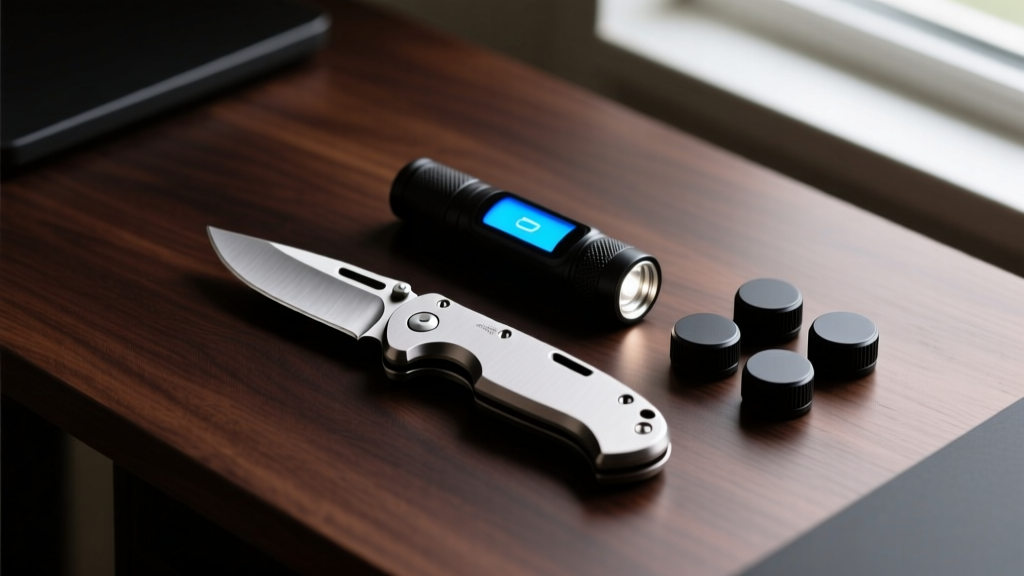
The Benchmade Bugout 535-3 (Carbon Fiber Variant)
The Benchmade Bugout remains the benchmark for lightweight folding knives, but the 2026 Carbon Fiber and Titanium milled variants correct the primary complaint of earlier Grivory models: lateral rigidity. Weighing in at exactly 1.85 ounces, the 535-3 utilizes a 3.24-inch drop-point blade forged from CPM-S30V stainless steel. According to the Crucible Industries CPM-S30V data sheet, this powder-metallurgy steel offers a superior balance of edge retention and corrosion resistance compared to higher-carbon alternatives like S90V, which are notoriously difficult to field-sharpen.
- Price: $180 - $210 (depending on aftermarket scale swaps)
- Lock Type: AXIS Lock (ambidextrous, spring-driven)
- Edge Geometry: 14-degree inclusive angle per side
- Failure Mode: The phosphor bronze washers can develop lateral play after 1,000+ cycles; requires periodic pivot tensioning via a T10 Torx driver.
Nitecore TINI 2 Keychain Light
Keychain lights often sacrifice user interface for size. The Nitecore TINI 2 solves this by integrating a 0.96-inch OLED display directly into the 47mm chassis. It outputs a peak 500 lumens from its dual LH351D LEDs, but its true value lies in the 15-lumen 'Ultra-Low' mode, which provides 45 hours of runtime without destroying your night vision. The internal 500mAh Li-ion battery is USB-C rechargeable, eliminating the need for proprietary charging cradles.
- Price: $59.95
- Weight: 1.34 oz (38g)
- IP Rating: IP54 (splash resistant, not submersible)

Workspace Command: Haptics and Ergonomic Anchors
The shift to hybrid work models has permanently altered desk setups. The focus has moved from basic monitor arms to tactile control surfaces and acoustic/visual dampening materials.
Elgato Stream Deck + (2026 Haptic Update)
Originally marketed to streamers, the Stream Deck + has been adopted by developers, video editors, and data analysts as a physical macro board. The defining feature is the inclusion of four LCD dials with 256-level haptic feedback. This allows users to scrub through Premiere Pro timelines, adjust DaVinci Resolve color wheels, or control Spotify volume with physical resistance that mimics analog potentiometers. The Elgato official hardware specifications detail the 100x100 pixel resolution of the seven main LCD keys, which dynamically update based on the active window context via the Stream Deck SDK.
- Price: $199.99
- Connectivity: USB-C (cable included, requires direct motherboard connection; unpowered hubs cause OLED flicker)
- Software Lock-in: High. Requires Elgato Stream Deck software running in the background.
Grovemade Walnut Desk Shelf & MagSafe Dock
Monitor risers are common, but the Grovemade Eastern Black Walnut Desk Shelf serves as an ergonomic anchor that elevates the screen to eye level while hiding mechanical keyboards underneath. The 2026 iteration integrates a flush-mounted 15W MagSafe charging puck into the left wing, routed through a hidden internal cable channel. Dimensions are precisely 32" x 9.5" x 3.5", supporting up to 200 lbs.
| Workspace Gadget | Primary Material | Power Requirement | ROI / Cost-Per-Use |
|---|---|---|---|
| Stream Deck + | Polycarbonate / Glass | 5V/2A USB-C | High (Daily time saved) |
| Grovemade Shelf | Black Walnut / Maple | Passive (15W MagSafe) | Medium (Ergonomic health) |
| Herman Miller Ollin | Aluminum / ABS | None | High (Posture correction) |
Backcountry Tech: Thermal and Satellite Redundancy
When operating outside cellular grids, gadget evaluation shifts entirely from convenience to life-safety and thermal efficiency. The gear below represents the current gold standard for off-grid reliability.
BioLite CampStove 2+
The CampStove 2+ utilizes a thermoelectric generator (TEG) to convert waste heat from a wood fire into usable electricity. The internal 3200mAh Li-ion battery stores this energy, outputting up to 3W via USB-A. While it will not fast-charge a modern flagship phone, it will reliably keep a GPS unit or headlamp topped off. The 2026 firmware update improved the internal fan's combustion efficiency, reducing boil times for 1 liter of water to roughly 4.5 minutes while generating a cleaner, smokeless burn.
- Price: $149.95
- Weight: 2.06 lbs (935g)
- Fuel: Biomass (twigs, pinecones, wood pellets)
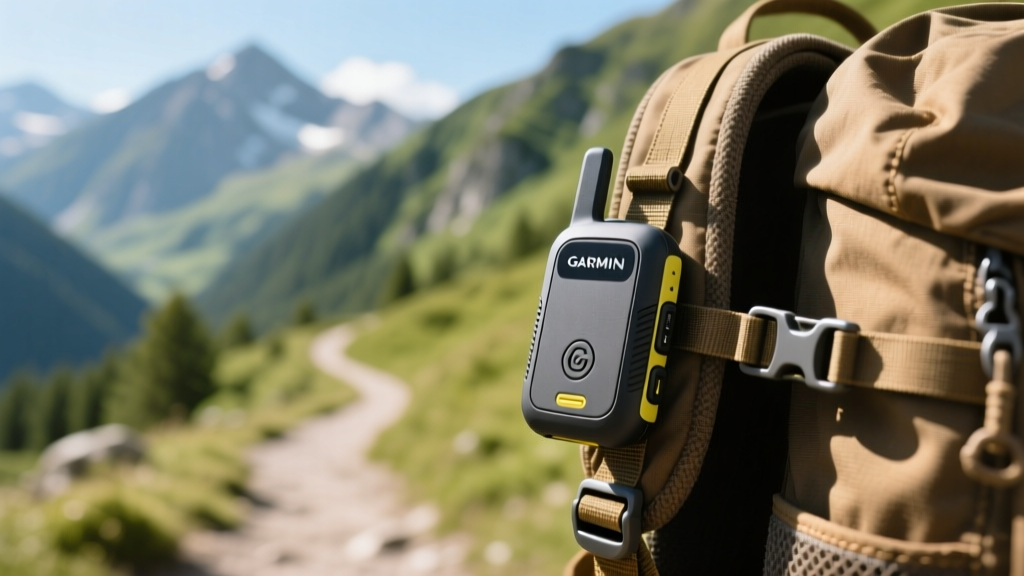
Garmin inReach Mini 2
Despite the proliferation of smartphone satellite SOS features (like Apple's Emergency SOS via satellite), the Garmin inReach Mini 2 remains the mandatory choice for serious backcountry travel. Smartphone satellite features are restricted to emergency pings and require precise sky alignment. The inReach Mini 2 uses the Iridium satellite network for two-way text messaging, breadcrumb tracking, and weather downloads. According to OutdoorGearLab satellite messenger field tests, the Mini 2's 14-day battery life at 10-minute tracking intervals vastly outperforms smartphone alternatives, which drain rapidly when searching for weak satellite signals in cold environments.
Expert Insight: 'Relying solely on a smartphone for satellite communication in sub-freezing temperatures is a critical failure point. Lithium-ion phone batteries degrade by up to 40% in cold weather, and the high-draw antenna required for space-to-earth communication will kill a phone in hours. The inReach Mini 2's dedicated, low-power Iridium transceiver is non-negotiable for alpine or winter routing.'
The Buyer's Framework: Evaluating Gadget ROI
To avoid accumulating drawer-clutter, apply this three-point evaluation framework before purchasing any tech toy or EDC item in 2026:
- The 100-Hour Rule: If a gadget requires more than 2 hours of setup, calibration, or software configuration to yield its primary benefit, it must be used for at least 100 hours to justify the friction. Avoid highly programmable gear if you only need single-function outputs.
- Battery Degradation Curves: Check the battery chemistry. Gadgets using standard Li-ion cells will lose 20% of their capacity after 500 charge cycles (roughly 1.5 years of daily use). Prioritize devices with user-replaceable batteries (like the Nitecore TINI 2's internal cell, which can be swapped by the manufacturer) or those that run on standard CR123A/AA lithium primaries for long-term storage.
- Ecosystem Lock-in Risk: Hardware is cheap; proprietary software is expensive. Before buying a smart desk accessory, verify if it supports standard HID (Human Interface Device) protocols. If a device requires a cloud-based subscription to function after the initial purchase (common in high-end smart home hubs), calculate the 5-year total cost of ownership, not just the MSRP.
Sourcing & Technical Citations
The specifications, metallurgical data, and field performance metrics referenced in this guide are sourced from manufacturer technical sheets and independent testing laboratories. For ongoing updates on firmware revisions and hardware teardowns, consult the primary documentation provided by Crucible Industries, Elgato, and independent field-testing organizations like OutdoorGearLab.
Written by
David OkaforDavid Okafor is an ASE (Automotive Service Excellence) Master Certified Technician with 15 years of professional experience in vehicle diagnostics, aftermarket electronics installation, and fleet management. He holds an Associate Degree in Automotive Technology from Universal Technical Institute and certifications in mobile electronics (MECP Certified Installer). David has installed and reviewed over 800 car tech products — from OBD2 scanners and dash cams to full infotainment system retrofits — in vehicles ranging from economy compacts to luxury SUVs. His popular YouTube channel "AutoTech David" has over 150,000 subscribers and features detailed installation tutorials and product teardowns. He is a regular contributor to the SEMA Show's aftermarket technology showcase and advises two automotive tech startups on product development.