7 Unique Gadgets for Golfers That Actually Lower Scores
Discover 7 cool and unique gadgets for golfers that go beyond standard rangefinders. From smart sensors to biometric grips, upgrade your bag today.
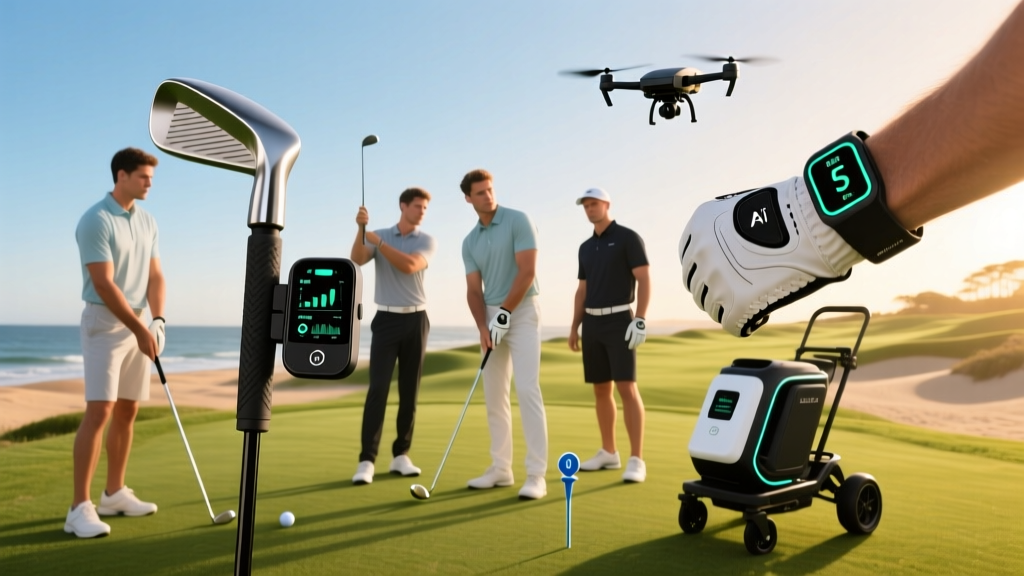

Most golfers stop their tech journey at a laser rangefinder and a basic GPS watch. While knowing the exact yardage to the pin is essential, the real strokes-gained advantages in 2026 are hidden in biometric sensors, AI-driven camera hybrids, and micro-kinematic trackers. If you want to break through a scoring plateau, you need to look at the cool and unique gadgets for golfers that measure what the naked eye simply cannot see.
We have filtered out the gimmicks to bring you a curated list of high-performance, niche golf technology. These are the tools that club fitters, touring professionals, and elite amateurs are actively using to shave strokes off their handicap.
The Biometric Revolution: Tracking What Your Eyes Can't See
Video analysis is great, but it only shows you the result of your body's movements. Biometric gadgets for golfers measure the internal mechanics of the swing in real-time.
HackMotion Wrist Sensor
The HackMotion Wrist Sensor ($299) is a wearable device that slips under your golf glove to track wrist kinematics at 200 samples per second. It measures flexion/extension (bowing/cupping) and radial/ulnar deviation (cocking/uncocking).
The Information Gain: Tour professionals typically present 20° to 30° of lead wrist flexion (bowing) at impact, which delofts the club and compresses the ball. The average 15-handicap amateur presents 10° to 15° of extension (cupping), adding dynamic loft and causing weak slices. HackMotion provides real-time audio feedback when your wrist falls out of your predefined 'tour window' during practice swings, effectively rewiring your muscle memory without needing a coach standing over you.
Salted Smart Insoles
Weight transfer is the engine of the golf swing, yet most amateurs guess at their ground reaction forces. Salted Smart Insoles ($199) slide directly into your golf shoes and map your Center of Pressure (CoP) in real-time. The companion app visualizes your pressure shift, showing exactly when you transition from your trail foot to your lead foot.
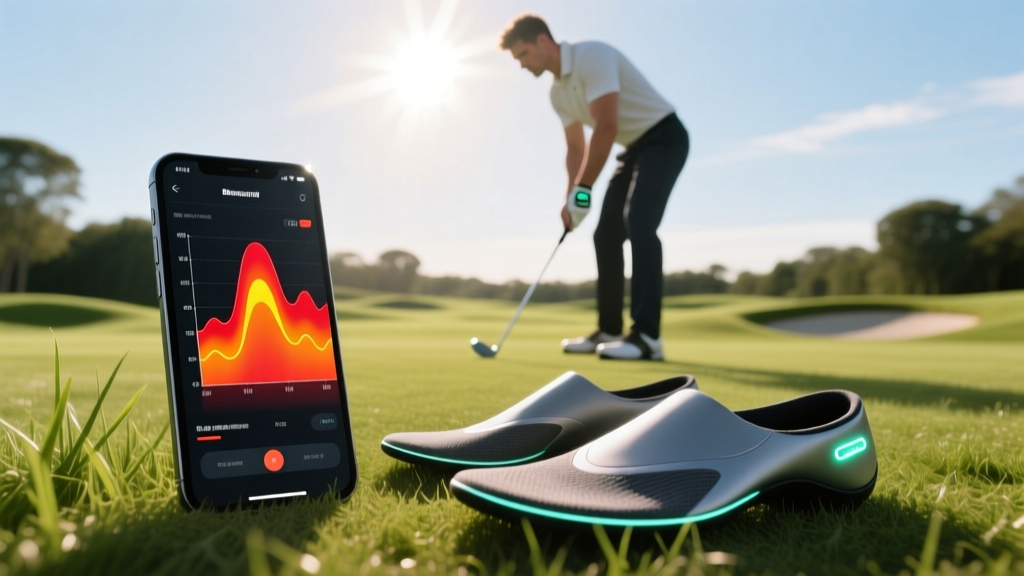
The Ideal Metric: Data shows that elite ball-strikers have 70% to 80% of their pressure on the trail foot at the top of the backswing, and successfully shift 80% to 90% onto the lead foot just before the club reaches impact. If your app shows you are still hanging on your back foot at impact, you have instantly diagnosed your fat shots and thin strikes.
Camera-Radar Hybrids: The New Era of Launch Monitors
Historically, you had to choose between Doppler radar (great for outdoor ball flight, poor for club data) or photometric cameras (great for indoor club data, poor for tracking full outdoor flight). The latest gadgets for golfers merge both technologies.
Rapsodo MLM2PRO
The Rapsodo MLM2PRO ($699) utilizes dual-doppler radar alongside two high-speed cameras. This hybrid approach allows it to measure 16 distinct parameters, including Spin Axis and Spin Rate, with an accuracy that rivals $15,000 enterprise monitors. It also features an 'Impact Vision' camera that records your exact strike location on the clubface, overlaying the video with your launch data.
2026 Portable Launch Monitor Comparison
| Metric | Rapsodo MLM2PRO | Garmin Approach R10 | FlightScope Mevo+ |
|---|---|---|---|
| Technology | Radar + Dual Camera | Doppler Radar Only | 3D Doppler Radar |
| Spin Rate Accuracy | High (Camera verified) | Moderate (Algorithmic) | High (Radar optimized) |
| Impact Video Overlay | Yes | No | Yes (Pro Package only) |
| Indoor/Outdoor | Excellent / Excellent | Poor / Excellent | Good / Excellent |
| Price Point | $699 | $599 | $2,000+ |
For the serious amateur looking to practice both indoors and outdoors without buying metallic tape for their golf balls, the camera-radar hybrid is the undisputed champion of portable launch monitors.
Micro-Sensors: Fixing the Short Game with Hard Data
Driving distance gets you on the leaderboard, but putting keeps you there. The green is where unique golf gadgets truly shine, turning 'feel' into quantifiable math.
Capto Putting
Capto Putting ($350 + subscription) is a 9-axis sensor that attaches to your putter shaft via a magnetic quick-release. Sampling at 1000 Hz (1000 times per second), it measures face angle, loft, lie, and rotation rate throughout the entire putting stroke.
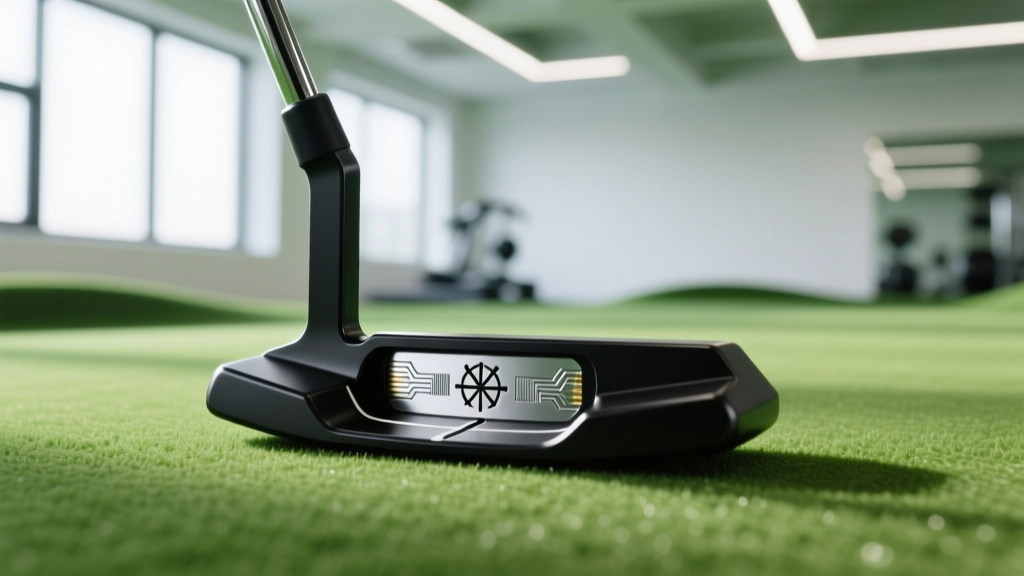
Why it matters: Most golfers think they are pulling putts when they miss left. Capto data frequently reveals that the putter face is actually square, but the golfer's grip pressure is causing the putter head to rotate open on the backswing and snap shut through impact. By tracking face rotation in degrees per second, Capto allows you to adjust your grip pressure and stroke path with surgical precision.
Blast Motion Golf Sensor
For a more budget-friendly entry ($99), the Blast Motion sensor tracks stroke tempo, face rotation, and lie angle. The key metric here is Tempo—the ratio of backswing time to forward swing time. Tour professionals almost universally maintain a 2.0:1 or 2.1:1 tempo ratio. If your Blast app shows a 2.8:1 ratio, you know your backswing is too slow and disjointed, causing inconsistent speed control on 15-foot putts.
On-Course AI: Moving Beyond Basic GPS
Arccos Caddie Gen 4
While many golfers use basic shot-tracking, the Arccos Caddie Gen 4 system ($149/year) elevates the concept by integrating AI caddie advice with environmental factors. The Gen 4 sensors screw into the grip of every club, and the app uses your phone's microphone to detect the sound of the club striking the ball, automatically logging the shot.
The true value is the 'Strokes Gained' analytics and the AI caddie. The system analyzes thousands of data points from your past rounds, combined with real-time wind and elevation data, to tell you exactly which club to hit. It will actively advise you against hitting a driver on a par 5 if your historical data shows you score 0.4 strokes better when laying up with a 3-wood. It removes ego from club selection.
How to Choose the Right Tech for Your Handicap
Not all gadgets for golfers are created equal, and buying the wrong tech for your skill level is a waste of money. Use this decision framework to guide your purchase:
- Scratch to 5 Handicap (The Optimizer): You don't need help finding the fairway; you need to optimize your spin rates and green-in-regulation proximity. Buy: Rapsodo MLM2PRO for dialing in wedge spin, and Capto Putting to perfect your face rotation on fast tournament greens.
- 6 to 15 Handicap (The Ball-Striker): You have a consistent swing but suffer from timing and weight shift issues. Buy: HackMotion Wrist Sensor to groove a consistent clubface delivery, and Salted Smart Insoles to ensure proper ground force sequencing.
- 16 to 25+ Handicap (The Course Manager): You lose strokes to penalty areas and poor club choices, not necessarily swing mechanics. Buy: Arccos Caddie to eliminate ego-driven club selections and track exactly where your strokes are bleeding away (usually approach shots and penalty avoidance).
Upgrading your golf bag in 2026 isn't about buying more clubs; it is about buying better data. By integrating these unique, high-fidelity gadgets into your practice and course management routines, you transition from guessing to knowing—and that is how handicaps actually drop.
Written by
Priya SharmaPriya Sharma holds a Ph.D. in Acoustical Engineering from the University of Southampton and a B.Tech in Electronics from IIT Delhi. She has spent 9 years as a consumer electronics journalist, with deep specialization in audio equipment, camera systems, and assistive technology. Priya is an active member of the Audio Engineering Society (AES) and has co-authored papers on spatial audio perception published in the Journal of the Acoustical Society of America. Her reviews of headphones, portable DACs, and studio monitors include objective measurements using Audio Precision analyzers alongside subjective listening tests. She also serves on the advisory board of the Global Accessibility Reporting Initiative (GARI), evaluating mobile devices for users with visual and hearing impairments.