Copper Kitchen Gadgets in Pasta Making: A Durability Review
We test the durability, thermal performance, and maintenance costs of copper kitchen gadgets for pasta making and traditional Italian cooking.
The Metallurgical Reality of Copper in Italian Cooking
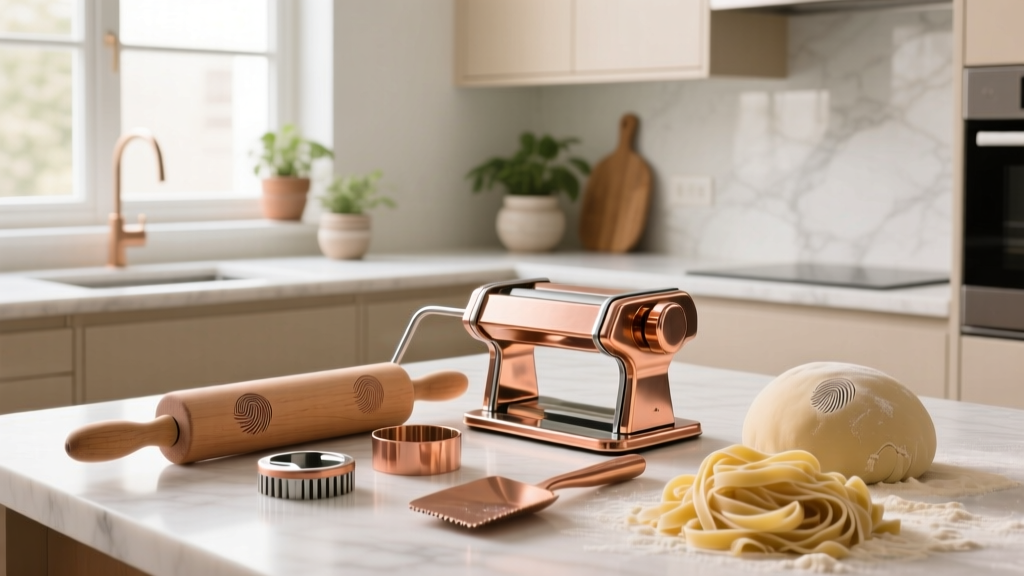
When outfitting a kitchen for serious Italian cooking, the market is saturated with stainless steel pasta pots and bronze extrusion dies. However, integrating high-end copper kitchen gadgets into your pasta and specialty prep workflow offers distinct thermodynamic and chemical advantages that steel simply cannot replicate. Copper boasts a thermal conductivity of approximately 401 W/(m·K), compared to just 16 W/(m·K) for stainless steel and 237 W/(m·K) for aluminum. This means copper responds to temperature changes almost instantaneously, a critical factor when tempering delicate sauces or maintaining the precise rolling boil required for fresh pasta.
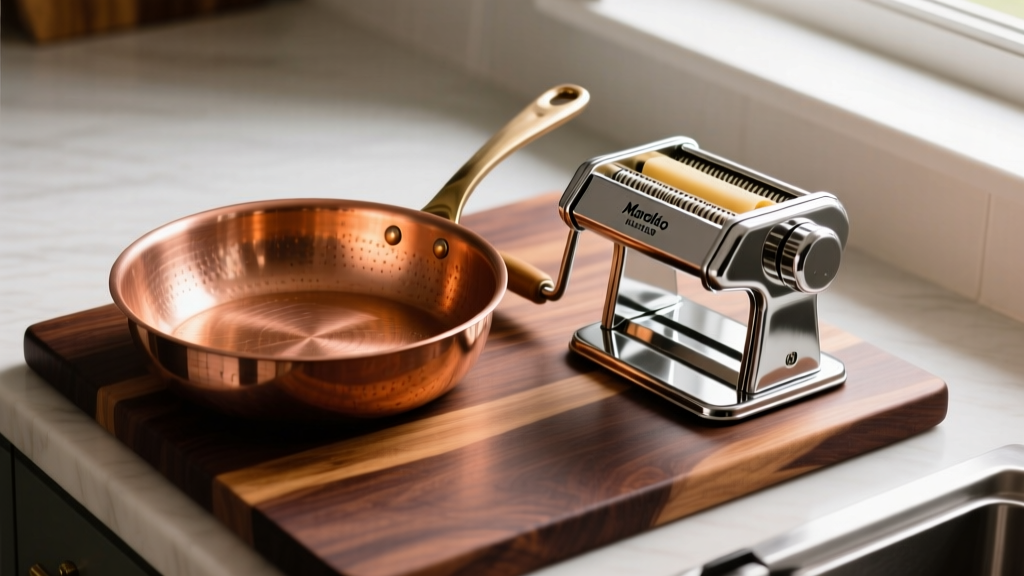
Yet, the durability of copper is frequently misunderstood. Unlike a Marcato Atlas 150 pasta roller, which relies on hardened steel gears and chrome-plated rollers that can last a lifetime with zero chemical maintenance, copper requires active stewardship. In this 2026 durability review, we dissect the actual lifespan, failure modes, and culinary ROI of copper specialty tools—specifically the traditional paiolo (polenta pan) and unlined copper mixing bowls used in Italian pastry and pasta dough preparation.
Thermal Performance Matrix: Copper vs. Traditional Pasta Materials
To understand where copper kitchen gadgets excel—and where they fall short—we must compare them directly against the standard materials used in pasta making and Italian prep.
| Material / Gadget | Thermal Conductivity | Primary Italian Application | Durability & Maintenance |
|---|---|---|---|
| 2.5mm Tin-Lined Copper | 401 W/(m·K) | Polenta, delicate emulsions (Cacio e Pepe) | High; requires re-tinning every 5-10 years. |
| Tri-Ply Stainless Steel | ~16 W/(m·K) (core dependent) | Pasta boiling, acidic tomato ragùs | Exceptional; virtually indestructible, dishwasher safe. |
| Bronze Extrusion Dies | ~52 W/(m·K) | Pasta extrusion (creates micro-porosity) | High; soft metal wears down after ~500kg of dough. |
| Unlined Copper Bowl | N/A (Chemical reactivity focus) | Whipping egg whites for Tiramisu / Gnudi | Moderate; requires acid/salt polishing, strictly hand-wash. |
Deep Dive: Specialty Copper Tools for the Italian Kitchen
The Copper Paiolo (Polenta Pan)
Authentic Italian polenta requires 45 to 60 minutes of continuous simmering and stirring. In a standard stainless steel pot, the intense, localized heat at the bottom vertex often triggers the Maillard reaction, scorching the cornmeal and introducing a bitter, burnt flavor profile. The traditional paiolo di rame (copper polenta pan) solves this through geometry and metallurgy. Brands like Mauviel 1830 and Ruffoni manufacture paiolos with a 2.5mm copper body and a tin lining. Because copper distributes heat laterally with near-perfect uniformity, the temperature delta between the pan's sidewalls and the bottom center is less than 2°C. This eliminates hot spots, allowing the polenta to release its starches evenly without scorching, even over a low gas flame.
Unlined Copper Mixing Bowls for Egg Whites
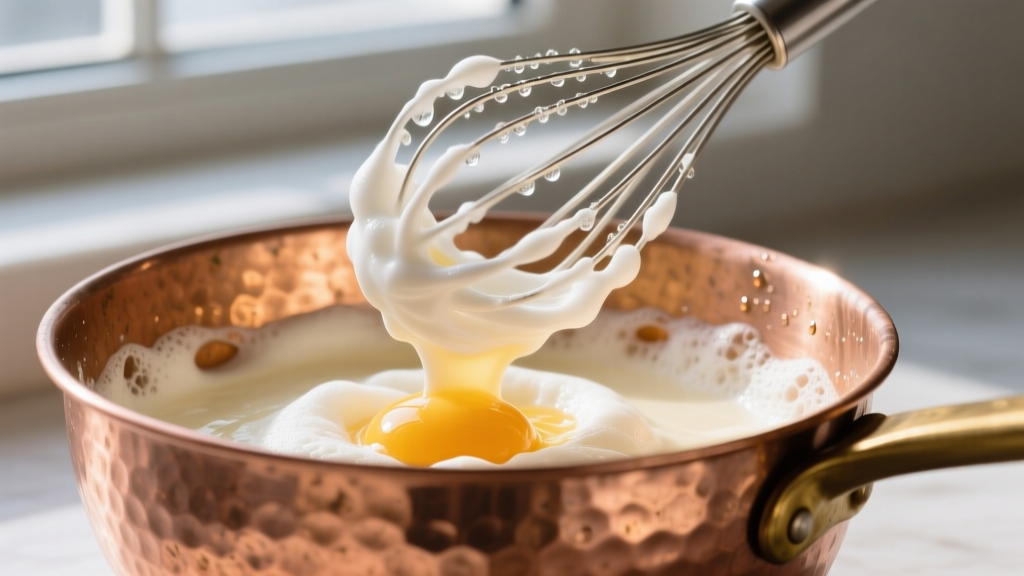
While tin-lined copper is mandatory for cooking, unlined copper kitchen gadgets are essential for specific raw preparations. When whipping egg whites for a traditional Tiramisu or a light, airy gnudi dough, copper ions (Cu2+) leach into the egg whites and bind with conalbumin, a key egg protein. According to America's Test Kitchen, this copper-conalbumin complex raises the denaturation temperature of the proteins, making the foam structurally stable and virtually impossible to over-whip. A glass or steel bowl will yield a brittle foam that weeps liquid; a 3-quart unlined copper bowl yields a glossy, marshmallow-like stability that survives folding and baking.
"The difference between a steel bowl and a copper bowl isn't just about peak volume; it's about the micro-structure of the protein network. Copper acts as a chemical stabilizer that no mechanical gadget can replicate."
— Dr. Hervé This, Molecular Gastronomy Researcher
Failure Modes and Edge Cases in Copper Maintenance
The primary argument against copper kitchen gadgets is the maintenance burden. Unlike a stainless steel pasta pot that can be scrubbed with abrasive pads, copper requires strict adherence to thermal and chemical limits.
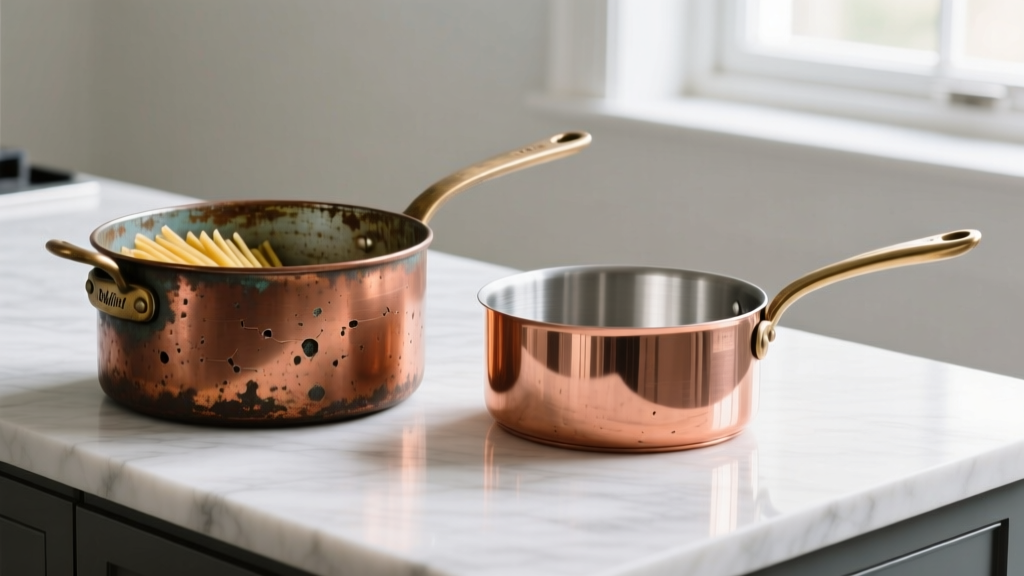
- Tin Lining Meltdown: The tin lining used in 95% of culinary copper cookware has a melting point of exactly 450°F (232°C). Preheating an empty copper pan on a high-output gas burner can blister or melt the tin in under 45 seconds, ruining the lining and exposing the reactive copper beneath.
- Verdigris Toxicity: If the tin lining wears through (usually visible as copper-colored patches larger than a quarter), cooking acidic ingredients like a Chianti-based Bolognese will cause copper to leach into the food. The Centers for Disease Control and Prevention (CDC) notes that excessive copper ingestion leads to acute gastrointestinal distress and long-term hepatic issues. Once the lining is compromised, the pan must be pulled from rotation immediately.
- Dishwasher Destruction: The caustic detergents and high heat of modern dishwashers will strip the exterior lacquer (if present) and aggressively oxidize the copper, leading to pitting and permanent water-spot etching within a single wash cycle.
Cost-Benefit Analysis: Is the Premium Justified in 2026?
Investing in copper specialty tools requires a long-term perspective. As of 2026, a high-quality 25cm Mauviel M'250 tin-lined copper saucepan retails between $280 and $340, while a specialized Ruffoni copper paiolo can exceed $450. By comparison, a premium 5-quart tri-ply stainless steel pasta pot from All-Clad costs roughly $180.
💡 The Re-Tinning Reality Check
When the tin lining wears out, you do not replace the pan; you re-tin it. Professional re-tinning services currently charge between $4.50 and $6.00 per linear inch of diameter, plus shipping. Re-tinning a 10-inch pan costs approximately $60. If you re-tin a pan twice over a 30-year lifespan, your total cost of ownership is still lower than replacing mid-tier stainless steel cookware three times in the same period. As detailed in the Serious Eats copper cookware guide, a well-maintained 2.5mm copper pan is effectively an heirloom asset that outlives its owner.
Final Verdict for the Serious Home Cook
If your Italian cooking repertoire is limited to boiling dried pasta and simmering highly acidic tomato sauces, copper kitchen gadgets are a poor investment; stick to heavy-gauge stainless steel or enameled cast iron. However, if you are dedicated to the nuances of regional Italian cuisine—specifically the slow, low-heat coaxing of starches in polenta, the emulsification of delicate cheese-based pasta sauces, or the chemical stabilization of egg foams for pastries—copper transitions from a luxury aesthetic to a functional necessity.
For the ultimate durability and performance setup, pair a mechanical workhorse like the Marcato Atlas 150 pasta roller (for its indestructible steel gearing) with a 2.5mm tin-lined copper saucier (for finishing the pasta in its emulsified sauce). This hybrid approach leverages the zero-maintenance durability of steel for prep, and the unmatched thermodynamic precision of copper for the critical finishing stages of Italian cooking.
Written by
Lena ChenLena Chen earned her M.S. in Human-Computer Interaction from Carnegie Mellon University and a B.S. in Electrical Engineering from the University of Washington. She has spent the past decade specializing in smart home architecture and IoT ecosystems, helping over 200 homeowners design fully connected living spaces. Lena is a certified Matter protocol consultant and has published peer-reviewed research on voice-first interface design in the ACM Digital Library. Her reviews of smart home products combine deep technical analysis with real-world usability testing, evaluating everything from Zigbee mesh stability to Alexa skill responsiveness. She regularly speaks at CEDIA Expo and CES smart home panels.