Cool Kitchen Gadgets 2025: Outdoor Thermometers & Timers
Master seasonal grilling with the best cool kitchen gadgets. Compare MEATER, ThermoWorks, and FireBoard wireless thermometers for outdoor cooking.
The Shift from Analog to True Wireless in Outdoor Cooking
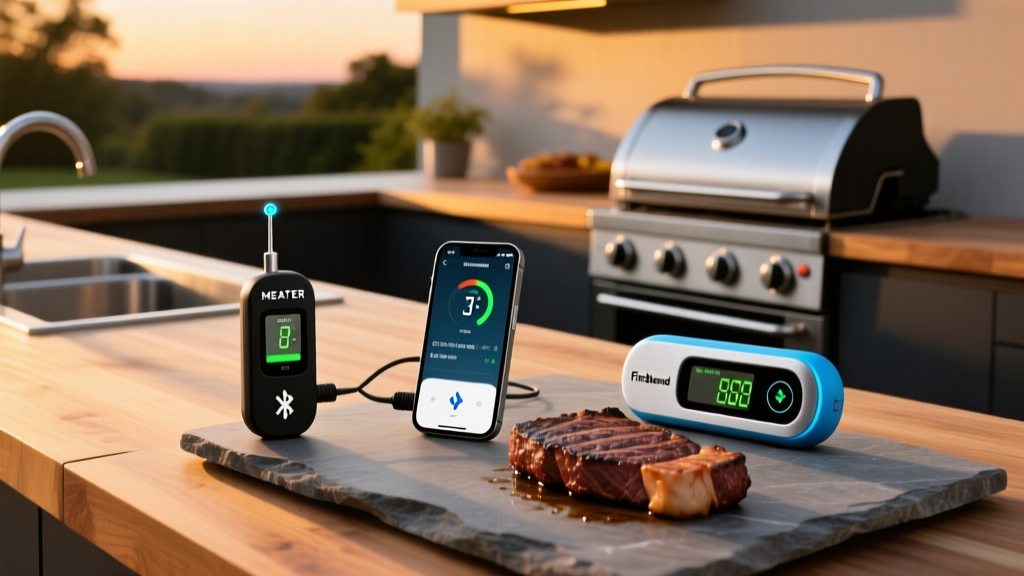
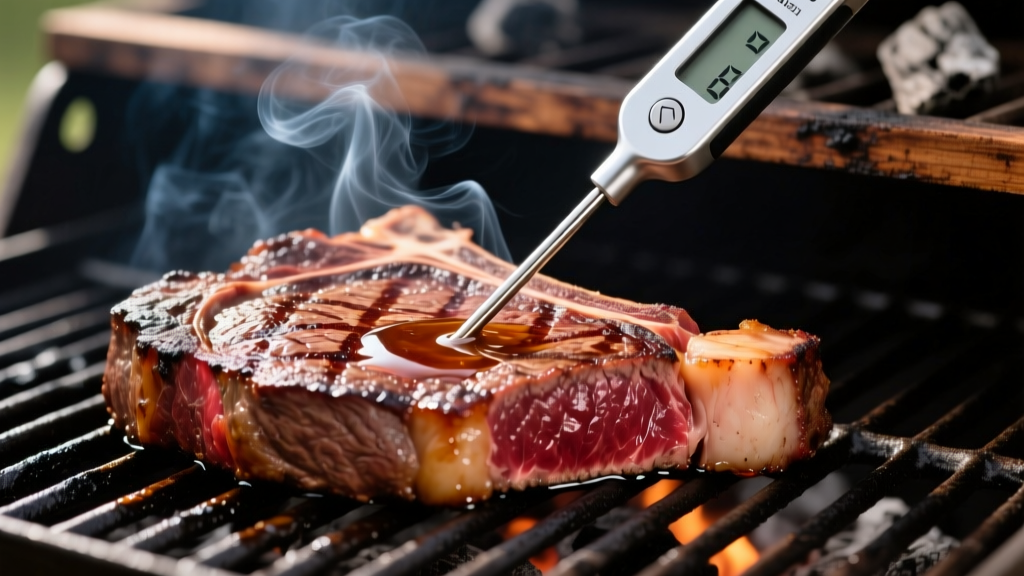
Seasonal outdoor cooking demands precision that analog dome thermometers simply cannot provide. When managing a 14-hour brisket smoke or reverse-searing thick ribeyes over hardwood lump charcoal, guessing is a liability. The evolution of wireless thermal tracking has transformed backyard patios into data-driven culinary stations. Modern cool kitchen gadgets 2025 and heading into 2026 have moved beyond basic Bluetooth tethers, embracing dual-sensor WiFi architectures and true wire-free instant reads that eliminate base-station clutter.
For the outdoor chef, the primary challenge is range and signal penetration. Standard 2.4GHz Bluetooth signals degrade rapidly when passing through dense materials. If your smoker is on the patio and your kitchen features stucco, brick, or Low-E glass, a standard Bluetooth connection will drop before you reach the refrigerator. Upgrading to WiFi-bridged or true wireless systems is no longer a luxury; it is a fundamental requirement for seamless outdoor-to-indoor monitoring.
Top-Tier Wireless Thermometers for the Grilling Season
MEATER 2 Plus: The Dual-Sensor Wire-Free Standard
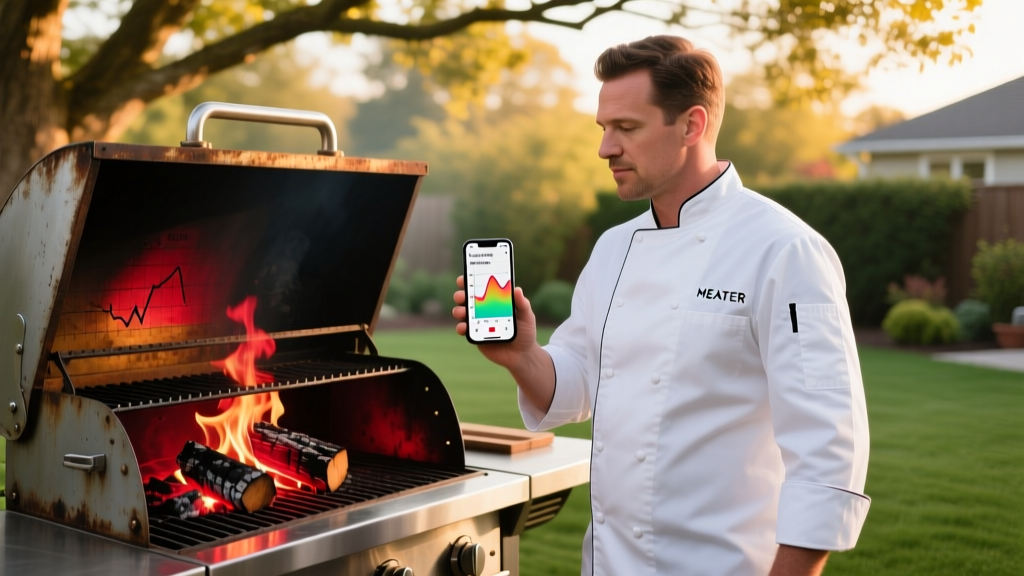
The MEATER 2 Plus ($129) remains a dominant force in the true wireless category. Unlike its predecessors, the 2 Plus features an IP67 waterproof rating, meaning it can survive a drop into a marinade bucket or a thorough scrub under the tap. The 6mm stainless steel probe houses two sensors: one at the tip for internal meat temperature (max 212°F) and one near the top for ambient grill temperature (max 527°F).
- Range: 165 feet via Bluetooth; unlimited via WiFi (using the wooden charging block as a bridge).
- Edge Case Warning: Because the internal sensor maxes out at 212°F, you cannot use the MEATER for deep frying or high-heat direct grilling where the core temperature of the meat exceeds boiling point before removal.
ThermoWorks Signals: The Pitmaster's Command Center
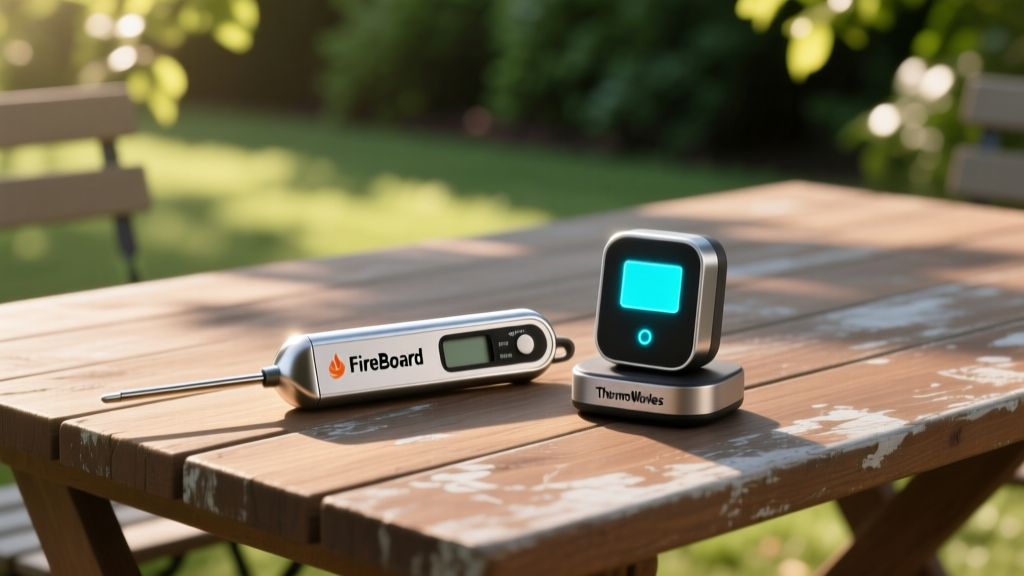
For serious offset smokers and ceramic kamado users, the ThermoWorks Signals ($139) offers a rugged, multi-channel approach. It features four pro-series high-temp probes (capable of withstanding up to 700°F) and a dedicated ambient probe. Its standout feature is native compatibility with the Billows BBQ Control Fan, allowing the Signals unit to automatically regulate your smoker's intake vent to maintain a precise ambient temperature within ±5°F.
'The Signals doesn't just read temperatures; it actively manages the fire. When paired with Billows, it turns a manual charcoal smoker into a set-and-forget convection oven.' — Outdoor Cooking Tech Review, 2025
FireBoard Spark: Bridging Leave-In and Instant Read
The FireBoard Spark ($199) solves the two-device problem. It functions as both a leave-in probe for long smokes and an instant-read thermometer for quick checks. The proprietary 'PureTherm' sensor delivers a full temperature reading in roughly 3 seconds. The entire unit is IP66 rated, and the magnetic charging base acts as a WiFi gateway, pushing data directly to the cloud without requiring your phone to stay in range.
Comparison Matrix: Range, Battery, and Probe Limits
| Model | Connection | Max Ambient Temp | Probe Thickness | Best Use Case |
|---|---|---|---|---|
| MEATER 2 Plus | BT + WiFi Bridge | 527°F (275°C) | 6.0 mm | Roasting, Indirect Grilling |
| ThermoWorks Signals | BT + WiFi Gateway | 700°F (371°C) | 3.0 mm | Smoking, Kamado, Multi-meat |
| FireBoard Spark | BT + WiFi Cloud | 600°F (315°C) | 4.5 mm | Hybrid Smoking & Quick Reads |
Critical Failure Modes: What Ruins Outdoor Thermometers?
Even the most expensive cool kitchen gadgets will fail if deployed incorrectly in harsh outdoor environments. Understanding these failure modes separates amateur grillers from seasoned pitmasters.
Leave-in probes contain internal wiring insulated by PTFE or fiberglass. While the metal shaft can withstand 700°F, a sudden grease flare-up can spike localized temperatures to over 1,000°F in seconds. This will melt the internal insulation, permanently shorting the sensor. Always route probe cables away from direct flame paths and use silicone cable clips to secure them to the grill grate.
Another common failure is condensation shorting. Moving a cold base unit from an air-conditioned kitchen into a humid 90°F outdoor environment causes internal condensation. Always allow your electronic base stations to acclimate to the outdoor temperature for 15 minutes before powering them on.
Timer Gadgets Beyond the Thermometer
While smart thermometers track internal doneness, outdoor cooking requires managing multiple side dishes, resting periods, and spritzing intervals. Relying on a smartphone timer is a mistake; wind, lawnmowers, and conversation easily drown out standard phone speakers.
The ThermoPro TM07 ($25) is the definitive outdoor multi-timer. It features four independent channels, an IPX6 waterproof rating (surviving heavy rain or a hose-down), and a 90-decibel alarm that cuts through the noise of a crowded backyard party. Its oversized, backlit digits are visible in direct sunlight, and the heavy-duty neodymium magnet on the back securely anchors it to the side panel of any steel smoker or grill cart.
The Resting Timer Framework
Proper resting allows muscle fibers to relax and reabsorb expelled moisture. Use your dedicated timer gadget to enforce strict resting protocols based on mass:
- Steaks & Chops (1-2 lbs): Set timer for 8-10 minutes. Tent loosely with foil.
- Poultry & Roasts (3-6 lbs): Set timer for 20-30 minutes. Do not tent tightly, or the skin will lose its crispness.
- Brisket & Pork Shoulder (10+ lbs): Set timer for 1 to 2 hours. Wrap tightly in a towel and place in a dry cooler to hold above 140°F safely.
Expert Sourcing & Food Safety Standards
Technology is only as valuable as the safety parameters it enforces. According to the USDA Food Safety and Inspection Service, all poultry must reach a minimum internal temperature of 165°F. For whole cuts of beef, pork, lamb, and veal, the safe minimum is 145°F, but crucially, this must be followed by a mandatory 3-minute rest time before carving to ensure pathogen destruction.
Furthermore, calibration is vital. As noted in extensive thermal testing by Serious Eats, even premium thermometers can drift by 1-2°F after repeated exposure to extreme thermal shocks. Perform an ice-bath calibration test (32°F) at the start of every grilling season to ensure your baseline data is accurate.
Frequently Asked Questions
Can I leave my MEATER probe in the meat while searing over direct flame?
No. Direct charcoal flames can exceed 800°F, which will damage the ambient sensor located in the upper half of the probe. Use a dedicated instant-read for high-heat searing verification.
Do WiFi thermometers drain my grill's battery?
Leave-in probes do not have batteries; they are powered inductively or via the base unit. However, the WiFi base stations require constant power. Ensure your base unit is fully charged or plugged into an outdoor-rated USB power bank for cooks exceeding 12 hours.
Written by
Emma LarssonEmma Larsson holds an M.A. in International Relations from Sciences Po Paris and a B.A. in Communications from Stockholm University. A digital nomad since 2017, she has worked from over 45 countries across six continents, building deep expertise in portable power solutions, travel routers, compact computing, and connectivity gadgets that survive international travel. Emma is a certified member of the Travel Technology Association and has advised three travel gear startups on product-market fit for remote workers. Her reviews evaluate products against real travel scenarios — TSA compliance, voltage compatibility across 200+ countries, durability through 50+ checked bag cycles, and battery life under airplane mode vs. active use. She has been featured in Condé Nast Traveler's "Tech-Savvy Traveler" series and speaks at Remote Work Summit events.