Compact Must Have Kitchen Gadgets for Coffee and Tea
Maximize your micro-kitchen with these space-saving must have kitchen gadgets for coffee and tea. Exact dimensions, specs, and compact brewer comparisons.
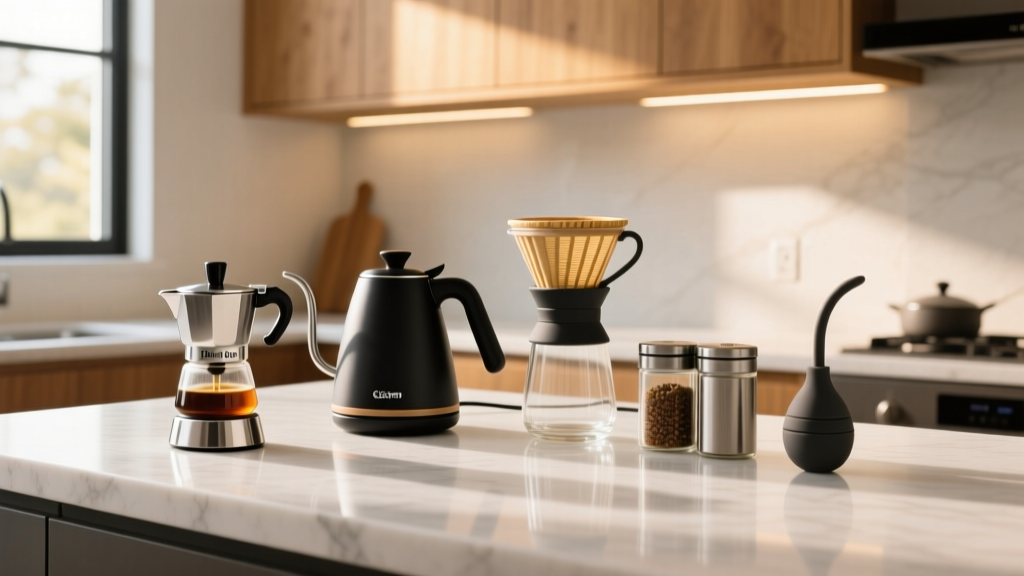
The Counter Footprint Efficiency (CFE) Standard
Standard espresso machines command 15 to 18 inches of horizontal counter space, while full-size electric kettles consume an 8x8 inch base. In galley kitchens, studio apartments, or dedicated coffee nooks under 4 feet wide, this footprint is mathematically incompatible with daily food prep. The solution is not to abandon specialty brewing, but to optimize for Counter Footprint Efficiency (CFE)—the ratio of brewing capability to physical base area.
When curating this list of compact must have kitchen gadgets for 2026, we eliminated any appliance that compromises extraction quality for the sake of size. A smaller machine must still hit the Specialty Coffee Association (SCA) brewing standards for thermal stability and particle uniformity. Below is the definitive hardware matrix for high-yield, low-footprint coffee and tea preparation.
The Footprint Matrix: Compact Brewers & Kettles
| Gadget Category | Model | Base Footprint (W x D) | Height | Current Price |
|---|---|---|---|---|
| Espresso Machine | Breville Bambino Plus | 6.9 x 12.5 inches | 12.2 inches | $499 |
| Pod Espresso | Nespresso Essenza Mini | 3.3 x 15.9 inches | 8.0 inches | $199 |
| Gooseneck Kettle | Gevi 1200W Slim | 5.5 x 8.5 inches | 10.5 inches | $69 |
| Standard Kettle | Smeg Mini 0.8L | 7.0 x 5.0 inches | 8.0 inches | $169 |
Espresso Without the Sprawl: Breville Bambino Plus Deep Dive
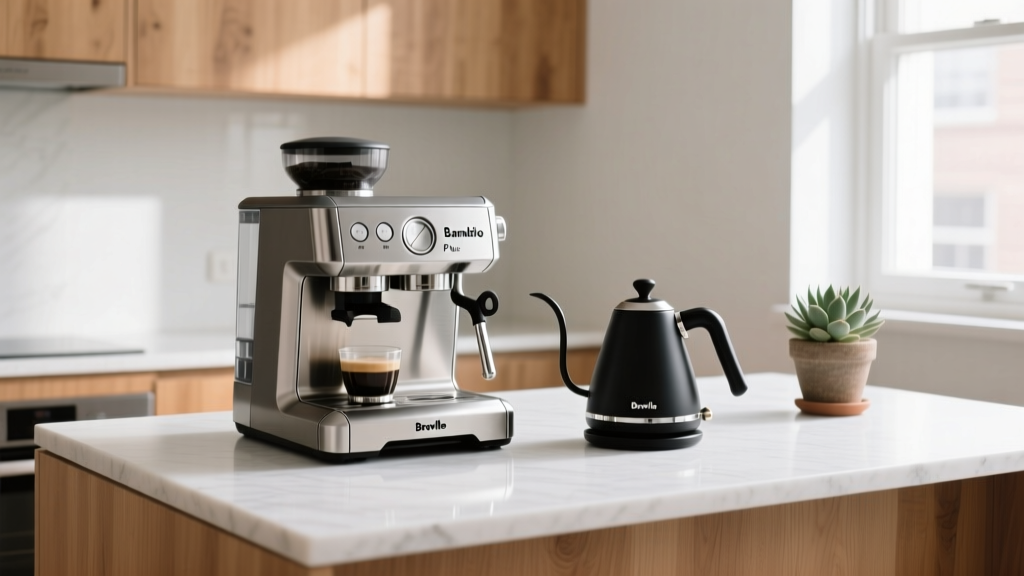
The Breville Bambino Plus remains the undisputed champion of compact pump espresso machines. At just 6.9 inches wide, it fits on a standard 12-inch deep upper shelf or a narrow rolling cart. Unlike cheaper ultra-compact models that downgrade to pressurized 51mm portafilters, the Bambino Plus utilizes a professional 54mm portafilter, allowing for standard bottomless portafilter upgrades and true unpressurized single-origin extractions.
Clearance and Workflow Constraints
The ThermoJet heating system achieves extraction temperature (200°F) in exactly 3 seconds, eliminating the 15-minute warm-up phase required by traditional brass boiler machines. However, the compact design introduces a specific mechanical failure mode: portafilter lock-in slide.
The Fix: Do not rely on the stock rubber feet. Place the machine on a 2mm thick, high-friction silicone countertop mat, or position it flush against a tiled backsplash to brace the rear during lock-in. New York Times Wirecutter's espresso machine testing corroborates that lightweight thermal-block machines require physical bracing during tamping and locking.
Precision Pouring on a Micro-Counter: Slim Gooseneck Kettles
For pour-over coffee and precise tea steeping, a gooseneck spout is non-negotiable for flow rate control. Standard gooseneck kettles (like the Fellow Stagg EKG) feature a wide 7x7 inch base to house large heating elements and counterbalance the heavy water load. In a tight space, the Gevi 1200W Slim Electric Gooseneck is the superior alternative.
- Base Footprint: The Gevi’s base measures just 5.5 x 8.5 inches, shaving 30% off the footprint of premium competitors.
- Thermal Stability: It utilizes a 1200W element that brings 400ml of water to 205°F in under 3 minutes.
- PID Fluctuation: While high-end kettles hold temperature within 1°F, the Gevi fluctuates by ±3°F. For SCA-standard pour-overs, this variance is entirely acceptable and will not cause astringency.
If you exclusively brew tea and do not require a slow-flow gooseneck spout, the Smeg 50's Retro Style Mini Kettle (0.8L) offers a 7x5 inch footprint. The 0.8L capacity is intentionally limited, preventing the excess water weight that causes compact kettles to tip, while providing exactly enough water for two large mugs of tea.
Grinding in Tight Quarters: The Manual Advantage
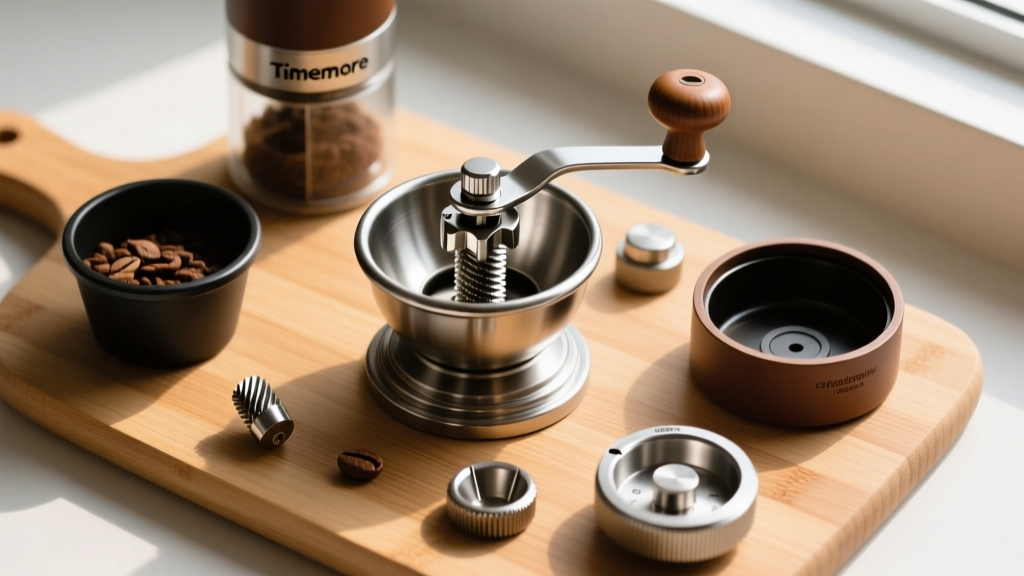
Electric burr grinders like the Baratza Encore require a 5x8 inch footprint and 12 inches of vertical clearance for the hopper. In a small kitchen, this is dead space when the grinder is not in use. The optimal space-saving must have kitchen gadget for grinding is the Timemore Chestnut C3 Manual Grinder.
Burr Wear and Heat Transfer Issues in Small Grinders
Most entry-level manual grinders (such as the ubiquitous Hario Skerton) use ceramic burrs. Ceramic burrs crush rather than cut, taking up to 3 minutes to grind 15g of light-roast coffee. This extended friction generates heat and produces excessive "fines" (dust-like particles). When these fines are used in a compact espresso machine like the Bambino Plus, they clog the micro-channels of the pressurized basket, resulting in choked shots and pump strain.
The Timemore C3 solves this with 38mm stainless steel S2C burrs. It cuts through 15g of dense light-roast beans in 45 seconds with zero heat transfer and a highly uniform particle distribution. When not in use, the C3 is roughly the size of a 16oz thermos and can be stored vertically in a drawer or cabinet, reducing its counter footprint to absolute zero.
"Transitioning from a ceramic manual grinder to a stainless steel conical burr system is the single most impactful upgrade for compact espresso setups, directly reducing channeling and pump over-pressurization." — Specialty Coffee Association Extraction Guidelines
The Vertical Storage Rule for Tea Accessories
Electric tea makers, such as the Breville Tea Maker, are engineering marvels but require a massive 11x11 inch footprint and a dedicated power outlet. For small kitchens, apply the Vertical Storage Rule: any tea gadget must nest inside the vessel it brews into.
The Finum Permanent Brewing Basket ($12) is a laser-cut, medical-grade stainless steel micro-mesh basket. It allows full leaf expansion (unlike restrictive tea bags) and fits perfectly inside standard 12oz to 16oz mugs. Because it requires zero electricity and stores inside your mug, it frees up the counter space entirely for your variable temperature kettle. Pair the Finum basket with the Smeg Mini Kettle, and you have a complete, temperature-accurate tea station occupying less than 40 square inches of counter space.

Maintenance Realities for Compact Machines
Compact machines achieve their size by utilizing smaller thermoblocks and reduced-capacity water reservoirs. This introduces a strict maintenance reality that owners of full-size machines ignore: accelerated scale buildup.
A standard espresso machine holds 2.5 liters of water. The Bambino Plus holds 1.9 liters, and the Nespresso Essenza Mini holds just 0.7 liters. If you live in a hard water area (over 120 ppm calcium carbonate), the Essenza Mini will accumulate limescale on its thermoblock heating element 3.5 times faster than a full-size machine.
Actionable Protocol: You must descale compact pod and espresso machines every 6 weeks using a lactic-acid based descaler (never vinegar, which degrades the internal silicone o-rings in micro-valves). According to Consumer Reports coffee maker maintenance data, failure to adhere to shortened descaling intervals in sub-1-liter machines results in thermoblock failure within 18 months.
Frequently Asked Questions
Can I use a standard blender grinder for my compact espresso machine?
No. Blade grinders produce wildly inconsistent particle sizes. In a compact machine with a small, high-pressure pump, the fine dust will clog the filter basket, while the large boulders will cause sour, under-extracted shots. Stick to the Timemore C3 manual burr grinder.
Do slim gooseneck kettles leak from the base?
Base leaking in slim kettles is almost always caused by overfilling past the interior MAX line. Because the water column is taller and narrower in a slim kettle, boiling water expands and bubbles higher up the neck. Always stop filling 0.5 inches below the stated max line to prevent base seepage.
Is the Nespresso Essenza Mini better than the Bambino Plus for small spaces?
The Essenza Mini has a smaller physical footprint (3.3 inches wide vs 6.9 inches), but it requires storing bulky sleeves of aluminum pods. If you lack cabinet space for pod storage, the Bambino Plus paired with a manual grinder is actually more space-efficient in total kitchen volume.
Written by
Ryan TanakaRyan Tanaka holds a B.S. in Mechanical Engineering from Oregon State University and is a certified AWS Solutions Architect. He has built over 80 custom electronics projects ranging from CNC machines to IoT sensor networks, and has reviewed development boards, 3D printers, soldering equipment, and maker tools for the past 6 years. Ryan is an active contributor to 12 open-source hardware projects on GitHub and teaches monthly workshops at three hackerspaces across the Pacific Northwest. His reviews combine engineering rigor with accessibility — he evaluates products not just on specs but on documentation quality, community support, and learning curve for beginners. He has presented at Maker Faire Bay Area, Open Hardware Summit, and the Adafruit community showcase, and maintains a popular blog documenting his build processes.