Best Stainless Steel Kitchen Gadgets for Baking 2026
Solve common pastry failures with the best stainless steel kitchen gadgets for home bakers. Expert picks for whisks, scrapers, and spatulas in 2026.
The Hidden Cost of Reactive and Flimsy Baking Tools
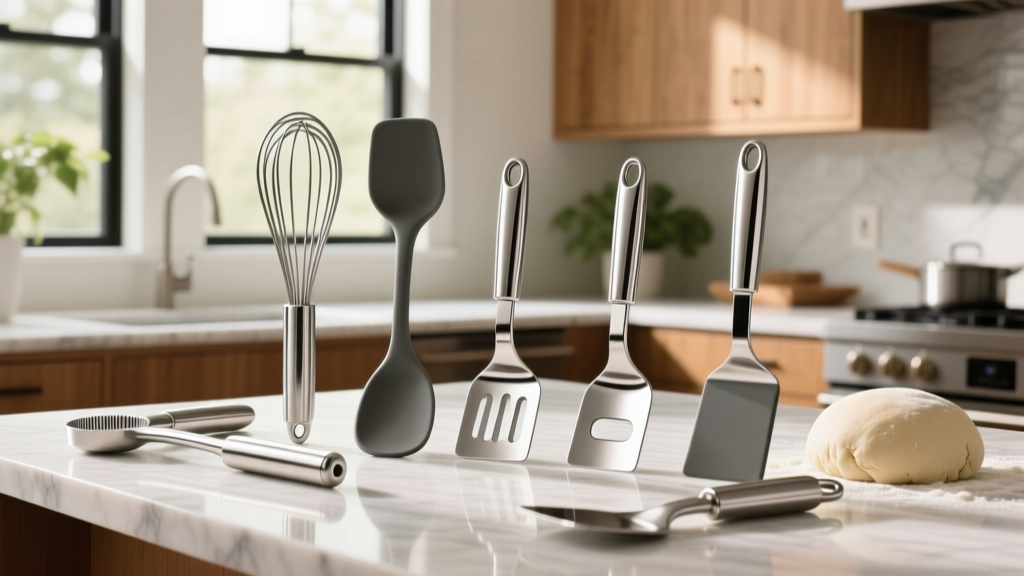
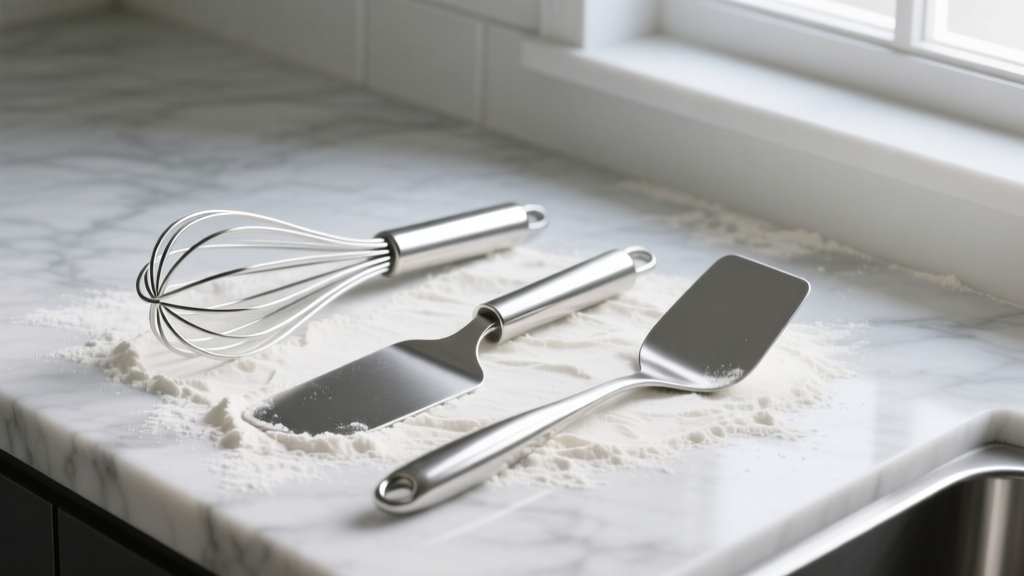
Home bakers often attribute collapsed meringues, torn cake layers, or metallic-tasting fruit curds to technique errors, when the actual culprit is their equipment. Flimsy aluminum whisks fail to incorporate adequate air into egg whites, while reactive metals like copper or unlined aluminum can chemically interact with acidic ingredients like passionfruit puree or raspberry coulis, resulting in off-flavors and greyish tints. When assembling a reliable toolkit, investing in high-quality stainless steel kitchen gadgets is the most effective way to eliminate these metallurgical variables. Unlike plastic, which warps in high-heat dishwashers and harbors odor-causing bacteria, or carbon steel, which rusts when exposed to ambient kitchen humidity, austenitic stainless steel offers a non-reactive, structurally rigid foundation for precision pastry work.
Decoding the Alloy: Why 304-Grade Dominates Professional Pastry Kitchens
Not all steel is created equal. The U.S. Food and Drug Administration regulates food-contact substances, and professional kitchens overwhelmingly rely on 304-grade stainless steel (often stamped as 18/8 or 18/10). This designation refers to the alloy's composition: 18% chromium and 8% to 10% nickel. The chromium binds with oxygen to form an invisible, self-healing passive layer of chromium oxide that prevents rust, while the nickel enhances corrosion resistance and provides that signature bright polish. According to metallurgical standards outlined by the Australian Stainless Steel Development Association, 304-grade steel is highly resistant to the organic acids found in baking ingredients, making it the definitive choice for tools that interact with batters, doughs, and dairy.
Problem-Solving Stainless Steel Kitchen Gadgets: Our Practical Picks
We evaluated dozens of tools to identify specific models that solve persistent baking frustrations. These are not generic utensils; they are engineered solutions for exact pastry problems.
1. The Aeration Problem: Rösle Stainless Steel High-Loop Balloon Whisk
The Problem: Standard teardrop whisks have a narrow profile that only agitates the bottom third of a mixing bowl, leaving heavy cream and egg whites unevenly whipped and requiring double the physical effort.
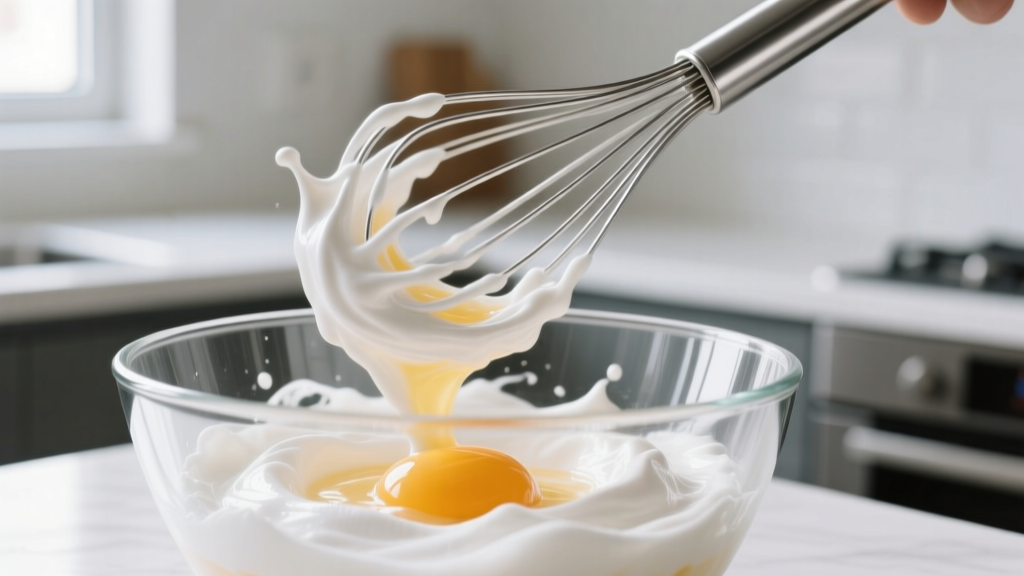
The Solution: The Rösle High-Loop Balloon Whisk ($28.50) features an elongated, bulbous wire geometry with 12 thick, high-tensile wires. This design maximizes the surface area interacting with the liquid, pulling air into the center of the vortex rather than just pushing liquid against the glass. The 18/10 stainless steel wires maintain their tension even after hundreds of uses in thick brioche doughs, and the seamless stainless steel handle prevents the bacterial buildup common in hollow, crimped whisks.
2. The Precision Problem: OXO Good Grips Stainless Steel Scraper with Ruler
The Problem: Dividing laminated doughs for croissants or portioning cookie dough by eye leads to uneven baking times. Furthermore, plastic bench scrapers bend under the weight of stiff, cold bagel doughs.
The Solution: The OXO Good Grips Stainless Steel Dough Scraper ($14.99) solves both issues. The 3-inch blade is forged from rigid 304-grade steel that will not flex when lifting heavy rye doughs. Crucially, the top edge features etched metric and imperial ruler markings. Bakers can roll out puff pastry and measure exact 4x4-inch squares without needing a separate tape measure, ensuring uniform lamination and consistent oven spring. The Santoprene handle provides a secure grip even when coated in butter or flour.
3. The Tearing Problem: Ateco 1394 4.5-Inch Offset Icing Spatula
The Problem: Spreading buttercream or leveling delicate sponge cake batters with a straight spatula forces the baker's knuckles into the frosting, causing drag, tearing, and uneven layers.
The Solution: The Ateco 1394 Offset Spatula ($11.99) features a precise 1-inch drop at the neck. This offset geometry keeps the baker's hand completely clear of the cake surface. The 4.5-inch blade length is the optimal size for standard 8-inch and 9-inch round cakes, offering enough leverage to smooth Swiss meringue buttercream without the unwieldy floppiness of an 8-inch blade. The blade is crafted from flexible, high-carbon stainless steel that yields slightly under pressure to create glass-smooth finishes.
Material Comparison Matrix: Baking Tool Alloys
Understanding how stainless steel compares to other common baking materials helps contextualize why these specific gadgets outperform the alternatives in a pastry environment.
| Material | Reactivity | Durability & Edge Cases | Best Use Case |
|---|---|---|---|
| 18/10 Stainless Steel | Non-reactive (Safe for all acids) | High. Vulnerable only to prolonged chloride (salt) exposure. | Whisks, scrapers, spatulas, mixing bowls. |
| Anodized Aluminum | Low (Sealed surface) | Medium. Can scratch, exposing reactive raw aluminum underneath. | Cake pans, baking sheets (not hand tools). |
| Silicone | Non-reactive | Low rigidity. Absorbs strong odors (e.g., garlic) over time. | Spatulas for folding batters, scraping bowls. |
| Unlined Copper | Highly reactive | Requires constant polishing. Toxic with acidic foods. | Strictly for whipping egg whites (stabilizes foam). |
Edge Cases: Preventing Pitting and Heat Tint on Steel Bakeware
Even premium stainless steel kitchen gadgets require specific maintenance protocols to maintain their structural integrity and aesthetic finish.
- Removing Heat Tint (Rainbow Stains): If you use stainless steel bowls over a bain-marie (double boiler) to melt chocolate or temper eggs, you may notice a rainbow discoloration. This is simply a thickening of the chromium oxide layer due to heat. It is entirely food-safe but visually unappealing. Wipe it away instantly using a paste of Bar Keepers Friend (oxalic acid) and water. Never use bleach-based cleaners, as the chlorine will rapidly degrade the passive oxide layer.
- Dishwasher Caveats: While the steel components of your tools are dishwasher safe, the handles may not be. The Ateco 1394 spatula features a rosewood handle that will splinter and crack under the high heat and harsh detergents of a dishwasher cycle. Hand-wash wood-handled steel tools with mild soap and oil the wood monthly with food-grade mineral oil.
- Storage and Galvanic Corrosion: Do not store wet stainless steel tools in a drawer alongside carbon steel knives or cast iron. If dissimilar metals touch in the presence of an electrolyte (like saltwater residue), galvanic corrosion can occur, causing rust spots on the stainless steel. Ensure all tools are bone-dry before drawer storage.

Frequently Asked Questions
Is 18/8 stainless steel identical to 18/10 for baking tools?
In practical terms for hand tools, yes. Both fall under the 304-grade austenitic stainless steel umbrella. The slight variance in nickel content (8% vs 10%) offers a marginal increase in corrosion resistance for 18/10, which is noticeable in large stockpots exposed to boiling saltwater, but virtually irrelevant for whisks and scrapers. Do not pay a premium solely for an 18/10 stamp on a pastry tool.
Can I use stainless steel whisks in non-stick or enameled bowls?
Aggressive whisking with stiff stainless steel wires will eventually score the surface of PTFE (Teflon) non-stick bowls and can cause micro-chipping in enameled cast iron or ceramic bowls. When working with delicate bowl coatings, reserve your stainless steel whisk for glass, stainless steel, or unglazed ceramic bowls, and switch to a silicone-coated whisk for non-stick surfaces.
Why does my stainless steel dough scraper leave black marks on my countertop?
Those black marks are not the steel degrading; they are microscopic metal transfer caused by friction against a harder surface like quartz or granite. Stainless steel is relatively soft compared to engineered stone. To prevent this, use a silicone baking mat or a wooden cutting board as your primary dough-working surface, preserving both your countertop and the sharp edge of your scraper.
Written by
Jake MorrisonJake Morrison holds a B.S. in Electrical Engineering from UC Berkeley and an MBA from Stanford Graduate School of Business. With over 12 years of hands-on experience in consumer electronics, he previously served as a senior product engineer at a Silicon Valley startup before transitioning to tech journalism. Jake has personally tested and benchmarked over 3,000 gadgets across categories including smartphones, wearables, smart home devices, and audio equipment. His durability testing methodology — involving controlled drop tests, thermal cycling, and water submersion — is widely cited by major tech publications. He is a certified CompTIA A+ technician and a contributing editor to the IEEE Consumer Electronics Magazine.