Cool Electronics and Gadgets Starting With R: Portable Displays
Discover unique electronics and gadgets starting with R. We review Rokid, RayNeo, and rollable portable displays for tech enthusiasts in 2026.
The Renaissance of Mobile Screens: Finding the Best 'R' Gadgets
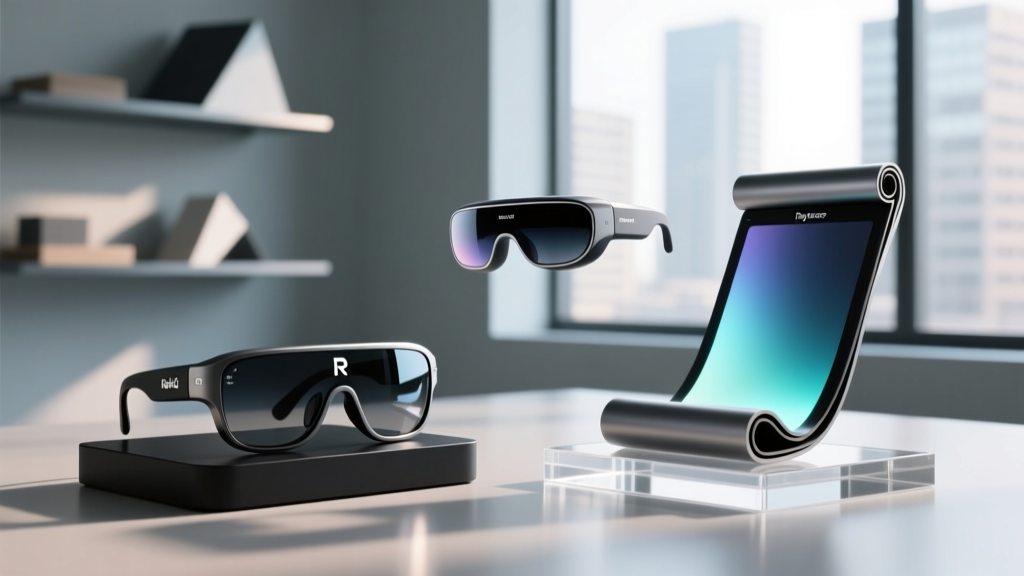
When curating a list of the most innovative electronics and gadgets starting with R, portable displays and wearable projectors immediately dominate the conversation. The era of lugging around heavy 15-inch laptop monitors or relying on cramped smartphone screens for productivity is over. In 2026, the convergence of micro-OLED manufacturing and advanced optical engines has given birth to a new category of 'R' tech: Rokid AR glasses, RayNeo waveguide projectors, Retractable pico screens, and Raspberry Pi DIY mobile displays.
As a tech enthusiast, you aren't just looking for a second screen; you want a cinematic, portable command center that fits in your jacket pocket. This guide dives deep into the exact specifications, optical architectures, and real-world setups for the coolest portable display gadgets starting with the letter R.
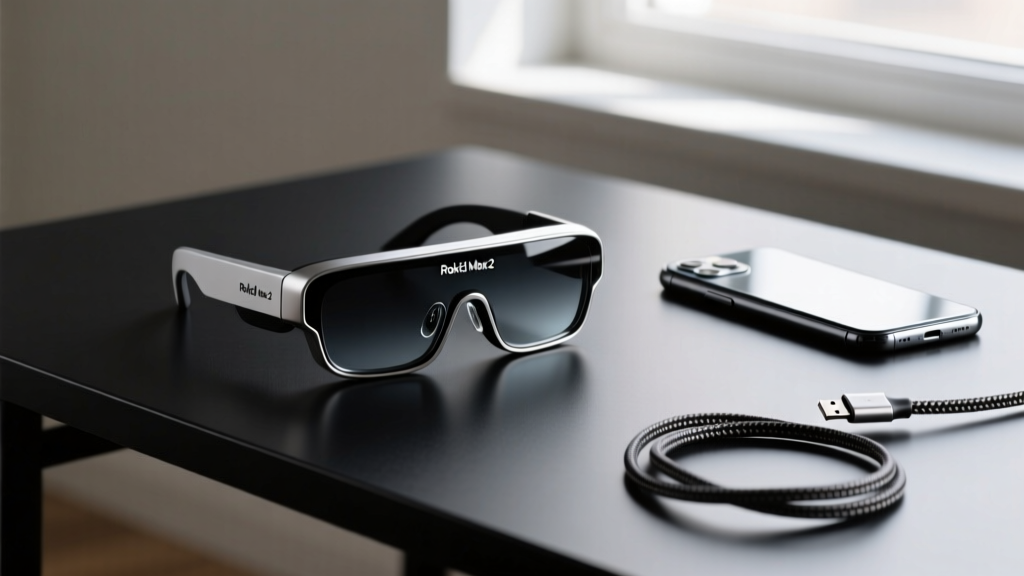
Rokid Max 2: The BirdBath Optics King
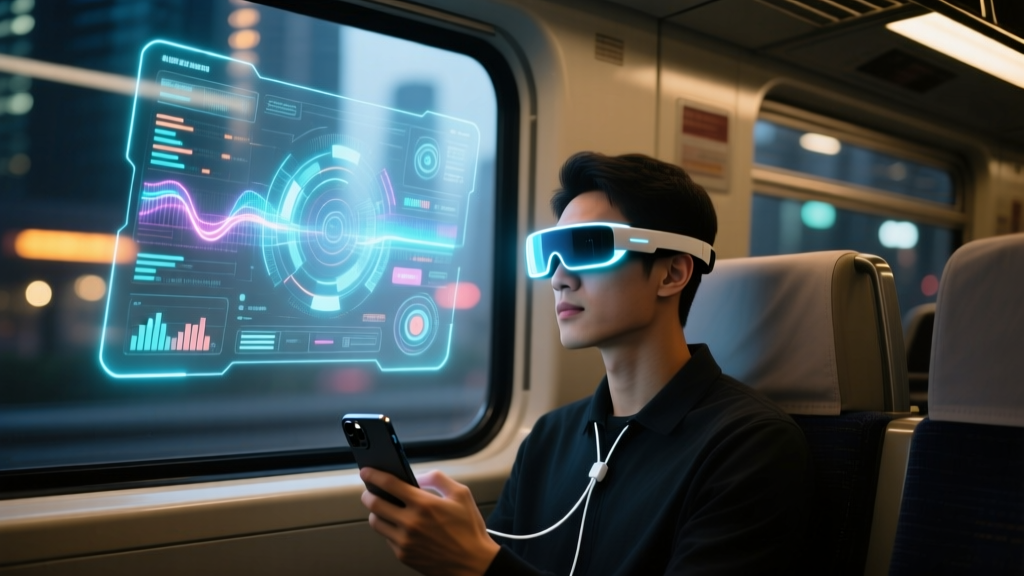
Rokid has cemented itself as a heavyweight in the wearable display space. The Rokid Max 2 operates on a 'BirdBath' optical architecture. This design uses a semi-reflective, curved mirror combiner to bounce light from a downward-facing micro-OLED panel directly into your eyes. The result? A staggering virtual 215-inch display from a distance of 6 meters.
Under the Hood: Specs & Real-World Performance
- Display Tech: Dual Sony Micro-OLED panels (1920x1080 per eye)
- Refresh Rate: 120Hz native (crucial for Steam Deck and ROG Ally companions)
- Field of View (FOV): 50 degrees
- Weight: 76 grams (excluding the tethered compute puck)
- Price: $449 USD
The 4000-nit peak brightness of the micro-OLEDs ensures that colors remain vibrant even in well-lit airport lounges. However, the true standout feature for enthusiasts is the physical myopia adjustment dial located on the top rim, supporting prescriptions from 0.00 to -6.00D without the need for custom Zeiss inserts.
RayNeo X2: Waveguide Wearable Projectors
While BirdBath optics are excellent for virtual cinemas, they are inherently thick. Enter the RayNeo X2, which utilizes Refractive Waveguide technology. Instead of bouncing light off a mirror, the X2 injects light from a micro-projector into the edge of the glass lens. The light bounces internally via total internal reflection until diffractive gratings redirect it into your pupil.
Expert Insight: Waveguide optics are the holy grail for true Augmented Reality (AR) because they allow ambient light to pass through the lens unobstructed. While the RayNeo X2 sacrifices some contrast compared to Rokid's opaque BirdBath combiners, its ability to overlay a 120-inch virtual monitor over your real-world laptop keyboard makes it an unparalleled tool for mobile coders and day traders.
Priced at a premium $899, the RayNeo X2 is powered by the Snapdragon XR2 Gen 2 platform, meaning it doesn't just mirror your phone; it runs standalone Android-based spatial computing apps, turning your local coffee shop into a multi-monitor workstation.
Retractable & Rollable: The Physical 'R' Displays
Not everyone wants to wear their monitor. For those who prefer physical panels, the market for Retractable and Rollable portable displays has exploded. Brands like LG and ASUS have pioneered flexible OLED substrates that allow a 17-inch 4K monitor to roll up into a cylinder the size of a thermos.
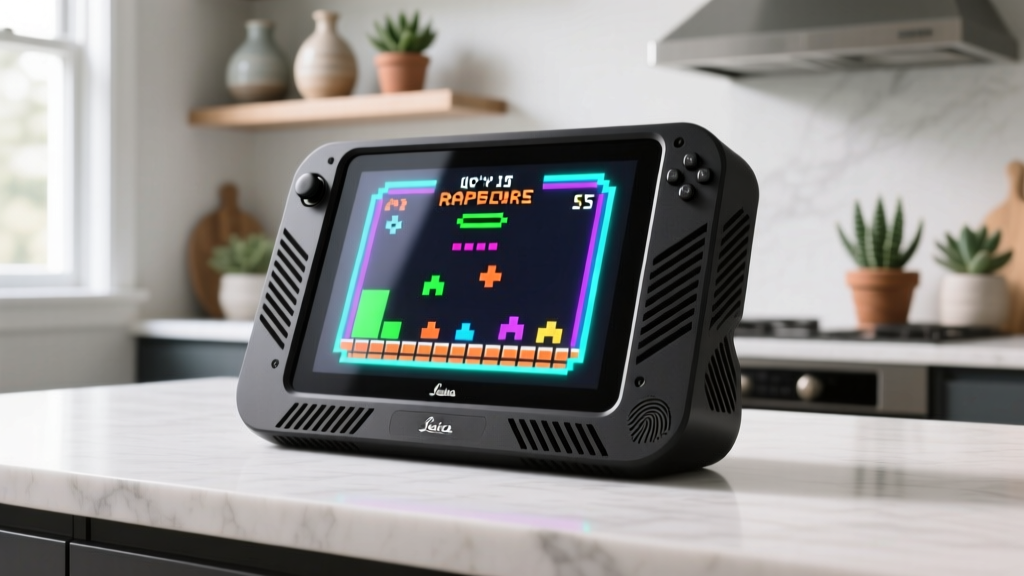
However, for the hardcore DIY enthusiast, the ultimate 'R' gadget is a custom-built Raspberry Pi portable smart-display. By combining a Raspberry Pi 5 with a retractable DSI touch panel, you can build a secondary macro-pad, a dedicated network-monitoring dashboard, or a portable retro-gaming projector input terminal.
DIY Raspberry Pi Portable Display Build (2026 Edition)
Building your own 'R' gadget requires precise component matching. Here is the exact bill of materials (BOM) for a $185 ultra-portable smart display:
- Compute: Raspberry Pi 5 (8GB RAM) - $80
- Panel: Waveshare 10.1-inch DSI Capacitive Touch Display (1280x800) - $65
- Power: PiSugar 3 Plus Battery Module (1200mAh, UPS HAT) - $40
Calibration Step: To ensure the DSI display achieves its native 60Hz without tearing, you must append dtoverlay=vc4-kms-v3d and max_framebuffers=2 to your /boot/firmware/config.txt file before your first boot. According to the official Raspberry Pi display documentation, failing to allocate sufficient GPU memory (set gpu_mem=128) will result in a sluggish UI when running Wayland-based desktop environments.
Comparison Matrix: The 'R' Lineup
How do these electronics and gadgets starting with R stack up against each other for specific enthusiast use cases? Review the matrix below to find your ideal mobile display.
| Gadget / Brand | Optical / Panel Type | Virtual / Physical Size | Weight | Best Use Case | Price (2026) |
|---|---|---|---|---|---|
| Rokid Max 2 | BirdBath Micro-OLED | 215" Virtual | 76g | Steam Deck / In-flight Cinema | $449 |
| RayNeo X2 | Waveguide AR | 120" Virtual Overlay | 118g | Mobile Coding / Trading | $899 |
| Rollable OLED (LG StanbyME Go style) | Flexible Physical OLED | 27" Physical | 12.5kg | Glamping / Outdoor Events | $2,999 |
| Raspberry Pi 5 DSI Build | IPS LCD Touch (DIY) | 10.1" Physical | ~350g | Network Dashboard / Macro Pad | $185 |
Calibration & Setup Framework for Micro-Displays
Whether you are unboxing a pair of Rokid glasses or setting up a pico projector from a brand like Roav (Anker's legacy mobile brand), optical calibration is non-negotiable. Follow this 3-step framework to eliminate eye strain and ghosting:
- IPD Matching: Interpupillary Distance (IPD) varies between 54mm and 74mm in adults. If your AR glasses lack a physical IPD slider, use the software calibration tool in the companion app to shift the optical center. Misaligned IPD causes severe vergence-accommodation conflict (VAC), leading to headaches within 20 minutes.
- Chromatic Aberration Tuning: Waveguide displays (like the RayNeo) often suffer from color fringing at the edges of the FOV. Access the developer settings and apply a negative barrel distortion profile of -0.05 to counteract the hardware's natural pincushion effect.
- Color Space Locking: Micro-OLEDs naturally cover 120% of the sRGB gamut. When connecting to a MacBook Pro via USB-C DisplayPort, force the output to DCI-P3 in your Mac's ColorSync utility to prevent oversaturated reds and crushed blacks.
For further reading on optimizing wearable optics, the Tom's Guide AR Glasses Roundup offers excellent baseline benchmarks for luminance uniformity across these 'R' brands.
Frequently Asked Questions (FAQ)
Can I use Rokid or RayNeo glasses as a monitor for my PS5 or Xbox?
Yes, but not directly. Consoles output HDMI, while these glasses require USB-C DisplayPort Alt Mode. You will need an active HDMI-to-USB-C adapter (like the GoFanco HDMI to USB-C Video Capture and Output adapter, approx. $60) that draws power from a secondary USB source to drive the glasses' internal processors.
Are rollable portable monitors durable enough for daily travel?
In 2026, flexible OLED substrates are protected by ultra-thin flexible glass (UFG). While they can withstand thousands of roll cycles, the motorized retraction mechanisms are sensitive to dust and pocket lint. We recommend keeping them in their provided hard-shell sleeves when not actively deployed.
What is the best portable projector starting with R?
If you are looking for traditional projection rather than wearable displays, the Roav Nebula Capsule series (now integrated into Anker's mainline) remains a benchmark. For true enthusiast-grade portable projection, look into the Runco legacy secondary market or modern ultra-short-throw Retractable ALR screen combos from Elite Screens, as detailed in PCMag's Pico Projector Guide.
Final Thoughts
The landscape of portable displays has evolved far beyond simple clip-on laptop monitors. By exploring the niche of electronics and gadgets starting with R, enthusiasts can unlock entirely new paradigms of mobile productivity and entertainment. Whether you are strapping on a pair of Rokid micro-OLEDs for a transatlantic flight, overlaying code via RayNeo waveguides, or soldering together a custom Raspberry Pi touch terminal, the 'R' category represents the bleeding edge of personal computing in 2026.
Written by
Tom ReynoldsTom Reynolds holds a CFA (Chartered Financial Analyst) designation and a B.S. in Finance from the University of Texas at Austin. Before entering tech journalism, he spent 6 years as a quantitative analyst at a hedge fund, building cost-benefit models for consumer product investments. Tom has maintained a proprietary database of over 10,000 tech deals for the past 8 years, developing his signature "penny-per-feature" evaluation framework that calculates the true value proposition of every gadget. His budget gadget reviews are known for their financial rigor — he tracks price history across 15+ retailers, calculates cost-per-use over 3-year lifespans, and identifies the exact inflection point where premium features justify their markup. Tom's deal alerts have saved his readers an estimated .3 million since 2018.