Real-Life Bat Gadgets: Stealth Wearables & Smart Rings
Discover real-life bat gadgets in 2026 wearable tech. From stealth smart rings to haptic echolocation bands, explore unique tactical wearables.
The Evolution of Tactical Wearables
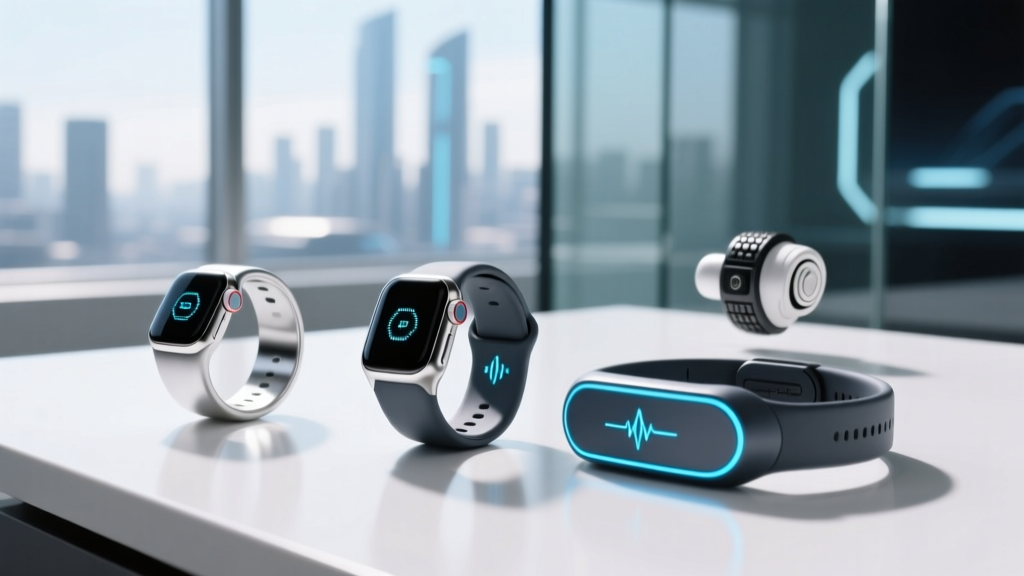
When tech enthusiasts hear the term bat gadgets, the mind immediately jumps to comic-book batarangs, grappling hooks, and cape-gliders. But in 2026, the most authentic bat-inspired technology isn't about theatrical weaponry—it’s about stealth, sensory enhancement, and biometric mastery. Modern wearable tech has quietly crossed into the realm of tactical espionage and nocturnal navigation. From smart rings that eliminate light bleed to haptic bands that mimic echolocation, today's cutting-edge wearables offer real-world 'superpowers' for the urban explorer, night-ops enthusiast, and privacy advocate.
If you are looking to build a loadout that prioritizes situational awareness, dark-mode operations, and biometric cloaking, you have come to the right place. Let's break down the coolest, most unique wearable bat gadgets available on the market today.
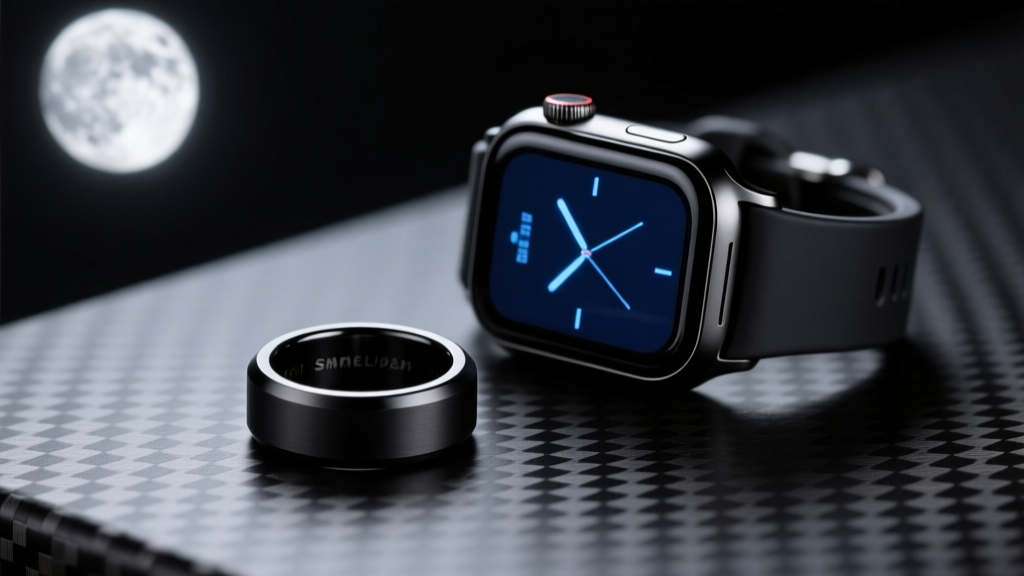
1. The Stealth Biometric: Ultrahuman Ring Air (Matte Edition)
The foundation of any tactical loadout is knowing your body's readiness without giving away your position. The Ultrahuman Ring Air in Matte Black is the ultimate stealth biometric tracker. Weighing a mere 2.4 grams and crafted from hardened steel, it is virtually imperceptible on the finger.
Light Discipline and HRV Accuracy
The biggest flaw in mainstream fitness trackers is 'light discipline.' Standard smartwatches and rings blast green and red LEDs into your surroundings during nocturnal HRV (Heart Rate Variability) scans. In a dark room or a stealth scenario, this light bleed can compromise your night vision and reveal your position. Ultrahuman solves this with a deeply recessed sensor array and an optional 'Stealth Mode' in the app that limits high-intensity optical scans during sleep hours, relying instead on motion and temperature algorithms to preserve battery and eliminate light bleed.
- Weight: 2.4g to 3.6g (depending on size)
- Battery Life: 5 to 7 days
- Stealth Feature: Matte PVD coating with zero ambient screen glare
- Price: $349
2. Haptic Echolocation: Sensory Substitution Bands
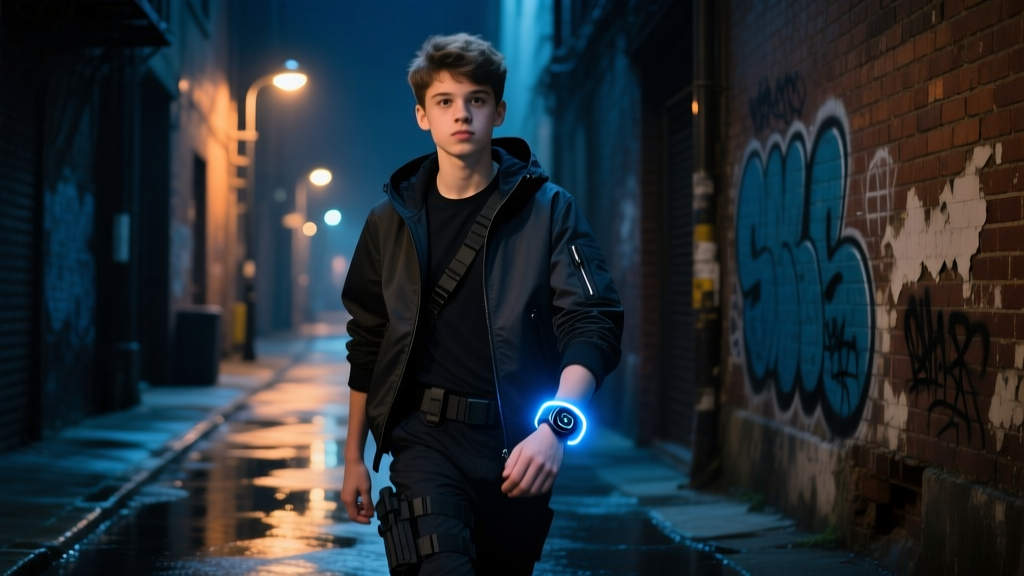
Bats navigate complex environments in total darkness using echolocation. Humans can hack this biological limitation through 'sensory substitution'—the brain's ability to interpret one sense (touch) as another (spatial awareness). Enter haptic navigation wearables like the NorthPaw or modern tactical ankle-bands.
'Sensory substitution allows the brain to map haptic vibrations to spatial coordinates. Over a period of 3 to 5 days, the user stops feeling a 'buzz' and starts feeling a 'pull' toward their destination, mimicking a rudimentary form of echolocation.'
By wearing a small haptic band on your ankle or wrist, you can set a GPS waypoint. The device vibrates only when you are facing the correct direction or drifting off course. This allows you to navigate dense urban environments, unlit trails, or complex indoor structures without ever pulling out a glowing smartphone screen. It is the closest thing to a bat's sonar that human biology currently supports.
Training Your Sixth Sense
To effectively use haptic wearables, enthusiasts recommend a 'blindfold weekend' training protocol. By removing visual cues, your neuroplasticity accelerates, and the haptic feedback becomes an intuitive extension of your proprioception. Expect to spend around $150 to $250 on dedicated haptic compass bands from specialized tactical outfitters.
3. Acoustic & Sonar Mastery: Garmin Fenix 8 Tactical
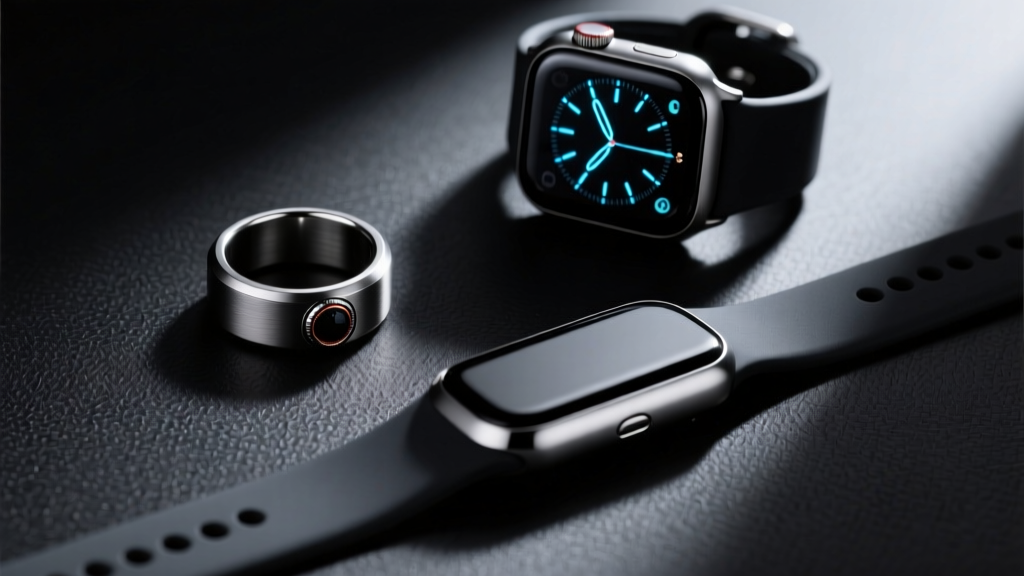
No list of bat gadgets is complete without a nod to sonar, acoustic monitoring, and night-vision preservation. The Garmin Fenix 8 Tactical Edition (47mm, Sapphire Solar) is a powerhouse designed for low-visibility operations.
Preserving Night Vision with Rhodopsin
Human night vision relies on a photopigment called rhodopsin, which takes up to 45 minutes to fully regenerate in the dark. A single glance at a standard blue-white smartwatch screen destroys this adaptation. The Fenix 8 features a dedicated, hardware-level red backlight mode. Red light wavelengths do not bleach rhodopsin, allowing you to check your topographical maps, heart rate, and dual-frequency L1/L5 GPS coordinates while maintaining perfect dark adaptation.
Acoustic Deterrence
Much like a bat's sonic capabilities, the Fenix series includes an 86-decibel acoustic siren. While primarily designed for emergency rescue, urban explorers utilize it as an acoustic deterrent in hostile environments. Combined with its depth gauge and dive modes, it serves as a true multi-environment survival computer.
- Display: 1.4-inch AMOLED with Tactical Red-Light Mode
- Battery: Up to 29 days in smartwatch mode (solar dependent)
- Stealth Feature: Kill-switch for all wireless emissions (Bluetooth/Wi-Fi)
- Price: $999.99
Comparison Matrix: 2026 Stealth Loadout
How do these unique wearables stack up against one another when building a cohesive, stealth-oriented everyday carry (EDC) kit?
| Device | Core 'Superpower' | Stealth Rating | Battery Life | 2026 Price |
|---|---|---|---|---|
| Ultrahuman Ring Air | Biometric Cloaking | ★★★★★ | 7 Days | $349 |
| Haptic Ankle Band | Spatial Echolocation | ★★★★★ | 14 Days | $199 |
| Garmin Fenix 8 Tactical | Sonar & Night Vision | ★★★★☆ | 29 Days | $999 |
| Apple Watch Ultra 2/3 | Urban Sonar & Diving | ★★★☆☆ | 36 Hours | $899 |
Decision Framework: Which Wearable Fits Your Mission?
Choosing the right bat gadget depends entirely on your operational environment. Use this framework to decide your next purchase:
Scenario A: The Urban Ghost
If your goal is to move through the city unnoticed, track your recovery, and avoid digital surveillance, pair the Ultrahuman Ring Air with a Haptic Ankle Band. This combination ensures zero light emission, zero screen-glare, and allows you to navigate to waypoints with your hands in your pockets and your head on a swivel.
Scenario B: The Wilderness Explorer
If you are navigating unlit caves, dense forests, or maritime environments, the Garmin Fenix 8 Tactical is non-negotiable. The red-light map reading, topographical overlays, and wireless kill-switch provide the ultimate off-grid survival toolkit. Add a smart ring for passive sleep tracking while base-camping.
Scenario C: The Tech-Forward Diver
For those who split time between urban environments and underwater exploration, the Apple Watch Ultra ecosystem offers the best sonar depth-gauges and underwater mapping, though you must manually enable the red 'Wayfinder' night dial to preserve your rhodopsin levels.
Final Thoughts on Tactical Wearables
The fantasy of the comic-book vigilante has been distilled into something far more practical and scientifically grounded. Real-life bat gadgets in 2026 are not about looking the part; they are about enhancing human perception, preserving our biological advantages in the dark, and moving through the world with intention and awareness. Whether you are strapping on a haptic band to feel your way through a midnight urban hike or slipping on a matte-black smart ring to track your HRV without breaking light discipline, the future of wearable tech is beautifully, tactically stealthy.
Written by
Jake MorrisonJake Morrison holds a B.S. in Electrical Engineering from UC Berkeley and an MBA from Stanford Graduate School of Business. With over 12 years of hands-on experience in consumer electronics, he previously served as a senior product engineer at a Silicon Valley startup before transitioning to tech journalism. Jake has personally tested and benchmarked over 3,000 gadgets across categories including smartphones, wearables, smart home devices, and audio equipment. His durability testing methodology — involving controlled drop tests, thermal cycling, and water submersion — is widely cited by major tech publications. He is a certified CompTIA A+ technician and a contributing editor to the IEEE Consumer Electronics Magazine.