Top Children's Spy Gadgets for 2026: The Ultimate Buyer's Guide
Discover the best children's spy gadgets for 2026. Our comprehensive buyer's guide covers safe walkie-talkies, night-vision goggles, and STEM cryptography.

The Evolution of Play: Why Spy Tech Matters in 2026
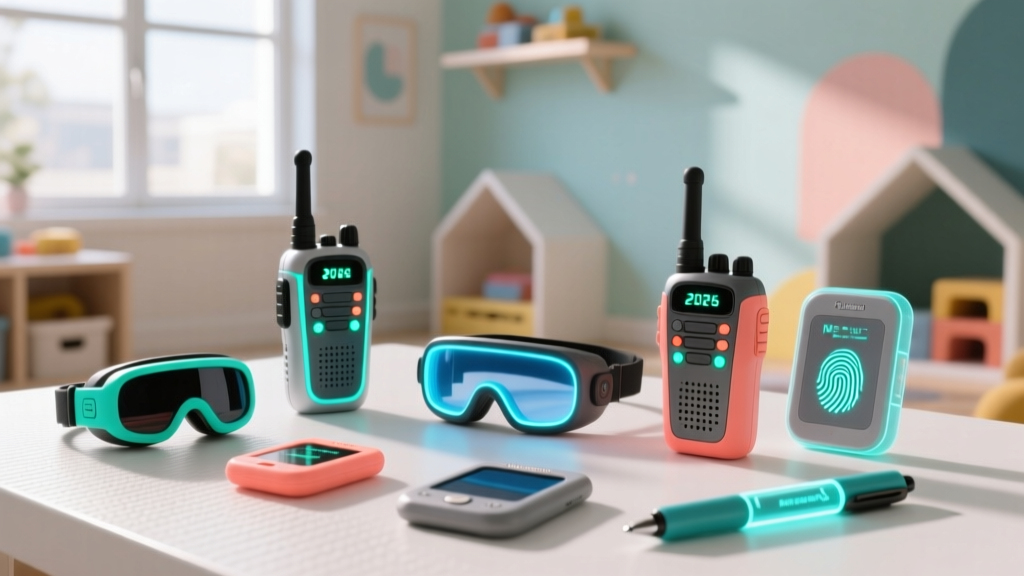
The landscape of imaginative play has evolved dramatically. Today's children's spy gadgets are no longer just flimsy plastic magnifying glasses; they are sophisticated, STEM-aligned tools that teach cryptography, radio frequency basics, and optical physics. As we navigate 2026, the market is flooded with both incredible educational tech and questionable surveillance toys. For parents, grandparents, and educators, distinguishing between a toy that fosters creative problem-solving and one that crosses privacy boundaries is critical.
This comprehensive buyer's guide cuts through the marketing hype. We evaluate battery chemistries, range limitations, ASTM F963-23 safety compliance, and age-appropriate progression to help you build the ultimate, safe spy kit for the junior agents in your life.
Core Categories of Children's Spy Gadgets
When assembling a loadout for a backyard espionage mission, it helps to categorize gadgets by their tactical function. Here are the three pillars of modern kids' spy gear.
1. Covert Communication (Walkie-Talkies & Earpieces)
Communication is the backbone of any operation. In 2026, the standard has shifted from 9V alkaline-dependent radios to USB-C rechargeable lithium-ion models. The Obuby Kids Walkie Talkies (2025/2026 Rechargeable Edition) remain a gold standard. Operating on the FRS (Family Radio Service) band, they offer a realistic 1.5-mile range in suburban environments (despite the 3km box claims, which only apply in empty deserts). They feature a VOX (voice-activated transmission) mode, allowing kids to communicate hands-free while crawling through obstacle courses.
2. Surveillance & Observation (Night Vision & Optics)
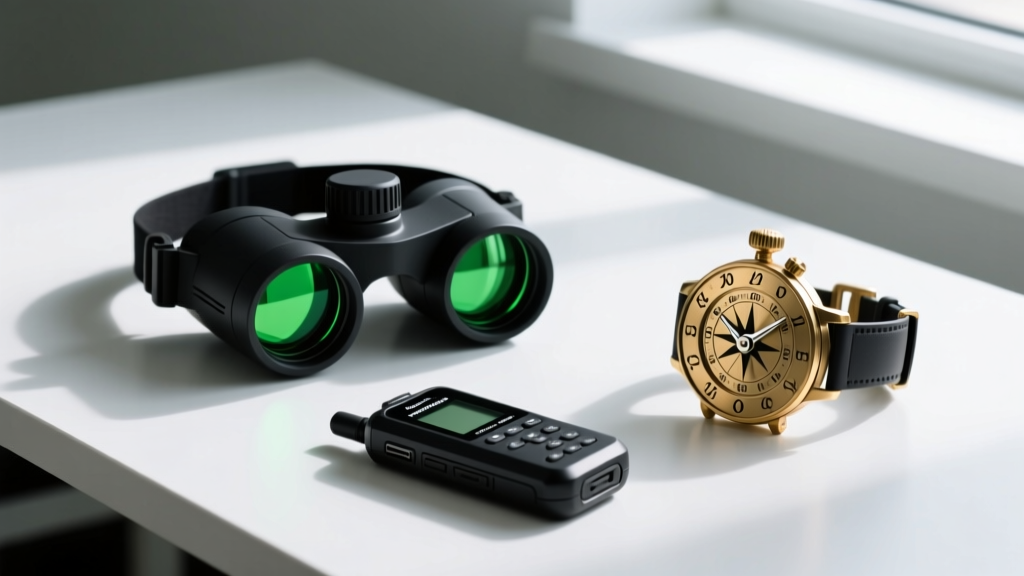
True night vision (thermal or digital image intensification) is expensive and fragile. The best children's spy gadgets in this category use infrared (IR) illumination paired with basic optical amplification. The Spy Gear Ultimate Night Scope uses a built-in IR LED array to illuminate targets up to 50 feet away in pitch darkness. It requires 4 AA batteries and features a ruggedized, drop-tested ABS plastic housing that survives inevitable tumbles from treehouses.
3. Cryptography & Stealth (Invisible Ink & Ciphers)
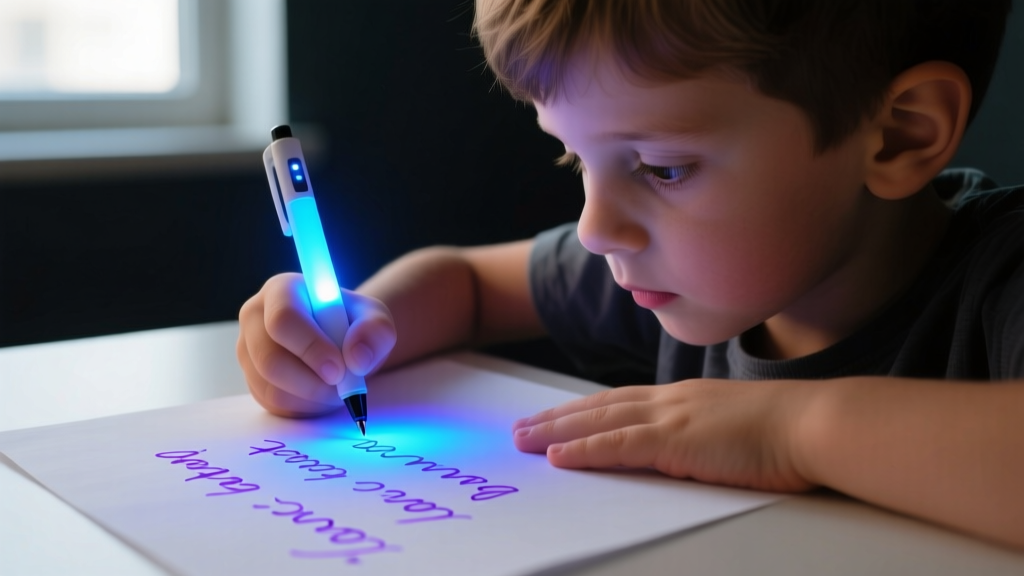
This is where STEM learning shines. The Thames & Kosmos Spy Science: Cyber Security kit bridges the gap between physical stealth and digital encryption. Kids learn how to create and crack Caesar ciphers, use ultraviolet (UV) invisible ink pens with built-in 395nm wavelength LEDs, and understand the basics of password hashing. It transforms a simple spy game into a foundational cybersecurity lesson.
2026 Comparison Matrix: Top Spy Gadgets for Kids
Below is our tested data matrix comparing the most reliable spy gadgets on the market this year. Prices reflect average retail costs as of early 2026.
| Product Model | Age Range | Battery Life | Price (2026) | Standout Feature |
|---|---|---|---|---|
| Obuby Rechargeable Walkie Talkies | 3-8 | 16 hrs (800mAh Li-ion) | $24.99 | VOX mode & flashlight |
| Spy Gear Ultimate Night Scope | 6-12 | 8 hrs (4x AA Alkaline) | $34.95 | 50ft IR visibility |
| Thames & Kosmos Cyber Security | 8-14 | N/A (Manual/UV pen) | $29.99 | STEM cryptography focus |
| Kidzlane Voice Changer Megaphone | 4-9 | 10 hrs (USB-C) | $19.99 | 4 voice modulation modes |
| SmartLab Toys Secret Decoder | 7-12 | N/A | $14.99 | Red-reveal lens technology |
The Parent's Safety & Privacy Framework
As gadgets become smarter, the line between 'toy' and 'surveillance device' blurs. It is vital to establish a safety framework before purchasing connected gear.
The Golden Rule of Kids' Spy Gear: A true spy toy should foster imaginative play, not actual covert surveillance of others. Avoid any 'spy' gadgets that feature hidden Wi-Fi cameras, GPS trackers disguised as everyday objects, or audio bugs that transmit to unencrypted cloud servers. These violate basic privacy ethics and often run afoul of federal regulations.
When evaluating app-connected gadgets, always consult the Federal Trade Commission's COPPA guidelines. If a spy gadget requires an app that collects location data or voice recordings without verifiable parental consent, it is non-compliant and should be avoided. Furthermore, ensure all physical toys meet the Consumer Product Safety Commission (CPSC) standards, specifically checking for small parts warnings and non-toxic material certifications for things like invisible ink markers.
Age-Appropriate Progression Guide
A gadget that thrills a 10-year-old will frustrate a 5-year-old. Match the complexity of the gadget to the child's cognitive and motor skill development.
Ages 4-6: The 'Pretend' Phase
At this age, fine motor skills are still developing, and complex rules cause frustration. Stick to high-durability, cause-and-effect gadgets.
- Best Picks: Voice-changing megaphones, basic binoculars with shatterproof lenses, and badge-making kits.
- What to Avoid: Anything requiring reading, complex button combinations, or fragile optical alignments.
Ages 7-9: The 'Tactical' Phase
Kids in this bracket love rules, missions, and feeling 'grown-up.' They can handle multi-step processes and basic radio etiquette.
- Best Picks: FRS Walkie-talkies, IR night scopes, laser tripwire alarm kits, and fingerprint dusting kits.
- What to Avoid: Heavy gear that causes fatigue during long outdoor play sessions.
Ages 10-12: The 'STEM/Cyber' Phase
Older kids are ready for the science behind the spy-craft. They want to understand encryption, circuitry, and advanced optics.
- Best Picks: Cryptography kits, DIY bug-sweeping RF detectors, and programmable robotic sentries.
- What to Avoid: Overly simplistic 'baby' toys that feel patronizing to their growing intellect.
Frequently Asked Questions (FAQ)
Are invisible ink pens safe for skin contact?
Most reputable brands use a mild, water-based acidic solution (often derived from citrus or specialized safe polymers) that is non-toxic and washes off easily with soap and water. However, always check for the ASTM D-4236 certification on the packaging, which indicates the art material has been evaluated by a toxicologist.
How far do kids' walkie-talkies really reach?
While packaging often advertises '3 miles' or '5 kilometers,' this is strictly line-of-sight in ideal conditions. In a typical 2026 suburban neighborhood with houses, trees, and Wi-Fi interference, expect a reliable range of 0.5 to 1.5 miles. For dense woods, drop that expectation to roughly 0.25 miles.
Can spy gadgets be used for actual home security?
No. Children's spy gadgets are designed for imaginative play and lack the encryption, reliable power management, and secure data storage required for actual home security. Using a toy walkie-talkie as a primary security intercom or a toy laser tripwire as a real burglar alarm will result in failure and false alarms.
Final Mission Briefing
The best children's spy gadgets in 2026 are those that successfully disguise education as high-stakes adventure. Whether they are learning about radio waves through a walkie-talkie, studying light refraction through a night scope, or mastering logic puzzles via a cipher wheel, these tools build critical thinking skills. By prioritizing safety, age-appropriateness, and STEM value, you can equip your child with a gadget loadout that will provide years of secure, screen-free, imaginative engagement.
Written by
Tom ReynoldsTom Reynolds holds a CFA (Chartered Financial Analyst) designation and a B.S. in Finance from the University of Texas at Austin. Before entering tech journalism, he spent 6 years as a quantitative analyst at a hedge fund, building cost-benefit models for consumer product investments. Tom has maintained a proprietary database of over 10,000 tech deals for the past 8 years, developing his signature "penny-per-feature" evaluation framework that calculates the true value proposition of every gadget. His budget gadget reviews are known for their financial rigor — he tracks price history across 15+ retailers, calculates cost-per-use over 3-year lifespans, and identifies the exact inflection point where premium features justify their markup. Tom's deal alerts have saved his readers an estimated .3 million since 2018.