Unique Smart Kitchen Gadgets for Outdoor BBQ Grilling
Discover the most unique smart kitchen gadgets for outdoor BBQ grilling. From wireless meat probes to automated cleaners, upgrade your cookout.
The Evolution of the BBQ Tool Set: Beyond Tongs and Spatulas
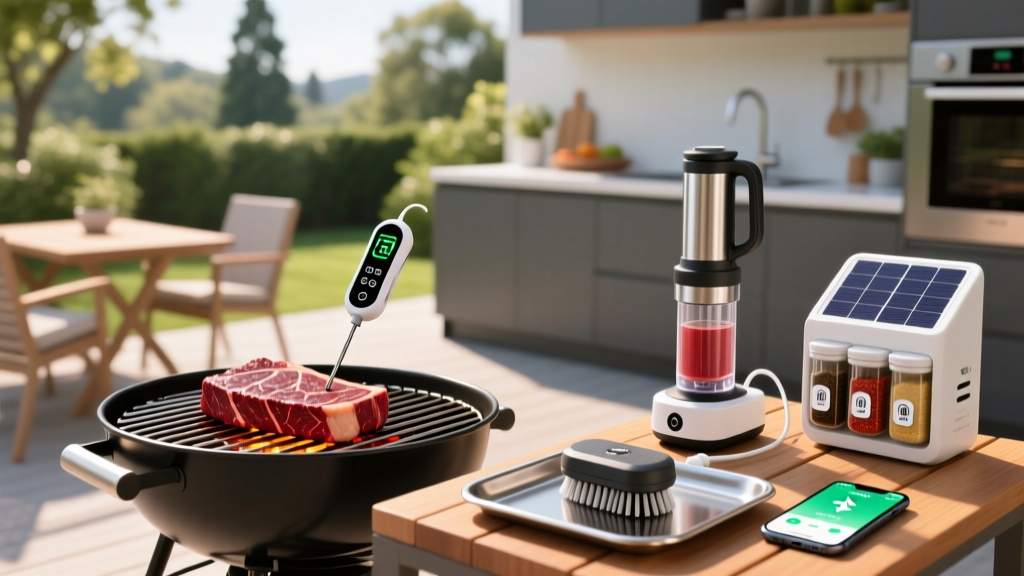
When curating a modern cookout setup, integrating smart kitchen gadgets into your outdoor BBQ grilling tool set transforms guesswork into precision. The traditional canvas roll of steel utensils is no longer sufficient for pitmasters who demand repeatable results. Today, the most critical tools in a grillmaster's arsenal are networked sensor arrays, automated maintenance robots, and PID-controlled airflow regulators. These devices do not just monitor the cook; they actively manipulate the thermodynamic environment of the grill, ensuring that a 14-hour brisket smoke survives sudden ambient temperature drops or wind gusts without manual intervention.
According to thermodynamic analyses by AmazingRibs.com, the air inside a closed grill behaves like a convection oven, but the metal grates conduct heat directly into the meat. Measuring only the dome temperature is a recipe for overcooked exteriors and raw centers. This is why the first tier of any smart grilling upgrade must focus on localized, multi-point thermal tracking.
Wireless Multi-Probe Ecosystems: MEATER Block vs. ThermoWorks Signals
The market for wireless meat thermometers has bifurcated into two distinct architectures: fully wireless internal probes and tethered base-station systems. Understanding the failure modes of each is critical before spending upwards of $300.
The Fully Wireless Approach: MEATER Block
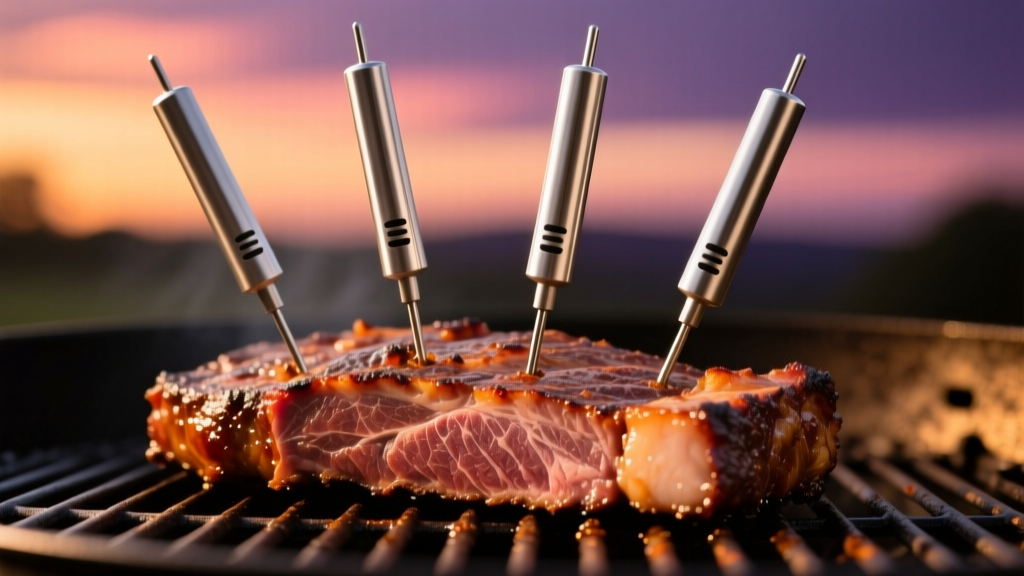
The MEATER Block ($329) houses four independent probes, each containing two sensors (one for internal meat temperature, one for ambient grill temperature at the grate level). Because there are no tether wires, the probes rely on Bluetooth 5.0 to communicate with the wooden charging block, which then acts as a WiFi bridge to your home's 2.4GHz network.
- Edge Case Failure: Ceramic kamado grills (like the Big Green Egg or Kamado Joe) feature walls up to 1.5 inches thick. This dense ceramic effectively creates a Faraday cage, blocking the Bluetooth signal from the probe to the external block. If you cook exclusively on a ceramic smoker, the MEATER system will frequently drop connection during long overnight cooks.
- Information Gain: The MEATER app's "Guided Cook" algorithm calculates carryover cooking. It pulls the target temperature down by 5-10°F, alerting you to remove the meat early. This aligns perfectly with USDA Food Safety guidelines, which note that whole cuts of beef and pork are safe at 145°F with a 3-minute rest, allowing the internal temperature to rise safely while the fibers relax and reabsorb moisture.
The Tethered Base-Station Approach: ThermoWorks Signals
For kamado and offset smokers, the ThermoWorks Signals ($139) is the superior architectural choice. It uses thick, braided Kevlar-coated wires that physically route out of the grill lid or through a dedicated grommet. The base station boasts a high-gain antenna that punches through thick steel and ceramic walls via 900MHz RF and Bluetooth, ensuring zero data loss during a 16-hour pork shoulder smoke.
Quick Spec Matrix: Probe Systems
| Feature | MEATER Block | ThermoWorks Signals |
|---|---|---|
| Probe Count | 4 (Dual Sensor) | 4 (Meat) + 1 (Air) |
| Max Internal Temp | 212°F (Boil Limit) | 750°F+ (Pro-Series) |
| Kamado Compatibility | Poor (Signal Block) | Excellent (Wired) |
| Battery Life | 24+ Hours | 40+ Hours (Li-ion) |
Automated Maintenance: The Grillbot G2 and Bristle Safety
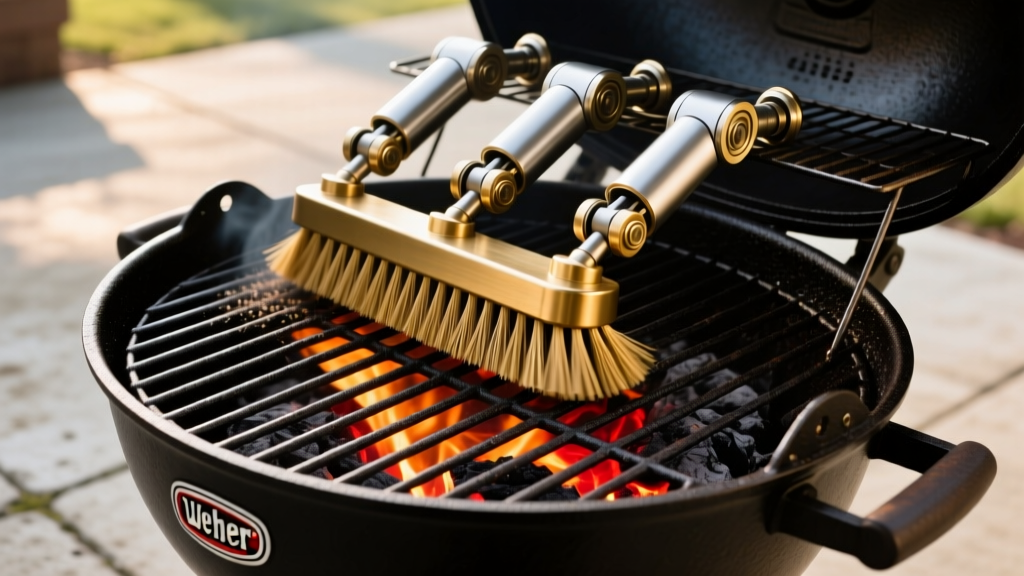
Post-cook maintenance is where most outdoor BBQ tool sets fail. Scraping carbonized grease off cast iron grates is tedious and hazardous if using cheap wire brushes. The Grillbot G2 ($130) introduces robotics to this chore. It utilizes three independent micro-motors that spin replaceable bristle discs in randomized patterns, navigating the grill surface via boundary-detection algorithms that reverse the motors when they detect the drop-off at the edge of the cooking grate.
Never use stainless steel bristle attachments on your Grillbot or manual scrapers. Stainless steel is harder than the porcelain enamel coating on most modern grates (like Weber's Flavorizer bars). Under high torque, stainless bristles can snap off, embed in the grease layer, and subsequently be ingested, leading to severe gastrointestinal perforations. Always equip your automated or manual cleaners with solid brass bristles or coiled stainless steel loops (which lack cut ends that can snap).
The Grillbot G2 operates for 90 minutes on a full charge, which is sufficient to clean a 22-inch kettle grill operating at 450°F. It is rated for temperatures up to 480°F; deploying it on a searing-hot cast iron grate exceeding 500°F will melt the internal ABS plastic chassis and destroy the lithium-ion battery cells.
Precision Airflow Management: Flame Boss 400
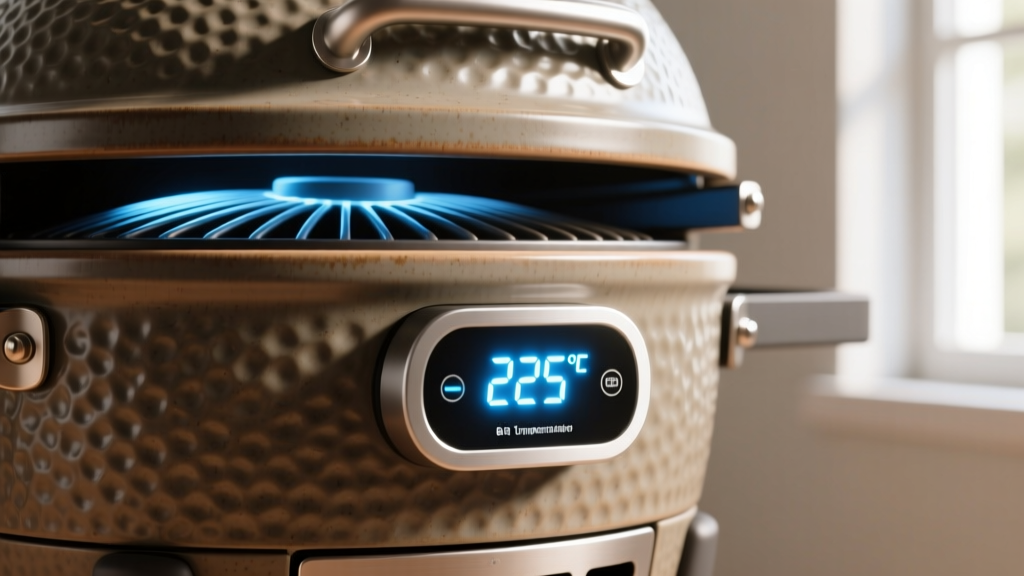
Pellet grills have built-in PID controllers, but charcoal and wood-fired offset smokers require manual vent manipulation to hold steady temperatures. The Flame Boss 400 ($249) is a smart kitchen gadget adapted for heavy outdoor use. It consists of a variable-speed blower fan that mounts to the bottom intake vent of your smoker, paired with a pit probe and a cloud-connected brain.
How the PID Algorithm Beats Manual Venting
Human pitmasters react to temperature drops after they happen, opening vents wide, which causes a massive temperature spike 10 minutes later. The Flame Boss uses a Proportional-Integral-Derivative (PID) control loop. It monitors the rate of temperature change (the derivative) and adjusts the blower's RPM in micro-increments before the pit drops below the setpoint.
- Wind Compensation: When a 15mph gust hits the smoker, the Flame Boss detects the rapid heat loss and instantly ramps the blower to 100% capacity to force oxygen into the coal bed, stabilizing the fire before the dome temp drops more than 3°F.
- Fuel Conservation: By restricting oxygen to the exact milliliter required to maintain 225°F, the Flame Boss can extend a standard charcoal load by up to 30%, preventing the need for messy mid-cook refills.
Building Your Smart BBQ Tool Set: A Phased Approach
Do not attempt to upgrade your entire kit at once. Smart grilling requires an understanding of data overload. Follow this phased integration framework to build a reliable, high-tech outdoor cooking arsenal.
Phase 1: Thermal Visibility (Budget: $130 - $330)
Start with a multi-probe thermometer. If you cook on open steel grates (Weber, Traeger, Yoder), buy the MEATER Block. If you use thick ceramic or heavy steel offsets, buy the ThermoWorks Signals. Master the app's graphing features to understand how your specific grill reacts to ambient weather changes before adding automation.
Phase 2: Environmental Automation (Budget: $250)
Once you understand your fire's behavior, introduce the Flame Boss blower for charcoal smokers, or upgrade to a smart pellet grill with integrated WiFi (like the Traeger Timberline series). This removes the anxiety of overnight stalls and allows you to monitor the cook from your bed.
Phase 3: Maintenance Robotics (Budget: $130)
Finally, introduce the Grillbot. Automating the cleanup process ensures your grates are properly seasoned and free of carcinogenic carbon buildup, which aligns with long-term health and safety best practices for outdoor cooking.
Frequently Asked Questions
Can I use standard smart home speakers to monitor my grill?
Yes, but with limitations. Both MEATER and ThermoWorks offer Alexa and Google Home skills. However, these integrations typically only support basic voice queries (e.g., "Alexa, what is the internal temperature of probe one?"). They do not support complex push-notifications for carryover cooking alerts. Rely on the native smartphone apps for critical food safety alarms.
Do WiFi grill thermometers work when my phone loses cell service?
Most modern smart probes (like the MEATER Block) store data locally on the wooden block/base station if the home WiFi drops. The Bluetooth connection between the probe and the block remains active. Once your home network reconnects, the block pushes the cached data to the cloud. However, if you are cooking in a remote location without WiFi, you must keep your smartphone within 30 feet of the block to maintain a direct Bluetooth link.
Are smart grill blowers safe for unattended overnight cooks?
Yes, provided you use high-quality lump charcoal or briquettes. The primary risk in unattended smoking is a grease fire. Smart blowers regulate oxygen; they do not suppress grease flare-ups. Ensure your grill's grease management system (drip pans, baffles) is clean before starting a 12-hour automated cook to prevent runaway thermal events that the blower cannot control.
Written by
Tom ReynoldsTom Reynolds holds a CFA (Chartered Financial Analyst) designation and a B.S. in Finance from the University of Texas at Austin. Before entering tech journalism, he spent 6 years as a quantitative analyst at a hedge fund, building cost-benefit models for consumer product investments. Tom has maintained a proprietary database of over 10,000 tech deals for the past 8 years, developing his signature "penny-per-feature" evaluation framework that calculates the true value proposition of every gadget. His budget gadget reviews are known for their financial rigor — he tracks price history across 15+ retailers, calculates cost-per-use over 3-year lifespans, and identifies the exact inflection point where premium features justify their markup. Tom's deal alerts have saved his readers an estimated .3 million since 2018.