From Cold War Spy Gadgets to Modern Covert Safety: A Buyer's Guide
Discover how vintage Cold War spy gadgets inspired today's covert women's safety tech. Compare historical espionage tools with modern discreet security gear.
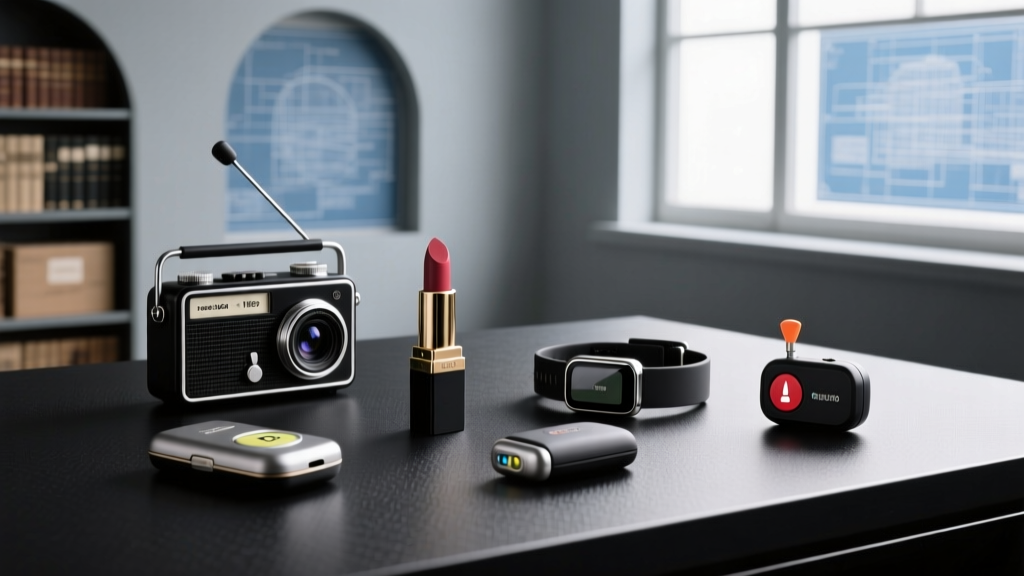
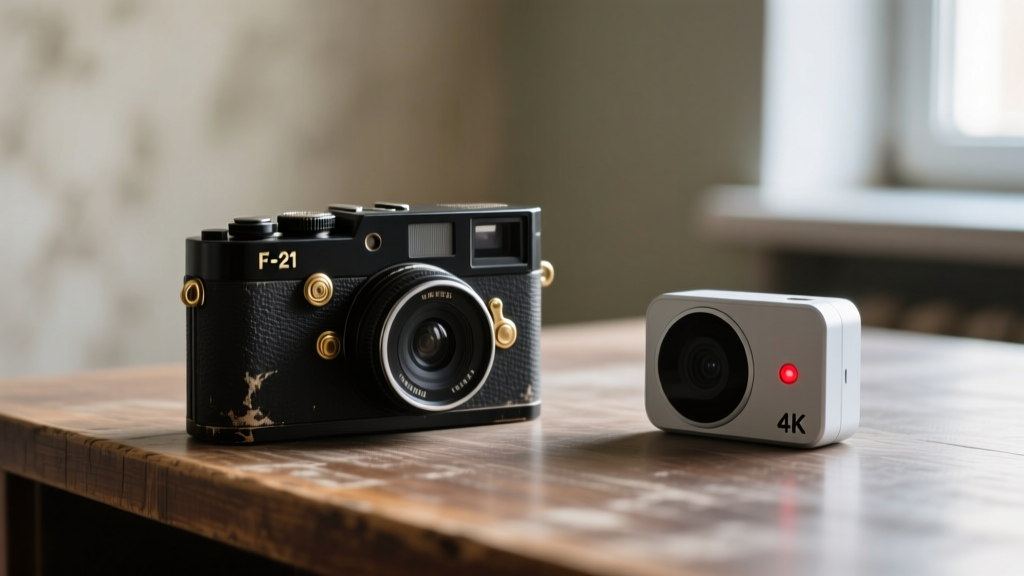
The world of international espionage has always been a driving force behind the miniaturization of technology. When we examine cold war spy gadgets, we are looking at the direct ancestors of the discreet, life-saving security tools women rely on today. From the KGB's hidden lapel cameras to the hollow coins used for dead drops, mid-20th-century intelligence agencies spent millions developing covert gear. Today, that exact same technology has been adapted, refined, and made accessible for everyday women's safety.
As a senior tech reviewer for GadgetGuideNet, I have spent the last decade testing personal security devices. In this comprehensive buyer's guide, we will trace the lineage of historical espionage tools and compare them to their 2026 modern equivalents. Whether you are looking for covert recording devices, discreet tracking, or concealed self-defense, understanding this evolution will help you choose the most effective, low-profile safety gadgets for your daily carry.
The Evolution of Covert Security: From Espionage to Everyday Safety
During the 1950s and 60s, the primary objective of covert technology was deniability and concealment. A spy camera had to look like a harmless button; a tracking beacon had to fit inside a lighter. Today, the objective for women's safety is remarkably similar: unobtrusive protection. A modern personal safety device must not look like a weapon or a camera, ensuring that a potential threat remains unaware of your ability to record, track, or defend yourself.
According to the CIA Museum, the push for micro-photography and concealed radio frequencies during the Cold War laid the groundwork for the CMOS sensors and Bluetooth Low Energy (BLE) chips we use today. Let us break down the best modern buyer picks based on their historical counterparts.
The Lapel Camera vs. Modern Wearable Button Cameras
Historical Origin: The F-21 and Minox
The KGB's F-21 lapel camera, introduced in the late 1940s, was a marvel of mechanical engineering. Hidden behind a jacket button, it used a clockwork spring mechanism to advance the film and a cable release hidden in the agent's pocket to trigger the shutter. It was bulky, required precise tailoring, and held only 12 exposures.
2026 Buyer's Pick: ehomful 4K Button Camera & Defender Series
Today, you do not need a custom-tailored jacket to hide a camera. The ehomful 4K Mini Spy Button Camera (retailing around $45.99) represents the pinnacle of this lineage. It features a 150-degree wide-angle lens, 4K resolution at 30fps, and built-in infrared (IR) night vision that activates automatically in low light.
Expert Insight: When buying a covert button camera in 2026, always check the 'no-glow' IR specification. Older models emit a faint red ring when night vision activates, which defeats the purpose of covert safety recording. The ehomful uses 940nm IR LEDs, which are completely invisible to the human eye.
Dead Drops and Microdots vs. Discreet GPS and SOS Trackers
Historical Origin: The Hollow Coin
In 1953, a Brooklyn newspaper boy dropped a nickel that shattered, revealing a hollow interior containing a microdot message. This 'hollow coin' was a staple of Cold War dead drops, allowing agents to pass intelligence without direct contact. The core concept was hiding a vital payload inside an everyday, ignored object.
2026 Buyer's Pick: Apple AirTag & Invisawear Smart Jewelry
Modern safety relies on hiding digital payloads—specifically, GPS coordinates and SOS signals—inside everyday accessories.
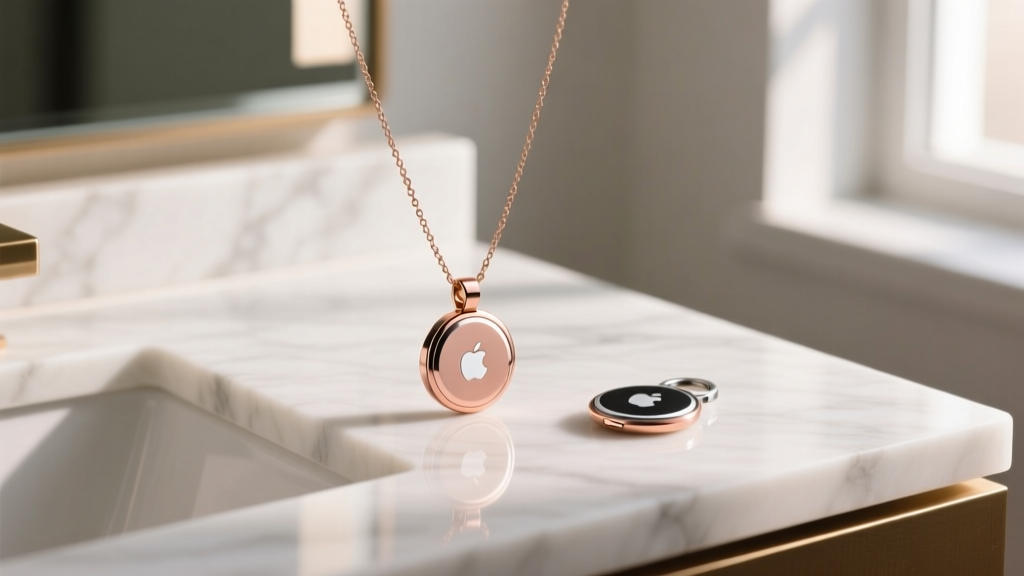
- Apple AirTag ($29.00): Utilizing Ultra Wideband (UWB) technology, the AirTag allows for 'Precision Finding' down to the inch. For women navigating unfamiliar areas or tracking their luggage, it leverages the billion-device Find My network to provide passive, highly accurate location data without a monthly subscription.
- Invisawear Smart Jewelry ($149 - $229): Taking the 'hidden payload' concept a step further, Invisawear integrates a BLE panic button into a rose-gold necklace pendant or bracelet charm. A double-press silently sends your exact GPS coordinates and a text message to up to five emergency contacts and local authorities, bypassing the need to reach for a smartphone.
Comparison Matrix: Cold War Tech vs. Modern Women's Safety Equivalents
| Feature / Category | Cold War Equivalent | 2026 Modern Safety Device | Avg. Price (2026) | Primary Use Case |
|---|---|---|---|---|
| Covert Recording | F-21 Lapel Camera | ehomful 4K Button Camera | $45.00 | Documenting harassment or stalking |
| Location Tracking | Radio Beacon in Lighter | Apple AirTag (UWB) | $29.00 | Asset recovery and route sharing |
| Emergency Comms | Cyanide Pill / Microdot | Invisawear SOS Necklace | $189.00 | Silent distress signaling to contacts |
| Concealed Defense | Bulgarian Umbrella Dart | Sabre Red Lipstick Pepper Spray | $16.99 | Close-quarters non-lethal defense |
The Umbrella Dart vs. Modern Non-Lethal Discreet Defense
Historical Origin: The Bulgarian Umbrella
Perhaps the most infamous assassination tool of the era was the 'Bulgarian Umbrella,' used in 1978 to assassinate dissident Georgi Markov in London. The umbrella's tip was modified to fire a tiny, ricin-filled platinum pellet using compressed gas. It proved that everyday objects could be weaponized for close-quarters encounters.
2026 Buyer's Pick: Sabre Red Lipstick Pepper Spray
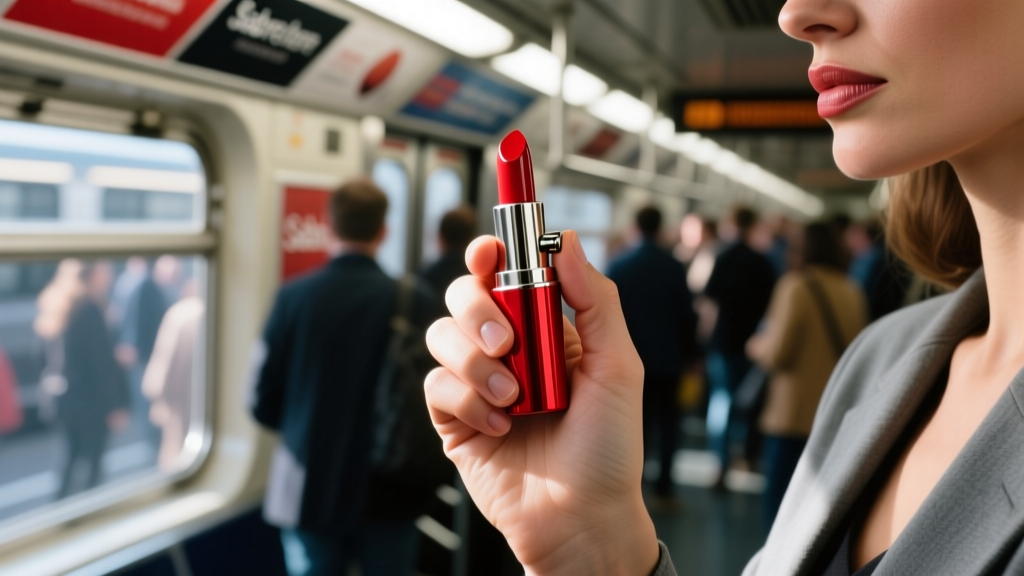
While we obviously do not advocate for lethal poison, the concept of disguised, close-quarters defense is highly relevant for women's safety. The Sabre Red Lipstick Pepper Spray ($16.99) is the modern, legal equivalent of concealed carry defense. Disguised as a high-end cosmetic tube, it contains a maximum-strength formulation rated at roughly 3,000,000 Scoville Heat Units (SHU).
According to Sabre Red, this specific model features a 10-foot (3-meter) range and deploys a focused stream rather than a mist, reducing the risk of wind blowback. It includes a built-in finger grip deployment mechanism, allowing for immediate use without fumbling to remove a safety cap—a critical failure point in high-stress encounters.
Decision Framework: Choosing Your Covert Safety Loadout
When building a personal safety kit inspired by the principles of covert espionage, avoid buying gadgets just because they look clever. Use this three-step decision framework:
- Assess Your Threat Model: Are you primarily concerned about digital stalking, physical harassment, or property theft? If harassment is the main concern, prioritize the 4K button camera and Invisawear SOS pendant. If navigating unsafe transit routes, prioritize the AirTag and Sabre Lipstick spray.
- Verify Local Jurisdictions: Covert recording laws vary wildly. In 'two-party consent' states (like California or Florida), using a hidden button camera to record audio without the other party's knowledge is a felony. Always disable the audio recording feature on covert cameras if you live in these jurisdictions, relying solely on 4K video evidence.
- Evaluate Battery and Connectivity: A Cold War spy gadget failed if the clockwork spring wound down. A modern gadget fails if the battery dies. Ensure your wearable trackers (like Invisawear) are charged nightly, and opt for devices with low-battery push notifications to your smartphone.
Frequently Asked Questions (FAQ)
Are hidden button cameras legal for women's self-defense evidence?
Video recording in public spaces where there is no 'reasonable expectation of privacy' is generally legal across the United States. However, audio recording is heavily regulated. Always check your state's wiretapping laws before activating the microphone on any covert camera.
How does the Invisawear SOS necklace work without a phone nearby?
Invisawear requires a Bluetooth connection to your smartphone to function. It acts as a remote trigger; the necklace itself does not have cellular capabilities. If your phone is in your purse or pocket, the BLE signal bridges the gap, allowing you to trigger the SOS without exposing your phone to an attacker.
Can an Apple AirTag be used to track my personal safety in real-time?
While AirTags are excellent for locating lost items or allowing a friend to track your route via the 'Find My' app, they rely on the surrounding Apple device network. In highly remote areas with no Apple users nearby, real-time tracking may experience delays. For remote hiking or travel, consider a dedicated satellite GPS beacon like the Garmin inReach Mini 2.
Final Thoughts
The leap from cold war spy gadgets to modern women's safety technology is a testament to how innovation trickles down from government intelligence to consumer protection. By understanding the history of these tools, you can better appreciate the engineering that goes into today's discreet safety gear. Whether you are clipping a 4K button camera to your blazer for a difficult HR meeting, or carrying a Sabre lipstick spray on your evening commute, you are utilizing the modern legacy of espionage to ensure your own personal security.
Written by
Emma LarssonEmma Larsson holds an M.A. in International Relations from Sciences Po Paris and a B.A. in Communications from Stockholm University. A digital nomad since 2017, she has worked from over 45 countries across six continents, building deep expertise in portable power solutions, travel routers, compact computing, and connectivity gadgets that survive international travel. Emma is a certified member of the Travel Technology Association and has advised three travel gear startups on product-market fit for remote workers. Her reviews evaluate products against real travel scenarios — TSA compliance, voltage compatibility across 200+ countries, durability through 50+ checked bag cycles, and battery life under airplane mode vs. active use. She has been featured in Condé Nast Traveler's "Tech-Savvy Traveler" series and speaks at Remote Work Summit events.