2026 Gift Guide: Best Gadgets for Boaters & Marine Cams
Discover the best gadgets for boaters in our 2026 gift guide. Compare marine dash cams, IP cameras, and vessel monitoring systems for ultimate security.
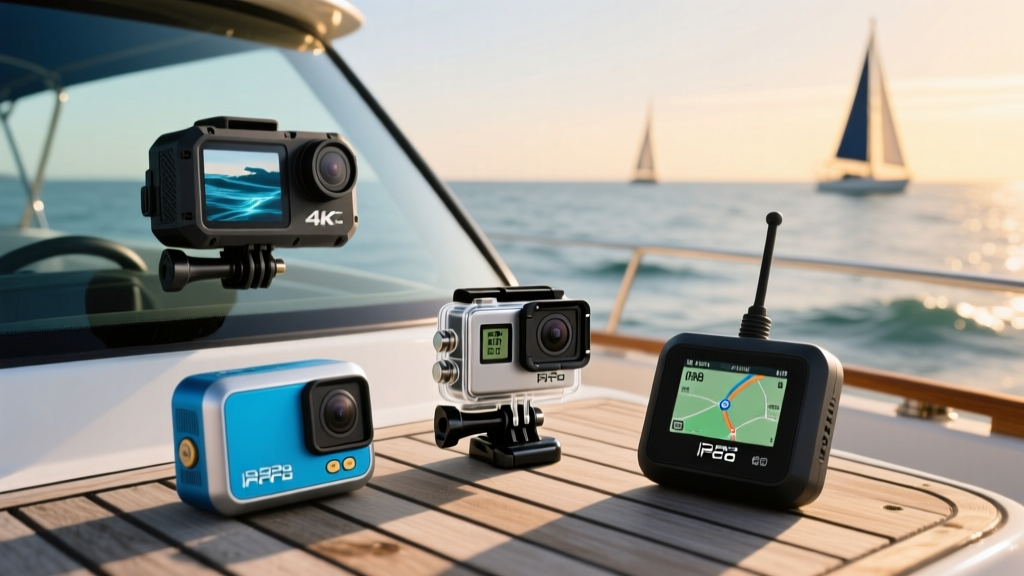
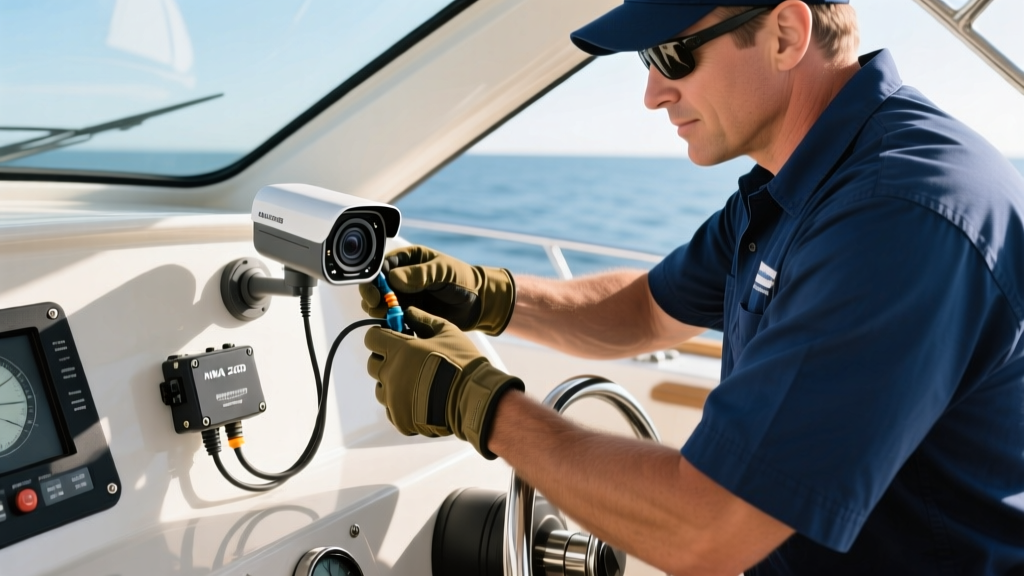
Finding the right gifts for boat owners is notoriously difficult. They already have the premium polarized sunglasses, the high-end coolers, and the custom teak decking. When searching for the most impactful gadgets for boaters this season, the smartest gift-givers are looking toward vessel security, incident logging, and remote telemetry. Automotive dash cams and standard car trackers fail rapidly in marine environments due to salt spray, UV degradation, and the constant vibration of planing hulls. For the 2026 boating season, purpose-built marine camera systems and NMEA 2000-integrated monitoring hubs represent the ultimate upgrade for any captain's helm.
The Automotive Dash Cam Myth: Why Marine Environments Demand Specialized Gear
A common mistake well-meaning gift-givers make is purchasing a standard automotive dash cam (like a Garmin Dash Cam Tandem or Nextbase 622GW) and attempting to mount it inside a boat's windshield. This approach fails for three specific reasons:
- UV and Heat Failure: Automotive suction cup mounts and 3M adhesive pads degrade rapidly under the amplified UV index of open water, typically failing within 4 to 6 weeks of summer use.
- G-Sensor Miscalibration: Automotive accelerometers are tuned for asphalt impacts and hard braking. The repetitive 3G to 5G vertical slams of a boat hull hitting chop will trigger constant false-positive lockouts, filling the SD card with useless footage and halting continuous loop recording.
- Galvanic Corrosion: Standard USB-C power ports and unsealed micro-SD slots will succumb to ambient salt aerosol corrosion, shorting the motherboard even if the unit never takes a direct wave splash.
Top Marine Camera Systems for Incident Logging
Instead of traditional dash cams, modern mariners rely on networked IP cameras and ruggedized marine CCTV systems to log incidents, monitor blind spots, and secure the vessel while docked. Here are the top-tier options for 2026.
Raymarine CAM220 IP Camera
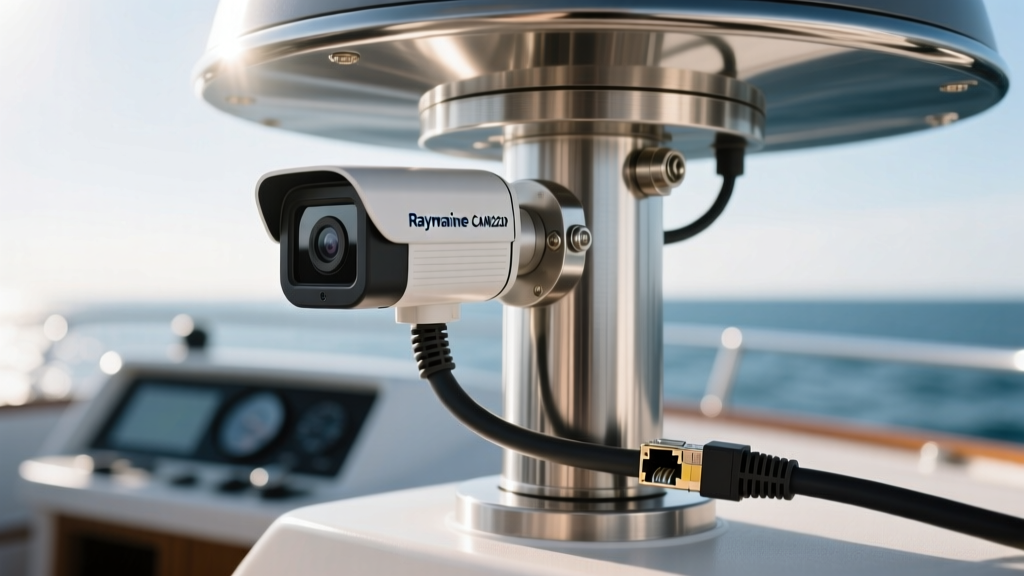
The Raymarine CAM220 (retailing around $349) is an IP67-rated, 1080p high-definition camera that integrates seamlessly with Raymarine Axiom and Element MFDs via a standard Ethernet network. Unlike suction-cup dash cams, the CAM220 mounts permanently to a radar arch or hardtop using 316 stainless steel hardware. It features a built-in heater to defog the lens in cold morning conditions and utilizes LightHouse AI to identify people and vehicles on the dock, triggering automatic recording to the MFD's microSD card when the boat is left unattended.
Iris Innovations 4-Channel Marine DVR System
For larger vessels (30+ feet) or captains who want continuous, multi-angle recording similar to a fleet dash cam setup, the Iris Innovations 4-Channel Marine DVR ($899 - $1,150) is the industry standard. This system utilizes a centralized, waterproof DVR unit hidden in the helm, connected to up to four ruggedized exterior cameras. The system is designed to withstand heavy green-water submersion and records continuously onto a vibration-dampened solid-state drive (SSD), completely eliminating the mechanical hard drive failures common in older marine CCTV setups.
Vessel Monitoring: The Ultimate Peace of Mind
While cameras capture visual data, vessel monitoring gadgets act as the boat's central nervous system, tracking bilge pump cycles, battery voltage, and geographic location. According to the U.S. Coast Guard Boating Safety Division, a significant percentage of non-fatal vessel losses involve unattended boats sinking at the dock due to failed bilge pumps or depleted batteries. A remote monitoring system is the single most valuable gift you can give a boat owner who leaves their vessel in the water.
Comparison Matrix: 2026 Marine Telematics Trackers
| Feature | Siren Marine MTC | Garmin MSC 10 | Spot Trace |
|---|---|---|---|
| Primary Function | Full Vessel Telematics & Control | Satellite Tracking & Messaging | Anti-Theft & GPS Geofencing |
| NMEA 2000 Integration | Yes (Deep Engine/Bilge Data) | Yes (Basic Network Data) | No (Standalone GPS) |
| Remote Bilge Control | Yes (Can trigger pumps via app) | No (Alerts only) | No |
| Connectivity | 4G LTE (Cellular) | Iridium Satellite | Globalstar Satellite |
| Approx. 2026 Price | $699 + $19/mo sub | $799 + $15/mo sub | $165 + $10/mo sub |
The Siren Marine MTC is the undisputed champion for docked vessels. By tapping into the NMEA 2000 backbone, it reads engine hours, fuel levels, and battery state-of-charge. More importantly, it monitors the bilge pump circuit. If the bilge pump activates more than three times in an hour while the captain is off the boat, the MTC sends a push notification and SMS alert, allowing the owner to dispatch a dockhand before the boat sinks.
Installation Edge Cases and NMEA 2000 Gotchas
If you are gifting a marine monitoring system or IP camera, be aware that installation requires strict adherence to marine electrical standards. The National Marine Electronics Association (NMEA) outlines specific protocols for the NMEA 2000 (N2K) data backbone that connects these gadgets to the boat's central network. Ignoring these protocols leads to network drops and fried MFDs.
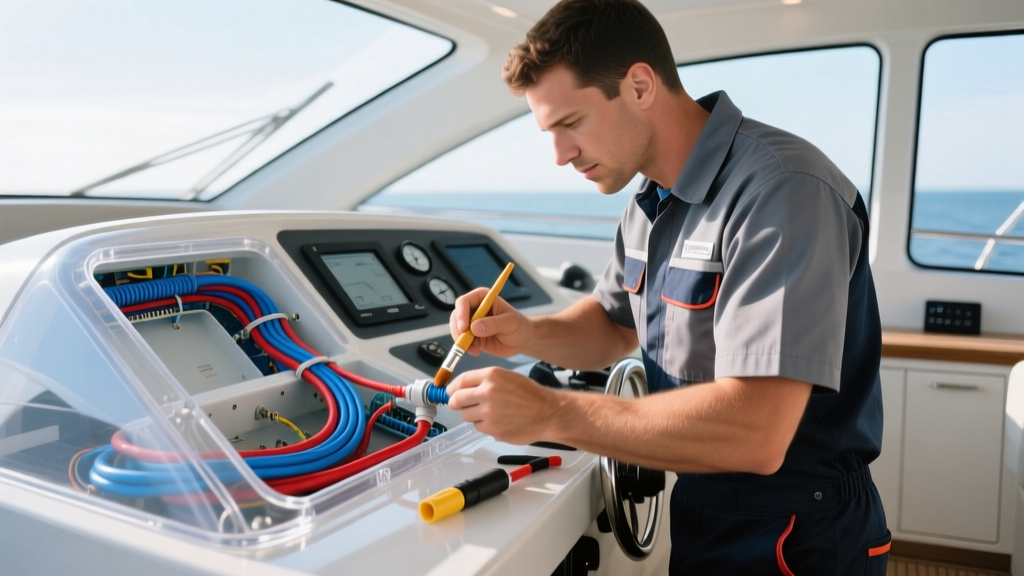
Every NMEA 2000 backbone must have exactly two 120-ohm termination resistors—one at each physical end of the cable run. A common DIY installation mistake is plugging a monitoring hub into an existing MFD network without verifying the resistor count. If the network has zero resistors or more than two, data packets will bounce back and cause severe network collisions, potentially bricking sensitive engine ECUs.
Hardware Mounting and Corrosion Prevention
When mounting exterior cameras like the Raymarine CAM220, the choice of fastener material is critical. Never use standard 304-grade stainless steel screws on an aluminum radar arch or hardtop. The galvanic potential difference between 304 stainless and marine-grade aluminum in a saltwater environment will cause rapid galvanic corrosion, freezing the screws and destroying the mounting surface. Always use 316-grade stainless steel hardware, paired with a marine-grade anti-seize compound (such as Lanacote or Tef-Gel) on the threads, and seal the mounting holes with 3M 5200 or Sikaflex 291 marine sealant to prevent core rot in cored fiberglass hardtops.
The Gift-Giver’s Decision Framework
To select the exact right gadget from this guide, use this practical decision matrix based on the recipient's boating profile:
- The Weekend Trailerboater (Under 24ft): Gift the Spot Trace. Trailer boats don't need complex NMEA 2000 bilge monitoring since they are stored on land. The Spot Trace provides essential anti-theft GPS tracking and alerts the owner if the boat is moved from the driveway or storage lot.
- The Tech-Forward Day Cruiser (25ft - 35ft): Gift the Raymarine CAM220 (if they own a compatible MFD) or a ruggedized action camera setup like the GoPro HERO13 Black with a Floaty Door mounted to the transom for logging wakesurfing and fishing catches.
- The Liveaboard or Slip-Rent Yacht Owner (35ft+): Gift the Siren Marine MTC. For owners who pay $1,000+ a month for marina slips, the $699 upfront cost and $19 monthly subscription is a fractional insurance premium that prevents catastrophic sinking events and dead batteries.
By bypassing generic automotive electronics and investing in purpose-built marine telemetry and IP video logging, you are providing a gift that actively protects a highly valuable asset. These systems offer the exact incident logging and remote security that modern captains demand, elevating the standard of marine safety for the 2026 season and beyond.
Written by
Lena ChenLena Chen earned her M.S. in Human-Computer Interaction from Carnegie Mellon University and a B.S. in Electrical Engineering from the University of Washington. She has spent the past decade specializing in smart home architecture and IoT ecosystems, helping over 200 homeowners design fully connected living spaces. Lena is a certified Matter protocol consultant and has published peer-reviewed research on voice-first interface design in the ACM Digital Library. Her reviews of smart home products combine deep technical analysis with real-world usability testing, evaluating everything from Zigbee mesh stability to Alexa skill responsiveness. She regularly speaks at CEDIA Expo and CES smart home panels.