Portable Power Gadgets for Mum: Beginner vs Expert Tech Guide
Compare beginner and expert portable power gadgets for mum. Discover the best power banks, solar chargers, and car adapters for every tech comfort level.
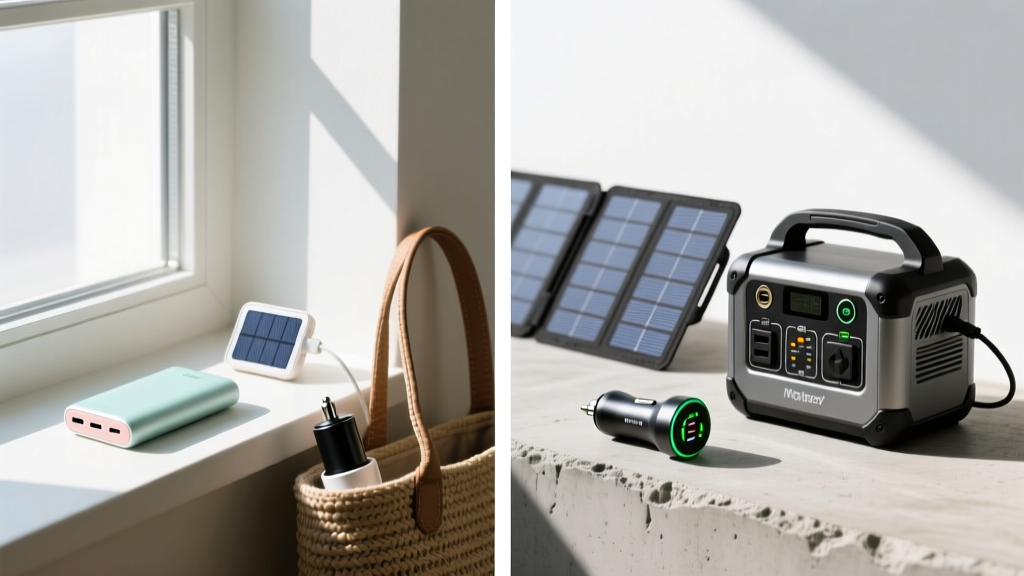
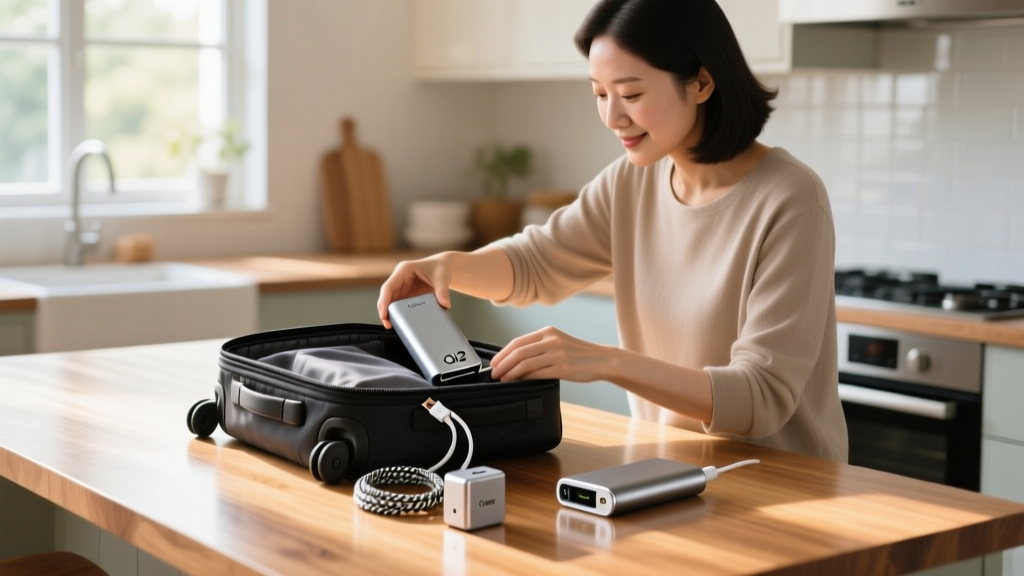
When shopping for portable power gadgets for mum, the market presents a stark divide. On one end, you have budget-friendly, plug-and-play lithium-polymer bricks designed for simple top-ups. On the other, you find high-density Gallium Nitride (GaN) ecosystems, Qi2 magnetic wireless arrays, and 140W Power Delivery (PD 3.1) car adapters. The right choice depends entirely on her technical comfort level, daily commute, and device ecosystem. This guide breaks down the exact specifications, failure modes, and real-world yields of beginner versus expert portable power solutions.
The Beginner Tier: Plug-and-Play Simplicity
Beginner portable power prioritizes low cognitive load. The goal is to provide a reliable battery boost without requiring the user to manage cable clutter, understand wattage negotiations, or troubleshoot thermal throttling.
- Capacity: 10,000mAh (approx. 37Wh), yielding roughly 1.5 to 2 full charges for a standard smartphone.
- Output: 12W to 18W via USB-A or basic USB-C.
- Form Factor: Often features built-in Lightning or USB-C cables to eliminate the need to carry extra wires.
- Price Range: $15 to $30.
Models like the Anker PowerCore Slim 10K dominate this space. They use standard lithium-polymer (Li-Po) cells. While they lack fast-charging capabilities that can push a phone from 0% to 50% in 20 minutes, they are lightweight (usually under 210g) and universally compatible. The primary trade-off is charge time: recharging the power bank itself via a standard 10W wall brick can take up to six hours.
The Expert Tier: GaN3, Qi2, and Smart Telemetry
Expert-tier gadgets for mum leverage advanced semiconductor materials and standardized magnetic protocols. If she carries a laptop, a tablet, and a smartphone simultaneously, basic power banks will bottleneck her productivity.
Gallium Nitride (GaN) Multi-Port Hubs
GaN3 technology replaces traditional silicon in power transistors, allowing for significantly higher efficiency and lower heat generation. An expert-tier 65W or 100W GaN wall charger (such as the Ugreen Nexode Pro series) is roughly 40% smaller than an equivalent silicon charger. This means she can carry a single, dense brick capable of fast-charging a MacBook Air and an iPhone simultaneously via dynamic power splitting.
Qi2 Magnetic Wireless Batteries
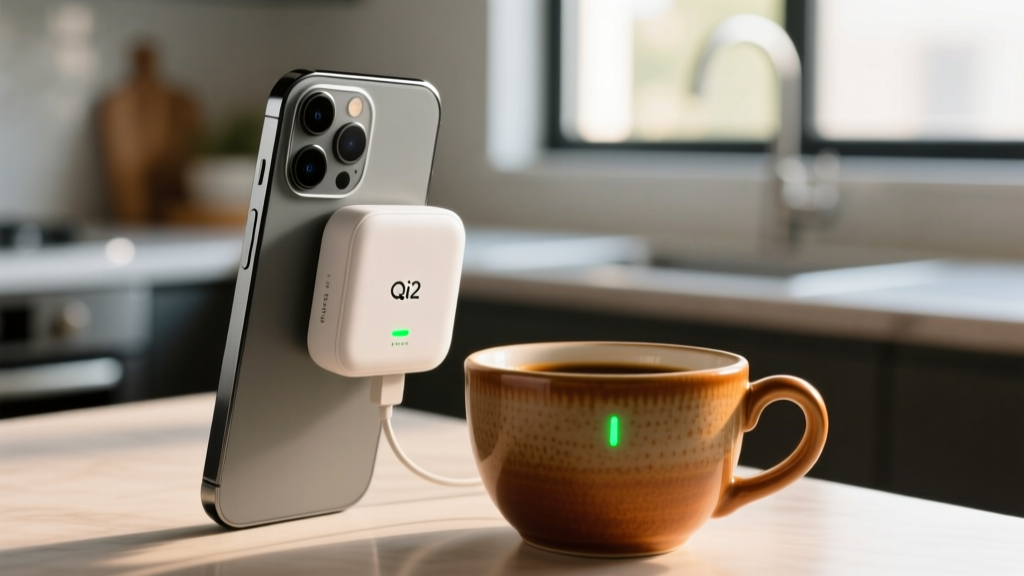
Proprietary magnetic chargers have largely been superseded by the Qi2 standard, developed by the Wireless Power Consortium. Qi2 guarantees a 15W fast-charge rate across compatible Android and iOS devices using the Magnetic Power Profile. Expert users opt for Qi2 battery packs with built-in kickstands and app-based telemetry, allowing them to monitor exact battery health cycles and temperature thresholds via Bluetooth.
Spec Showdown: Beginner vs Expert Power Metrics
| Feature | Beginner Standard | Expert Standard |
|---|---|---|
| Cell Chemistry | Standard Li-Po | High-Density Li-Po / Silicon-Carbon Anode |
| Max Output | 18W (PD 2.0) | 140W (PD 3.1) |
| Wireless Tech | 5W Qi (Slow, high heat) | 15W Qi2 (Magnetic alignment) |
| Car Adapter | 12W Dual USB-A | 120W+ (100W USB-C PD + 20W USB-C) |
| Price Range | $15 - $35 | $70 - $180 |
Solar Charging: Evaluating the Real-World Yield
The portable solar market is rife with misleading marketing, particularly targeting casual buyers. Understanding the physics of solar irradiance is critical when selecting solar gadgets for mum.
The Beginner Trap: Integrated Solar Power Banks
You will frequently see 10,000mAh power banks with a tiny, built-in solar panel on the casing. These panels typically generate between 0.8W and 1.2W under absolute peak, direct sunlight. A 10,000mAh battery at 3.7V holds roughly 37Wh of energy. Even assuming 100% efficiency (which is physically impossible), a 1W panel would require 37 hours of perfect, unobstructed sunlight to fully charge the device. In reality, accounting for voltage conversion losses and thermal throttling, it is effectively a gimmick.
The Expert Solution: Foldable ETFE Monocrystalline Arrays
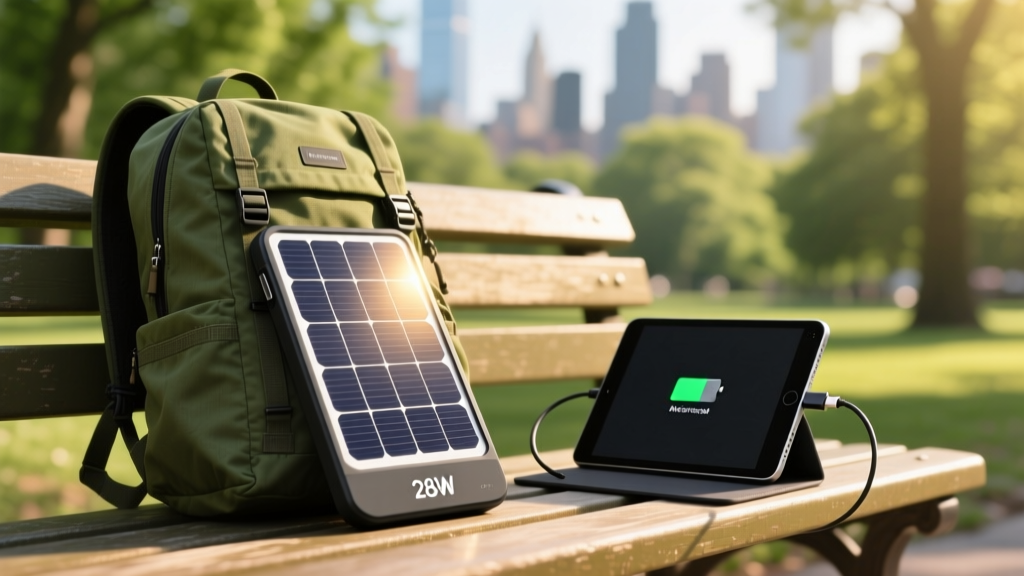
For genuine off-grid utility, expert users rely on standalone, foldable solar panels rated between 28W and 60W. According to the U.S. Department of Energy, monocrystalline silicon cells offer the highest commercial efficiency rates. Modern expert panels use ETFE (Ethylene Tetrafluoroethylene) coatings instead of PET, which increases light transmittance and prevents the yellowing and delamination that plagues cheaper models after a single summer of UV exposure. A 28W ETFE panel can realistically push 18W to 22W to a device via USB-C during midday sun, fast-charging a phone in under two hours.
High-Wattage Car Adapters: Tapping the 12V Socket
Most vehicles come equipped with a 12V accessory socket (cigarette lighter) fused at either 10A or 15A. This dictates the absolute ceiling for car charging adapters.
- Beginner Adapters: Typically output 12W to 18W total, splitting power across two USB-A ports. They are fine for maintaining a phone's battery during a commute but cannot charge a laptop.
- Expert Adapters: Maximize the vehicle's fuse limit. A 12V/10A socket can deliver 120W. Expert adapters (like the Satechi 72W or Ugreen 100W car chargers) utilize a single USB-C PD port to deliver up to 100W directly to a laptop, while reserving a secondary 20W USB-C port for a smartphone. This turns the family SUV into a mobile fast-charging station for the entire household's tech ecosystem.
The Airport Security Check: Watt-Hour Limits
When buying high-capacity power banks for a frequent flyer, you must adhere to aviation safety regulations. The FAA PackSafe guidelines strictly limit lithium-ion batteries in carry-on luggage to 100 Watt-hours (Wh) without airline approval.
Manufacturers advertise in milliamp-hours (mAh), but aviation limits use Wh. The formula is:
(mAh × Voltage) / 1000 = Wh
Since almost all power banks use 3.7V cells internally:
- 20,000mAh: (20,000 × 3.7) / 1000 = 74Wh (Safe for all flights)
- 27,000mAh: (27,000 × 3.7) / 1000 = 99.9Wh (The absolute maximum safe limit)
- 30,000mAh: (30,000 × 3.7) / 1000 = 111Wh (Will be confiscated at TSA security)
Decision Matrix: Matching the Gadget to Mum's Lifestyle
Use this framework to select the exact portable power configuration that matches her daily reality.
- IF she primarily works from home, takes short school runs, and dislikes carrying cables THEN buy a Beginner 10,000mAh power bank with built-in USB-C/Lightning cables. It lives in her purse permanently and requires zero maintenance.
- IF she travels frequently for business, carries a laptop, and values minimalism THEN buy an Expert 65W GaN3 Wall Charger and a 20,000mAh PD 3.0 Power Bank. This combo replaces all her OEM bricks and keeps her laptop charged at 35,000 feet.
- IF she spends weekends hiking, gardening, or at outdoor sports tournaments THEN buy an Expert 28W ETFE Foldable Solar Panel paired with a rugged, water-resistant 10,000mAh battery. Avoid integrated solar banks entirely.
- IF she manages a chaotic family road trip schedule and needs to keep tablets alive THEN install an Expert 100W USB-C Car Adapter in the vehicle's front socket, paired with 10-foot braided USB-C cables to reach the back seats.
Written by
Sarah KimSarah Kim holds certifications from both NASM (National Academy of Sports Medicine) and ACE (American Council on Exercise), along with a B.S. in Kinesiology from UCLA. She has spent 7 years bridging the gap between exercise science and consumer technology, evaluating fitness trackers, smart scales, sleep monitors, and recovery devices with clinical precision. Sarah has tested over 200 health-focused wearables in controlled lab settings and real-world training environments, comparing device data against gold-standard medical equipment like ECG monitors and DEXA scans. She consults for three fitness app companies on data accuracy standards and has presented research on wearable reliability at the American College of Sports Medicine (ACSM) annual conference. Her reviews emphasize clinical validity over marketing claims.