Best Outdoor & Seasonal Gadgets for Elderly Living Alone (2026)
Discover the best outdoor and seasonal gadgets for elderly living alone in 2026. Stay safe from winter ice and summer heat with these top tech picks.
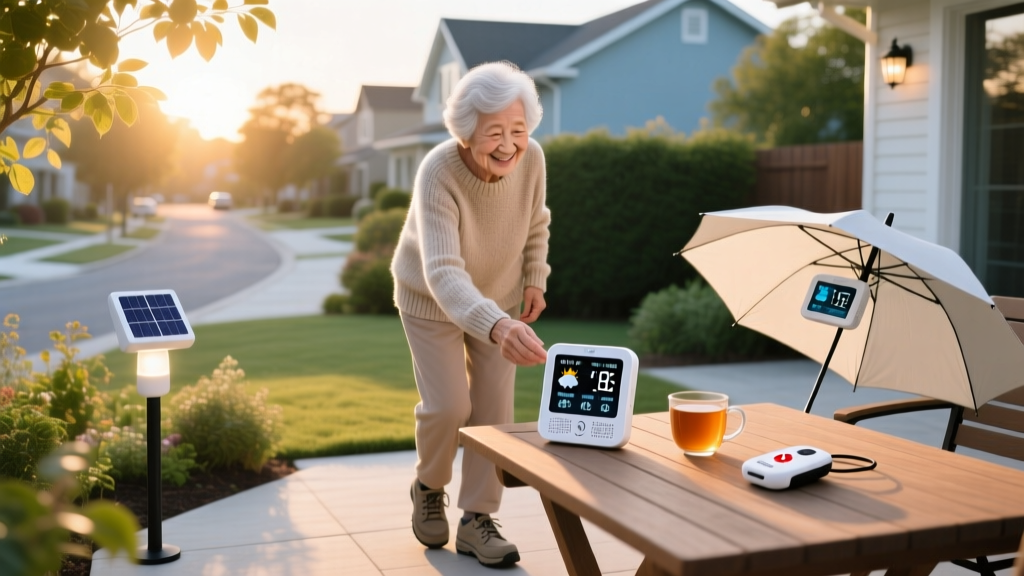

The Seasonal Vulnerability Gap for Solo Seniors
Living alone offers independence, but seasonal weather shifts introduce severe environmental hazards. For adults over 65, a drop in temperature or a spike in humidity is not merely uncomfortable; it is a critical safety event. According to the National Institute on Aging (NIA), environmental factors like icy walkways and heat exhaustion are leading contributors to emergency room visits among solo-dwelling seniors. In 2026, the market for adaptive outdoor technology has matured, moving beyond basic medical alerts to proactive, season-specific environmental management. This guide details the exact hardware, pricing, and operational edge cases for the most effective outdoor and seasonal gadgets for elderly living alone.
Winter Mobility: Heated Apparel and Smart Traction
Winter presents two primary threats: hypothermia due to reduced metabolic circulation, and slip-and-fall incidents on black ice. Standard layering is often too bulky for seniors with limited shoulder mobility or arthritis, restricting movement and paradoxically increasing fall risk.
Active Heating: Ororo Classic 7.4V Heated Jacket
Rather than relying on heavy wool or down, the Ororo Classic Heated Jacket ($149–$189) utilizes three carbon fiber heating pads strategically placed across the left chest, right chest, and upper back. The 7.4V 5000mAh battery provides 4 hours of heat on the 'High' setting (140°F) and up to 10 hours on 'Low' (104°F).
- Mobility Advantage: Weighs only 1.2 lbs more than a standard fleece, preserving natural gait and balance.
- Edge Case Warning: The battery pack must be removed before machine washing. Seniors with memory impairment should use a visual cue (like a bright carabiner) attached to the battery pocket to remind them to detach it before laundry day.
Footwear Traction: Yaktrax Walk Traction Cleats
For navigating icy driveways, the Yaktrax Walk ($29.99) uses 1.2mm steel coils that wrap around existing footwear. Unlike aggressive spiked crampons that catch on concrete, these coils provide 360-degree grip on packed snow.

Summer Thermoregulation: Active Cooling and Hydration Tracking
As we age, the body's ability to sweat and regulate core temperature diminishes. The NIA's guidelines on hot weather safety emphasize that seniors often do not feel overheated until heat exhaustion has already set in. Relying on ambient fans is insufficient during extreme heatwaves.
Personal Thermal Regulation: Embr Wave 2
The Embr Wave 2 ($299) is a wrist-worn device that acts as a personal thermostat. Using the Peltier effect, it generates precise cooling (or warming) pulses directly against the radial artery on the inner wrist.
- Performance Specs: Delivers up to 4 hours of continuous cooling or up to 3 days on intermittent use via a rechargeable lithium-ion battery.
- Failure Mode: The device requires direct skin contact to transfer thermal energy. It will fail to cool the user if worn over long sleeves or thick watch bands. It must be worn on the sensitive inner wrist, not the top of the hand.
Hydration Enforcement: HidrateSpark PRO Smart Water Bottle
Dehydration accelerates cognitive decline and causes orthostatic hypotension (dizziness upon standing), leading to outdoor falls. The HidrateSpark PRO ($69.95) tracks fluid intake via a built-in Bluetooth sensor. More importantly for solo seniors, it features an customizable LED glow that physically illuminates when it is time to drink, removing the need to remember to check a smartphone app.
Year-Round Perimeter Security and Navigation
Outdoor independence requires safe navigation from the front door to the mailbox or garbage bins, regardless of the season. Poorly lit pathways are a year-round hazard.
Automated Illumination: Ring Solar Pathway Lights
Hardwiring landscape lighting is expensive and requires maintenance. The Ring Solar Pathway Lights ($99 for a 4-pack) charge via integrated solar panels and activate via motion sensors.
- Setup Gotcha: These lights require a Ring Bridge ($49) or a compatible Amazon Echo device to connect to Wi-Fi and enable smart alerts. Without the Bridge, they function only as basic motion lights.
- Placement Metric: Space lights exactly 6 to 8 feet apart along walkways to prevent shadow gaps that can obscure uneven pavement or tripping hazards.

Seasonal Gear Comparison Matrix
| Device | Primary Season | Price Range | Power Source | Maintenance Requirement |
|---|---|---|---|---|
| Ororo Heated Jacket | Winter | $149 - $189 | 7.4V Removable Battery | Battery removal before wash |
| Yaktrax Walk Cleats | Winter | $29.99 | None (Passive) | Rinse salt off coils weekly |
| Embr Wave 2 | Summer | $299.00 | Internal Rechargeable | Daily charging, skin contact |
| HidrateSpark PRO | Summer / Year-Round | $69.95 | Replaceable Coin Cell | Annual battery replacement |
| Ring Solar Pathway | Year-Round | $99 (4-pack) | Solar + Internal Cell | Wipe solar panels monthly |
The 4-Point Seasonal Outdoor Safety Audit
Gadgets fail when the environment is not prepared to support them. The National Council on Aging (NCOA) recommends routine environmental audits. Solo seniors or their remote caregivers should execute this checklist at the start of every season:
- Clearance Width Verification: Ensure all outdoor walkways maintain a minimum 36-inch clear width. Overgrown summer shrubs or winter snow drifts often encroach on this critical margin, forcing walkers or canes off the paved surface.
- Lumen Output Check: Standard solar lights degrade over time. Use a smartphone lux meter app at night to verify pathway lighting delivers at least 50 lux at ground level. Replace units that fall below this threshold.
- Threshold Height Measurement: The step down from the back door to the patio should not exceed 1.5 inches. If seasonal ground heaving (frost line shifts) has altered this, apply high-visibility yellow anti-slip tape to the edge.
- Charging Station Proximity: Consolidate all wearable tech chargers (Embr Wave, Ororo battery, HidrateSpark base) into a single, well-lit 'power station' near the primary exit door to prevent forgotten charges.
Troubleshooting Common Tech Hurdles
Many seniors abandon outdoor tech due to minor operational friction. Here are solutions to the most common failure points:
Bluetooth Pairing Fatigue
Devices like the HidrateSpark require Bluetooth syncing. If the connection drops, the bottle still tracks water internally but won't push data to the phone. Fix: Set a recurring monthly calendar reminder to simply open the app while the bottle is within 10 feet. The app will force a background sync without requiring the user to navigate complex settings menus.
Solar Panel Obscuration
Ring Pathway lights often fail in autumn due to wet leaves sticking to the solar cells, or in winter due to snow caps. Fix: Mount the lights at a 15-degree tilt rather than perfectly flat. This utilizes gravity and wind to naturally shed leaves and snow accumulation.
Equipping a home with these targeted, season-specific tools transforms the outdoors from a liability into a safe, accessible extension of the living space. By addressing the precise mechanical and environmental failure points of aging, solo seniors can maintain their autonomy safely through every climate shift.
Written by
Jake MorrisonJake Morrison holds a B.S. in Electrical Engineering from UC Berkeley and an MBA from Stanford Graduate School of Business. With over 12 years of hands-on experience in consumer electronics, he previously served as a senior product engineer at a Silicon Valley startup before transitioning to tech journalism. Jake has personally tested and benchmarked over 3,000 gadgets across categories including smartphones, wearables, smart home devices, and audio equipment. His durability testing methodology — involving controlled drop tests, thermal cycling, and water submersion — is widely cited by major tech publications. He is a certified CompTIA A+ technician and a contributing editor to the IEEE Consumer Electronics Magazine.