Smart Kitchen Gadgets for Seniors: 2026 Trend Report
Discover 2026 trends in kitchen gadgets for seniors. Explore AI stove guards, biometric drinkware, and voice-native appliances for aging in place.
The 2026 Paradigm Shift: From Reactive to Proactive Kitchen Tech
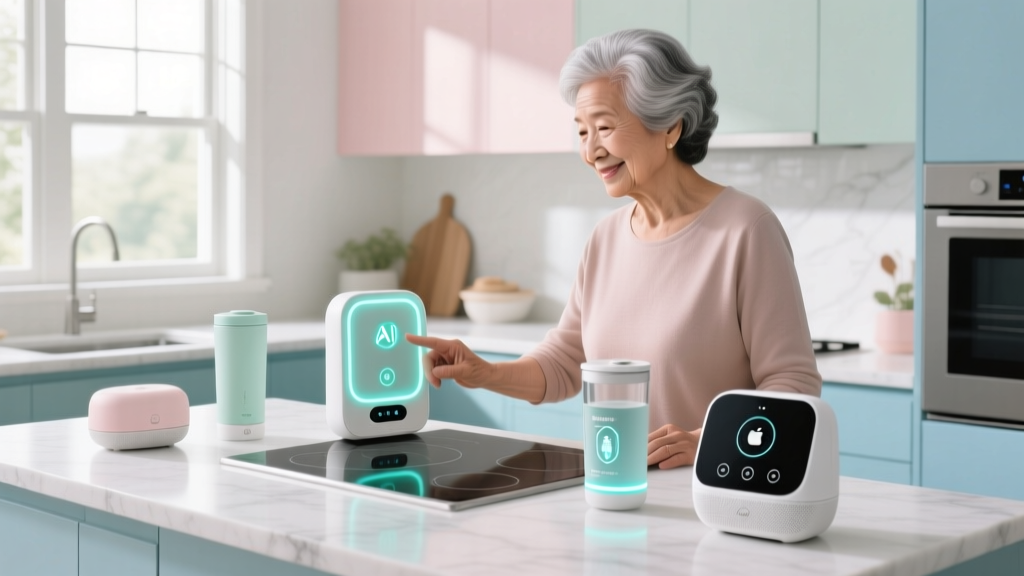
Unattended cooking remains the leading cause of residential fires among adults over 65, accounting for nearly 40% of kitchen-related emergency responses according to the National Fire Protection Association (NFPA). Historically, kitchen gadgets for seniors focused on reactive physical adaptations: weighted utensils for tremors, high-contrast measuring cups for macular degeneration, or easy-grip jar openers for arthritis. In 2026, the landscape has fundamentally shifted toward ambient intelligence and proactive safety. Modern adaptive kitchen technology now anticipates failure modes—such as cognitive lapses, dehydration, or mobility restrictions—and intervenes before an incident occurs. This report outlines the definitive hardware and ecosystem trends redefining culinary independence for aging populations this year.
AI Stovetop Guardians: Eradicating Unattended Cooking Fires
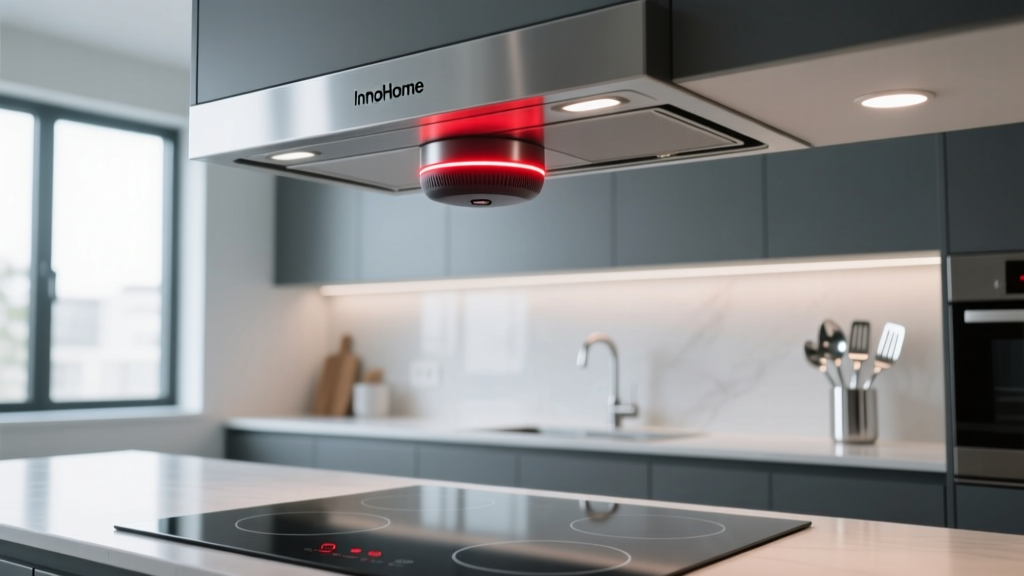
The most critical advancement in senior kitchen safety is the maturation of AI-driven thermal and motion monitoring. Standard smoke detectors are insufficient for kitchen environments due to nuisance alarms from normal cooking, leading many seniors to disable them. The 2026 standard relies on hardwired smart relays paired with multi-spectrum ceiling sensors.
The Innohome Stove Guard (Model SGK5025) represents the current benchmark. Priced at approximately $285, it utilizes a ceiling-mounted sensor that tracks both heat profile acceleration and human presence via passive infrared (PIR). If the stove is left on and the kitchen is vacant for a user-defined threshold (typically 3 to 10 minutes), the sensor communicates with a hardwired relay at the electrical panel to physically cut power to the cooktop. Crucially, it also triggers an audible pre-alarm to alert the senior before cutting power, preventing the frustration of ruined meals if they merely stepped into an adjacent room.
For homes where hardwiring a 240V relay is structurally or financially prohibitive, the Wallflower Smart Plug for Electric Stoves ($149) offers a non-invasive alternative. It clamps around the stove’s power cord, monitoring current draw to detect when burners are active, and sends SMS alerts to designated caregivers if the stove runs longer than a preset limit.
Cost vs. Protection Matrix: 2026 Stove Safety Devices
| Device | Estimated Cost | Installation Requirement | Primary Intervention Mechanism | Best For |
|---|---|---|---|---|
| Innohome Stove Guard SGK5025 | $285 | Licensed Electrician (Panel Relay) | Auto-shutoff via PIR & Thermal AI | Mild-to-moderate cognitive decline |
| Wallflower WF-200 Smart Plug | $149 | DIY (Clamp-on cord monitor) | Caregiver SMS Alerts & Timers | Independent seniors, remote family monitoring |
| iGuardStove Elite | $340 | Licensed Electrician (Inline Relay) | Motion-based auto-shutoff & LTE backup | Homes with unreliable Wi-Fi |
Voice-Native & Matter-Integrated Appliances
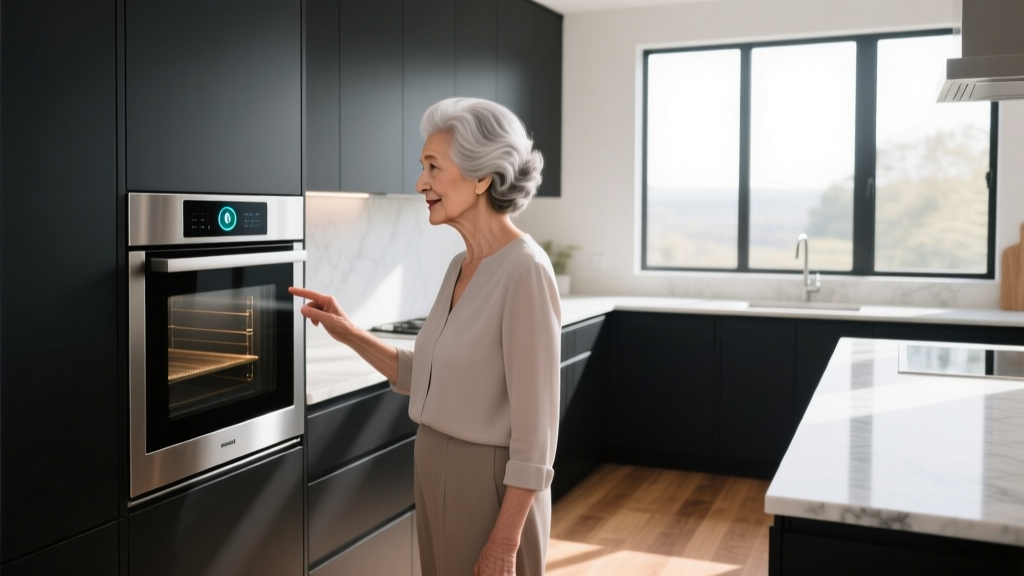
The adoption of the Matter 1.3 smart home protocol in 2026 has eliminated the cloud-latency and privacy issues that previously hindered voice-controlled kitchen appliances. For seniors with limited dexterity or visual impairments, local-processed voice commands are no longer a novelty; they are a primary interface.
'The transition to Matter over Thread means a senior's voice command to a smart oven is processed locally on the home network. This reduces response latency to under 200 milliseconds, which is critical for users with speech impediments or those who may forget their train of thought if the system takes too long to respond.' — 2026 Smart Home Accessibility Report, Aging in Place Technology Council
Appliances like the GE Profile UltraFresh Smart Oven now feature conversational AI that guides users through multi-step recipes. If a senior with early-stage dementia asks, 'Is the chicken done?', the oven's internal precision probe and camera system will respond with specific, actionable audio feedback: 'The internal temperature is 145 degrees. It needs 10 more minutes. I will notify you when it is safe to remove.' This closed-loop audio feedback prevents the dangerous habit of repeatedly opening the oven door to check food, which causes heat loss and increases burn risks.
Biometric Hydration & Medication-Synced Drinkware
Dehydration in older adults is a silent crisis, often leading to urinary tract infections, kidney stones, and severe confusion that mimics dementia. The National Institute on Aging (NIA) notes that the sensation of thirst diminishes significantly with age, making passive hydration tracking essential.

The 2026 iteration of smart drinkware moves beyond simple Bluetooth tracking. The HidrateSpark PRO ($69) now integrates directly with continuous glucose monitors (CGMs) and smart pill dispensers. If a senior's medication schedule requires taking pills with 8oz of water, the bottle's base glows and syncs with the home's smart speakers to provide an audio reminder. Furthermore, the Ember Mug 2 ($129) addresses the burn hazard associated with seniors repeatedly microwaving forgotten cups of tea or coffee. By maintaining liquids at a precise, safe temperature of 135°F via its internal heating coil, it eliminates the need for microwave reheating, reducing both scald risks and unnecessary appliance usage.
The 2026 Kitchen Audit: A 4-Step Upgrade Framework
Upgrading a senior's kitchen requires a systematic assessment of their specific physical and cognitive baseline. Use this framework to prioritize investments:
- Audit the Electrical Panel (Day 1): Identify if the stove is gas, 120V electric, or 240V induction. Gas stoves require automated shut-off valves (like the StoveTop FireStop canister system, $130) rather than electrical relays. 240V systems require a licensed electrician to install a smart breaker or inline relay.
- Map the Wi-Fi Mesh (Day 2): Kitchens are notorious dead zones due to large metal appliances (refrigerators, dishwashers) causing signal interference. Install a dedicated Wi-Fi 6E mesh node in or immediately adjacent to the kitchen to ensure smart safety sensors maintain 100% uptime.
- Assess Dexterity vs. Cognition (Day 3): If the primary issue is arthritis, invest in motorized accessibility gadgets (e.g., the Black+Decker Spacemaker auto-lift can opener, $45). If the primary issue is memory loss, prioritize the Innohome Stove Guard and smart pill-dispensing drinkware.
- Implement Voice Fallbacks (Day 4): Configure a local smart speaker (e.g., Apple HomePod mini or Amazon Echo) with a simplified, senior-specific routine. Create a single command like 'Kitchen Off' that simultaneously turns off smart lights, stops the coffee maker, and verifies the stove relay is disengaged.
Funding the Smart Kitchen: Insurance and Grants
While Medicare Part B does not typically cover smart kitchen appliances, the 2026 landscape offers alternative funding routes. Many state-level Medicaid Home and Community-Based Services (HCBS) waivers now classify AI stovetop shut-off systems as 'environmental accessibility adaptations' rather than standard appliances. Additionally, the CDC's STEADI (Stopping Elderly Accidents, Deaths & Injuries) initiative partners with local Area Agencies on Aging (AAAs) to provide grants for fall-prevention and fire-prevention home modifications. Caregivers should request a formal Occupational Therapy (OT) home evaluation; a prescription from an OT documenting the medical necessity of a smart stove guard or automated hydration system is often the key to unlocking state-level grant funding or long-term care insurance reimbursements.
Written by
Jake MorrisonJake Morrison holds a B.S. in Electrical Engineering from UC Berkeley and an MBA from Stanford Graduate School of Business. With over 12 years of hands-on experience in consumer electronics, he previously served as a senior product engineer at a Silicon Valley startup before transitioning to tech journalism. Jake has personally tested and benchmarked over 3,000 gadgets across categories including smartphones, wearables, smart home devices, and audio equipment. His durability testing methodology — involving controlled drop tests, thermal cycling, and water submersion — is widely cited by major tech publications. He is a certified CompTIA A+ technician and a contributing editor to the IEEE Consumer Electronics Magazine.