Is Your Next Cool Gadget 2025 Sustainable? Eco Phone Accessories
Discover eco-friendly phone accessories, from bioplastic wireless chargers to recycled aluminum gimbals, proving your next cool gadget 2025 can be truly green.
The Hidden E-Waste Crisis in Mobile Accessories
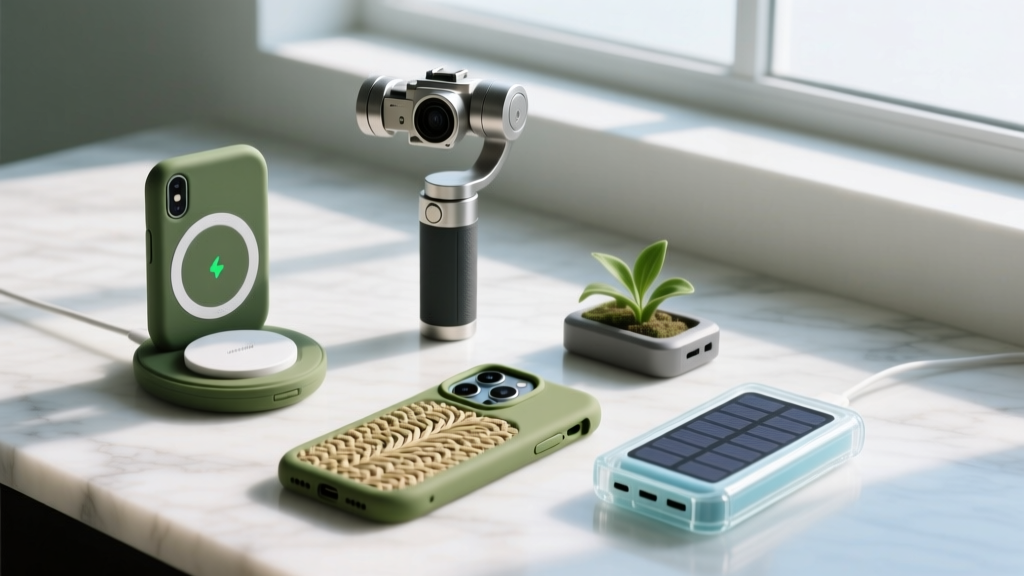
When tech enthusiasts hunt for that cool gadget 2025 introduced to the market, the focus is almost exclusively on processing power, camera sensors, and display brightness. Yet, the peripheral ecosystem—wireless chargers, gimbals, and lens kits—generates a disproportionate amount of untracked electronic waste. According to the Global E-waste Monitor, small IT and telecommunication equipment, which includes mobile accessories, account for millions of metric tons of e-waste annually, with a recycling rate hovering below 20% globally.
The traditional accessory market relies heavily on virgin ABS plastics, rare-earth magnets mined without oversight, and PVC-coated cables that degrade within 18 months. As we navigate 2026, a new tier of sustainable mobile peripherals has emerged. These devices do not compromise on the 15W fast-charging speeds or 3-axis stabilization that enthusiasts demand; instead, they fundamentally re-engineer the material supply chain.
Bioplastic & Recycled Wireless Chargers: Beyond the Greenwash
The wireless charging market is saturated with cheap, heat-generating plastic pucks. True sustainability in this category requires addressing two factors: material composition and energy transfer efficiency.
The Qi2 Efficiency Standard
The transition to the Qi2 standard has been a massive win for sustainability. By utilizing the Magnetic Power Profile, Qi2 chargers ensure perfect coil alignment every time. The Wireless Power Consortium notes that misaligned standard Qi chargers can lose up to 30% of their energy to heat dissipation. Qi2's magnetic snap reduces this thermal loss significantly, meaning less electricity is wasted and the internal components degrade slower due to reduced thermal stress.
Top Sustainable Charger Picks for 2026
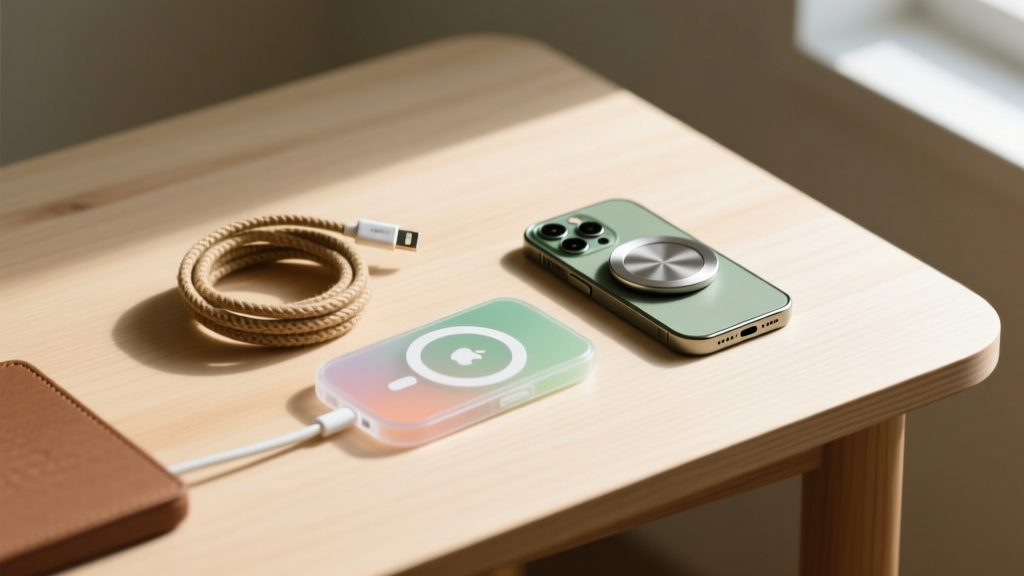
- Nimble For Good 15W MagSafe Charger ($49.95): Constructed from 72% post-consumer recycled aluminum and certified bioplastics. The included cable uses a braided rPET (recycled polyethylene terephthalate) sheath derived from reclaimed water bottles. Nimble also includes a prepaid e-waste return bag in the FSC-certified packaging.
- Pela MagSafe-Compatible Charger ($39.99): Pela utilizes a proprietary compostable bioplastic elastomer (Flaxstic) blended with plant-based biopolymers. While the internal copper coils and magnets are not compostable, the outer housing is designed to be easily separated at end-of-life, a massive improvement over ultrasonically welded virgin plastic pucks.
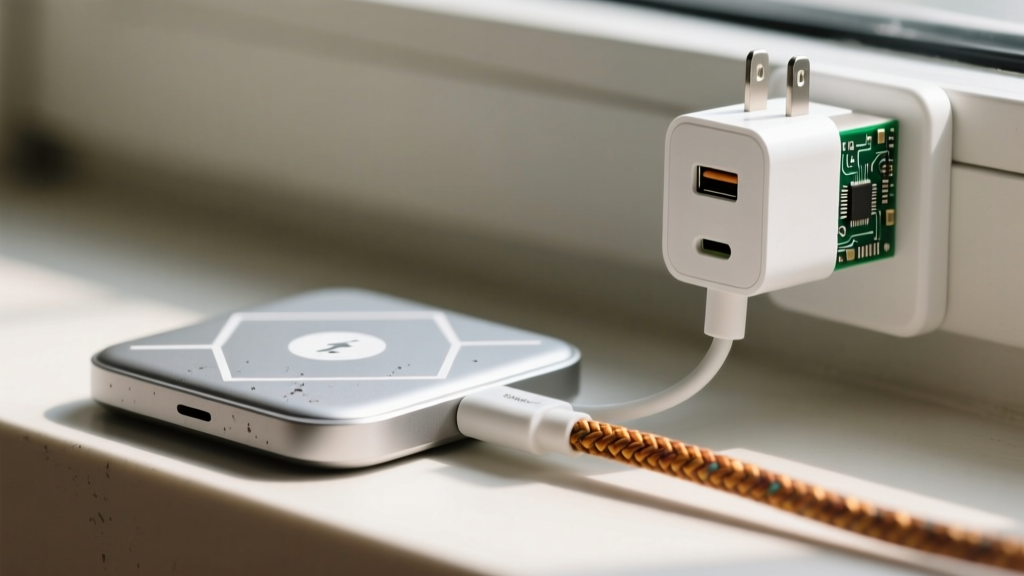
Pairing an eco-friendly wireless puck with a Gallium Nitride (GaN) wall adapter reduces charging footprint further. GaN adapters operate at up to 92% efficiency compared to 75% for traditional silicon adapters, drastically reducing phantom power draw when left plugged into the wall.
Sustainable Gimbals and Stabilizers
Motorized smartphone gimbals are notoriously difficult to recycle due to the dense integration of lithium-ion batteries, neodymium magnets, and mixed-grade plastics. However, the shift toward modular designs and recycled chassis materials is changing the landscape.
The ShiftCam SnapGrip ($79.99) pioneered the use of recycled ABS plastics and wheat-straw bio-composites in its outer shell. Unlike traditional 3-axis gimbals that require complex balancing and consume more battery, the SnapGrip uses a single-axis motorized roll combined with a magnetic phone clamp. This reduces the total number of internal motors by 66%, directly lowering the rare-earth metal requirement per unit. Furthermore, its built-in 10,000mAh power bank is user-replaceable via standard Torx screws, extending the device's lifespan by an estimated 4 to 5 years compared to sealed units.
Modular Lens Kits: Glass Over Plastic
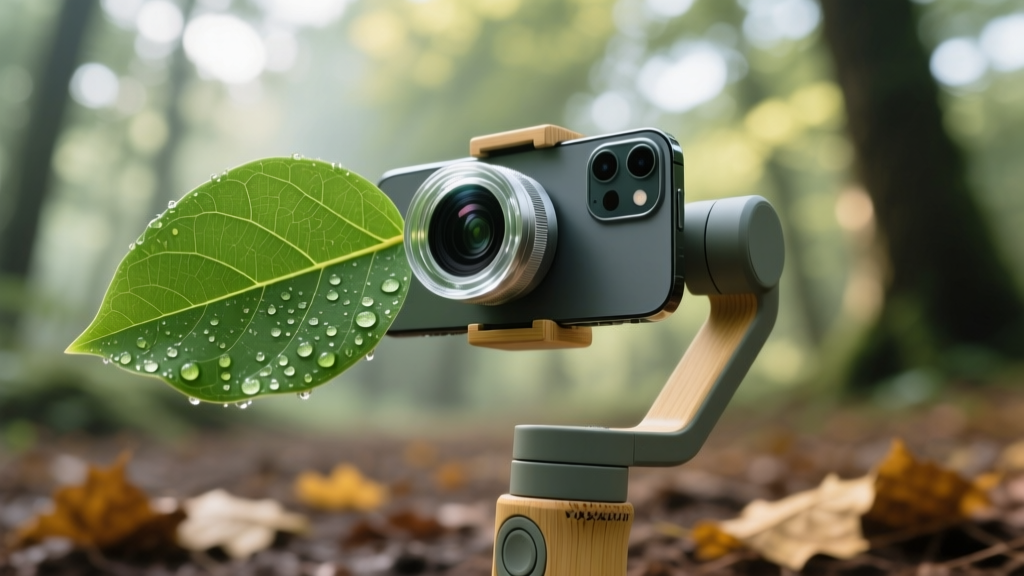
Cheap smartphone lens kits flood the market with injection-molded acrylic optics that scratch easily and end up in landfills within a year. The sustainable alternative is investing in modular, precision-machined glass optics that outlive multiple smartphone generations.
Moment Lenses (Starting at $99.99): Moment utilizes aerospace-grade anodized aluminum and hand-polished glass elements. Because they use a proprietary bayonet mount (requiring a specific case), the lenses are completely decoupled from the phone's lifecycle. When you upgrade your phone, you simply buy a new $40 mount case and retain the $100+ glass lens. This modular approach reduces accessory waste by an estimated 80% over a five-year period compared to buying universal clip-on plastic lenses for every new device.
Comparative Matrix: Eco-Friendly vs. Traditional Accessories
| Feature | Traditional Accessory (Standard) | Sustainable Accessory (Eco-Pick) |
|---|---|---|
| Chassis Material | Virgin ABS Plastic, PVC | rPET, Recycled Aluminum, Flaxstic, Wheat Straw |
| Energy Standard | Standard Qi (High thermal loss if misaligned) | Qi2 Magnetic (Optimized coil alignment, low heat) |
| End-of-Life Plan | Landfill (Ultrasonically welded, unrepairable) | Take-back programs, modular repair, compostable shells |
| Cable Sheath | PVC (Degrades and cracks in 12-18 months) | Braided Hemp, rPET, or Bio-TPE (3+ year lifespan) |
| Packaging | Plastic blister packs, non-recyclable foam | FSC-certified cardboard, molded pulp, soy-based inks |
Decision Framework: Verifying 'Green' Claims
Greenwashing is rampant in the tech accessory space. To ensure your next purchase is genuinely sustainable, apply this 3-point verification framework before checking out:
- Demand Exact Percentages: Ignore terms like 'made with recycled materials.' Look for specific metrics: '72% post-consumer recycled aluminum' or '100% rPET braiding.' If the brand cannot provide a percentage, it is likely less than 5%.
- Check the Repairability Index: A truly sustainable gadget can be opened. Look for Torx or standard Phillips screws instead of heavy adhesive or ultrasonic welding. The EPA's guidelines on electronics heavily emphasize design-for-disassembly as a key metric for reducing e-waste.
- Verify the Take-Back Program: Sustainable brands offer a closed-loop end-of-life plan. Check the company's footer for a dedicated recycling or trade-in portal. If they do not offer a way to return the product for proper material recovery, they are merely shifting the disposal burden to the consumer.
Frequently Asked Questions
Are bioplastic phone accessories as durable as traditional plastics?
Modern bio-composites, such as those using wheat straw or flax shive blended with PLA (polylactic acid), offer tensile strength comparable to standard ABS plastics. However, they are slightly more susceptible to prolonged UV degradation and extreme heat. For wireless chargers and desk accessories, durability is identical; for outdoor gimbals, ensure the bioplastic is treated with a UV-resistant bio-coating.
Does a recycled aluminum MagSafe charger affect signal or charging speed?
No. Manufacturers use precision-milled recycled aluminum for the base and outer ring, but the charging face (the surface touching the phone) is always constructed from signal-transparent polycarbonate or glass. This ensures the 15W Qi2 magnetic induction and NFC handshakes operate without interference.
How do I properly dispose of a broken eco-friendly gimbal?
Even eco-friendly gimbals contain lithium-ion batteries and neodymium magnets, which are classified as hazardous e-waste. Do not throw them in standard compost or recycling bins. Disassemble the unit if possible, removing the battery, and take the components to a certified e-waste drop-off facility or utilize the manufacturer's prepaid return mailer if provided.
Written by
Nina PetrovaNina Petrova holds a Master's degree in Child Development from the Erikson Institute and a B.S. in Nursing from the University of Illinois at Chicago. She worked as a pediatric nurse for 6 years before transitioning to family technology consulting, bringing clinical rigor to her evaluations of kid-friendly gadgets, educational toys, and parental control software. Nina has reviewed over 400 children's tech products, testing each for safety compliance (CPSC and ASTM standards), developmental appropriateness across age groups, screen-time impact, and data privacy practices. She serves on the Children's Technology Review advisory board and has testified before the FTC on children's data protection in connected toys. Her reviews are trusted by parents and educators alike for their evidence-based approach to balancing technology benefits with child safety.